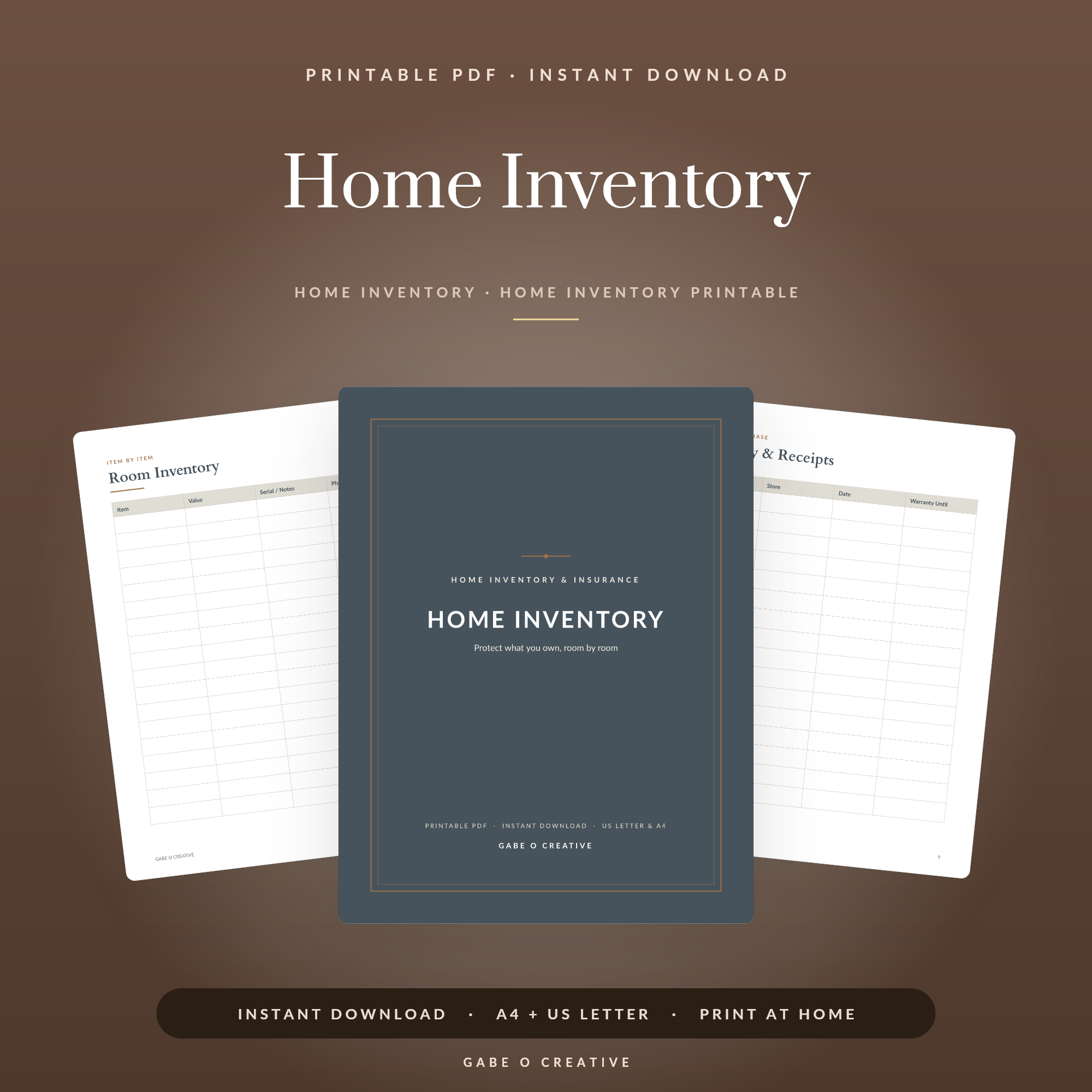
A home inventory list is one of those jobs that feels unnecessary right up until the moment it's the only thing standing between you and a badly settled claim. After a fire, a flood or a burglary, insurers ask what you had — and almost nobody can answer that from memory while their house is in that state. An afternoon spent recording it now turns a stressful guessing exercise into paperwork you simply hand over. Our printable home inventory gives you the room-by-room structure so you're not staring at a blank page.
Never done this? Print the home inventory checklist and do one room this weekend — the kitchen alone usually surprises people.
 Shop Moving House Checklist →
Why Memory Is Not Good Enough
Two things go wrong without a record. The first is obvious: you forget things, and unclaimed items are simply money you don't get back. The second is worse — you discover you were underinsured all along, because the sum you picked years ago was a guess and the guess was low.
Listing it out is usually the moment that becomes clear. Most people are astonished by the total once the kitchen, the wardrobes and the garage are on paper. Sofas, beds, white goods, tools, bikes, coats, bedding and the accumulated small electronics run to far more than the round number on the policy.
An inventory therefore does two jobs: it supports a claim after the fact, and it tells you today whether your cover is anywhere near right. The second is the one that saves people the most money, and it costs nothing to check.
What to Record for Each Item
Don't over-engineer this. Five columns cover almost everything an insurer asks:
| Field | Why it matters |
|---|---|
| Item and room | Structures the claim the way the insurer will assess it |
| Approximate purchase date | Drives depreciation and whether it's new-for-old |
| What you paid | The starting point for valuation |
| Make, model, serial number | The strongest single proof for electronics, bikes and tools |
| Photo reference | Shows condition as well as existence |
You don't need to list every mug. Record anything you'd want replaced, group the small stuff sensibly ("kitchen crockery and glassware, approx £200"), and spend your detail where the value is.
Photograph the room, then the valuables
Stand in each doorway and take a wide photo, then open the wardrobes and cupboards and photograph those too. Close-ups only for the expensive things — jewellery, electronics, tools, instruments — plus their serial numbers. Ten minutes a room, and the photos carry most of the evidential weight on their own.
Working Room by Room
Doing it in one sitting is how it never gets done. One room per weekend finishes an average house in about six weeks, and the order barely matters — though starting with the kitchen tends to be motivating, because it's where the totals are least expected.
- Kitchen — appliances first, then the contents of cupboards as groups.
- Living room — sofas, television, media kit, rugs, anything on the walls.
- Bedrooms — beds and wardrobes, then clothing as categories rather than items.
- Bathroom and hallway — quick; mostly fixtures and coats.
- Loft, garage and shed — the most commonly forgotten, and often where the tools and bikes live.
- Anything high-value anywhere — jewellery, instruments, collections. Check whether these need listing individually on your policy; many have a single-item limit far lower than people assume.
This pairs naturally with a declutter, because you're handling everything anyway. If you're doing both, our room-by-room decluttering guide covers the same route in the same order, and the decluttering checklist works alongside the inventory sheets.
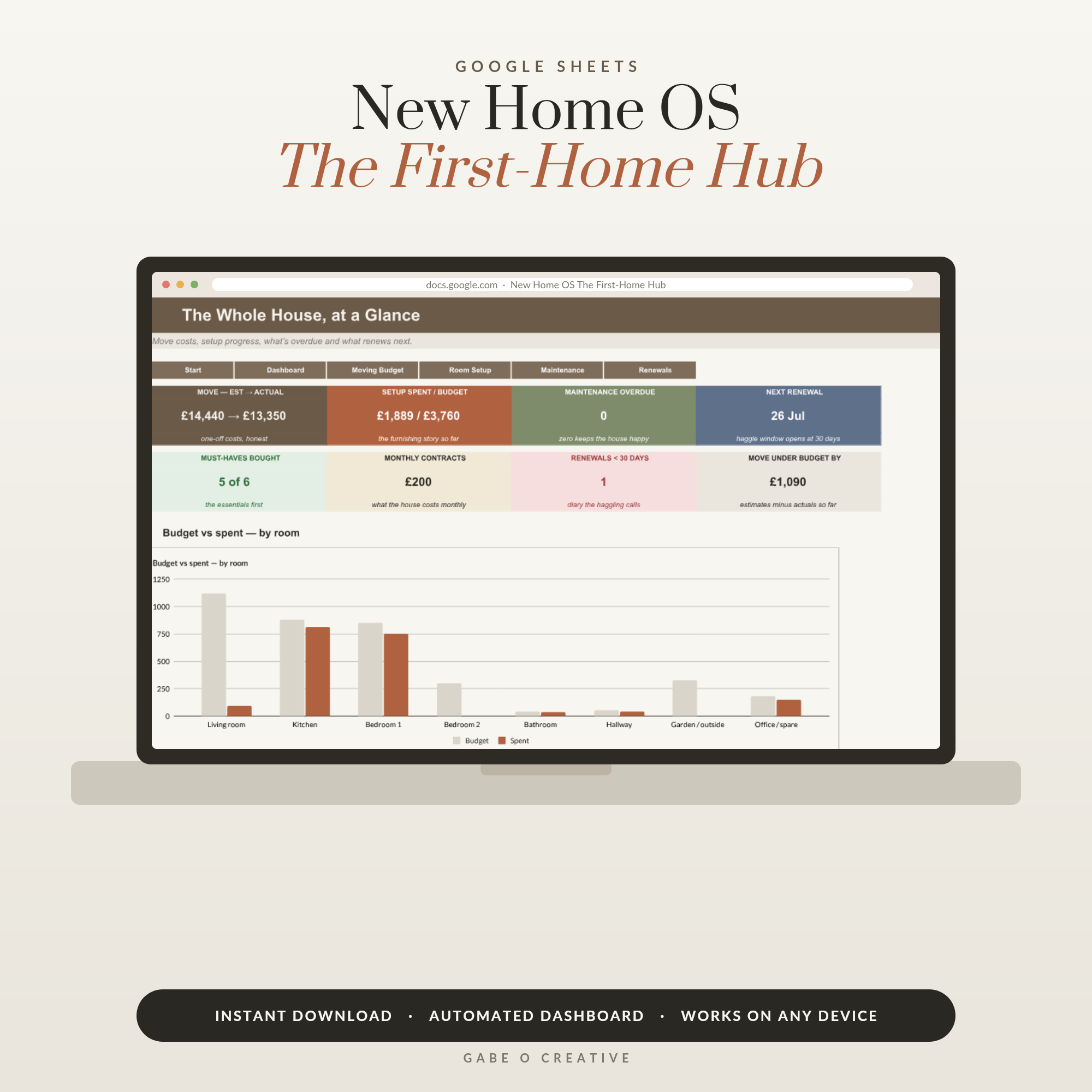 Shop New Home OS — Google Sheets First-Home Spreadsheet: Moving Budget, Room-by-Room Setup, Home Maintenance Schedule & Renewal Tracker →
Where to Keep It
An inventory stored only in the house it describes is no inventory at all. A fire takes the record along with the contents.
- Keep a digital copy off-site — cloud storage, or simply email the file to yourself.
- Photograph the completed paper sheets if you filled them in by hand.
- Store receipts with it for anything significant, or at least note where they are.
- Tell someone it exists. A record nobody can find helps nobody.
Keep it current without it becoming a chore
Once a year is enough. Pin it to your insurance renewal — you're already thinking about cover then, and it's the natural moment to check the sum insured still matches reality. Add significant purchases as they happen rather than in a yearly sweep, and the annual review stays a ten-minute job.
Moving House, or Just Moved
A move is the single best time to do this. Everything is in boxes and being handled once, the valuations are fresh in your mind, and you need the list anyway for removals insurance — which is a separate cover from your contents policy, and worth checking rather than assuming.
If you're mid-move, the moving house checklist sequences the admin around the move date, and our moving house guide covers the timeline. For a first home, the New Home OS spreadsheet keeps the budget, the buying costs and the inventory in one file — see also our first home admin checklist for everything that needs registering and switching. And while you're counting things, the freezer and pantry inventory is the version of this job that saves money every week rather than once a decade.
 Shop Decluttering Checklist →
What Happens When You Actually Claim
Knowing the shape of a claim tells you what to record now. Insurers generally work through the same steps, and each one is easier with a list in front of you.
- You report it and, for theft or malicious damage, give a crime reference number — so report to the police first where that applies.
- You submit a schedule of loss — a list of what's gone, with values. This is the inventory, more or less verbatim, and it's the stage people find impossible from memory.
- They ask for proof on the larger items: receipts, photos, statements, serial numbers.
- A loss adjuster may visit for bigger claims, and will ask about the same items in person.
- They settle — as replacement, repair or cash, depending on your cover.
Two things routinely reduce a settlement, and both are avoidable today rather than on the day. The first is a single-item limit: most policies cap any one item at a figure well below the total sum insured, so anything above it must be listed separately in advance. The second is underinsurance — if the sum insured is materially below what you actually own, some insurers reduce the payout proportionally, even on a small claim. Both are checks you can do in ten minutes once the inventory exists, and neither is possible without it.
Home Inventory FAQs
What is a home inventory?
A written record of what you own, room by room, with enough detail to prove it existed and what it was worth. It's what turns a contents insurance claim from a memory test into a paperwork exercise.
What should a home inventory include?
Item, room, rough purchase date, what you paid, and any serial or model number. Photos of each room plus close-ups of anything valuable do most of the remaining work.
Do I need receipts for an insurance claim?
They help enormously but aren't the only proof. Photos, bank or card statements, emailed order confirmations and the item's own serial number all support a claim where the receipt is long gone.
How often should I update a home inventory?
Once a year is plenty for most households, plus any time you buy something significant or move. Tying it to a date you already remember, like a renewal, stops it drifting.
Where should I store my home inventory?
Not only in the house it describes. Keep a copy in cloud storage or email it to yourself, so a fire or burglary can't take the inventory along with the contents.
Do renters need a home inventory?
Yes. The building is the landlord's problem, but everything inside it is yours, and tenants are the group most likely to be underinsured because the total feels small until it's listed.
This is general guidance rather than insurance advice — your policy's own terms, limits and single-item caps are what actually govern a claim, so read them alongside the list you build.
Start with one room today. Print the home inventory and work through the kitchen, or browse the full Home & Organization collection for moving, decluttering and household admin planners.