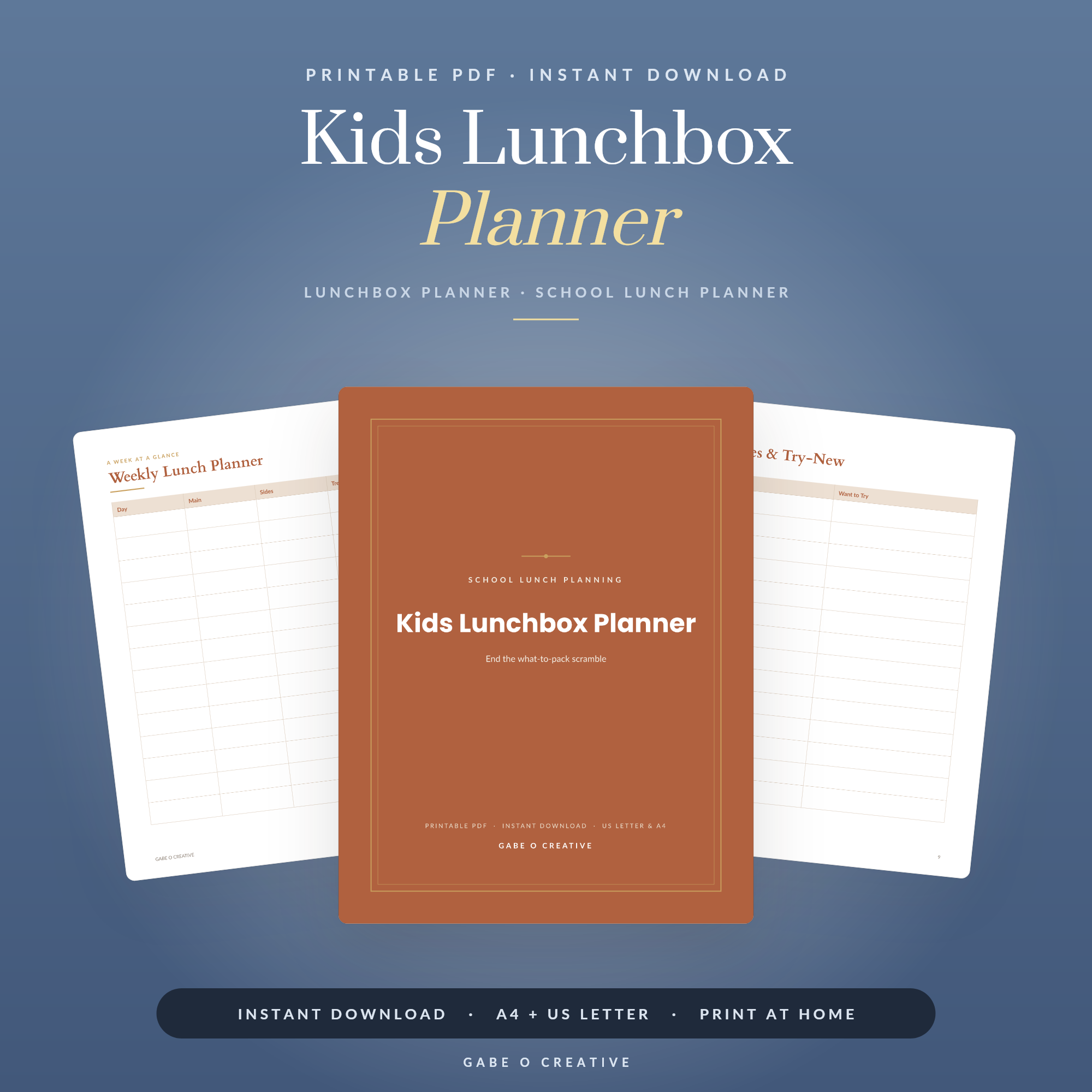
School lunchbox ideas run out fast. By the second week of term you're staring into the fridge at 7am, and the same tired sandwich goes in for the fourth time. Packed lunches don't have to be a daily creative crisis — they just need a plan. With a simple week of rotating ideas and a printable planner on the fridge, lunch becomes a five-minute assembly job instead of a morning stress. Our Kids Lunchbox Planner gives you the framework and the shopping list so the thinking happens once, on your terms.
Plan the week once, shop to it, and never face the empty-fridge panic again.
The simple formula for a balanced lunchbox
Forget elaborate Pinterest bento art. A lunch kids actually eat follows a reliable formula: a base (wrap, sandwich, pasta, rice or crackers), a protein (chicken, cheese, egg, hummus or beans), two portions of fruit or veg, a dairy or calcium hit, and one small treat. Nail that pattern and you can mix the components endlessly without overthinking. The secret to variety is rotating the base across the week rather than reinventing lunch every day.
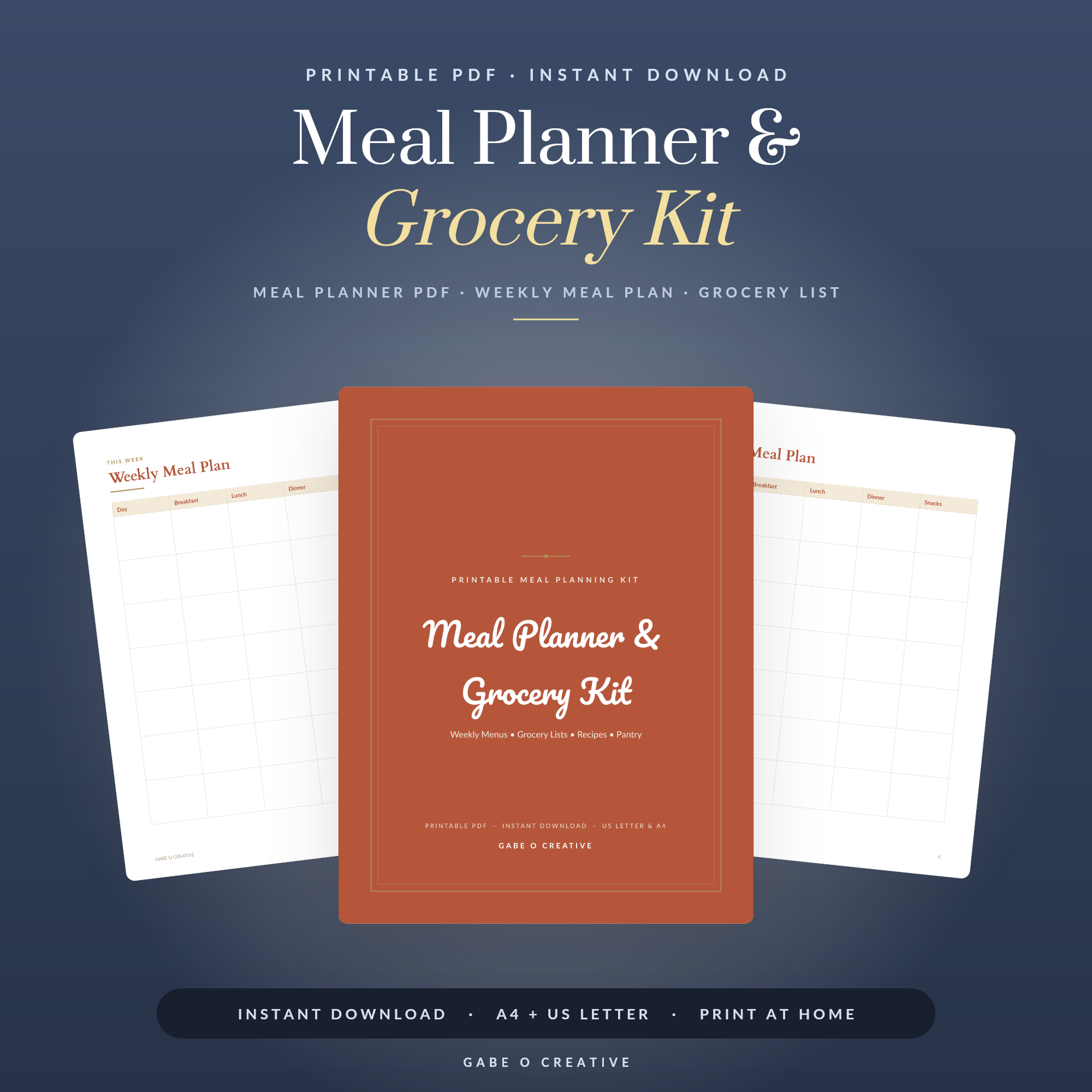 Shop Meal Planner & Grocery Kit →
A week of easy lunchbox ideas
Here's a no-stress rotation to start from. Monday: chicken and salad wrap, cucumber sticks, grapes, yoghurt tube. Tuesday: pasta salad with cheese and sweetcorn, cherry tomatoes, apple slices, oat bar. Wednesday: bagel with cream cheese, carrot sticks and hummus, satsuma, a few crackers. Thursday: savoury muffin or mini quiche, pepper strips, berries, cheese portion. Friday: 'picky plate' of cold meats, cheese, breadsticks, grapes and a small treat. Five different bases, five happy lunches — and a shopping list that barely changes week to week.
Keep a running list of components rather than fixed recipes, and you'll never be stuck. Bases: wraps, pitta, bagels, crackers, pasta, rice, couscous. Proteins: cheese, ham, chicken, boiled egg, hummus, tuna, beans. Crunch and colour: cucumber, peppers, carrots, cherry tomatoes, sweetcorn, apple, grapes, berries, satsuma. Extras: yoghurt, a small flapjack, popcorn, a couple of squares of chocolate. Pick one from each row and you've built a balanced box in seconds. Photograph the boxes your child comes home having eaten fully — over a couple of weeks you'll spot the winning combinations and can lean on them when you're short on time or ideas.
Snacks, drinks and the little extras
The snack slot is where lunchboxes quietly go off the rails, so plan it like everything else. Portion crisps, popcorn or dried fruit into small pots at the start of the week rather than dropping in a full multipack bag. Alternate a 'fun' snack with a fruit or veg one so it's not a daily sugar hit. For drinks, water is the easy default — a refillable bottle saves money and waste — with a carton of milk or a diluted juice as an occasional change. And don't forget the practical extras that make lunch actually work: a spork for pasta days, a small ice pack in warm weather, and a napkin. These tiny things are the difference between a box that comes home eaten and one that comes home in a soggy heap.
No-microwave hot lunches for winter
When it's cold, a hot lunch is a real comfort — and you don't need a microwave at school. A small insulated flask keeps last night's pasta, a mild chilli, soup or a pasta bake warm until midday. Warm the flask with boiling water first, tip it out, then add the piping-hot food. Cooking a little extra dinner and portioning it straight into the flask is the laziest, most satisfying lunch hack there is — a natural extension of your dinner plan.
Lunchbox ideas for fussy eaters
If foods touching is a dealbreaker, a compartment box is transformational. Keep everything separate, always include one 'safe' favourite, and add just one tiny new thing to try with no pressure. Shape cutters, a pot of dip, and letting your child help choose and pack all nudge fussy eaters towards eating more. The goal is a box that comes home emptier, not a photo-perfect one — progress over perfection.
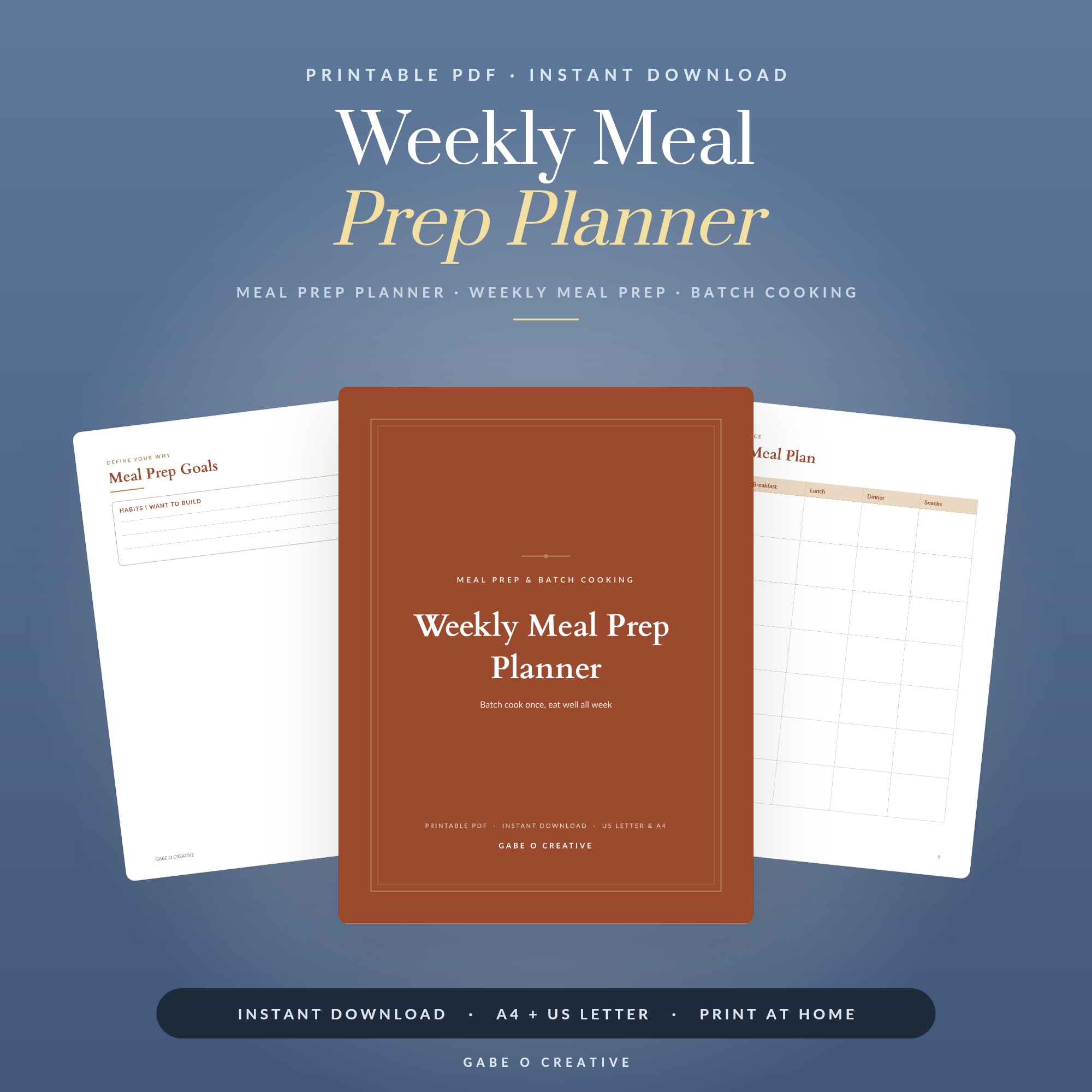 Shop Weekly Meal Prep Planner →
Batch-prep so mornings are calm
The real time-saver isn't a clever recipe — it's front-loading the work. On Sunday, chop a tub of veg sticks, bake a batch of savoury muffins, portion crackers and snacks into small pots, and wash the fruit. Then each morning you're assembling from ready pieces, not starting from scratch. A weekly meal-prep habit pays off across dinners too; our Weekly Meal Prep Planner and Meal Planner & Grocery Kit keep the whole week joined up so lunches and dinners share ingredients and nothing gets wasted.
| Day | Base | Quick lunch idea |
|---|---|---|
| Monday | Wrap | Chicken salad wrap, cucumber, grapes, yoghurt |
| Tuesday | Pasta | Pasta salad with cheese, tomatoes, apple, oat bar |
| Wednesday | Bagel | Cream cheese bagel, carrots and hummus, satsuma |
| Thursday | Baked | Savoury muffin, pepper strips, berries, cheese |
| Friday | Picky plate | Meats, cheese, breadsticks, grapes, small treat |
Shop smart and cut waste
Once your week is planned, write the shopping list straight from it so you buy exactly what the lunches need — no vague 'lunch stuff' that rots in the drawer. An aisle-organised shopping list gets you round the supermarket faster, and a few meal-planning stickers make the fridge planner something the kids enjoy updating. For more on planning around a budget, see our guide to meal planning on a budget and our roundup of meal planner printables.
Find the full range in our Meal & Recipes collection — planners, shopping lists and prep sheets, all instant downloads you can print today.
Frequently asked questions
What are good school lunchbox ideas?
Build each box from a base (wrap, pasta, rice, crackers or a sandwich), a protein (chicken, cheese, egg, hummus or beans), two veg or fruit, and one small treat. Rotate the base across the week so it never feels repetitive.
How do I pack a healthy lunchbox kids will actually eat?
Balance nutrition with familiarity. Include at least one thing you know they love, cut fruit and veg into easy-to-eat pieces, and keep portions realistic. A compartment box helps fussy eaters because foods don't touch.
What can I put in a lunchbox instead of sandwiches?
Pasta or rice salad, wraps and pinwheels, savoury muffins, crackers with cheese and cold meats, mini quiches, pizza scrolls, or a 'picky plate' of chopped bits. Variety stops lunch boredom and often gets more eaten.
How do I make a hot lunch without a microwave?
A small insulated food flask keeps pasta, soup, chilli or leftover dinner warm until lunchtime. Heat the food, warm the flask with boiling water first, then fill it — it'll still be hot hours later.
What lunchbox ideas work for fussy eaters?
Keep foods separate, offer 'safe' favourites alongside one tiny new thing, and involve your child in choosing and packing. Cutter shapes, dips and a compartment box make familiar food feel fun. Don't fight over the untouched item.
How can I make packing lunches faster?
Plan the week in one go, shop to that plan, and batch-prep on Sunday — chop veg, bake muffins, portion snacks. A printable weekly planner on the fridge means no one has to think at 7am; you just assemble what's already decided.
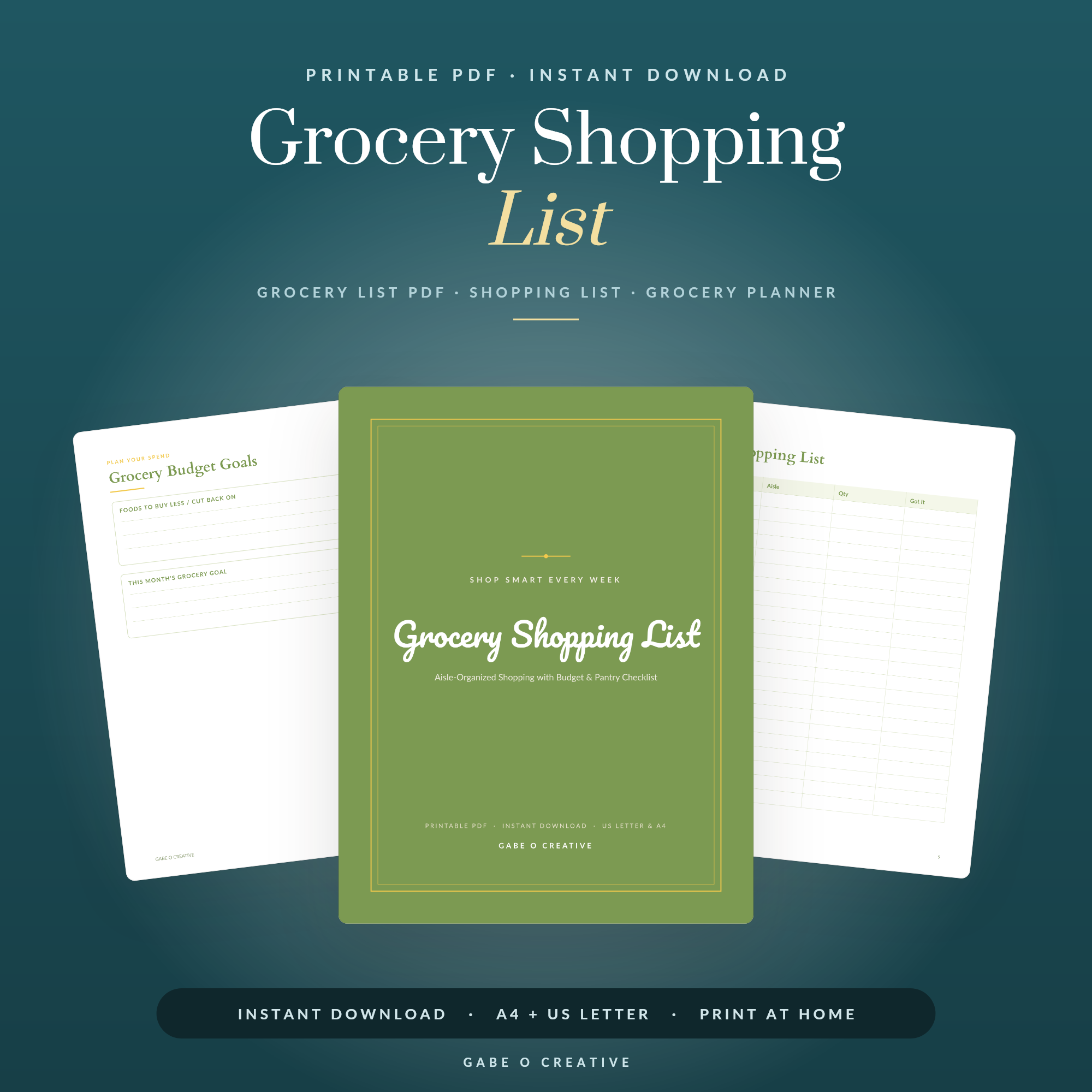 Shop Grocery Shopping List →
Ready to end the lunchbox scramble? Download the Kids Lunchbox Planner, plan your first week tonight, and pack tomorrow's lunch in five calm minutes.