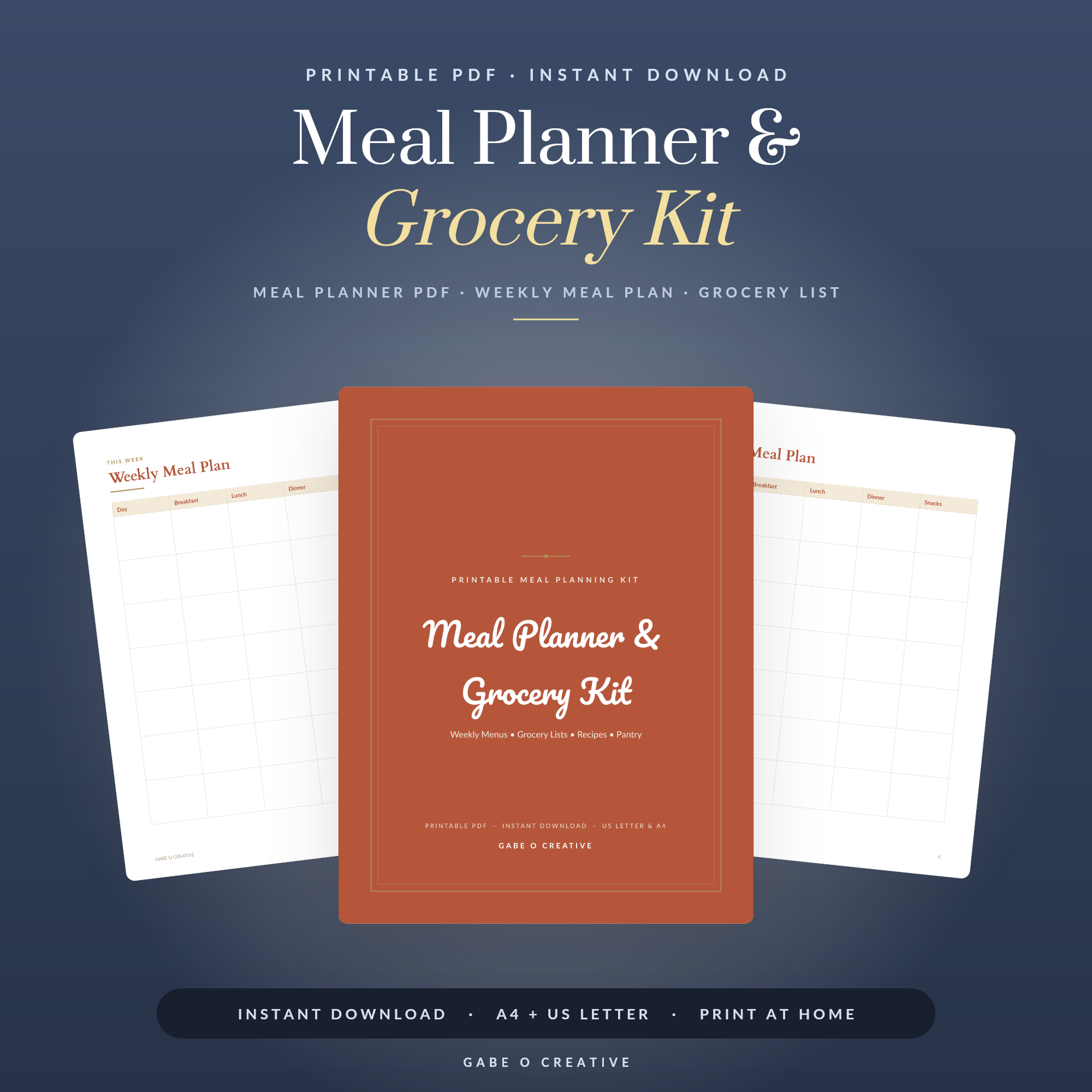
Rent is fixed. The car is the car. But food? Food is the most flexible line in the whole budget — the same family can spend £400 or £700 a month eating roughly the same meals, and the difference is rarely coupons or suffering. It's a plan. Meal planning on a budget is a 20-minute weekly routine that quietly removes impulse buys, waste and panic takeaways, and the Meal Planner & Grocery Kit gives you the exact pages to run it: plan the week, build the list from the plan, shop once, done.
Want the kit first? The Meal Planner & Grocery Kit pairs weekly planning pages with matching grocery lists — print a fresh set each week or fill them in on a tablet.
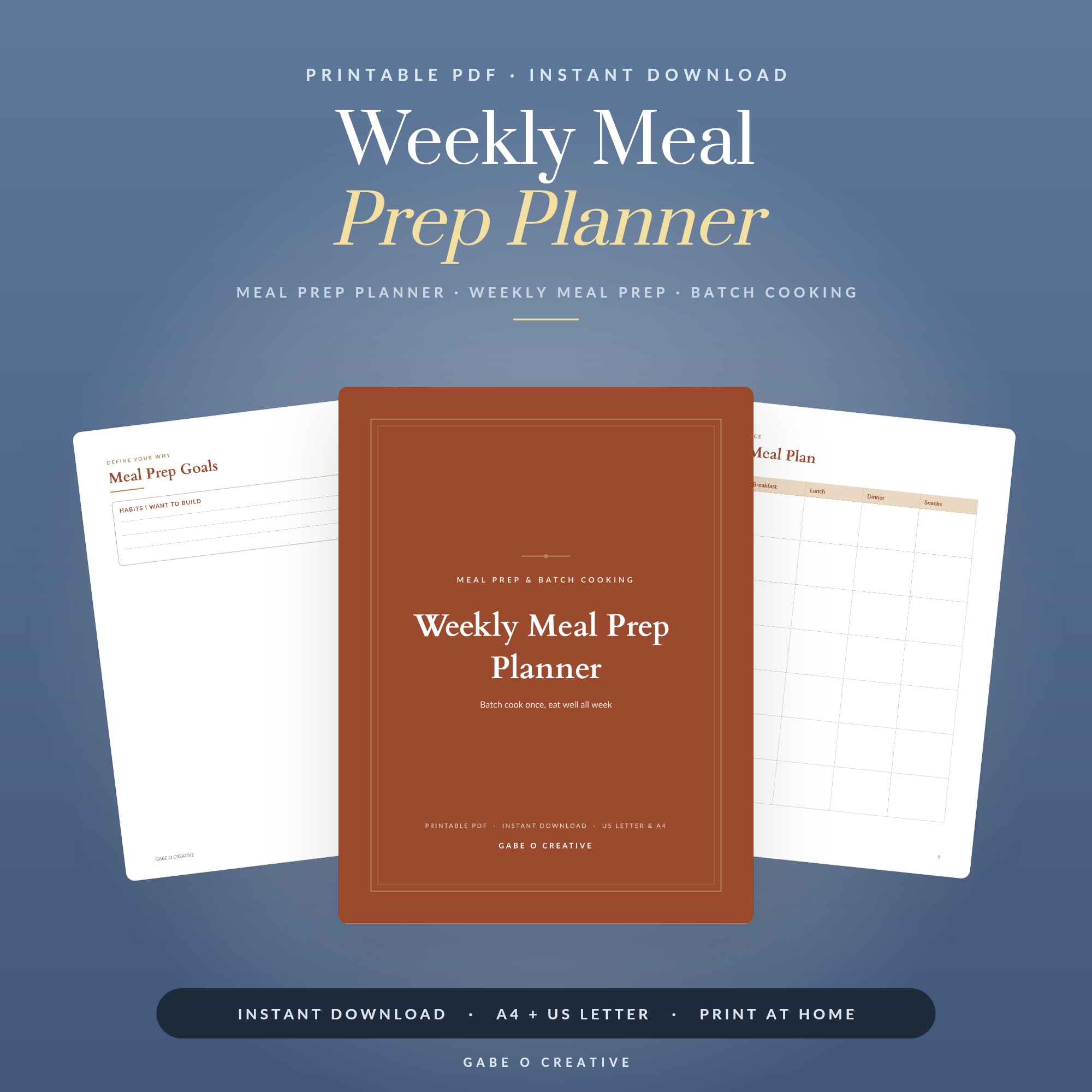 Shop Weekly Meal Prep Planner →
Where Food Money Actually Leaks
Almost nobody overspends on food because their planned meals are lavish. The leaks are structural: the second and third 'quick top-up' shops each week (where impulse buys live), the ingredients bought with good intentions and binned a week later, and the 6pm nothing's-defrosted takeaway. Studies of household waste keep landing on the same uncomfortable number — a meaningful slice of the food we buy is never eaten. Fix the structure and the spending fixes itself: one plan, one list, one shop. You'll eat the same — often better — for less.
The 20-Minute Weekly Routine
- Shop your kitchen first (5 min). Freezer, fridge, cupboards. That chicken, that half bag of spinach, those tins — they're the start of this week's plan, not landfill-in-waiting.
- Pick 5 dinners, not 7 (5 min). Real weeks contain leftovers and curveballs. Choose meals that share ingredients — one bag of spinach across two dinners beats two half-used bags.
- Write the list FROM the plan (5 min). Every item earns its place by belonging to a meal. This single habit kills most impulse spending, and an aisle-organised list gets you out of the shop before temptation does.
- Shop once, eat all week (5 min of willpower). Each avoided top-up shop saves the £15–25 of extras that always ride along.
The cheap-but-good dinner formula
Base (pasta, rice, potatoes, bread) + protein (beans, lentils, eggs, thighs, mince, tinned fish) + veg (seasonal or frozen) + a flavour bomb (spices, garlic, a sauce you love). Traybakes, soups, chillis and stir-fries all follow it, all cost pennies per portion, and all produce tomorrow's lunch for free.
A Sample Budget Week (Feeds 4, Roughly £35–45)
| Night | Dinner | Budget trick |
|---|---|---|
| Monday | Chicken thigh & veg traybake | Thighs over breasts; roast double veg |
| Tuesday | Leftover-chicken wraps | Monday's extras become filling |
| Wednesday | Lentil & tomato pasta | Meat-free night = biggest saver of the week |
| Thursday | Veg-heavy chilli & rice | Batch it — half goes in the freezer |
| Friday | Fakeaway night: fridge-clearing stir-fry | Beats a £30 delivery and empties the fridge |
Weekends run on leftovers, freezer treasures and one relaxed cook. Notice the plan builds waste-eating INTO the week — the wraps and the stir-fry are the bin's natural enemies.
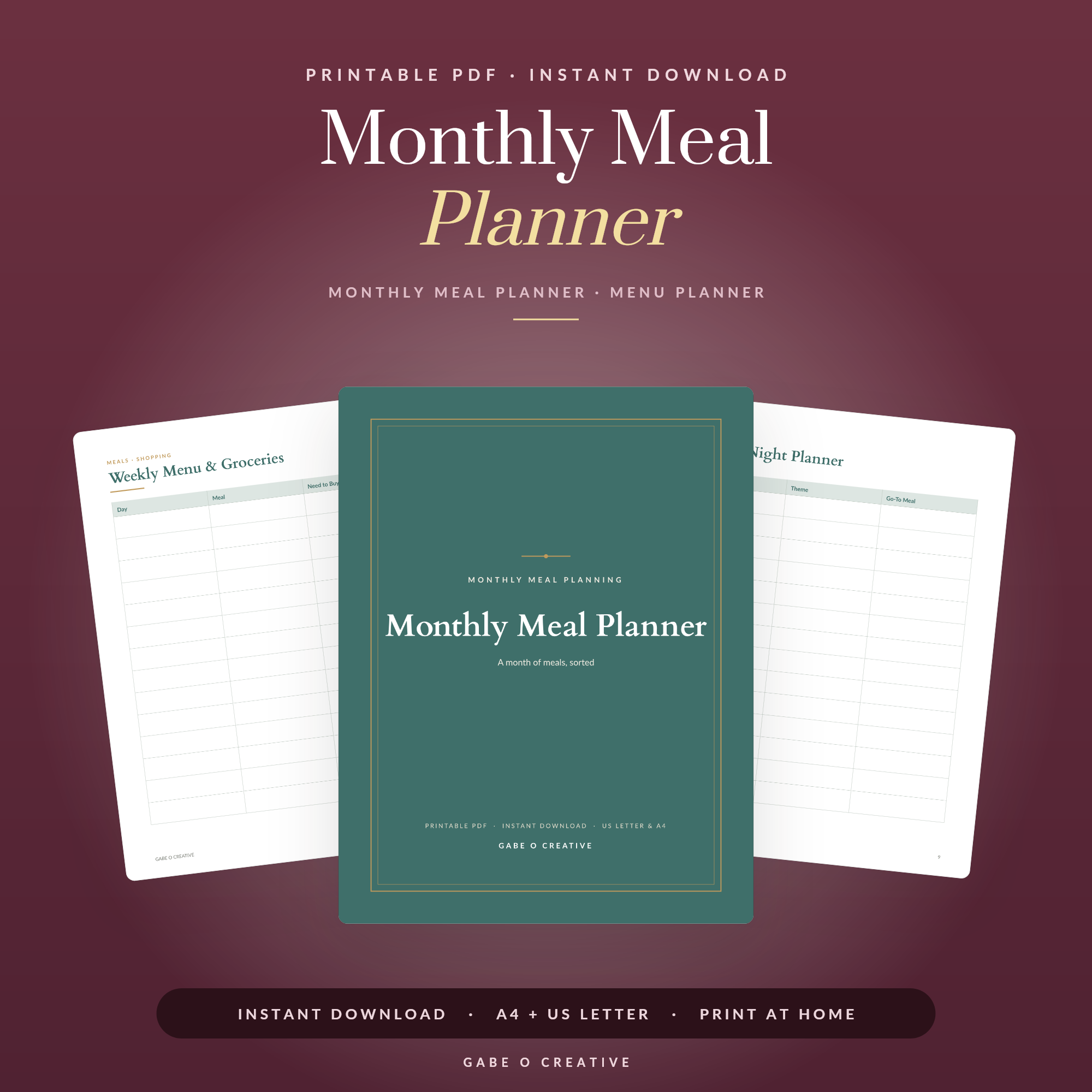 Shop Monthly Meal Planner →
Make It Stick for the Long Haul
The savings compound only if the routine survives busy seasons, so lower the effort everywhere you can. Keep a rotation of 10–12 meals the household genuinely accepts and plan mostly from it — novelty is for one slot a week, not seven. Store the keepers in a recipe binder so 'what shall we have?' takes seconds. If weeknights are the crunch point, add light prep with the weekly meal prep planner — even just chopping and marinating on Sunday turns Wednesday into assembly. And zoom out monthly: the monthly meal planner lets you spot the expensive weeks coming (birthdays, holidays) and balance them with cheaper ones. Track the result in your budget — pair this with the 50/30/20 rule and our grocery list guide, and watch the food line shrink while dinner stays lovely. More prep-day tactics live in the meal prep planner guide.
Give the savings a job
Money you 'save' but leave in the current account evaporates. Move the difference somewhere with a name — the holiday pot, the Christmas fund, the debt payment. When meal planning is visibly funding something you want, Sunday's 20 minutes stops feeling like a chore and starts feeling like a raise.
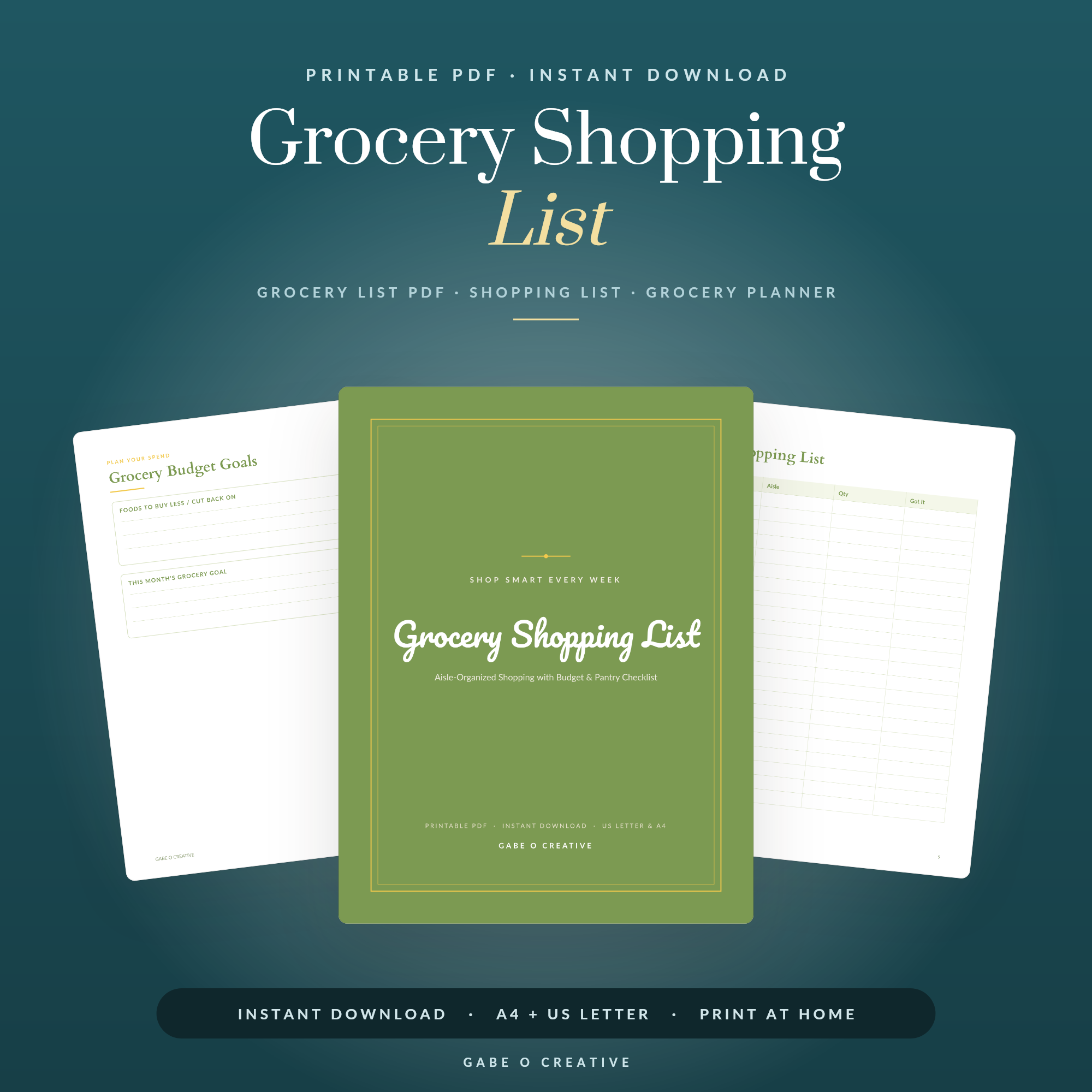 Shop Grocery Shopping List →
Shopping Tricks That Stack on Top of the Plan
The plan does the heavy lifting; these habits squeeze out the last stubborn pounds at the shelf. Read unit prices, not sticker prices. The per-100g figure in small print is the only honest number on the label — 'bigger pack' and 'special offer' are frequently neither. Drop one brand tier. Swap branded staples for own-label on rice, pasta, tinned tomatoes, oats and flour and you'll struggle to taste the difference in a finished dish; that single habit is worth 10–15% on its own. Respect the freezer aisle. Frozen veg, fruit and fish are typically frozen within hours of harvest — nutritionally excellent, dramatically cheaper, and immune to the rot-in-the-drawer tax. Learn your shop's reduction rhythm. Most stores mark down fresh items at predictable times; anything reduced that fits your rotation goes straight to the freezer as a future free dinner. Eat before you shop and stick to the list. Ancient advice because it works — hungry shoppers buy snacks, tired shoppers buy convenience.
Don't let lunches undo the dinners
A planned £1.20 dinner portion loses its glow if lunchtime is a £4.50 meal deal. Cook one extra portion at dinner (the pan doesn't notice), and Sunday's batch chilli quietly becomes three workday lunches. Same cooking, double the savings.
Budget Meal Planning FAQs
How much money can meal planning actually save?
Households that plan consistently commonly report shaving 20–30% off their food spend — through fewer impulse buys, less waste, fewer takeaways and better use of what's already in the cupboard. On a £500 monthly food budget, that's £100–150 back.
How do I start meal planning on a budget?
Start with one week: check what you already have, pick 5 dinners that share ingredients, write the shopping list from the plan, and shop once. Keep it boring and repeatable — the savings come from the routine, not the recipes.
What are the cheapest meals that still feel good?
Traybakes, soups, chillis, pasta bakes, stir-fries and anything built on beans, lentils, eggs, seasonal veg and cheaper cuts. The pattern: one pot or one tray, flexible ingredients, and leftovers that reheat into tomorrow's lunch.
How do I stop wasting food?
Plan around what you already own (shop your cupboards first), cook ingredients you bought for one meal into a second, and add a weekly 'use-it-up' dinner — the fridge-clearing stir-fry or omelette. Waste is just money in bin form.
Is meal prepping the same as meal planning?
Planning decides WHAT you'll eat; prepping cooks some of it in advance. Planning alone captures most of the savings. Add prep — batch-cooking two dinners or chopping veg on Sunday — when you want weeknights easier too.
How do I meal plan for a fussy family?
Build a rotation of 10–12 'green light' meals everyone accepts and plan mostly from that list, adding one new recipe a week at most. Let family members claim a night each — buy-in beats variety for keeping the plan alive.
Ready to shrink the food bill without shrinking dinner? Grab the Meal Planner & Grocery Kit and browse the full Meal & Recipes collection — print tonight, save this week.