The 50/30/20 budget is the simplest way to take control of your money without tracking forty-three different categories. You split your take-home pay into three buckets: 50% for needs, 30% for wants and 20% for savings. That's it. No complicated setup, no guilt-tripping over every coffee, just three clear targets that tell you, at a glance, whether your spending is in balance. If you've tried budgeting before and given up because it felt like a second job, this is the method to start with.
Want it laid out for you? Our Budget & Finance Planner binder gives you ready-made 50/30/20 pages, so you can split your take-home pay into the three buckets and start straight away.
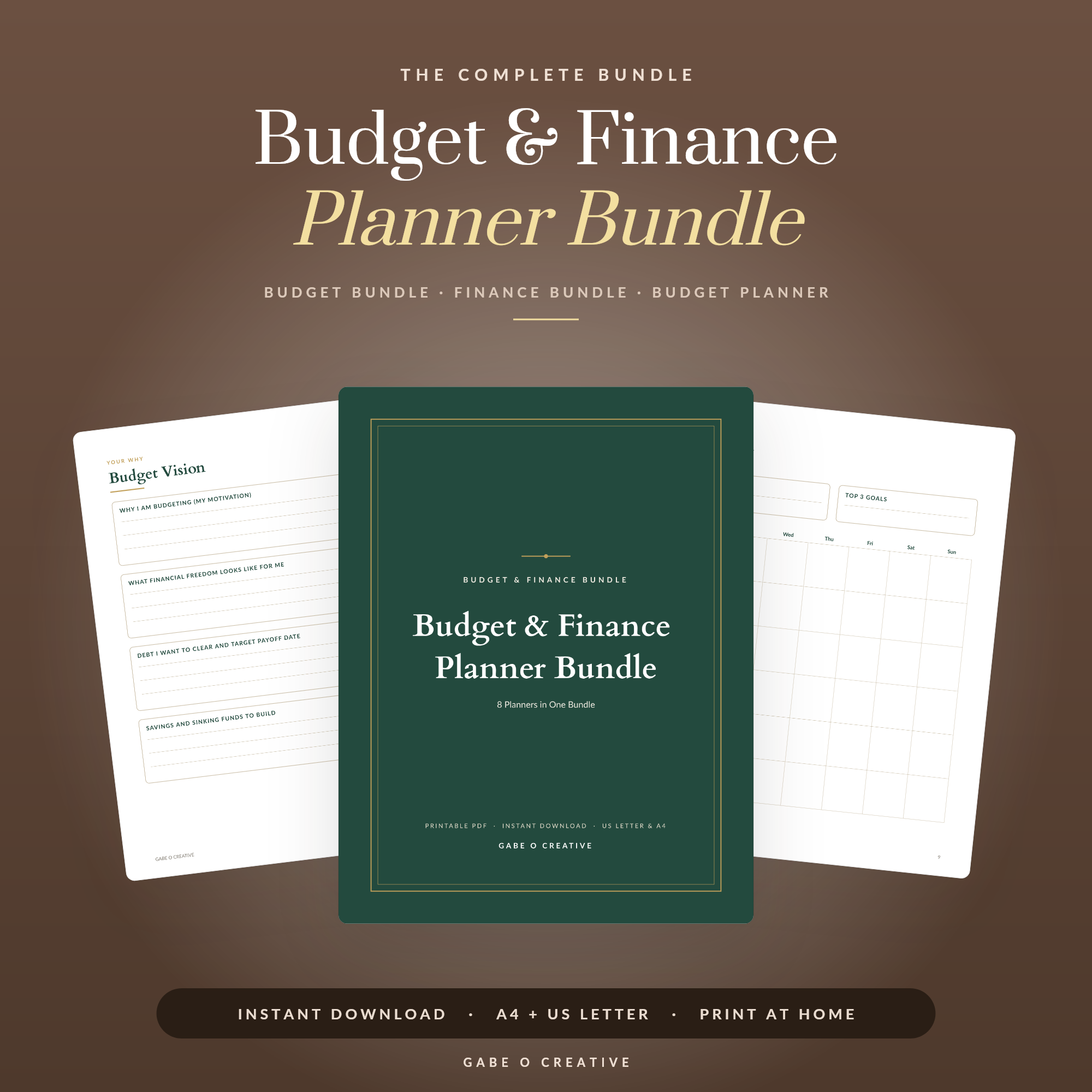 Shop Budget & Finance Planner Bundle →
What Is the 50/30/20 Budget Rule?
The 50/30/20 rule is a budgeting framework that divides your monthly take-home pay into three simple percentages. Half goes to the things you genuinely need, just under a third to the things you enjoy, and a fifth to your future. It was popularised by US senator Elizabeth Warren in her book All Your Worth, and it has stuck around because it's almost impossible to overcomplicate.
Here's the split in plain terms:
- 50% needs—rent or mortgage, bills, food, transport, minimum debt payments.
- 30% wants—eating out, subscriptions, hobbies, clothes, holidays.
- 20% savings—emergency fund, pension top-ups, investments and extra debt repayment.
The beauty of it is that you don't need to itemise every purchase. As long as each pound lands in the right bucket and the buckets stay roughly in proportion, you're winning. For budgeting for beginners, that simplicity is everything—a budget you can actually keep beats a perfect one you abandon by week two.
Needs vs Wants vs Savings: What Goes Where?
The whole method hinges on honestly sorting your spending. Getting the needs, wants and savings split right is where most people wobble, usually because a few "wants" have quietly disguised themselves as "needs".
What counts as a need (the 50%)
Needs are the non-negotiables—the things that, if you stopped paying them, would seriously disrupt your life. That means rent or mortgage, council tax, gas, electricity, water, basic groceries, transport to work, insurance and the minimum payments on any debts. Note the word minimum: anything you pay above the minimum on a loan counts as savings, not a need.
What counts as a want (the 30%)
Wants are everything that makes life better but isn't essential. Streaming subscriptions, meals out, takeaways, your gym membership, new clothes you don't strictly need, hobbies, holidays and the upgraded phone plan all live here. They're not bad—they're the reason you work—but they're the first place to look when the maths is tight.
What counts as savings (the 20%)
This bucket is your future self's money: building an emergency fund, paying extra off debt, topping up a pension or investing. It's the part most budgets quietly skip, which is exactly why the 50/30/20 rule bakes it in from the start.
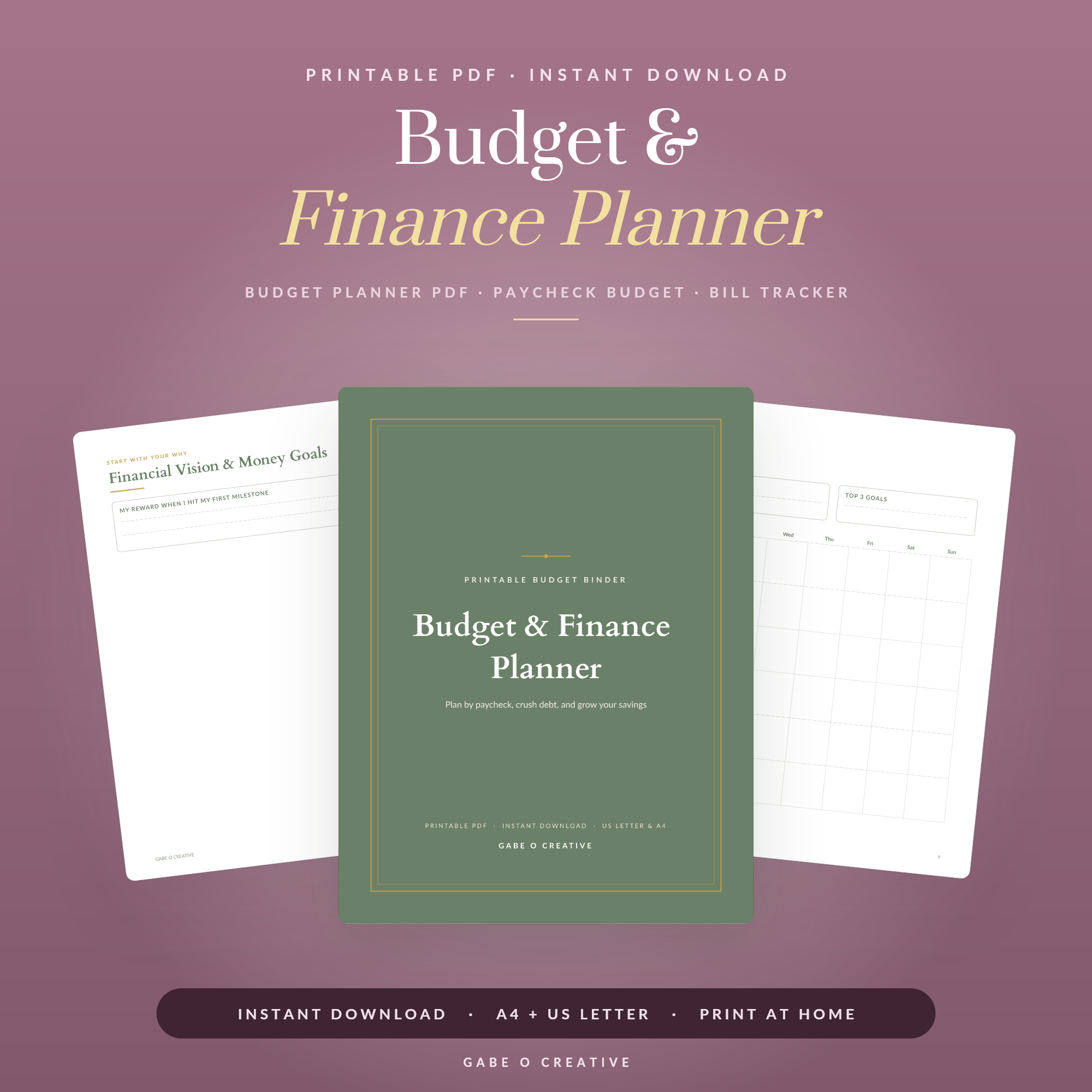 Shop Budget & Finance Planner →
How to Work Out Your 50/30/20 Numbers
You only need one figure to begin: your monthly take-home pay—what actually lands in your account after tax, National Insurance and pension contributions. Don't use your gross salary; the percentages only work on the money you can actually spend.
Once you have that number, the maths is quick:
- Find your take-home pay. Check your payslip for the net figure, or your bank for what arrives each month.
- Multiply by 0.5 for your needs budget.
- Multiply by 0.3 for your wants budget.
- Multiply by 0.2 for your savings budget.
- Compare with reality. Look at last month's spending and see which bucket is overflowing.
That last step is the one that changes things. Almost everyone discovers one bucket is bigger than they thought—usually wants—and seeing it in black and white is what makes the budget click. If maths isn't your favourite way to spend an evening, this is exactly where a template earns its keep.
A Worked Example: Budgeting £2,000 a Month
Let's make it concrete. Say your take-home pay is £2,000 a month. Under the 50/30/20 rule your targets are:
- £1,000 for needs—rent, bills, food and transport.
- £600 for wants—everything fun and flexible.
- £400 for savings—emergency fund, debt and your future.
If your rent and bills come to £1,150, you're already over the needs bucket by £150—so something has to give. You might trim wants to £450 to keep savings intact, or accept a temporary 57/23/20 split while you hunt for cheaper bills. The rule isn't there to shame you; it's there to show you the trade-off clearly so you can choose on purpose.
Because the split scales with income, the same logic works at every level. Here's how the three buckets look across a few common take-home figures:
| Take-home pay | Needs (50%) | Wants (30%) | Savings (20%) |
|---|---|---|---|
| £1,500 | £750 | £450 | £300 |
| £2,000 | £1,000 | £600 | £400 |
| £3,000 | £1,500 | £900 | £600 |
Find your nearest row and you've got your starting budget in seconds. If your pay varies month to month, base your numbers on a low-but-realistic month so you're never caught short—our guide to budgeting on an irregular income walks through exactly how.
When to Tweak the 50/30/20 Ratios
The percentages are a guide, not gospel. Plenty of perfectly sensible budgets don't fit the standard split, and forcing them to would do more harm than good. Here's when to bend the rule:
- High rent areas. If you live somewhere expensive, housing alone can swallow more than 50%. Aim for something like 60/20/20 and protect that savings bucket fiercely.
- Paying off debt. When you're clearing balances, flip toward 50/20/30—drop wants and pour 30% into savings and extra repayments to be done faster.
- Lower incomes. If needs already eat most of your pay, treat 50/30/20 as a target to grow into. Even a 5% savings habit beats none.
- Higher incomes. If you comfortably cover needs on less than half your pay, push savings well past 20% and let your future self thank you.
The point is to adjust on purpose, not by accident. A budget you've tweaked deliberately is still a budget; one that's drifting because you never look at it is just hoping. If your pay arrives in chunks rather than one neat salary, assign each pay packet to the three buckets as it lands so every pound has a home.
How a Template Makes It Effortless
Paid weekly or fortnightly rather than monthly? Run the same 50/30/20 split per pay cycle with a paycheck budget planner — you assign each paycheck's needs, wants and savings the day it lands, and the monthly totals take care of themselves.
You can absolutely run the 50/30/20 rule with a pen and a calculator, but a ready-made 50/30/20 budget template removes every bit of friction. You write your take-home pay at the top once, split it into needs, wants and savings, then track your real spending against each target as the month goes on. No fiddly setup, and nothing to recalculate from scratch when you get a pay rise.
Our Budget & Finance Planner binder does exactly that, with ready-made 50/30/20 pages alongside a full year of monthly budgets so you can plan the whole twelve months at a glance. Want the lot? The Budget & Finance Planner Bundle gathers every budget and tracker together at the best value.
If you prefer to track what you actually spend first, our guide to the monthly expense tracker shows you how, and for inspiration across formats see the best budget planner printables. However you set it up, the goal is the same: make the right choice the easy choice, so you actually keep going.
Shop Budget & Finance Planner Bundle →50/30/20 Budget FAQs
What is the 50/30/20 budget rule?
It's a simple way to split your take-home pay: 50% goes to needs, 30% to wants, and 20% to savings and debt repayment. It keeps budgeting simple by using three buckets instead of dozens of fiddly categories.
What counts as a need versus a want?
Needs are things you genuinely can't skip—rent or mortgage, utilities, groceries, transport to work and minimum debt payments. Wants are everything that makes life nicer but isn't essential, like eating out, subscriptions, hobbies and holidays.
How do I work out my 50/30/20 numbers?
Start with your monthly take-home pay (after tax and pension). Multiply it by 0.5 for needs, 0.3 for wants and 0.2 for savings. A template does this automatically the moment you type your income in.
Does the 50/30/20 rule work on a low income?
If rent and bills already eat up more than half your pay, the strict split won't fit—and that's fine. Treat it as a target rather than a rule: trim wants first, protect a small savings habit, and adjust the percentages to suit your real life.
Should I change the percentages if I'm paying off debt?
Yes. Many people flip to something like 50/20/30, putting 30% toward savings and extra debt payments to clear balances faster. Once the debt is gone, you redirect that money straight into savings.
Can I use a 50/30/20 budget template on my phone or tablet?
Yes. Load the printable PDF into an app like GoodNotes or Notability on your phone or tablet and fill in your income with a stylus, no printer required. If you prefer, you can keep the same three buckets in a simple note or app on your phone too.
Ready to split your money the simple way? Grab the Budget & Finance Planner binder and fill in your take-home pay today, or browse the full Budget & Finance collection for everything you need to take control. Three buckets, one clear plan.