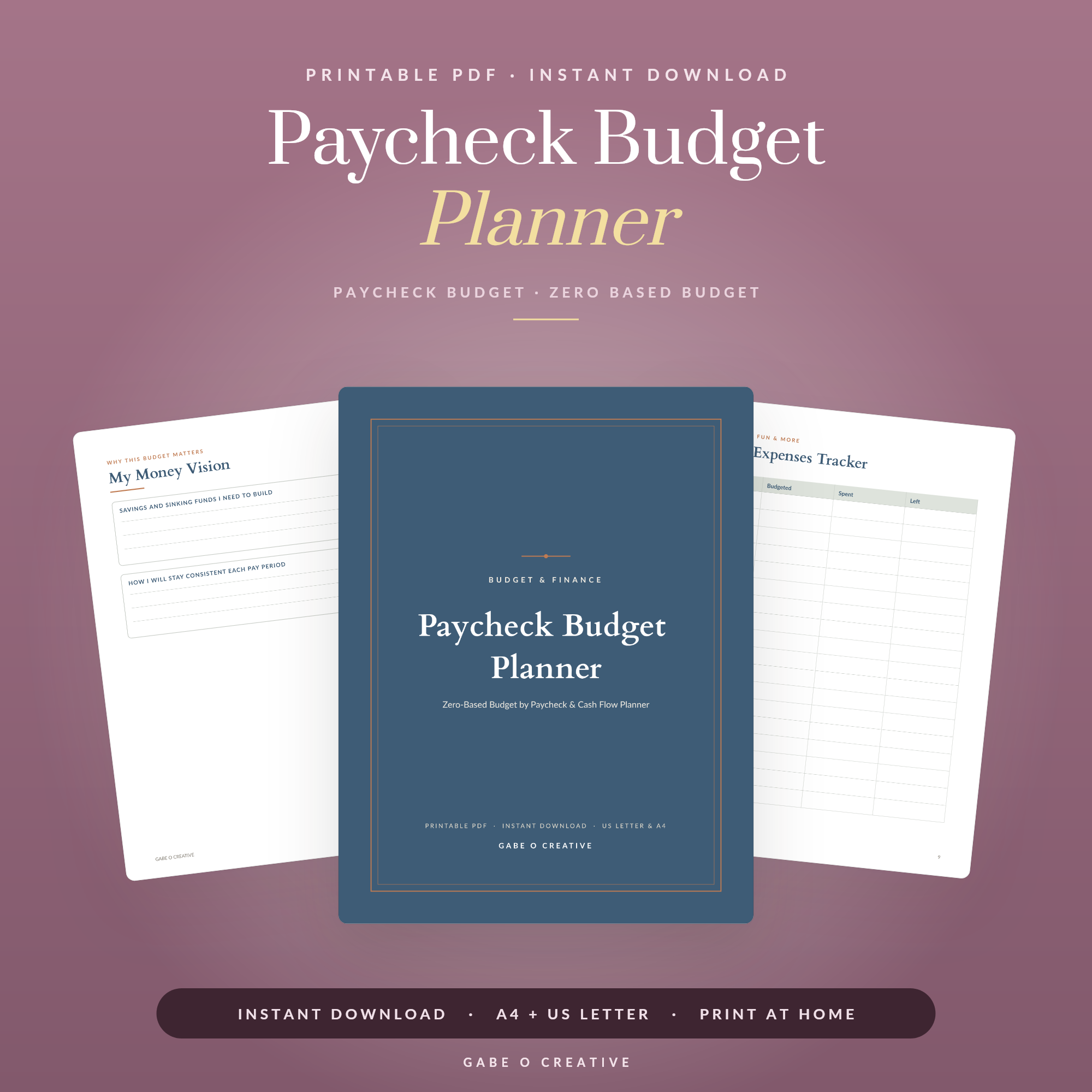
Budgeting on an irregular income can feel impossible. When every month brings a different number—because you're freelance, on commission, self-employed, or juggling a side hustle—a standard monthly budget falls apart fast. The fix isn't more willpower; it's a different system. Instead of budgeting by the calendar month, you budget by paycheck, build a small buffer, and give every payment a job the moment it lands. Done right, even a wildly variable income can feel steady and predictable.
Want the system that makes it click? The paycheck budget planner lets you assign each payment to bills, savings and goals as it arrives—perfect for income that never looks the same twice.
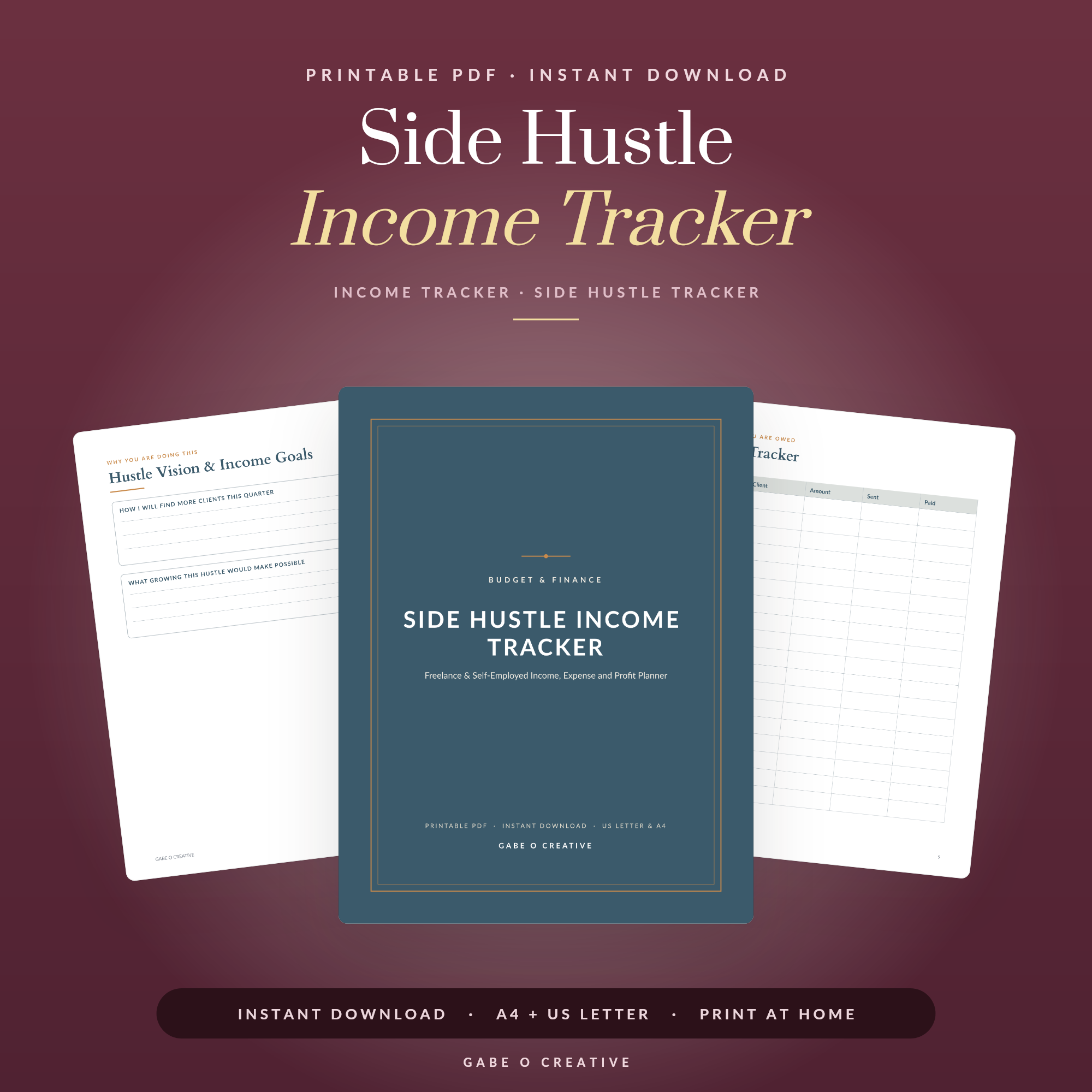 Shop Side Hustle Income Tracker →
Why Budgeting on an Irregular Income Is Different
With a steady salary, you can plan a month in advance because you know what's coming. With a variable income, you don't—so planning a fixed monthly budget sets you up to fall short in lean months and overspend in good ones. The goal of budgeting on an irregular income is to break that boom-and-bust cycle by smoothing your money out over time.
The mindset shift is simple but powerful:
- Don't budget money you haven't earned yet. Work with what's actually in the account.
- Prioritise ruthlessly. Cover essentials first, then work down a list of wants.
- Save the surplus in good months to cover the quiet ones.
This is the opposite of how most budgeting advice is written, which quietly assumes a fixed salary landing on the same day each month. Freelancers, hospitality and retail staff, commission earners, gig workers and the self-employed all need a method that bends with reality instead of breaking when a month comes in light. The good news: once the system is set up, an unpredictable income stops feeling stressful and starts feeling genuinely manageable.
Budget by paycheck, not by month
The single most useful change is to budget each payment as it arrives rather than planning a whole month at once. When money lands, you immediately assign it: this much to rent, this much to the buffer, this much to that overdue bill. A paycheck-by-paycheck planner is built exactly for this, so nothing slips through the cracks.
How to Budget on an Irregular Income, Step by Step
Here's the whole system in four steps:
- Know your baseline. Add up your essential monthly costs—rent, food, utilities, minimum debt payments. That's your survival number.
- Build a buffer. In good months, set aside the surplus until you have at least one month of essentials saved.
- Pay yourself a 'salary'. Once the buffer exists, pay yourself a steady amount each month from it, topping it up when you earn more.
- Assign every payment. As income arrives, give it a job—essentials first, then goals and extras.
Step 1: nail your baseline budget
You can't smooth an income until you know your floor. Tally the non-negotiables and keep that number visible. Everything above it is breathing room; everything below it is a shortfall to plan around. Be thorough—fold in annual costs like insurance or car tax as monthly amounts so they never ambush you. A realistic baseline is the foundation everything else rests on.
Step 2: build a one-month buffer
This buffer is what turns a variable income into a predictable one. It catches the slow months so you're never scrambling. Treat building it as your first financial goal before anything optional.
A quick example: imagine your essentials come to £1,800 a month. In a strong £2,600 month, you cover the £1,800 and send the £800 surplus to your buffer. In a lean £1,500 month, you draw £300 from the buffer to top yourself back up to £1,800. Over a few months the highs and lows even out—and you stop feeling every dip in income. That smoothing effect is the whole point: your spending stays steady even when your earning doesn't.
7 Tips for Budgeting With a Variable Pay
Beyond the core system, these tips keep things smooth:
- Track every source. Log freelance, side-hustle and one-off income with a side hustle income tracker so nothing is forgotten at tax time.
- Use cash envelopes for variable spending. A cash envelope system keeps discretionary spending in check during good months.
- Set aside tax as you go. Move a percentage of every payment into a separate tax pot immediately.
- Keep fixed costs low. The lower your baseline, the easier every month becomes.
- Prioritise high-interest debt. Funnel surplus toward balances with a debt payoff tracker.
- Bank windfalls. A big month isn't a reason to splurge—it's a chance to extend your buffer.
- Review weekly. A five-minute check-in keeps you ahead of the ups and downs.
You won't nail all seven at once, and that's fine. Start with the baseline and the buffer—those two alone transform how a variable income feels—then layer in the rest as the habit sticks. The aim isn't perfection; it's a system steady enough that a quiet month is a minor wobble rather than a crisis.
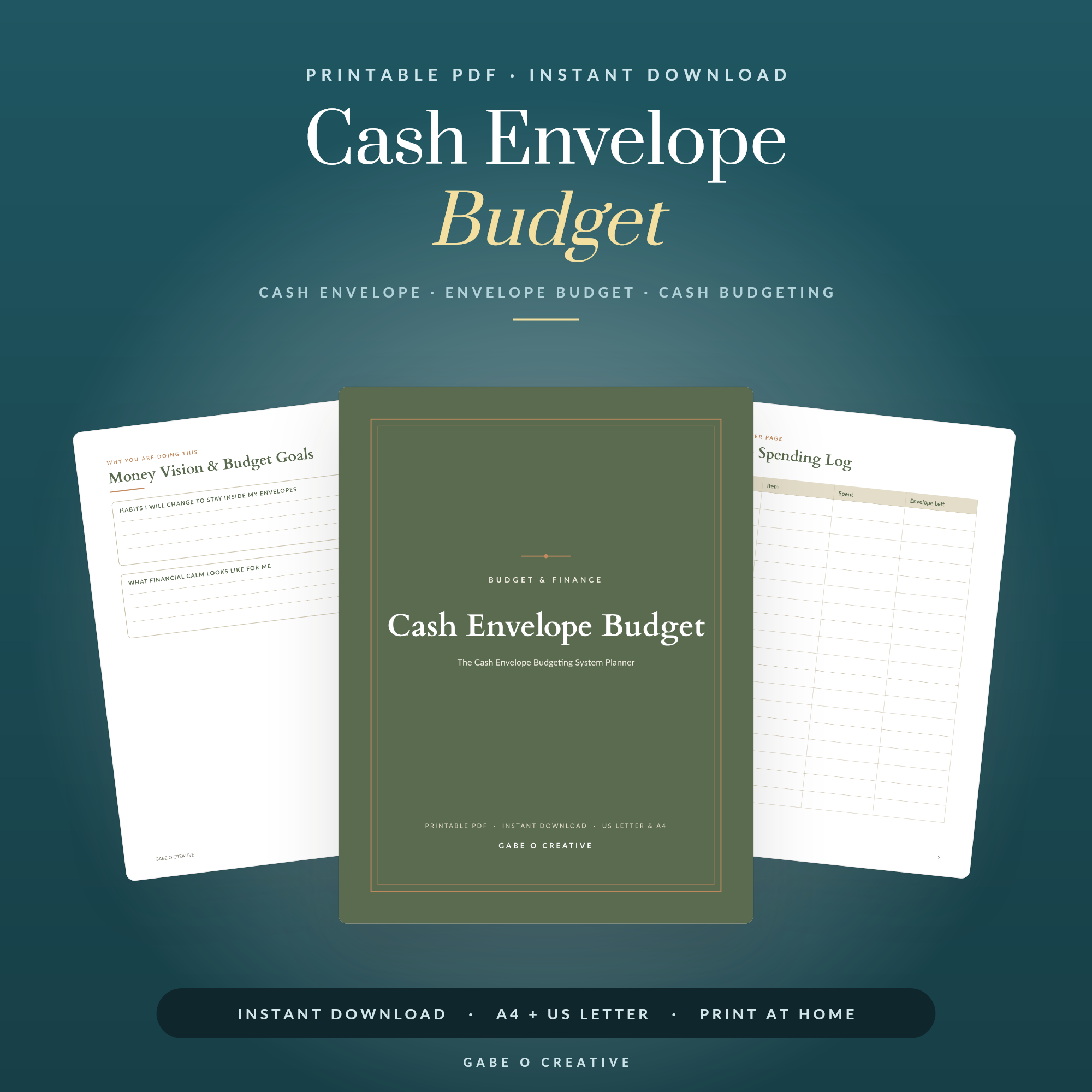 Shop Cash Envelope Budget →
Tools That Make Irregular-Income Budgeting Easier
The right printables do the heavy lifting. Here's what to pair together:
| Need | Use this |
|---|---|
| Assign each payment | Paycheck Budget Planner |
| Track variable income | Side Hustle Income Tracker |
| Control discretionary spend | Cash Envelope Budget |
| Everything in one place | Budget & Finance Bundle |
To get the whole toolkit at once, the budget and finance bundle brings the planner, trackers and budgets together for the best value. If you run a business or freelance full time, our small business planners add invoicing and income tools on top.
New to these methods? Our guides to the cash envelope system and the debt snowball tracker walk through each one in detail, and both pair perfectly with a variable income.
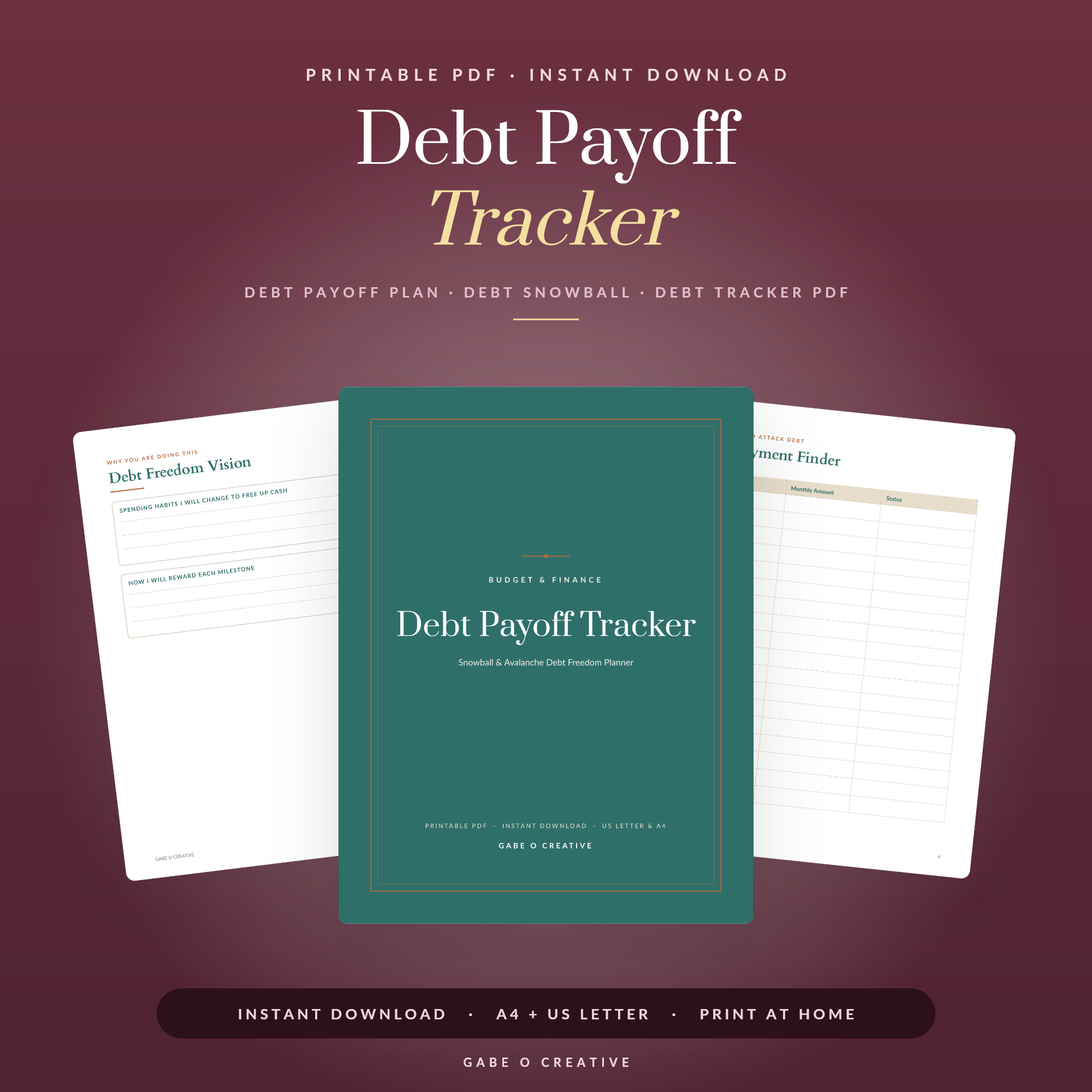 Shop Debt Payoff Tracker →
Budgeting on an Irregular Income: FAQs
How do you budget on an irregular income?
Budget by paycheck instead of by month. Build a baseline budget covering your essentials, then assign each payment as it arrives to bills, savings and goals, prioritising must-pay expenses first.
What is a baseline budget?
It's the minimum amount you need each month to cover essentials like rent, food, utilities and minimum debt payments. Knowing this number tells you exactly how much you must earn before anything else.
How big should my buffer be with a variable income?
Aim to build a buffer of at least one month of essential expenses, so a slow month doesn't derail you. Many freelancers work toward two or three months for extra peace of mind.
What's the best budgeting method for freelancers?
Zero-based, paycheck-by-paycheck budgeting works best because it assigns every payment a job the moment it lands, which suits income that arrives at unpredictable times.
Can printables help with irregular income budgeting?
Yes. A paycheck budget planner lets you allocate each payment, and an income tracker helps you record variable and side-hustle earnings so you always know where you stand.
Should I budget with my lowest or average monthly income?
Budget from your lowest realistic month, not your average. If you plan around an average you'll overspend in lean months, whereas planning from your floor means good months always leave a comfortable surplus.
Ready to make a variable income feel steady? Start with the paycheck budget planner, then read our roundup of the best budget planner printables to round out your system. Steady money is a system, not a salary—and you can build it.