Most people who say budgeting does not work for them have in fact budgeted correctly. The numbers balanced. The problem was that the money arrived on the 25th and the bills left on the 1st, the 3rd, the 8th and the 15th, and by the 28th there was nothing left — despite the month, as a whole, adding up perfectly. That is a timing failure, not an arithmetic one, and budgeting by paycheck is the fix. The Budget by Paycheck spreadsheet is built around pay dates rather than calendar months for exactly this reason.
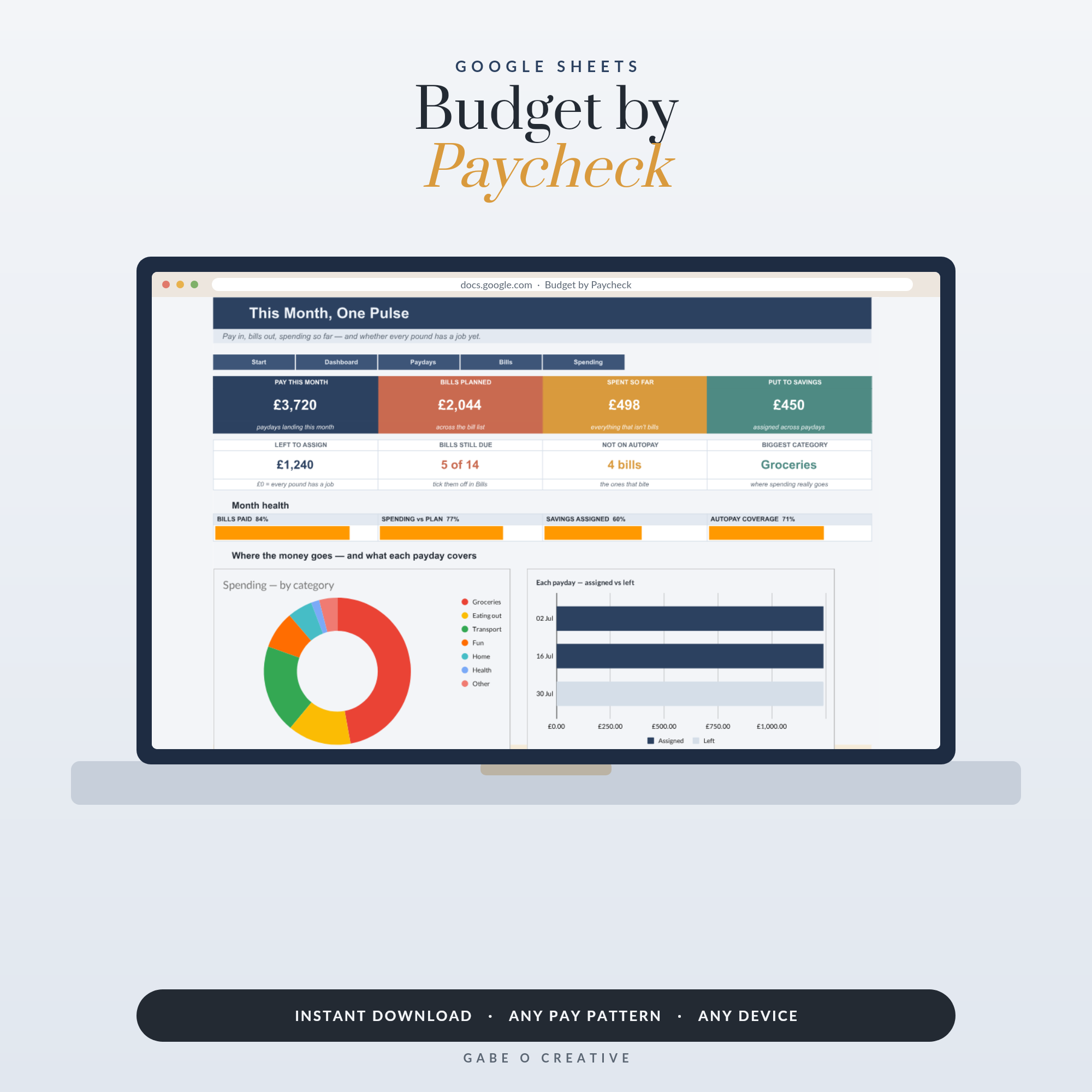
Paid weekly or fortnightly? The Budget by Paycheck template assigns every bill to the pay date that covers it and shows what is genuinely left to spend — in Google Sheets, updating itself.
 Shop Savings Challenge Tracker Google Sheets, 52 Week Challenge, 100 Envelope Challenge £5050, No Spend Month, Custom Savings Goal Spreadsheet →
Why the Month Is the Wrong Unit
A monthly budget answers "does my income cover my outgoings?" That is a useful question, and it is not the one that ruins your week.
The question that actually bites is "does the money I have right now cover what leaves before I am paid again?" A month can balance while the second week is a disaster, and no amount of reviewing the monthly total reveals that — the total is fine. It is the distribution that is not.
The gap that breaks budgets
Look at where your bills fall. Almost everyone finds a cluster: several direct debits within a few days of each other, usually just after payday, and then a thin stretch at the end. If two of those clusters sit either side of a pay date, one paycheck is carrying far more than the other, and it will be the one that fails.
Building It: Three Steps
The whole setup is an hour, once, and most of that is finding due dates.
- List every bill with its due date. Not the amount first — the date. Bank statements for two months will give you the full picture, including the annual ones you have forgotten.
- Assign each bill to the last payday before it is due. That payday is now responsible for it. Nothing else covers it.
- Total each payday, then subtract. What is left is what you can actually spend before the next one arrives. That number is the entire point of the exercise.
| Pay date | Covers | Because |
|---|---|---|
| 25th | Rent (1st), council tax (1st), phone (3rd) | All fall before the next payday |
| 25th | Groceries to the 9th | Day-to-day for the first stretch |
| 10th | Energy (15th), broadband (18th), savings | Fall in the second half |
| 10th | Groceries to the 24th | Day-to-day for the second stretch |
Two paydays, two lists, and the number at the bottom of each is what you have. That number is far more useful than a monthly surplus, because you can act on it today rather than discovering it in arrears.
Move the date, do not reshuffle the budget
When one payday is clearly overloaded, the instinct is to cut spending on that side. Usually the better move is to move a bill. Most providers — phone, broadband, energy, insurance — will change your payment date on request, and it costs nothing. One five-minute phone call can rebalance a budget permanently in a way that no amount of discipline will.
Give Every Pound a Job
Once the bills are assigned, allocate what remains until nothing is unlabelled. This is the zero-based part, and it works far better per paycheck than per month, because a paycheck is small enough to allocate honestly.
Include a category for spending. Budgets that assign every spare pound to savings and nothing to enjoyment fail within two cycles, not because the person lacks discipline but because the plan was never realistic. Naming the money you intend to spend is what stops it leaking out of the savings line instead.
 Shop All-in-One Personal Finance Dashboard, Google Sheets Budget Template, Net Worth, Debt Payoff & Savings Goal Tracker →
Using a paycheck budget planner
Once the method makes sense, the format matters less than the habit — but a dedicated paycheck budget planner saves you rebuilding the same layout every payday. A good one gives you one page per pay period: income at the top, the bills due before the next pay date, then what is left to allocate. That is the whole job, and having it pre-printed is what stops the system quietly lapsing in a busy month.
When the Income Is Not Regular
Freelancers, shift workers and anyone on variable hours are usually told budgeting is not for them. It is — the method just changes from fixed amounts to percentages and priority order.
Decide the order first, while you are calm: essentials, then debt minimums, then savings, then discretionary. When money lands, work down the list. A strong month reaches the bottom; a weak one stops partway. Nothing at the top is ever missed, which is the outcome that matters.
Percentages make the split automatic. If 60% covers essentials, a £2,000 month allocates £1,200 and an £800 month allocates £480 — and neither requires a decision when you are tired. Our guide to budgeting on an irregular income covers the approach in full, including how to smooth a genuinely lumpy year.
Build the buffer that ends the cycle
The long-term aim on any income is to be spending last month's money rather than this month's — one full pay cycle held in reserve, so a late invoice or a short week stops being an emergency. It takes a while to build and it is the single change that most reduces money stress.
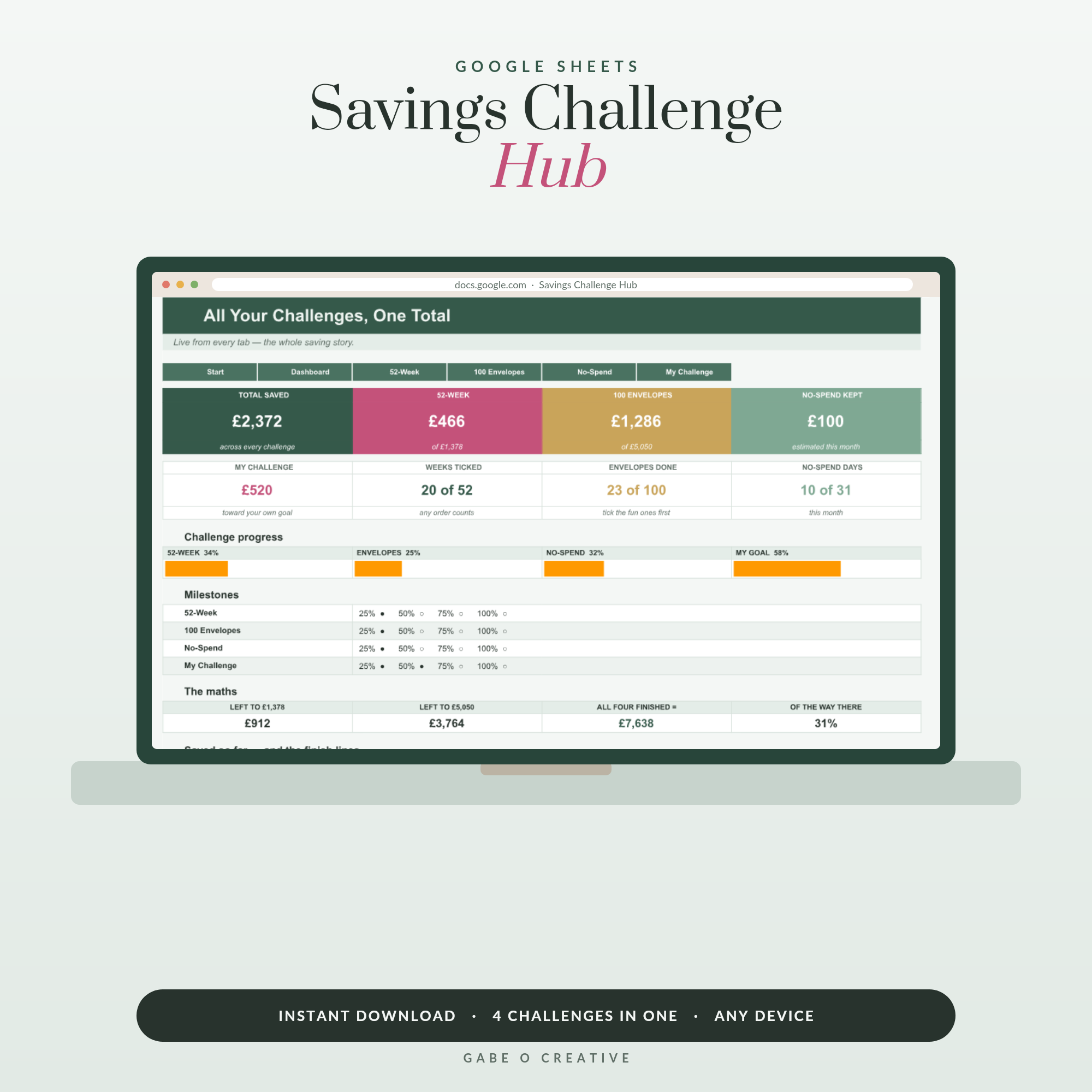
If you respond better to a visible target than a standing order, a challenge format works well alongside this. The Savings Challenge Tracker handles that side, and our guide to the 100 envelope challenge explains the method people most often use to build a first buffer from nothing.
Reviewing Without Dreading It
Five minutes per pay date, not an evening per month. Open the sheet, tick off what has gone out, and adjust the coming stretch if something has changed.
The monthly review that everyone recommends and nobody does is too far from the decisions it is meant to influence. By the time you sit down in late August to review August, every August decision has already been made. A quick look on payday, when the money is actually in front of you, changes what happens next — which is the only thing a budget can do.
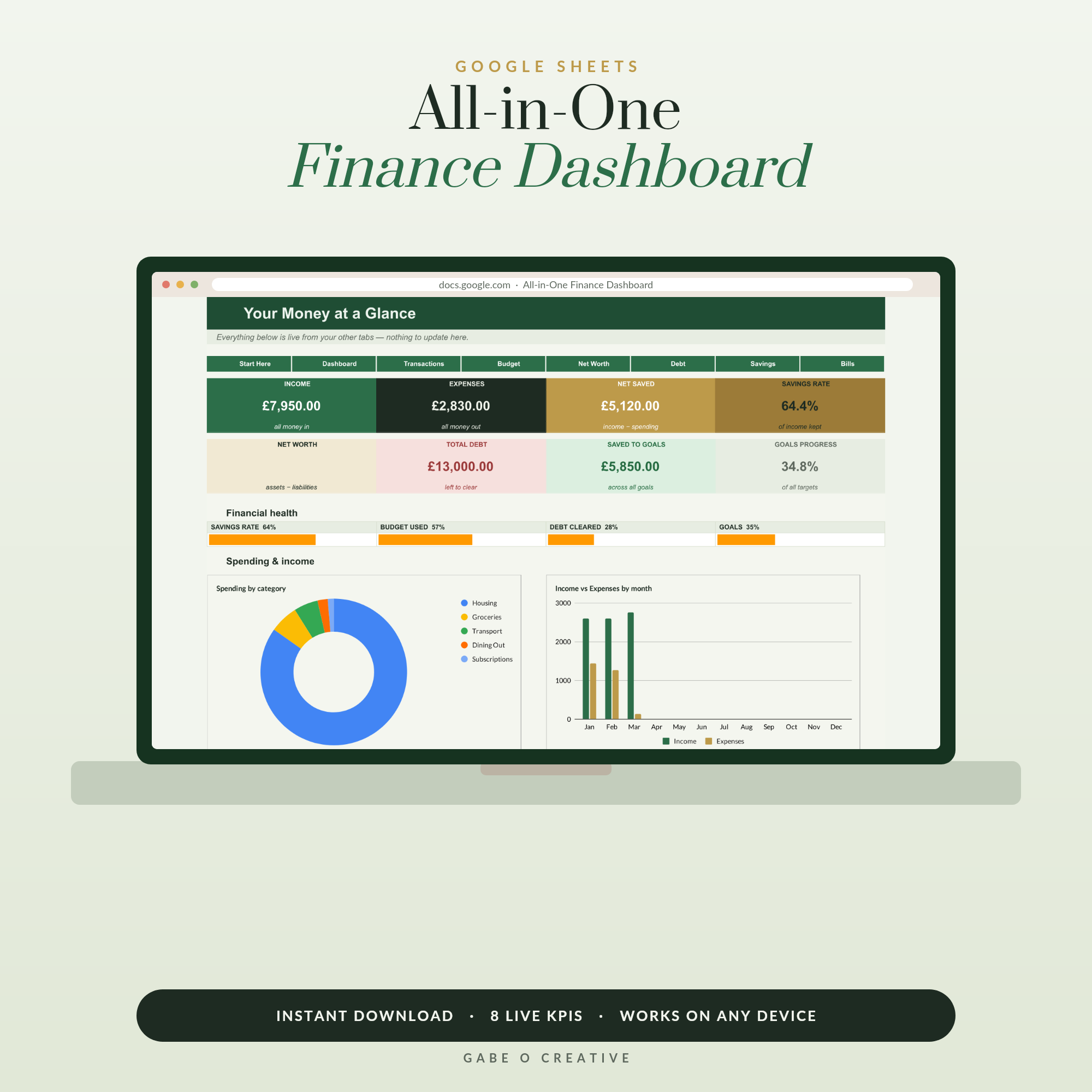
Once this is running and you want the wider picture — net worth, debt, savings and spending in one place — the All-in-One Finance Dashboard sits on top of it.
 Shop Budget by Paycheck — Google Sheets Zero-Based Budget Spreadsheet: Assign Every Pound Each Payday, Bill Calendar, Autopay Flags & Spending Dashboard →
Budget by Paycheck FAQs
What is a paycheck budget planner?
A planner laid out by pay period rather than by calendar month: income at the top, the bills falling before your next pay date, and what is left to allocate. It is the paper version of the budget-by-paycheck method.
What is budgeting by paycheck?
Assigning every bill and saving to the specific pay date that will cover it, rather than to a month as a whole. The month stops being one big pot and becomes two or four smaller ones, each with its own obligations.
Why do monthly budgets fail?
Because money arrives on one date and leaves on twenty. A monthly budget can balance perfectly on paper while still leaving you short on the 28th, and that mismatch is what people experience as 'I budgeted and it still did not work'.
How do I split bills between two pay dates?
List every bill with its due date, then assign each one to the last payday before it lands. Total each payday's obligations. If one is overloaded, move a payment date rather than reshuffling the budget — most providers will change it on request.
How does this work on an irregular income?
Budget by percentage rather than fixed amounts, and pay in priority order: essentials, then debt minimums, then savings, then everything else. A good month funds further down the list; a poor one stops sooner, and nothing at the top gets missed.
What is a zero-based budget?
Giving every pound a job until nothing is unassigned — including a job called 'spending'. It pairs naturally with paycheck budgeting, because a pay date is a small enough amount to actually allocate down to zero without guessing.
How long before it feels normal?
About two pay cycles. The first is awkward because you are mapping due dates you have never written down; the second mostly runs itself. If it still feels like work after a month, the budget has too many categories.
General budgeting guidance for personal planning, not financial advice. If debt is already unmanageable, a free debt advice service will help more than any spreadsheet.
Start with the next payday, not the next month. Open the Budget by Paycheck template, map your due dates once, and see what is genuinely left — or browse the full Google Sheets collection.