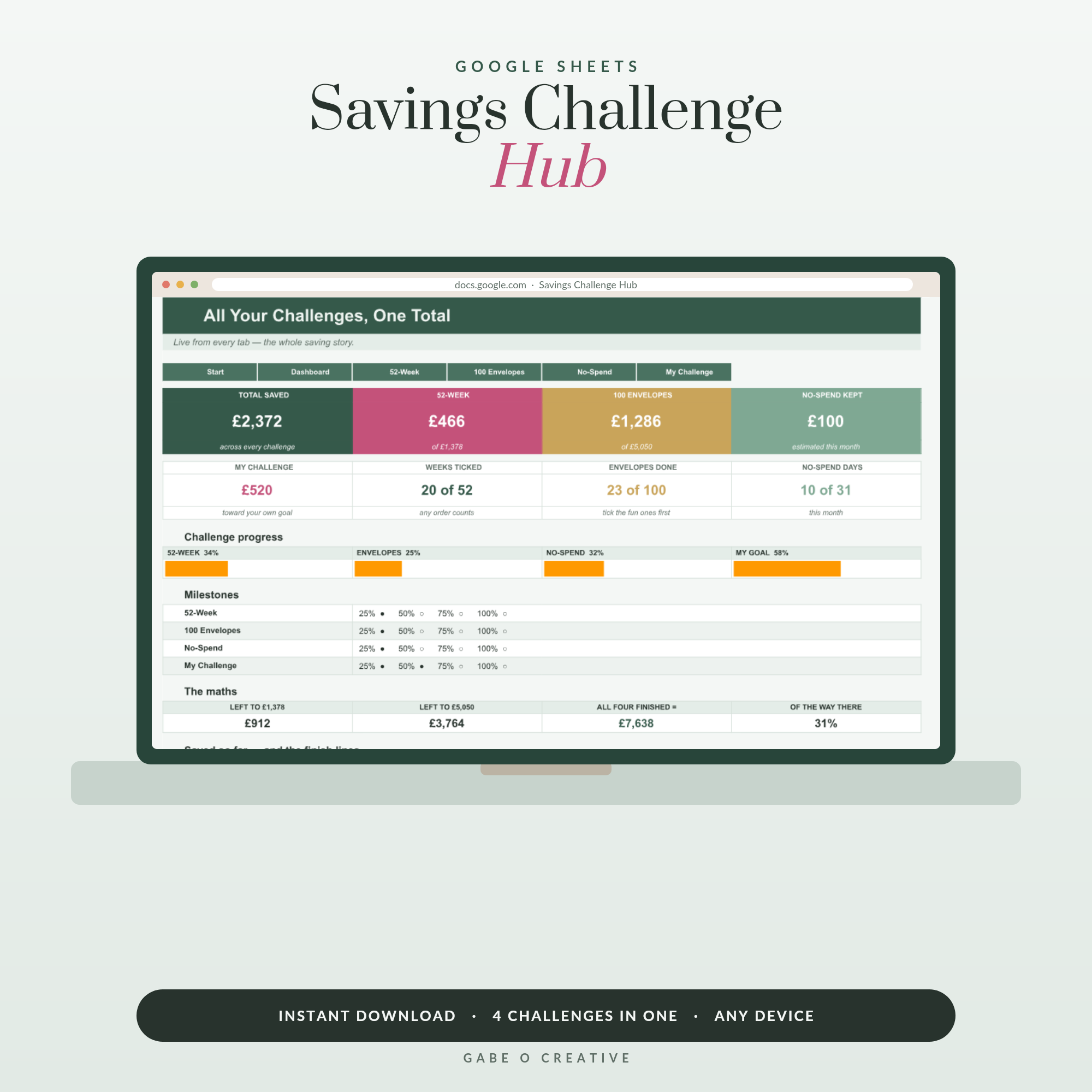
The 100 envelope challenge is the rare money idea that is both a proper savings plan and genuinely fun: number 100 envelopes, shuffle them, draw one at random, and stuff it with that amount — draw 8, save £8; draw 92, save £92. Fill all 100 and you have saved exactly £5,050. No spreadsheet-avoidance, no vague intentions, just a game with a five-figure finish line. This guide covers the maths, the psychology of why it works when ordinary saving fails, the variations that fit real budgets, and how to run the whole thing digitally with our Savings Challenge Hub for Google Sheets.
Want the tracker before you start? The Savings Challenge Hub runs the 100 envelope challenge (and five other challenges) with automatic totals and progress bars.
The rules, in thirty seconds
Take 100 envelopes and number them 1 to 100. Shuffle them into a box so the order is random. On every saving day — most people pick one or two days a week — draw an envelope and put that amount of cash inside, then seal it and mark it done. That is the whole game. The random draw is the engine: some days cost you £4, some days £87, and not knowing which keeps the ritual interesting in a way that 'transfer £97 every Friday' never manages.
 Shop Cash Envelope Budget →
The maths (and the pace that actually finishes)
The numbers 1 to 100 add up to £5,050 — that is fixed. What you choose is the pace, and the pace decides whether you finish:
| Pace | Time to finish | Average per week | Best for |
|---|---|---|---|
| One draw a day | ~14 weeks | ~£350 | High incomes, short sprints |
| Two draws a week | ~1 year | ~£101 | The realistic sweet spot |
| One draw a week | ~2 years | ~£50 | Steady, low-pressure saving |
The daily version looks exciting on social media but averages £1,500 a month — very few budgets absorb that. Two draws a week saves the full £5,050 inside a year at roughly £100 a week, and one a week halves that again. Slow and finished beats fast and abandoned, every time.
Why it works when 'just save more' doesn't
The challenge smuggles three pieces of behavioural psychology into a shoebox. First, randomness creates suspense — each draw is a tiny lottery, and your brain shows up for lotteries in a way it never shows up for standing orders. Second, visible progress rewards you: a box of fat sealed envelopes or a chart colouring in is the same streak mechanic that makes habit apps sticky. Third, the goal is exact. Not 'build savings' but £5,050 at envelope 100 — and precise finish lines are dramatically more motivating than vague ones. It is the same reason the no-spend challenge and our other savings challenges outperform willpower alone.
Make the draw a ritual
Tie it to something fixed — Sunday coffee, Friday payday evening. Challenges die from forgotten weeks, not hard weeks, and a ritual slot means the draw happens without a decision.
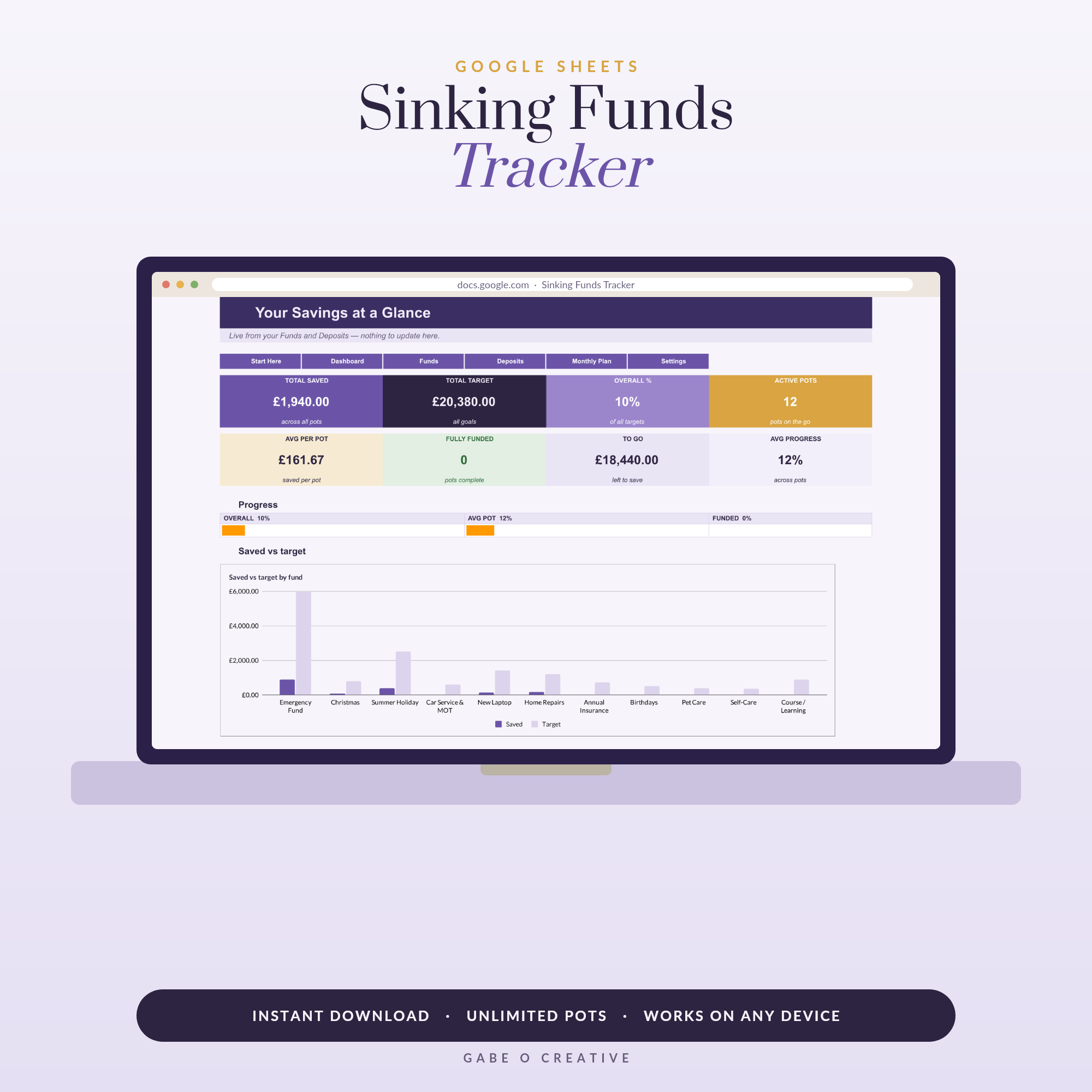 Shop Sinking Funds Tracker Spreadsheet, Google Sheets Savings Template, Multiple Savings Goals, Cash Stuffing & Budget Planner →
Variations for real budgets
The classic version is not sacred — the mechanism is what matters, so resize it to your life. The half challenge uses envelopes 1–50 and lands £1,275, a perfect Christmas or holiday fund. The double-fifty runs 1–50 twice for £2,550 with no single draw above £50 — kindest on cash flow. The balanced draw splits envelopes into a low pile (1–50) and a high pile (51–100) and takes one from each weekly, so you never hit a brutal £95-and-£98 fortnight. And the penny-shift version uses 1–100 in pounds but lets you bank any windfall against the biggest remaining envelope, clearing the scary numbers early.
Doing it together
The challenge is even stickier as a shared game. Couples can alternate draws — each person covers what they pull, which keeps contributions fair without a spreadsheet negotiation — or race two boxes of 50 to £1,275 each. With kids, run a pocket-money version using 1–20 in pence or pounds: the mechanics teach delayed gratification better than any lecture, and the sealed-envelope drama is genuinely exciting when you are eight. A shared challenge also survives motivation dips better, because on the week you want to quit, the other person draws anyway. If a full year of random draws feels like too much structure to hold in your head, that is exactly the job of the Savings Challenge Hub — pick the variation, tick the draws, watch the bar fill.
Cash envelopes or digital pots?
Physical cash makes the ritual tactile, and for smaller variations that texture genuinely helps — it is the same reason cash stuffing works for spending control, and our cash envelope budget kit pairs beautifully with the low-numbered envelopes. But £5,050 in a shoebox is uninsured, uninterested and slightly terrifying, so for the full challenge most people go digital: draw the number, transfer the amount to a named savings pot, tick it off. Same game, safer vault, and the money earns interest while it waits. When you finish, give the total a destination immediately — a sinking fund, the emergency fund, the deposit. Money with a name stays saved; see our sinking funds guide for the method. And if the challenge wakes up a wider money-tidying mood, the All-in-One Finance Dashboard or a simple monthly budget planner from the Budget & Finance collection turns the sprint into a system.
 Shop Monthly Budget Planner →
Frequently asked questions
How does the 100 envelope challenge work?
Number 100 envelopes from 1 to 100, shuffle them, and draw one at random on each saving day. Whatever number you draw is the amount you put inside — draw envelope 37, save £37. When all 100 are filled you will have saved exactly £5,050.
How much do you save with the 100 envelope challenge?
£5,050 exactly — that is the sum of every number from 1 to 100. Draw two envelopes a week and you finish in about a year; draw daily and you are done in just over three months, though the daily pace gets expensive in the final weeks.
Is the 100 envelope challenge realistic on a normal income?
The classic version averages about £50 per draw, which is steep. Popular fixes: the half version (50 envelopes, £1,275), the £1–50 version done twice (£2,550), or drawing one low envelope (1–50) and one high (51–100) per week so the pain is spread evenly instead of clustering.
Can I do the 100 envelope challenge digitally instead of with cash?
Yes — many people transfer the drawn amount to a savings pot instead of stuffing physical cash, which is safer for larger amounts and keeps the money earning interest. A digital tracker replaces the shoebox of envelopes; the random draw and the tick-off ritual stay exactly the same.
Why does the envelope challenge work when normal saving fails?
Three reasons: the randomness turns saving into a game with a little suspense, the visible progress (filled envelopes or a colouring chart) rewards your brain the way a streak does, and the finish line is precise — £5,050 by envelope 100 — instead of the vague 'save more' that never sticks.
What should I do with the money when I finish the challenge?
Decide the destination before you start — an emergency fund, a holiday, Christmas, a house deposit top-up. Money with a name is far less likely to leak back into everyday spending. Moving it into a named sinking fund or savings pot on the day you finish makes the win permanent.
Ready to draw envelope one? Set up the challenge in minutes with the Savings Challenge Hub for Google Sheets — six savings challenges, automatic totals, and a progress bar that makes £5,050 feel inevitable.