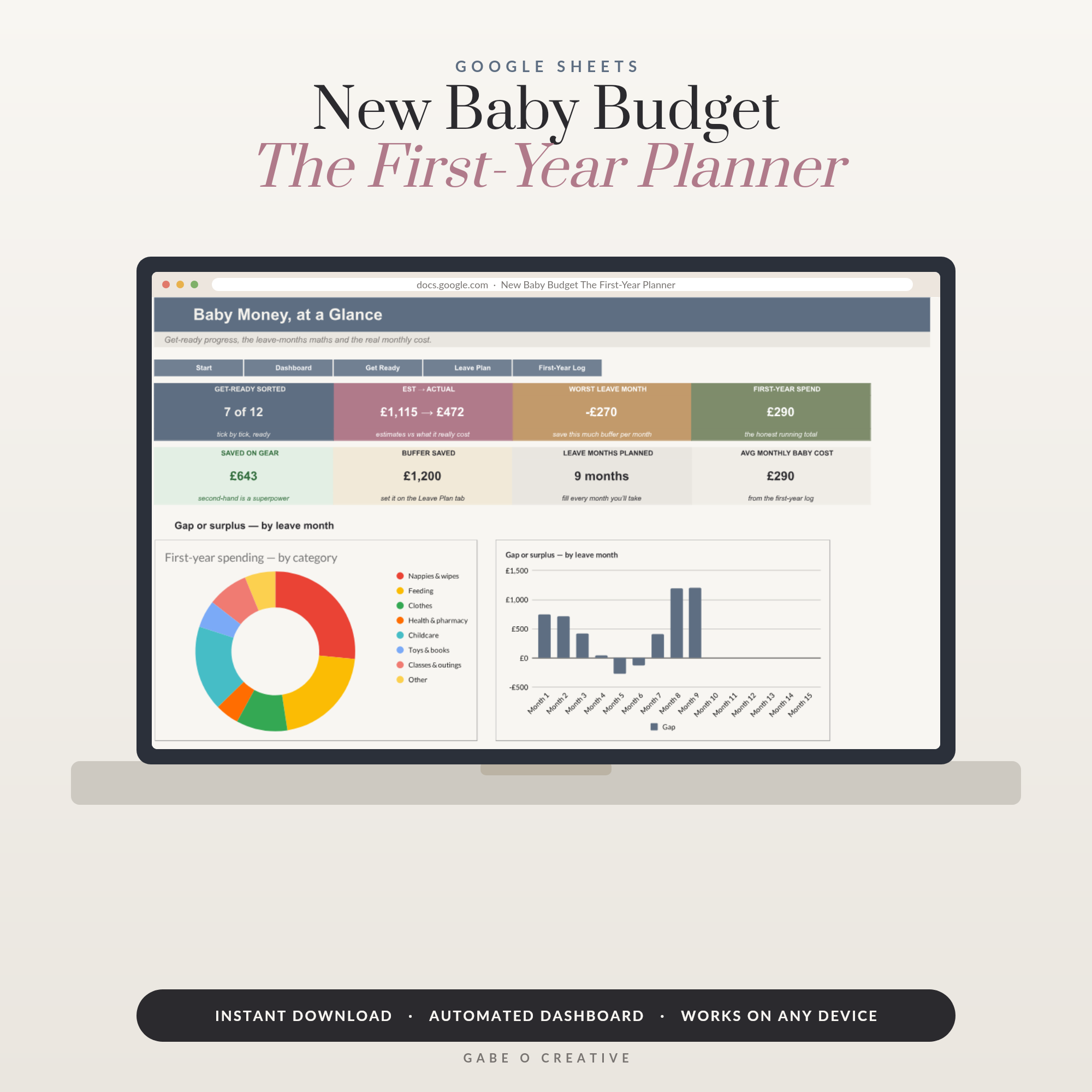
Somewhere between the second blue line and the first night feed, every parent-to-be googles the same thing: how much is this going to cost? A baby budget checklist is the antidote to the scary headline numbers — it separates the genuine essentials from the shop-assistant essentials, spreads the cost across the months you still have, and turns panic into a plan. The New Baby Budget spreadsheet was built for exactly this: a first-year planner with the full checklist, real costs and a countdown to your due date.
Want the plan done for you? The New Baby Budget is a Google Sheets planner with a costed baby checklist, monthly first-year budget and savings countdown — copy it, put your due date in, and watch the plan build itself.
Ignore the headline number — budget in three buckets
You'll see first-year totals quoted anywhere from £3,000 to £6,000+, and none of them are wrong; they're just averages of wildly different choices. The useful move is to split baby costs into three buckets, because each one is planned differently:
- One-off setup costs — cot, car seat, pram, first wardrobe. Paid before or around the birth; perfect for a sinking fund.
- Monthly running costs — nappies, feeding, clothes-as-they-grow, extra laundry and heating. Joins the normal monthly budget.
- The income dip — maternity or parental leave usually means less coming in exactly as more goes out. Planned separately, and first.
Most baby-budget stress comes from mentally mixing the buckets — trying to save for a pram while worrying about statutory pay in month seven. Separate them and each becomes a solvable problem.
The one-off setup list, honestly costed
Here's the realistic shape of the setup spend. The ranges are wide on purpose — the low end assumes second-hand where safe and gifts gratefully accepted; the high end is everything new from the high street:
| Category | Low | High | Worth knowing |
|---|---|---|---|
| Safe sleep (cot/crib + mattress) | £80 | £400 | Mattress should be new; frame needn't be |
| Car seat | £90 | £250 | Buy new — history matters for safety |
| Pram / travel system | £100 | £900 | The biggest second-hand saving available |
| First clothes (0–3 months) | £40 | £150 | They outgrow them in weeks; go minimal |
| Feeding kit | £30 | £300 | Depends heavily on feeding choices |
| Changing + bathing basics | £30 | £120 | A dresser + mat beats a changing table |
| Setup total | £370 | £2,120 | Most families land £800–£1,400 |
Two notes on that table. First, the car seat is the one line where second-hand is a false economy — an unknown history (one hidden crash) compromises it. Second, the pram is where the market wants you to overspend; a one-year-old £700 travel system routinely sells for £200, works perfectly, and the baby has no opinion. The full room-by-room version of this list, with a printable tick-off, lives in our New Baby Checklist and comes costed inside the New Baby Budget spreadsheet.
What you can happily skip
Every parenting aisle is a museum of solved non-problems. Veterans will tell you the same list: wipe warmers, nappy disposal machines (a lidded bin works), a dedicated changing table, newborn shoes, a 'baby' towel collection, most gadgets with screens, and more than two packs of newborn-size anything — babies regularly skip that size entirely. The rule of thumb: buy the first month's needs before the birth, and let real life order the rest. Next-day delivery exists; a cupboard of unused kit is just money that can't be un-spent.
The nine-month plan: your baby sinking fund
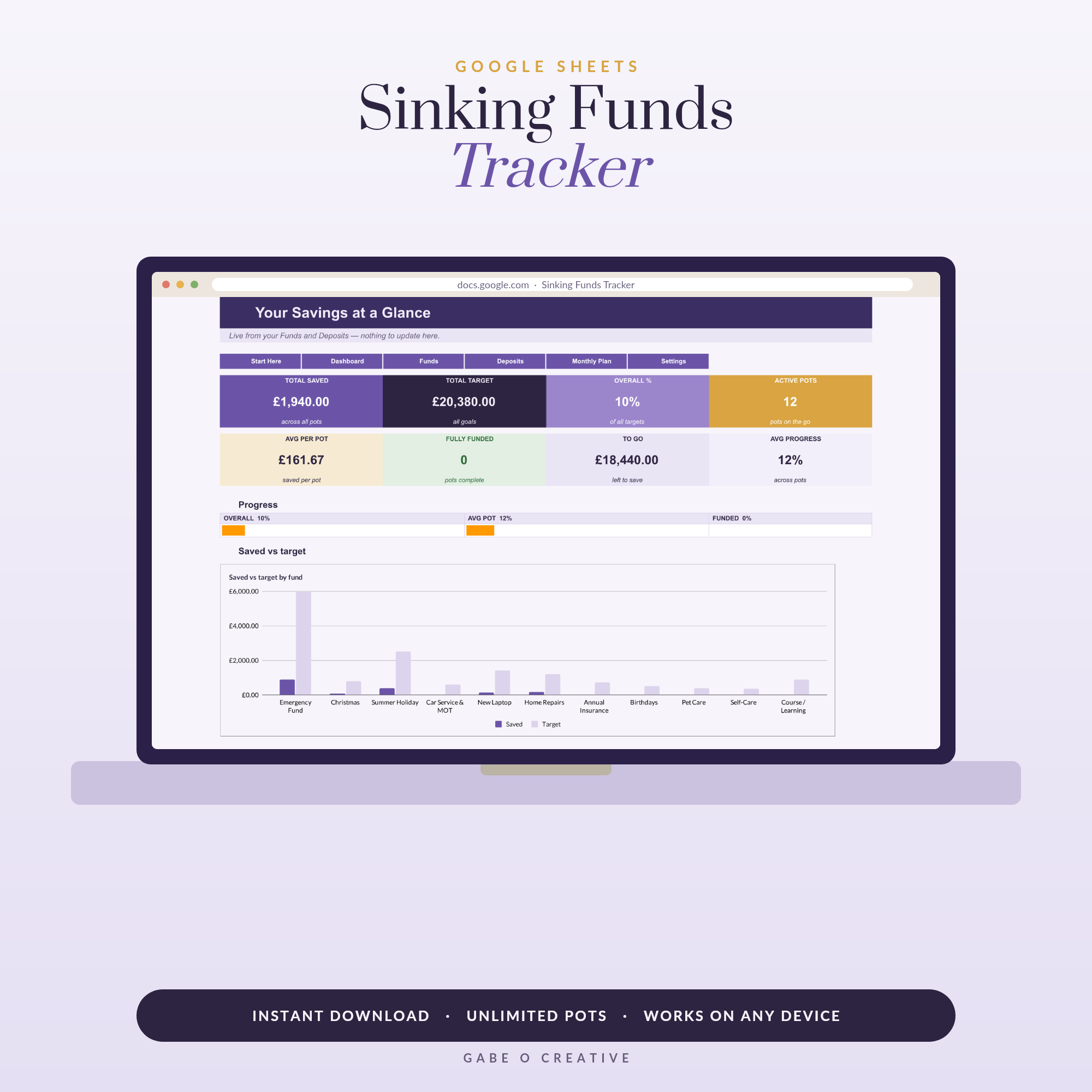
Here's the mechanism that pays for all of it calmly. Add up your setup list (say £1,200), add a buffer for the first months of nappies and surprises (£300), and divide by the months until your due date. Found out at eight weeks? That's roughly £1,500 ÷ 7 = £215 a month, automated on payday into a pot the day you set it up. Suddenly the pram isn't a scary purchase; it's month four of a plan that's already working. A Sinking Funds Tracker handles this beautifully if you like watching the bar fill up — and the baby fund can sit alongside pots for Christmas and the car MOT, because life doesn't pause for pregnancy.
Budget the income dip before you budget the baby
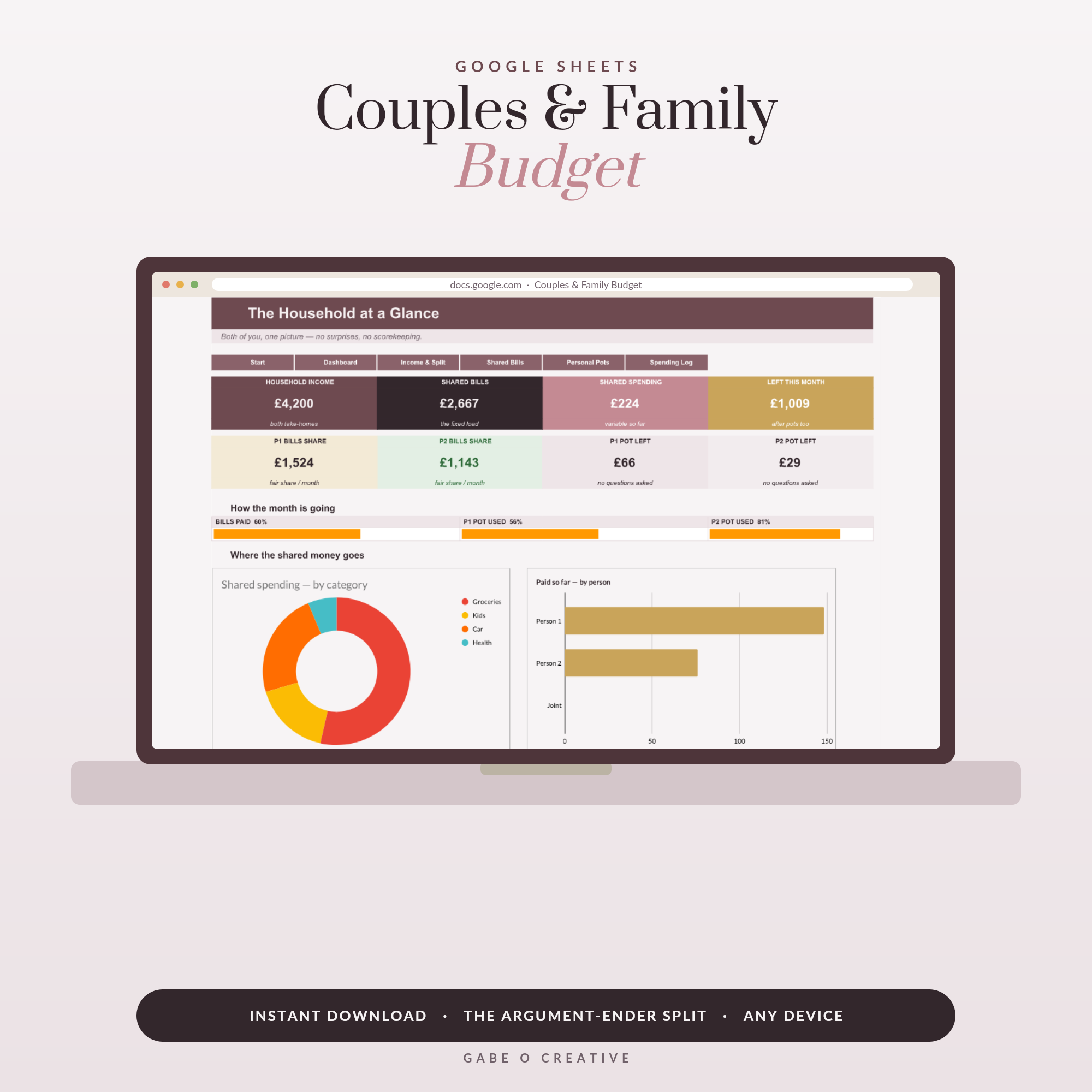
The most-missed step in budgeting for a new baby has nothing to do with baby things: it's that statutory maternity or parental pay usually steps down over the leave, so your lowest-income months arrive when the baby is six months old and busier than ever. Map your household income month by month across the whole leave now, find the lowest month, and run a trial month on that income before the birth. It's a rehearsal with a safety net: anything you save goes into the baby fund, and you'll learn which spending genuinely misses you. Couples find this far easier with shared visibility — the Couples & Family Budget splits bills fairly when incomes change and gives each of you a no-questions personal pot, which protects both the budget and the relationship during the sleep-deprived months.
Your questions, answered
How much does a baby cost in the first year?
Commonly quoted UK figures run from around £3,000 to over £6,000 for year one, but the honest answer is that it's largely up to you. Nursery furniture, feeding choices, childcare timing and how much arrives second-hand or as gifts swing the total by thousands. Budgeting per category beats trusting any single headline number.
When should we start budgeting for the baby?
The moment you start telling people — realistically, early in the second trimester. That gives you roughly six months of contributions to a baby sinking fund, which is enough to cover the one-off setup costs before the due date rather than on a credit card after it.
What baby items are genuinely essential to buy?
A safe sleep space, a properly fitted car seat (one of the few items to buy new), a pram or carrier, clothes in the smallest two sizes, feeding kit and nappies. Almost everything else — wipe warmers, changing tables, most gadgets, shoes for a person who cannot walk — is optional, and much of the essentials list arrives happily second-hand.
How do we budget for maternity or parental leave?
Work out your household income month by month across the leave period (statutory pay usually steps down over time), then live on the lowest month's figure for a trial month before the baby arrives. Whatever you save in the trial goes into the baby fund, and you've rehearsed the real budget with zero risk.
What is a baby sinking fund and how big should it be?
It's a dedicated pot you drip-feed monthly before the birth, sized to your one-off setup list plus a nappies-and-essentials buffer — for many families £1,000 to £2,000 does it. Divide your target by the months remaining until the due date and automate that amount on payday.
What ongoing baby costs surprise new parents most?
Childcare deposits and registration fees, the energy bill from washing and heating, formula if feeding plans change, sizing up car seats and clothes faster than expected, and the drop in household income landing before the spending peaks. A monthly baby budget line for 'growth and surprises' absorbs most of these.
Planning the celebration too? Someone hosting your shower will love the Baby Shower Suite. And for the wider money picture, see our guides to baby and family planner printables, the 50/30/20 budget rule and meal planning on a budget — batch cooking in late pregnancy is a gift to your future self.
Nine months is enough time to pay for the whole first year calmly. Copy the New Baby Budget spreadsheet, add your due date, and let the checklist and countdown do the worrying for you.