A monthly expense tracker answers the question almost everyone asks at some point: where does my money actually go? Instead of guessing, or quietly hoping it will work out, you log every expense in one place, sort it by category, and finally see the truth in black and white. That clarity is the single biggest step towards spending less, saving more and building a budget that fits your real life rather than a fantasy one. If you are tired of getting to the end of the month wondering what happened, the right expense tracker is the simplest place to start.
Want to see exactly where your money goes this month? Our printable Expense Tracker gives you a clear page to log every expense by category, so you can total each one at a glance and finally see where your cash goes.
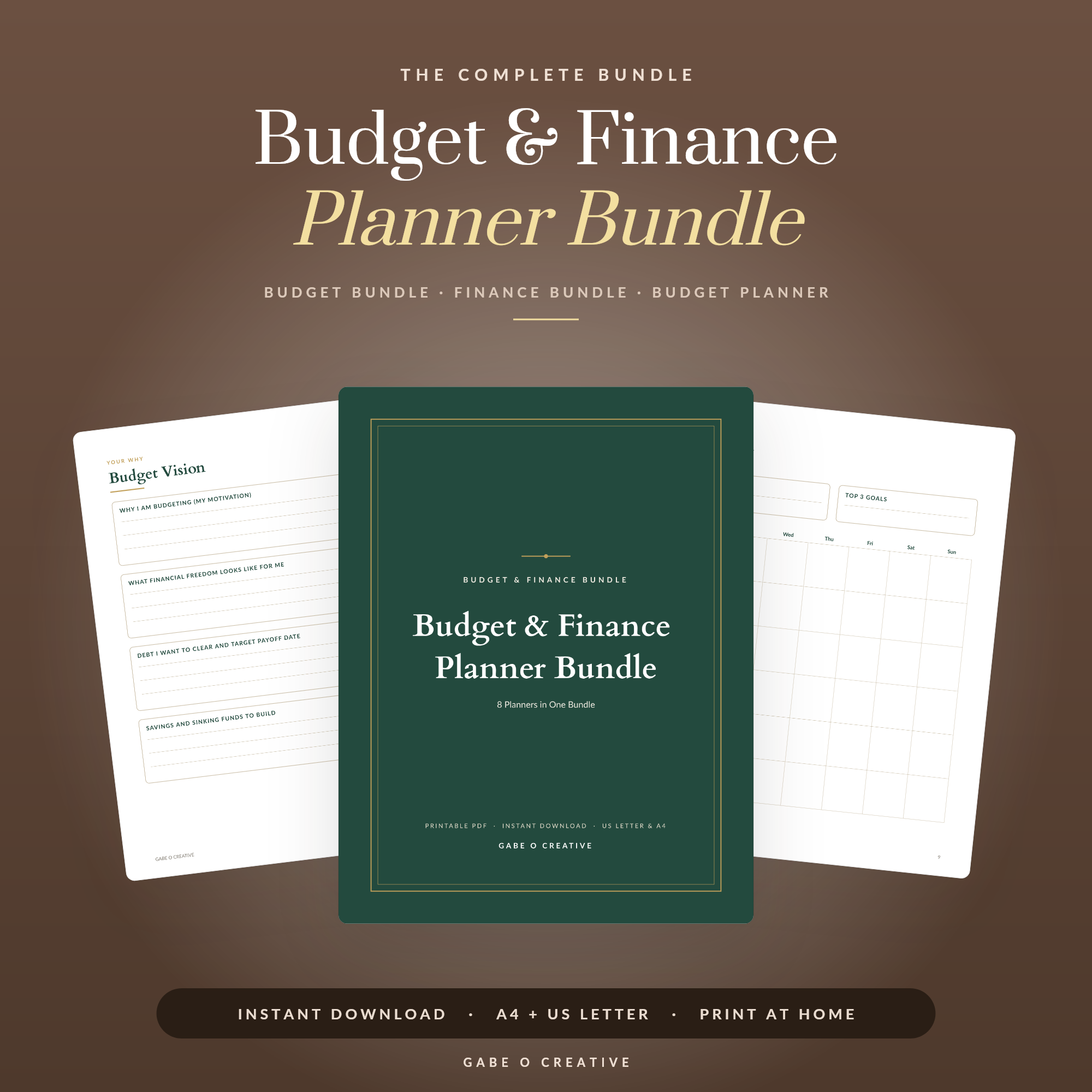 Shop Budget & Finance Planner Bundle →
What Is a Monthly Expense Tracker?
A monthly expense tracker is a page where you record every pound you spend, sorted into categories like groceries, transport, bills and treats. At its simplest, you write down a date, a description and an amount, then total each category and your overall spending at the end of the month. A good expense tracker template lays it all out for you, so you just fill in the numbers.
A good tracker helps you:
- See every expense in one place instead of scattered across bank statements and apps.
- Spot exactly where your money goes, down to the category and even the day.
- Catch the small leaks that quietly add up to hundreds over a month.
- Build a budget on facts rather than hopeful guesses.
Unlike a banking app that only shows transactions in a long, messy list, a proper tracker groups your spending the way you actually think about it. That is what turns a wall of numbers into a story you can act on, and it is exactly why people who track their spending tend to feel calmer and more in control of their money.
Why Tracking Beats Guessing
Ask anyone how much they spend on takeaways, coffees or subscriptions each month and most people guess low, often by a wide margin. We notice the big, occasional purchases and completely forget the steady drip of small ones. That gap between what we think we spend and what we actually spend is precisely why where does my money go becomes such a common, frustrating question.
A budget tracker closes that gap. When every expense is written down, the truth is impossible to argue with. You might discover three streaming services you forgot about, a food-delivery habit that costs more than your weekly shop, or that just a coffee adds up to £60 a month. None of that is about guilt. It is about giving you the facts so you can decide what is actually worth it to you.
Crucially, tracking is the foundation every budget is built on. You cannot sensibly decide how much to allocate to groceries or fun money until you know what you really spend now. Track first, budget second. Do it in that order and your budget will actually stick.
The Expense Categories to Track (Fixed vs Variable)
To track spending properly, it helps to split your costs into two types. Fixed expenses stay roughly the same every month, like rent or mortgage, council tax, insurance and subscriptions. They are predictable and easy to plan for. Variable expenses change month to month, like groceries, fuel, eating out, clothes and gifts. This is where almost all the surprises, and the savings, hide.
Here is a simple set of categories to get you started:
| Category | Type | Example monthly £ |
|---|---|---|
| Rent or mortgage | Fixed | £950 |
| Utilities & council tax | Fixed | £260 |
| Subscriptions | Fixed | £35 |
| Groceries | Variable | £320 |
| Transport & fuel | Variable | £140 |
| Eating out & takeaways | Variable | £110 |
| Shopping & treats | Variable | £90 |
You do not need dozens of categories. Too many and logging becomes a chore you abandon. Seven to ten clear ones usually capture everything without the admin. Keep a miscellaneous line for the odd one-off, but if anything in there grows large, it has earned its own category.
Fixed costs: set and check
Fixed costs need the least day-to-day attention, but they are worth reviewing a couple of times a year. Insurance renewals creep up, subscriptions multiply, and energy tariffs change. A quick annual sweep of your fixed lines, looking at the whole year in one view, often frees up money with almost no effort.
Variable costs: where the action is
Variable spending is where a tracker earns its keep. Because these numbers move, they are the ones you can actually influence week to week. Logging them as you go, rather than guessing at month-end, keeps you honest and gives you the early warning to ease off before payday gets tight.
How to Set It Up and Review It Weekly
Getting started takes one short sitting:
- Print your tracker. Choose a clear, ready-made page you will actually use.
- List your categories. Use the fixed and variable groups above as a starting point and tweak to fit your life.
- Log as you spend. Write down each expense the day it happens, or every couple of days, so nothing slips through.
- Review weekly. Spend five minutes each week checking category totals against where you would like them to be.
- Total up monthly. At month-end, look at the full picture and note what surprised you.
The weekly review is the secret ingredient. It is short, it is painless, and it means you adjust mid-month instead of discovering a problem when it is too late. If groceries are running hot by week three, you have time to plan a cheaper week rather than blowing the budget. A printable on the fridge makes this effortless, because a quick glance at your running totals tells you everything.
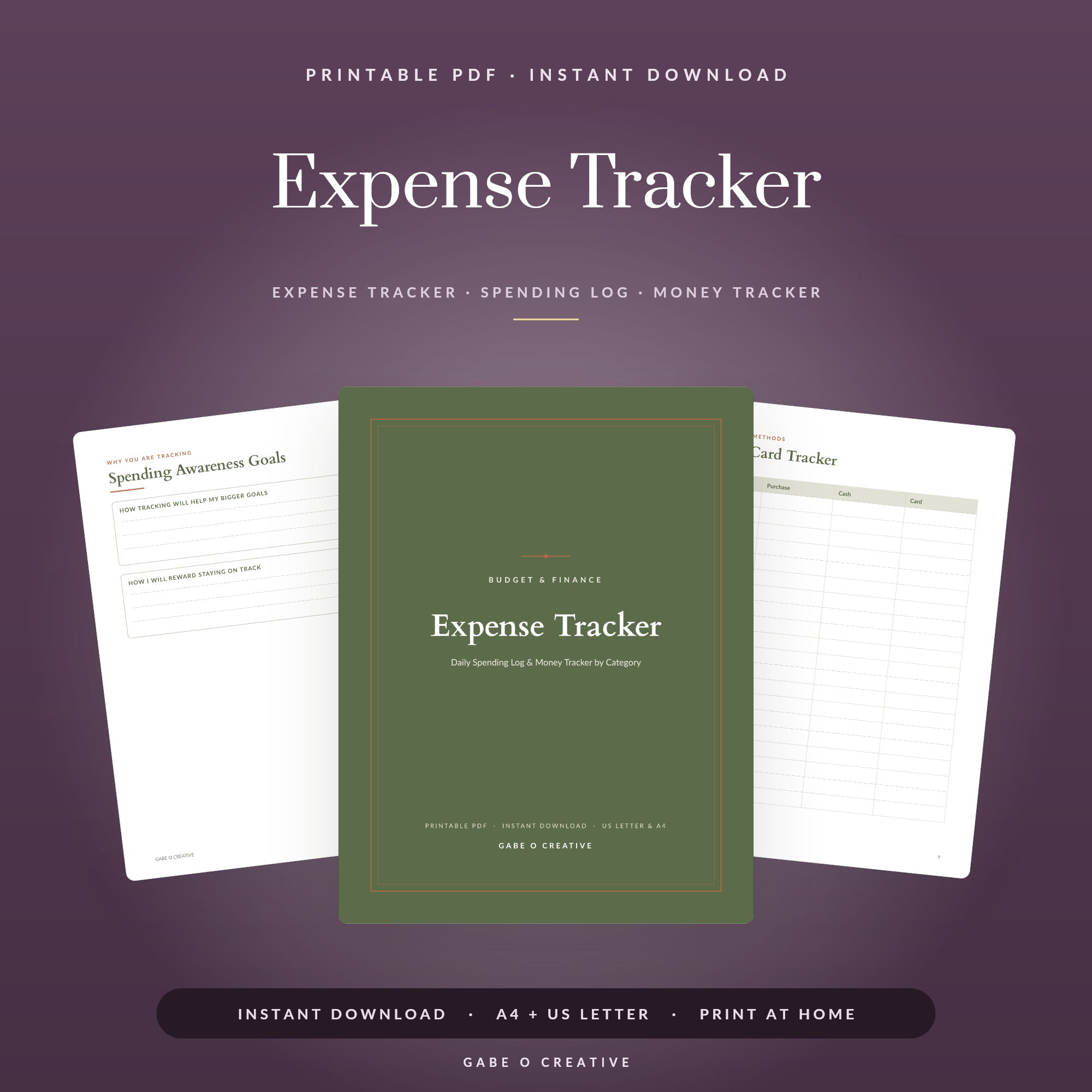 Shop Expense Tracker →
Printable vs App: Which Suits You?
Both work brilliantly, and it comes down to how you like to manage money. A printable suits anyone who thinks better on paper, likes a tracker stuck to the fridge, or wants to log spending without unlocking a device. An app suits people who are always near a screen and want totals on their phone. Plenty of people use a printable for the daily logging and a simple app for the monthly tally.
If you prefer pen and paper, the printable Expense Tracker gives you a clear, ready-made structure to fill in by hand, with space for every category and a monthly total. Stick it on the fridge or keep it by the front door for receipts, and you have a running picture of your spending without unlocking a device.
Turning Your Insights Into a Budget
If your money arrives per paycheck rather than per month, budget it that way: a paycheck budget planner in Google Sheets assigns every pay packet to bills, spending and savings the day it lands — the tracking above tells it what's realistic.
Tracking shows you the truth. A budget is what you do about it. Once you have a month or two of real numbers, you can stop guessing and start allocating with confidence. Group your spending, compare it to your income, and set realistic limits for each category, ones based on what you actually spend, not what you wish you spent.
A popular, low-stress framework is the 50/30/20 rule, which splits your income into needs, wants and savings. If your pay varies or arrives in chunks, assign each paycheque to its categories as it lands so nothing falls through the cracks. Want everything together at the best value? The Budget & Finance Planner Bundle pairs trackers and budgets in one kit.
For more, see our full walkthrough of the 50/30/20 budget rule, and our round-up of the best budget planner printables if you would rather work on paper. Track first, budget second, and you will finally know exactly where your money goes.
Shop Budget & Finance Planner Bundle →Tracking rental income as well? Our landlord spreadsheet guide shows a simple way to log income and expenses ready for tax.
Monthly Expense Tracker FAQs
What is a monthly expense tracker?
It is a simple page where you log every expense by category, so you can see exactly how much you spend each month and where your money actually goes. You total each category at the end of the month and the full picture is right there in front of you.
Why should I track my expenses?
Because guessing is almost always wrong. Tracking shows you the real numbers behind your spending, reveals the small leaks that add up, and gives you the facts you need to build a budget that actually fits your life.
What expenses should I track each month?
Track both fixed costs that stay the same, like rent, subscriptions and insurance, and variable costs that change, like groceries, fuel, eating out and shopping. The variable categories are usually where the surprises and savings hide.
Is a printable expense tracker better than an app?
A printable suits anyone who thinks better on paper, likes a tracker stuck to the fridge, or wants to log spending without unlocking a device. An app is handy if you are always near your phone. Many people happily use both, and a printable is the easiest, lowest-pressure way to start.
How often should I update my expense tracker?
A quick daily or every-few-days log takes minutes and keeps things accurate, then a short weekly review keeps you on track. The less time passes between spending and logging, the less you forget.
How do I turn my tracked expenses into a budget?
Once you have a month or two of real numbers, group your spending into categories, compare it to your income, and set realistic limits for each one. Your tracker becomes the evidence base for a budget you will actually keep.
Ready to see where your money goes? Grab the printable Expense Tracker and start logging today, or explore our best budget planner printables for every tracker and budget you need. Clarity is just a few entries away.