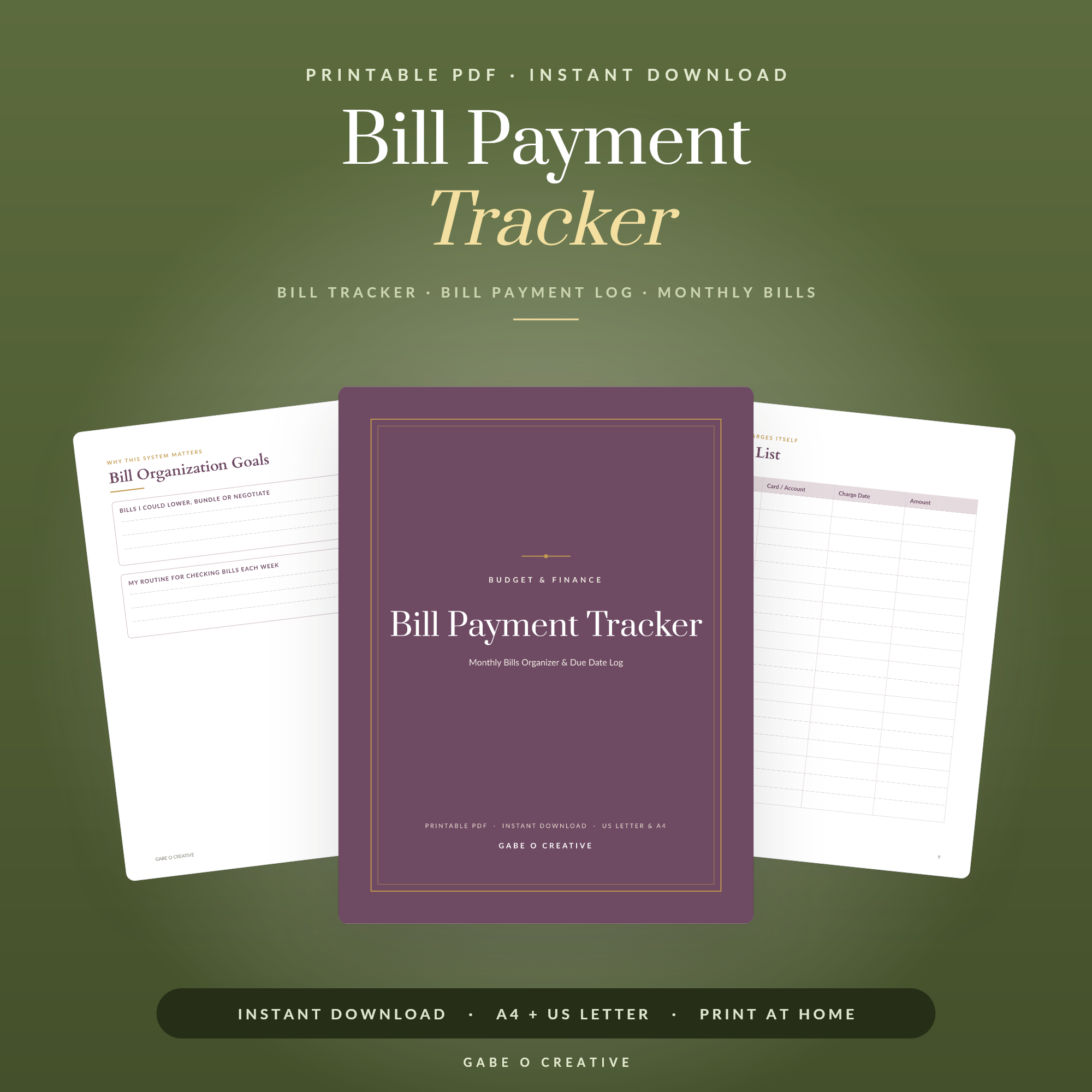
A bill payment tracker printable turns a messy pile of due dates, statements and reminder emails into one calm checklist you can actually trust. You list every bill with its amount and due date, tick it off as you pay, and never have to wonder whether the broadband or the council tax slipped through the cracks. If you've ever paid a late fee simply because a date crept up on you, the right printable bill tracker is the cheapest fix there is. Our Bill Payment Tracker gives you a clean monthly log you can print and fill in within minutes.
Want to stop missing due dates today? Grab the bill payment tracker printable, write in this month's bills, and you'll see every deadline in one glance.
 Shop Monthly Budget Planner →
What Is a Bill Payment Tracker Printable?
A bill payment tracker printable is a worksheet where you record every bill you owe—name, amount, due date and whether it's been paid—so the whole month fits on a single page. Think of it as a monthly bill organiser that lives on your desk or fridge rather than buried in a banking app. Unlike a bank statement, which only tells you what's already left your account, a bill tracker shows you what's coming so you can plan for it.
A good tracker helps you:
- See every bill in one place instead of scattered across emails and apps.
- Know exactly what's due and when with a clear bill due date tracker column.
- Tick off payments so nothing gets paid twice or forgotten.
- Spot the busy weeks when several bills land together.
It's also a quiet confidence boost. Because the tracker is physical and visible, it keeps your obligations front of mind in a way a notification you swipe away never will. Stick it somewhere you'll see it daily and the whole anxious 'have I paid that?' feeling simply fades.
Why Late Fees and Missed Payments Hurt More Than You Think
Missing a bill feels like a small slip, but the costs add up fast. A single late fee might be £12, but miss a few across the year and you're handing over real money for nothing. Worse, late or missed payments on credit cards, loans and some utilities can be reported to credit reference agencies, denting your credit score and making future borrowing—mortgages, car finance, even mobile contracts—pricier or harder to get.
There's also the knock-on stress. One missed direct debit can bounce, trigger a charge, and leave you scrambling. A simple bill payment log breaks that cycle: when every due date is written down and visible, you pay on time because you can see what's coming, not because you happened to remember at the right moment.
What to record on your tracker
You don't need anything complicated. For each bill, capture five things: the bill name, the amount, the due date, whether it's on autopay, and a tick once it's paid. That's enough to run your whole month with confidence. If you like, add the account or reference number so paying a one-off bill takes seconds rather than a hunt through your inbox.
A Sample Bill Tracker Row
Here's what a few rows might look like once you've filled it in:
| Bill | Amount | Due date | Autopay? | Paid |
|---|---|---|---|---|
| Council tax | £148 | 1st | Yes | ✓ |
| Broadband | £32 | 8th | No | ✓ |
| Credit card | £120 | 15th | No | ☐ |
| Electricity | £74 | 22nd | Yes | ☐ |
Glance down the due-date column and you instantly see the rhythm of your month. The autopay column tells you which bills look after themselves and which need your attention, and the paid column is the bit that quietly removes the worry.
How to Use Your Bill Payment Tracker Each Month
Getting set up takes one short sitting:
- List every bill. Rent or mortgage, council tax, utilities, broadband, mobile, subscriptions, insurance, credit cards—write them all down.
- Add amounts and due dates. Fill in what each costs and the day it's due, in date order if you like.
- Flag autopay. Mark which bills come out automatically so you know which ones still need a manual nudge.
- Tick as you pay. Each time a bill clears, tick the paid column—this is the satisfying part.
- Check in weekly. Once a week, scan for anything due in the next few days that isn't ticked yet.
That weekly five-minute check is the whole secret. You're never trying to hold a dozen dates in your head; you just look at the page, pay what's due, and get on with your week. At the end of the month you start a fresh sheet, and last month's becomes a tidy record of exactly what you paid.
Printable Tracker vs Digital Reminders
People often ask whether a printable beats setting reminders on their phone. The honest answer is that they do different jobs, and the best results usually come from using both.
Phone reminders are great for nudging you on a specific day, but they show you one bill at a time and vanish the moment you swipe. A monthly bill payment tracker printable gives you the whole month at a glance, so you can see when bills cluster, plan around a tight week, and feel in control rather than reactive. Many people keep the printable as their master view and set a couple of phone alerts only for the trickiest, easiest-to-forget bills.
Prefer to go paperless? Load the PDF into an app like GoodNotes or Notability and tick bills off with a stylus—you keep the at-a-glance layout without printing a fresh page each month.
 Shop Budget & Finance Planner →
Pair Your Tracker With a Budget That Funds Every Bill
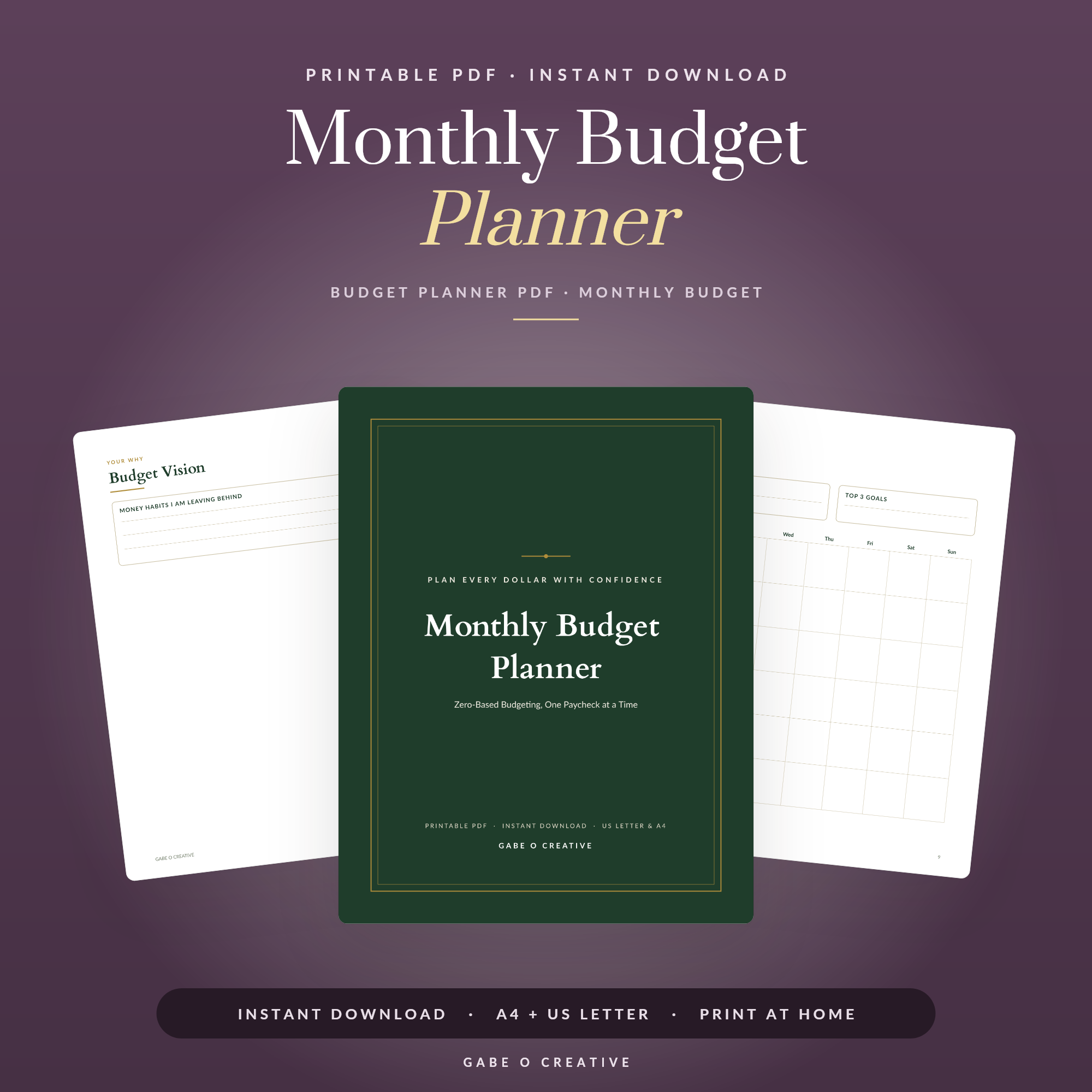
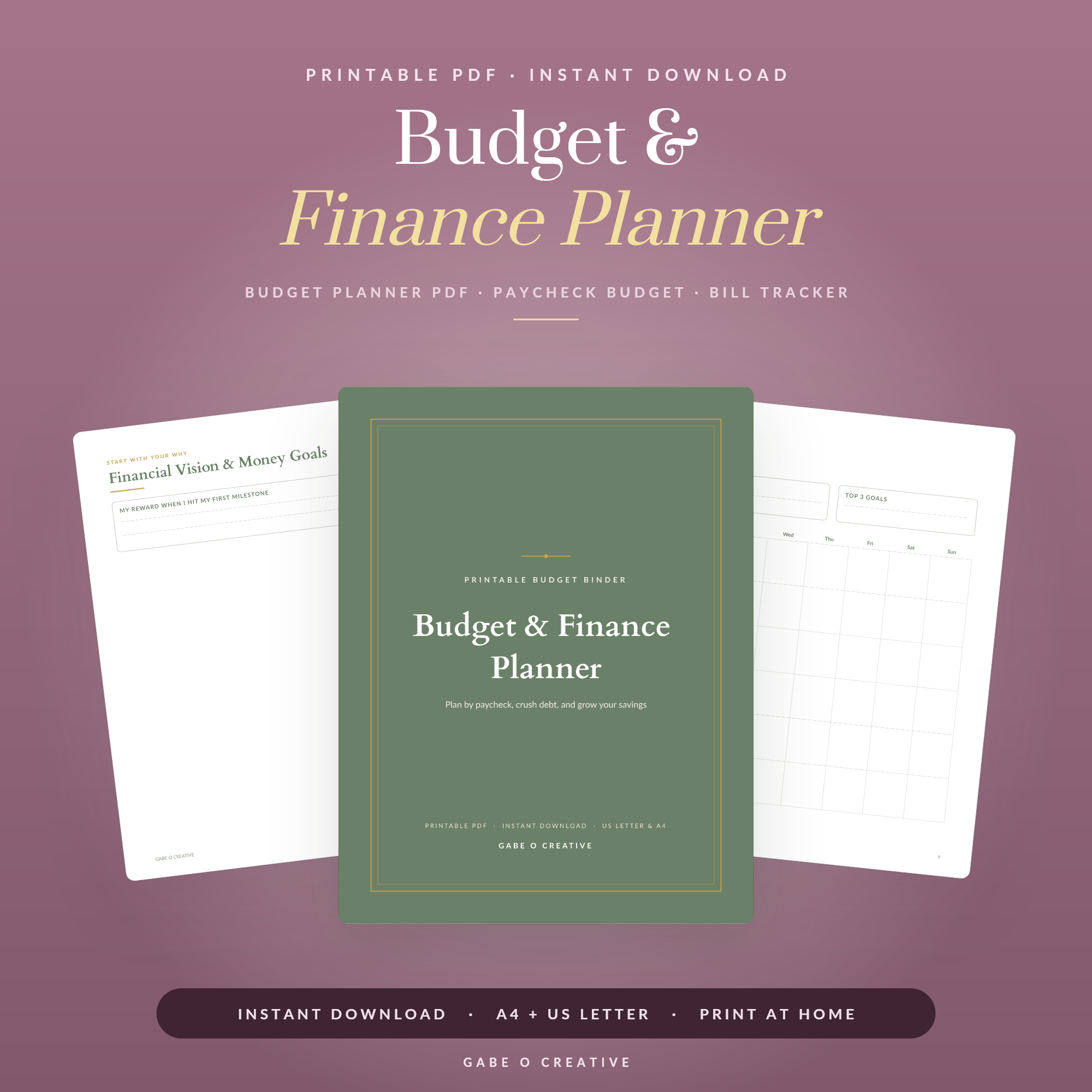
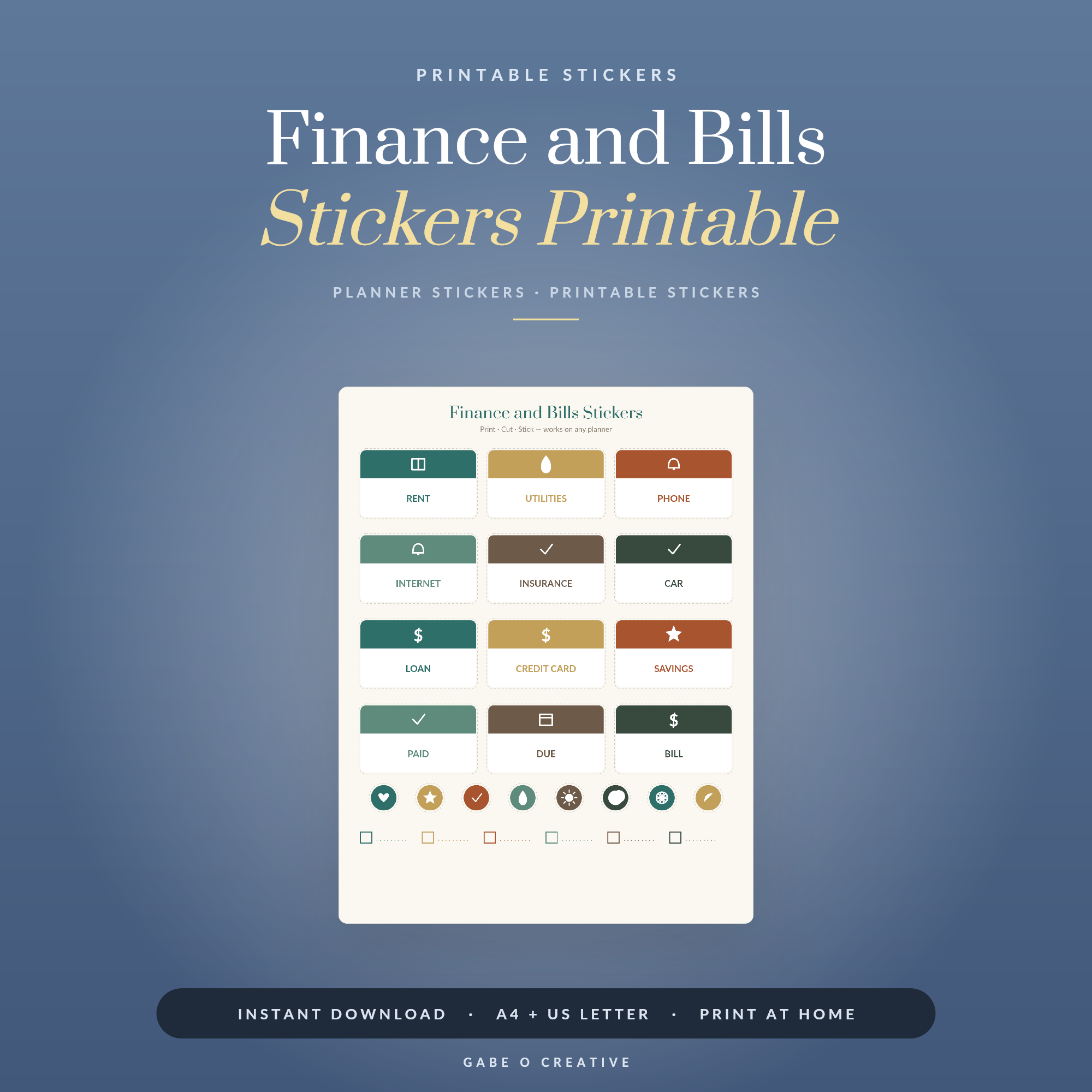
A tracker tells you what's due; a budget makes sure the money is there to pay it. The two together are what end the cycle of scrambling at the end of the month. Pair your bill tracker with the Monthly Budget Planner to map your income against your outgoings, so every bill is funded before it lands. For the full system in one place, the Budget & Finance Planner binder brings your bills, budgets and savings together, and a set of finance and bills stickers makes it genuinely quick to flag due dates and paid bills at a glance.
Want everything at the best value? The Budget & Finance Planner Bundle includes the tracker, budgets, stickers and more in one download.
For more, see our guide to the best budget planner printables. If overspending is what's leaving bills short, the cash envelope system pairs beautifully with your tracker, and the 50/30/20 budget rule is a simple way to make sure your bills always fit comfortably within your income.
 Shop Finance and Bills Stickers Printable →
Bill Payment Tracker FAQs
What is a bill payment tracker printable?
It's a print-at-home worksheet where you list every bill with its amount and due date, then tick it off once it's paid. It gives you one calm overview instead of scattered statements and reminder emails.
How does a bill tracker help me avoid late fees?
By putting every due date in one place, the tracker shows at a glance what's coming up and what's still outstanding. You spot anything unpaid before the deadline, so you stop losing money to late fees and interest.
What should I record on a bill payment tracker?
At minimum: the bill name, the amount, the due date, whether it's on autopay, and a tick once it's paid. Many people also add the account or reference number so paying takes seconds.
Should I use a printable tracker or just phone reminders?
Both work, but a printable tracker gives you the full month at a glance, which phone alerts can't. Many people use the printable for the big picture and set a couple of reminders for the trickiest bills.
Can I use a bill tracker on my phone or tablet?
Yes. Load the PDF into an app like GoodNotes or Notability and tick bills off with a stylus, so you can update it anywhere without printing a fresh copy each month.
How often should I update my bill tracker?
Set it up once at the start of each month with every bill and due date, then check in weekly to tick off what you've paid and flag anything coming up. Five minutes a week keeps you ahead of every deadline.
Ready to never miss a due date again? Grab the bill payment tracker and write in this month's bills today, or explore the full Budget & Finance collection for everything you need to take control. One calm page is all it takes.