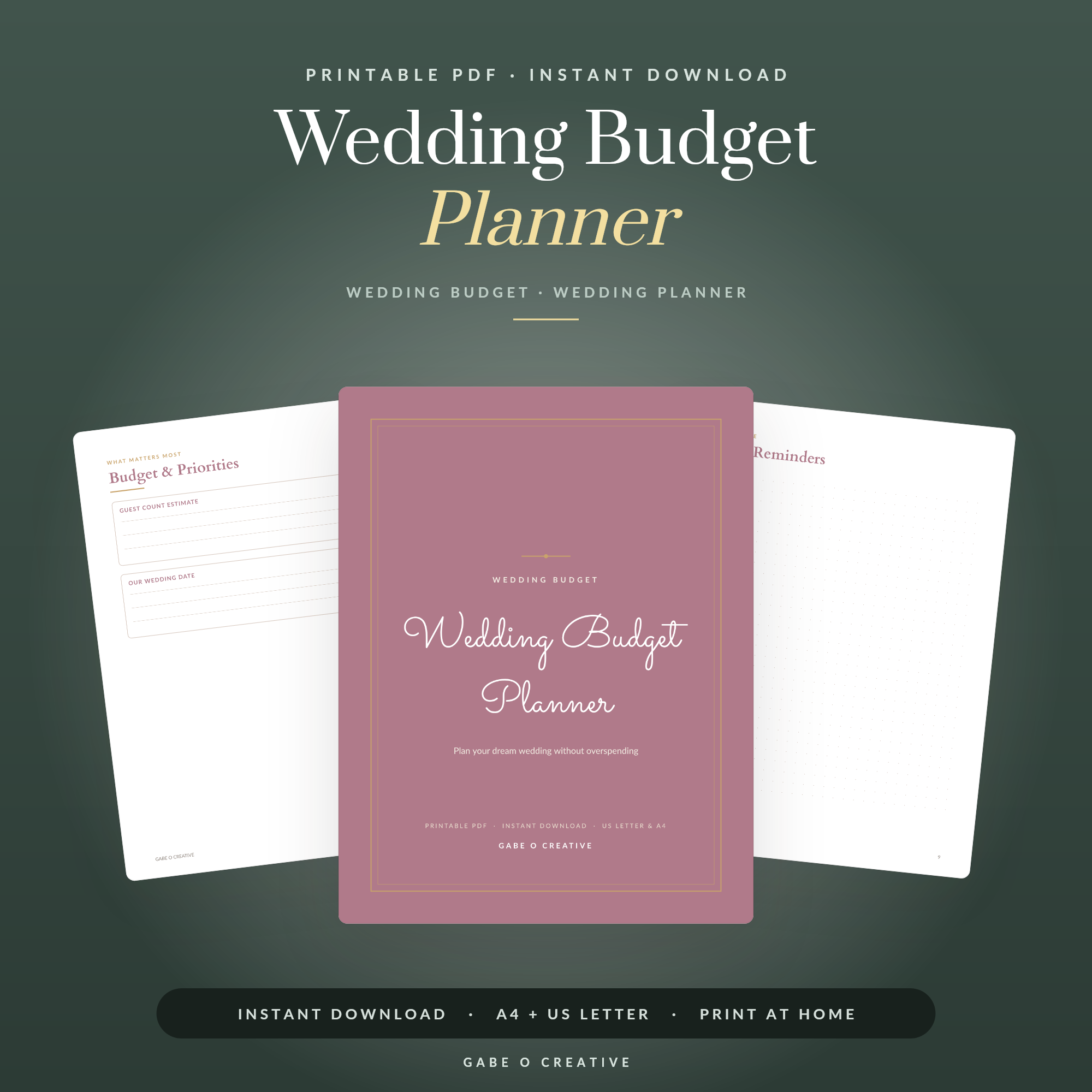
A wedding budget planner printable is the single most useful thing you can fill in before you book a thing. It turns 'we'll just see how it adds up' into a clear plan: one total figure, sensibly split across every category, with each quote and deposit tracked so you always know exactly what's left. That clarity is what keeps the planning joyful instead of stressful—and it's what stops couples sliding quietly into debt for one day. If you want the romance without the money worry, the right wedding budget template is where you start.
Want to set your budget today? Our wedding budget planner lets you set your total, split it across categories, and track every quote, deposit and balance in one place—print it and fill in your numbers tonight.
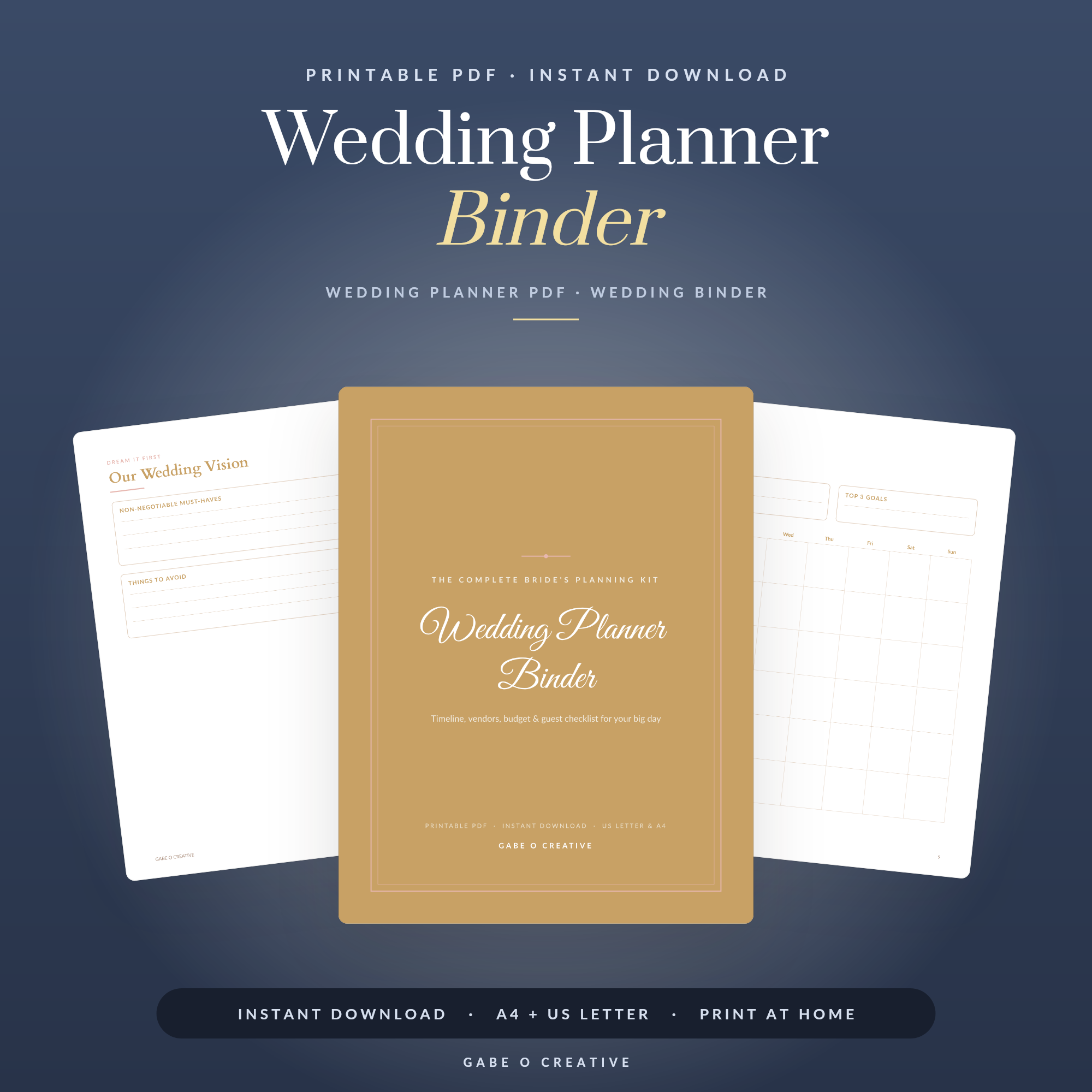 Shop Wedding Planner Binder →
What Is a Wedding Budget Planner Printable?
A wedding budget planner printable is a worksheet (or set of worksheets) where you record your total budget, break it down by category—venue, catering, attire, flowers, photography and so on—and then track three numbers for every line: estimated cost, amount paid and balance remaining. Unlike a banking app that only shows what's left in your account, a printable planner shows you the whole picture of a wedding at a glance, so you can see trouble coming long before the final invoice lands.
A good planner helps you:
- Set one realistic total and stick to it.
- Split the spend across categories with sensible percentages.
- Track every deposit and balance so nothing is forgotten.
- Spot overspending early, while you can still adjust.
It's also a brilliant accountability tool for two people. Because the budget is written down and shared, both of you see the same numbers and make decisions together—no nasty surprises, no 'I thought you'd paid that'. That shared visibility takes a surprising amount of tension out of planning, and it means money conversations happen calmly over a cuppa rather than in a panic the week before the deposit is due.
There's a quieter benefit too: a written budget protects the relationship as much as the bank balance. Money is one of the most common things couples argue about, and weddings turn the dial up to maximum. When everything is on paper—agreed once, together—you remove the ambiguity that breeds resentment. You stop guessing what the other person thinks is 'reasonable' and start working from a shared, visible plan. That's worth as much as any saving.
How much does a wedding actually cost?
The honest answer is: as much or as little as you decide. Averages get quoted endlessly, but they're a poor guide because they're skewed by guest count, region and a hundred personal choices. The figure that matters is your figure—the amount you can spend comfortably without borrowing. Set that first, then let it shape every decision that follows, from the guest list to the date.
How to Use Your Wedding Budget Planner Printable
Getting started takes one focused evening:
- Set your total. Agree the full amount you can spend, including any contributions from family.
- Split it by category. Allocate percentages across venue, food, attire, flowers, photography, stationery and extras.
- Get quotes. Fill in the estimated cost for each line as suppliers come back to you.
- Track payments. Log every deposit and balance the moment it's agreed.
- Watch the remaining total. Keep an eye on what's left and adjust before, not after, you commit.
A quick example: say your total is £12,000. You might earmark around £6,000 for venue and catering, £1,500 for photography, £1,200 for attire, £800 for flowers, and so on—leaving a deliberate cushion of about £1,000 for the surprises. As quotes come in, you slot them against each line. If the florist comes back £300 over, you can see immediately where to trim elsewhere rather than blowing the whole budget. Maybe the favours go, or you swap a live band for a brilliant playlist—small trades, made deliberately, rather than a nasty overshoot you only notice once it's too late.
The other thing this view gives you is timing. Wedding costs don't all land at once—deposits go out months apart, with balances clustering in the final weeks. Logging each due date alongside the amount means you can see the cash-flow shape of your wedding, not just the headline total. That's how couples avoid the classic crunch where three suppliers all want their final payment in the same fortnight. Spread out and planned for, those payments feel manageable. Bunched and unexpected, they're where the credit card comes out.
Where Couples Overspend (and How to Avoid It)
Weddings rarely blow the budget in one big mistake—it's the drip of small extras. These tactics keep you on track:
- Track quotes the moment they arrive so the running total is always honest.
- Build in a 5–10% contingency for the inevitable surprises.
- Decide your non-negotiables early, and be willing to economise everywhere else.
- Keep your suppliers organised with a wedding vendor tracker so payment dates never sneak up on you.
- Trim the guest list before the menu. Each extra guest multiplies catering, stationery and favours—cutting numbers is the fastest saving of all.
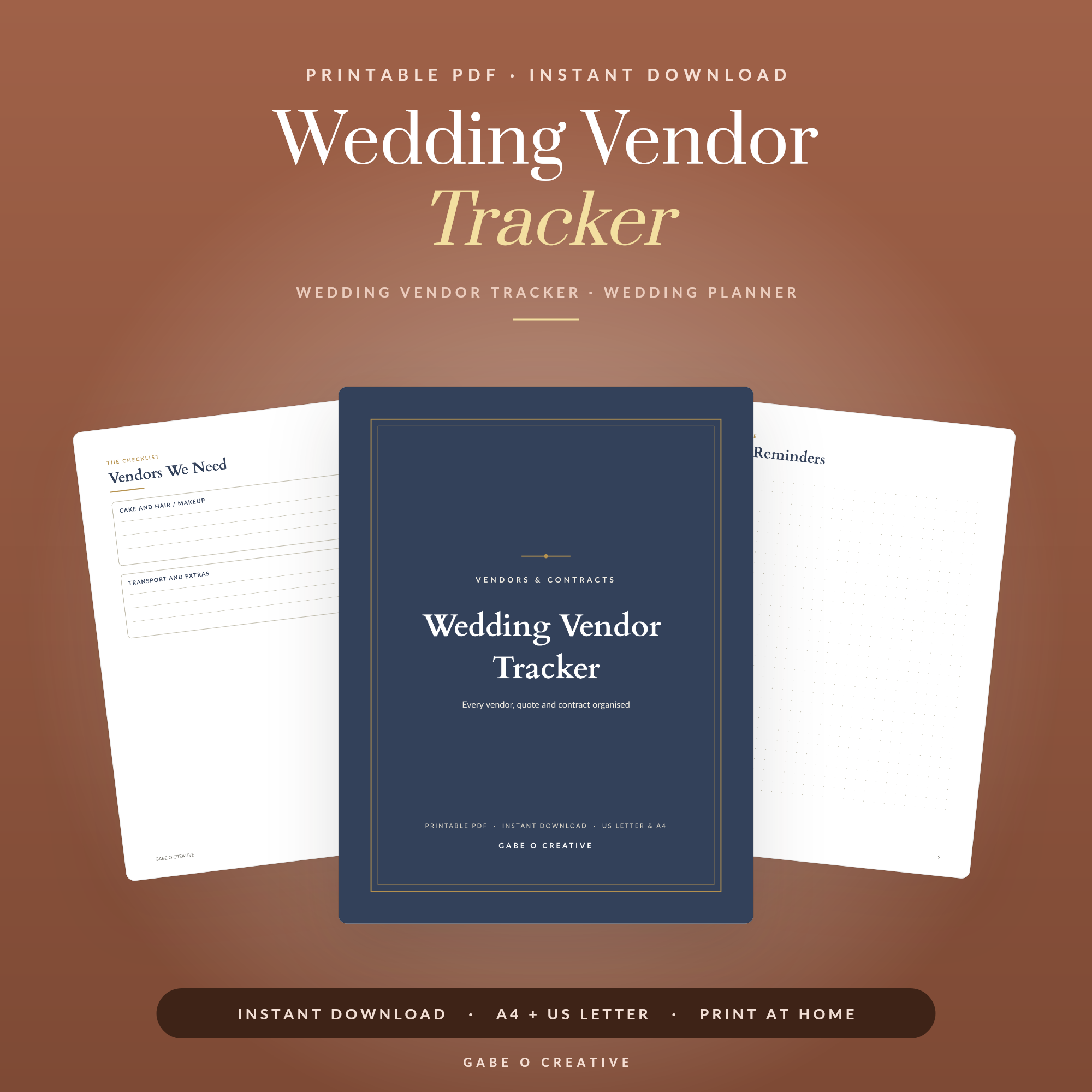 Shop Wedding Vendor Tracker →
A Sensible Wedding Budget Breakdown
Not sure how to split your total? This rough guide is a solid starting point you can tailor:
| Category | Typical share of budget |
|---|---|
| Venue and catering | Around 45–50% |
| Photography and video | Around 10–12% |
| Attire, hair and beauty | Around 10% |
| Flowers and decor | Around 8% |
| Music and entertainment | Around 8% |
| Stationery, favours and extras | Around 5% |
| Contingency | Around 5–10% |
Treat these as a frame, not a rule. If photography matters most to you, take a slice from elsewhere—the planner makes those trade-offs visible so you spend on what you'll truly remember.
Build a Wedding Planning System That Lasts
A budget tells you what you can spend; a full planning system tells you what to do with it. Pair your budget with the complete wedding planner binder to keep checklists, timelines and notes in one place, and track who's coming with the wedding guest list and RSVP tracker—because your guest count drives most of your costs. Want everything in one go? The wedding and events planner bundle gathers the budget, binder and trackers at the best value.
For the bigger picture, follow our calm 12-month wedding planning checklist so the budget lands at the right moment, lean on the wedding guest list printable to lock numbers early, and use the wedding day timeline template when the planning turns into the day itself.
And once the deposits are paid and the plan is set? Keep checking the planner each month. A budget only works if you actually look at it—five minutes of updating beats a panicked reconciliation the week before.
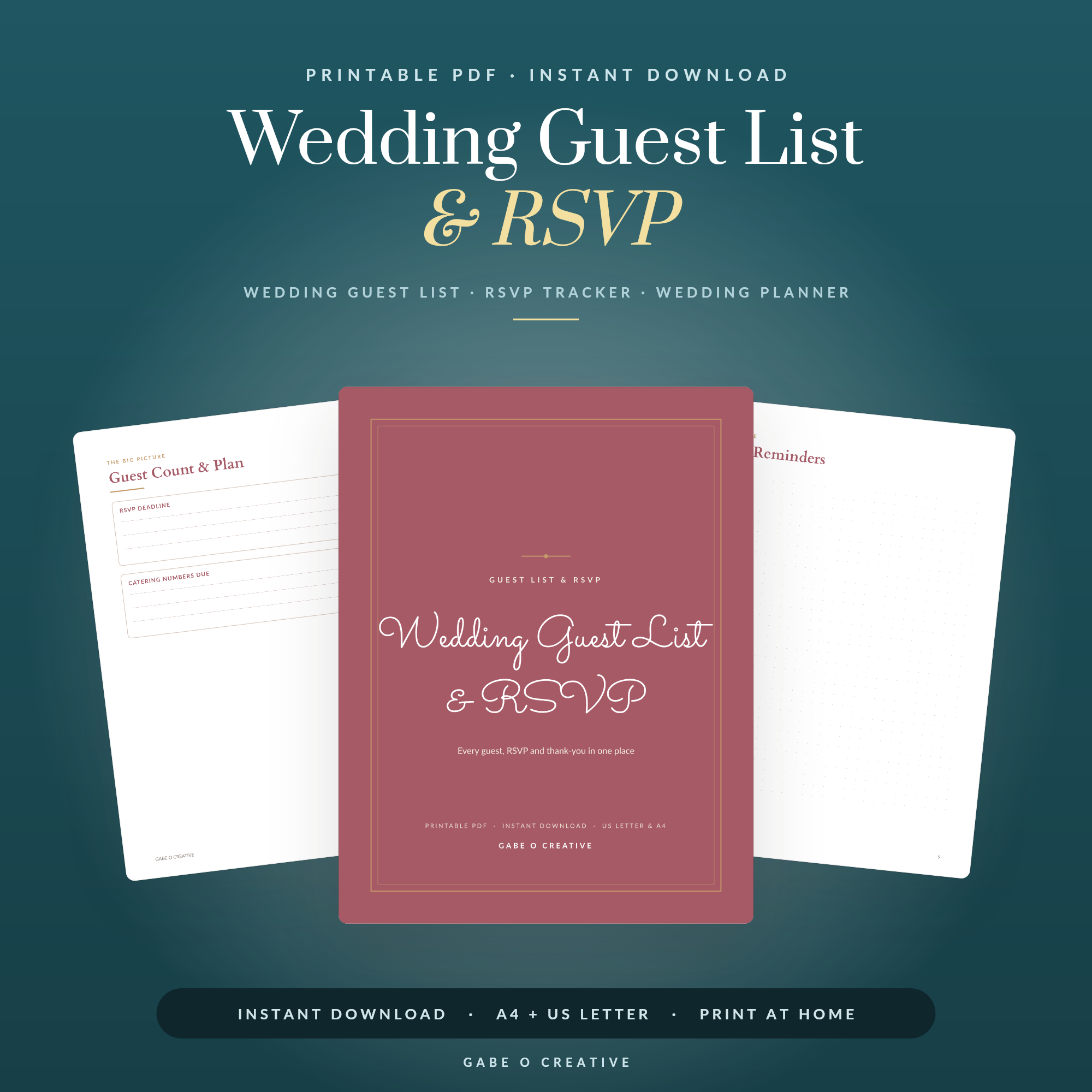 Shop Wedding Guest List & RSVP →
Wedding Budget Planner FAQs
What is a wedding budget planner printable?
It's a print-at-home worksheet where you set your total wedding budget, split it across categories like venue, food and flowers, then track what you've quoted, paid and still owe so nothing slips through the cracks.
How much should I budget for a wedding?
There's no single right number—budget what you can comfortably afford without taking on debt. Start with your total figure first, then work backwards to allocate it across categories rather than adding up wish-list prices.
What is the biggest cost in a wedding budget?
For most couples the venue and catering together swallow the largest share—often around half the total. Tackling these two decisions first sets the realistic frame for everything else you spend.
How do I avoid going over budget on my wedding?
Track every quote and deposit the moment it's agreed, keep a running 'remaining' total, and build in a 5–10% contingency for the surprises that always crop up. A printable tracker makes overspending visible early.
Can I use a wedding budget planner on my phone or tablet?
Yes. Load the PDF into an app like GoodNotes or Notability and fill it in with a stylus, so you can update figures on the go—handy when you're sat in a supplier meeting.
When should I start my wedding budget?
Before you book anything. Setting your budget first means every later decision—guest count, venue, date—fits the money you actually have, rather than forcing the money to chase the choices you've already made.
Ready to plan the day without the debt? Grab the wedding budget planner and set your total tonight, or explore the full Wedding & Bridal collection for everything you need to plan with confidence. Your future self will thank you.