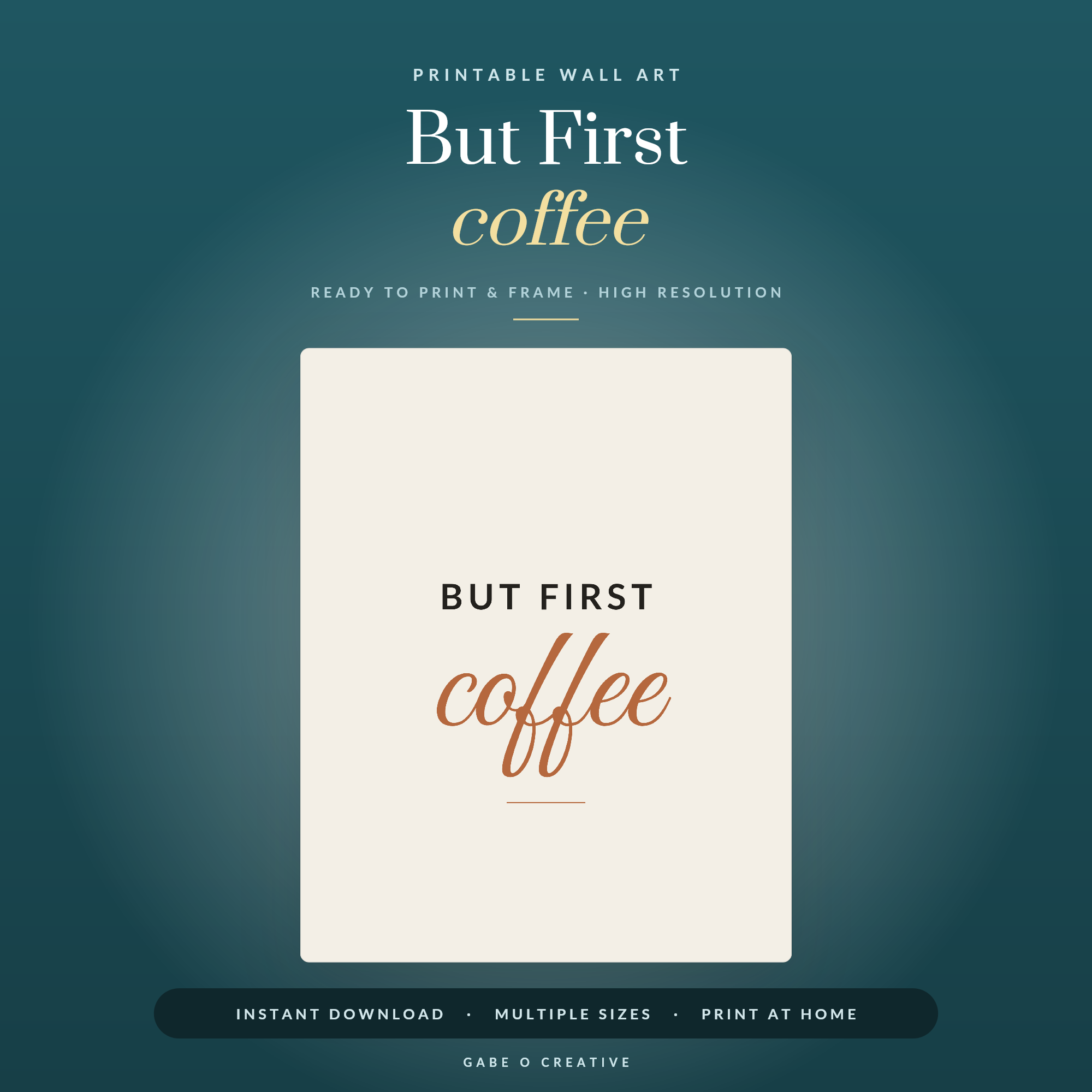
The moment after you download a printable comes a surprisingly unclear question: where to print wall art so it actually looks like the mockup rather than a photocopy. The file is rarely the problem — most disappointment comes from the wrong paper, the wrong size, or one setting in a print dialogue. None of it is complicated once you know what to ask for. Our printable wall art comes in the standard sizes precisely so any of the routes below works without resizing anything.
Got a file waiting? Check which sizes it includes, then pick the route below that matches the size you want — that order round saves the most trouble.
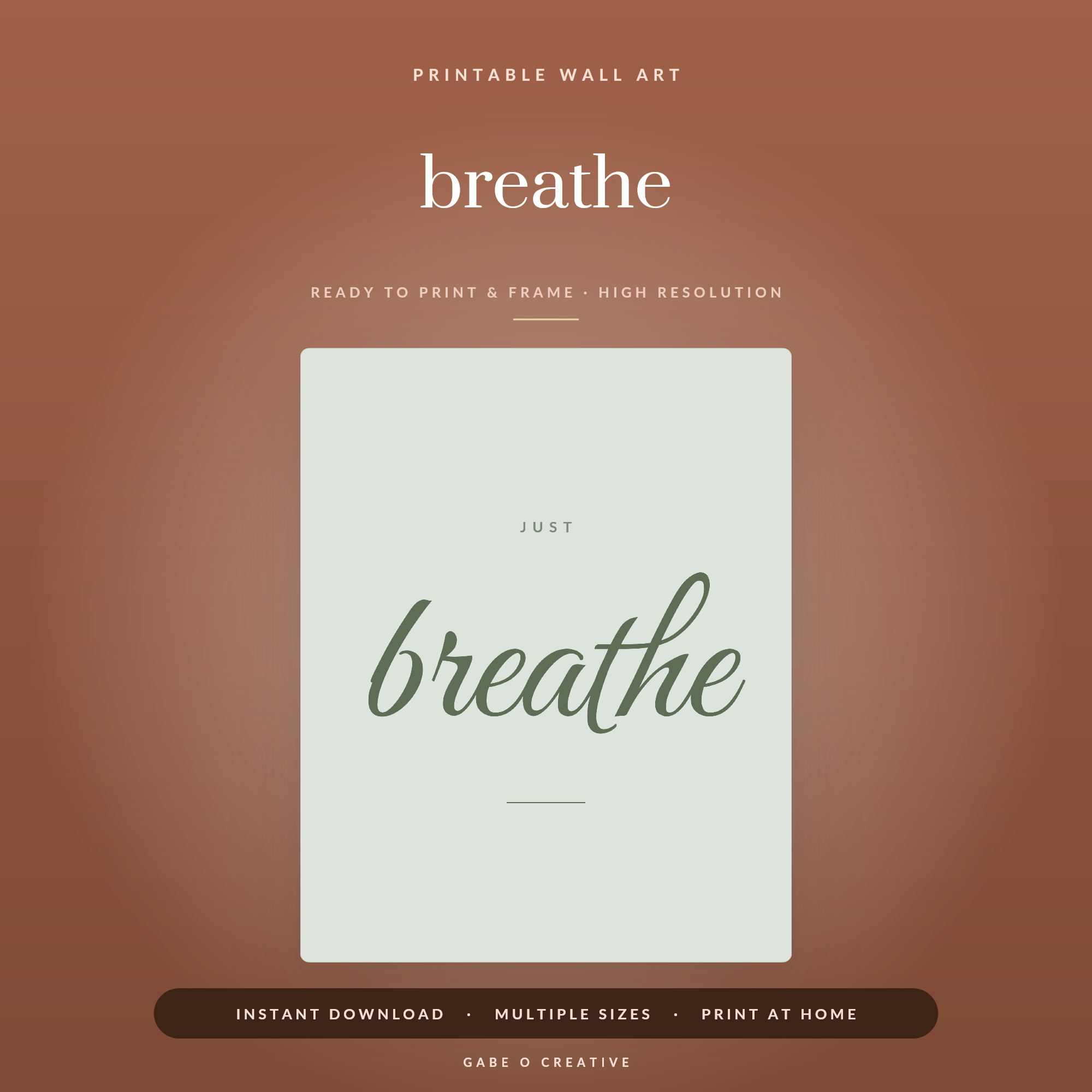 Shop breathe →
The Three Routes
| Where | Best for | Rough cost |
|---|---|---|
| Home printer | A4 and smaller, trying a layout before committing | Paper + ink only |
| High street shop | One or two prints, same day, up to A3 | £1–£5 per print |
| Online print lab | Several prints, larger than A3, best quality | £3–£15 plus postage |
At home
Fine for A4, and genuinely useful for testing — print a cheap draft first to check the piece works on that wall before paying for the good version. Two caveats: most home printers stop at A4, and ordinary copier paper will look like ordinary copier paper. Buy a small pack of matte photo paper and the difference is immediate.
High street
Print shops, larger stationers and the photo counters in supermarkets and chemists all do this, usually while you wait. Bring the file on a USB stick or send it from your phone. Ask for matte or satin photo paper, 200gsm or heavier — that one sentence gets you a decent result almost anywhere.
Online labs
Best quality and the only sensible option above A3. You upload, they print properly on heavy stock and post it. Worth it for anything going in a large frame or a room you care about. The trade-off is a few days' wait and postage, so it's poor value for a single small print.
What Paper to Ask For
Paper matters more than where you go. Three things to specify:
- Weight: 200gsm minimum, 250–300gsm for anything large. Below about 180gsm prints feel flimsy and can buckle inside a frame as they absorb moisture.
- Finish: matte or satin. Matte suits typographic and line art; satin gives photographs and rich colour a little more depth. Avoid gloss behind glass — it doubles the glare and shows every fingerprint.
- Colour: a bright white for modern designs, a warmer off-white for muted or botanical palettes.
If the colours look duller than the screen
They always will, slightly — screens emit light and paper reflects it, so pastels in particular flatten. Setting the correct paper type in the print dialogue does more to correct this than any adjustment to the file, because it tells the printer how much ink to lay down. Heavier matte stock helps too.
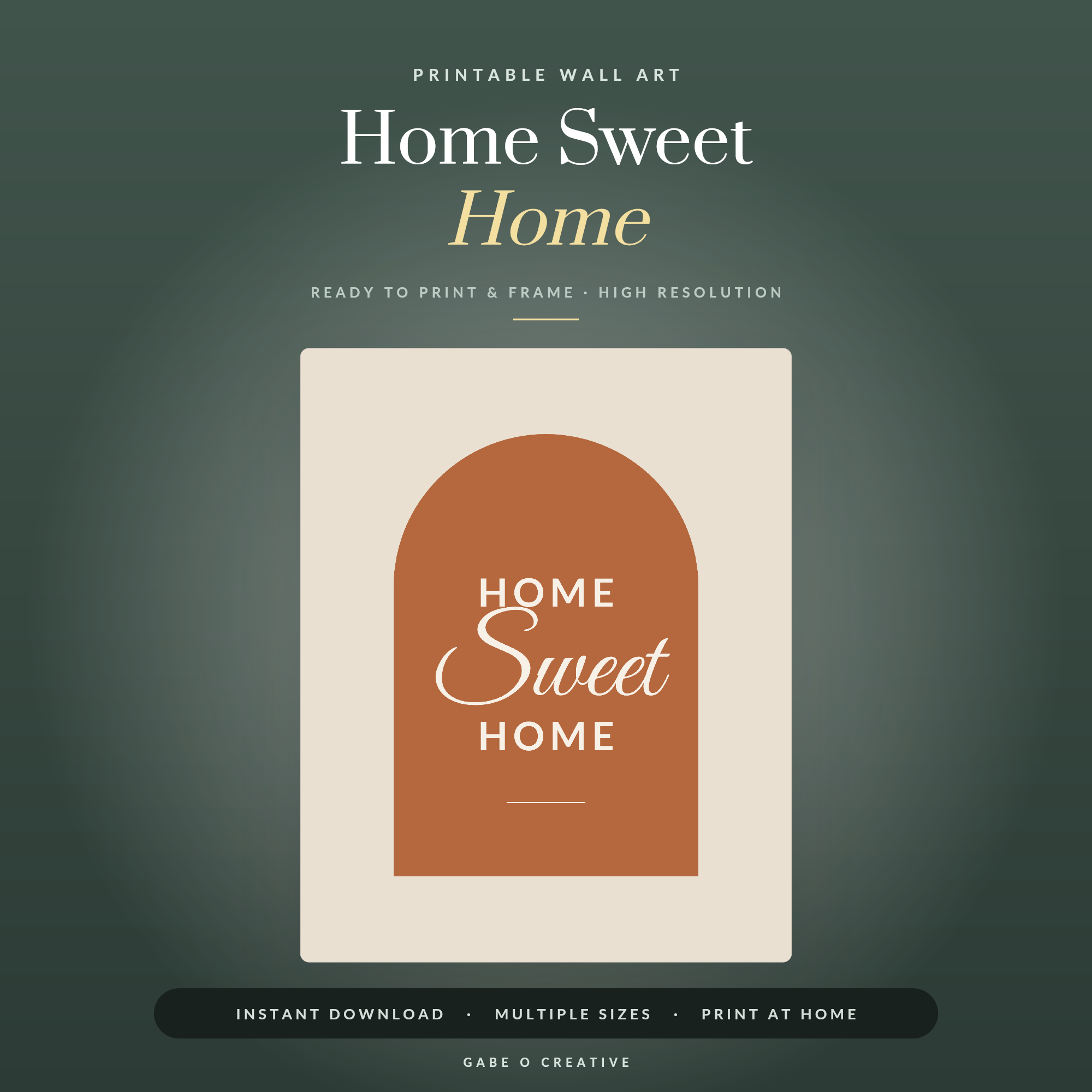 Shop Home Sweet Home →
The Settings That Cause Most Problems
- Turn scaling off. Print at 100% or 'actual size'. 'Fit to page' silently shrinks the image by a few millimetres, which is why prints come back slightly cropped or with uneven borders.
- Match the paper size to the file. A4 and US Letter are different shapes; an A3 file sent to an A4 printer will shrink, not split.
- Expect a small white margin unless your printer does borderless. Almost none print truly edge to edge — you can trim it, or let the frame's mount cover it.
- Print the PDF, not a screenshot. Screenshots are screen resolution and will look soft at any size.
Sizing is worth getting right before you print rather than after. Our guide to printable art frame sizes covers which standard sizes fit which frames, including the A-series versus US inch sizes trap that catches people buying frames online.
After It's Printed
A good print in a bad frame still looks wrong, and the fixes are cheap:
- Use a mount. A white mount board around the print makes an inexpensive frame look considered, and hides any printer margin.
- Let it dry fully before framing — inkjet prints can offset onto glass if framed the same hour.
- Keep it out of direct sunlight, which fades home-printed inks faster than lab prints.
- Print a spare while the settings are right. Reprinting later means rediscovering everything you just worked out.
If you're building a whole wall rather than hanging one piece, our gallery wall layout guide covers spacing and arrangement, and printable wall art quotes covers choosing pieces that work together. For a coordinated set rather than singles, the Scripture Wall Art Studio is editable so you can set your own text, and pieces like breathe, home sweet home and dream big are designed to sit alongside each other.
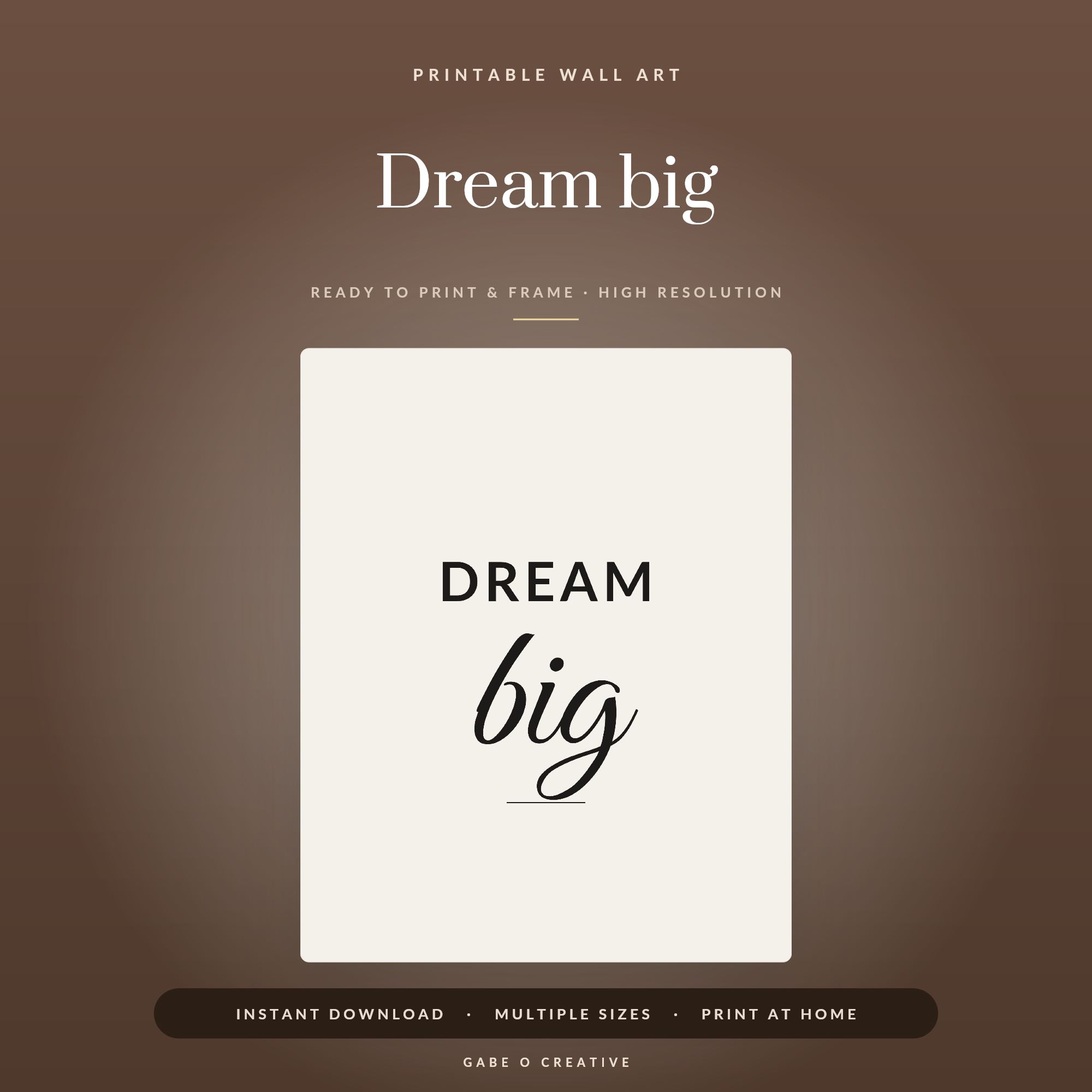 Shop Dream big →
Getting the Size Right Before You Pay
The most expensive mistake is printing at the wrong size, because you only discover it holding a frame in the other hand. Two things cause almost all of it.
A-sizes and inch sizes are not the same. A4 is 21 × 29.7cm; the nearest common inch frame is 8 × 10in, which is 20.3 × 25.4cm — noticeably shorter. A3 is 29.7 × 42cm against 11 × 14in at 27.9 × 35.6cm. They are close enough to look interchangeable in a listing and far enough apart to leave an obvious gap in the frame. Decide which system you're buying frames in first, then print to match.
Ratios matter more than dimensions. A file made for a 2:3 ratio will crop or letterbox if forced into a 4:5 frame. Most quality printables include several ratios for this reason — check what's in the download before assuming you need to resize anything, because resizing is what causes soft prints.
Measure the frame's opening, not the frame
Frames are sold by the size of the picture they hold, but a mount reduces the visible area by a couple of centimetres each side. If you're using a mount, you want the print to match the frame size and the mount to overlap its edges slightly — which conveniently hides any printer margin.
Test on cheap paper first
Print the piece on ordinary paper, cut it out and tape it to the wall for a day. It costs nothing and answers questions no mockup can: whether the size suits the wall, whether the colour works in that room's light, and whether it's hung at the right height. People routinely go up a size after doing this.
Printing Wall Art FAQs
Where is the cheapest place to print wall art?
At home if you already own a decent printer and only need A4. Beyond that, high street shops are cheapest for one-offs and online labs win once you're printing several or going above A3.
What paper should I use for art prints?
Ask for matte or satin photo paper at 200gsm or heavier. Below about 180gsm the print feels flimsy and can buckle in a frame; glossy shows glare and fingerprints behind glass.
Can I print A3 wall art at home?
Only if your printer explicitly supports A3 — most home printers stop at A4. Printing an A3 file onto A4 shrinks it, so send larger sizes to a shop or lab rather than scaling down.
Why does my print come out cropped or with white borders?
Scaling. Print at 100% or 'actual size' rather than 'fit to page', and expect a small white margin unless your printer does borderless — almost none print truly edge to edge.
Why do the colours look duller than on screen?
Screens emit light, paper reflects it, so prints always look slightly flatter. Setting the correct paper type in the print dialogue fixes most of the difference; heavier matte paper helps too.
Do I need to do anything to the file before printing?
No. A properly made printable is already at print resolution and the right proportions — just don't resize, re-save or screenshot it, as all three lose quality.
Pick something for the wall. Browse the full Wall Art collection — 180+ quote and minimalist prints, instant download, print as many copies as you like.