An activity advent calendar is a genuinely lovely idea that goes wrong in a predictable way. It is charming on the 1st, still fine on the 5th, and by the 12th it is a small daily obligation arriving on top of a month that is already full — usually landing on the one evening you got home at seven with a nativity costume still to make. The idea is not the problem. Planning it against an imaginary December is. The Christmas Holiday Planner has the pages to plan it against the real one.
Thinking ahead this year? The Christmas Holiday Planner holds the advent list beside the rest of December — gifts, food, school dates — so you can see which days are already spoken for before you promise anything.
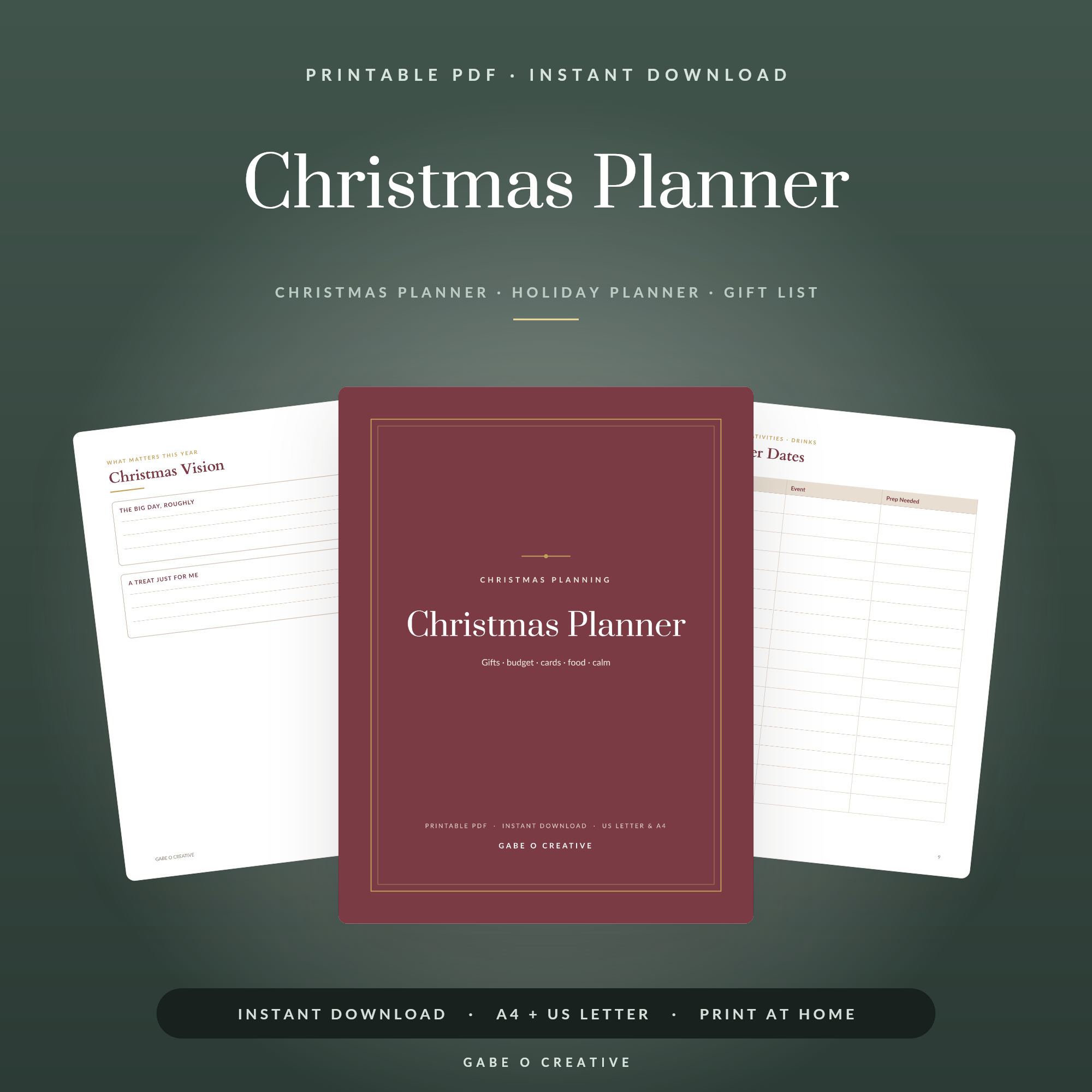 Shop Christmas Planner →
Plan It Against the December You Will Have
This is the whole thing, and almost nobody does it. Before writing a single activity, put December's fixed points on paper: the nativity, the work party, the school fair, the weekend you are travelling, the late shifts.
Then match the activity to the day. Five minutes on the busy ones, something bigger on a free Saturday. A calendar built this way survives; one written as a wish list in November collapses in the second week, because the second week is when reality arrives.
| Day type | What fits |
|---|---|
| Ordinary school night | Hot chocolate, a Christmas book at bedtime, one paper chain |
| Late home | Phone a grandparent, choose a card to send, look out for one light display on the way |
| Free evening | Bake something, film night, make decorations |
| Weekend | Walk to the lights, visit somewhere, the big bake |
| The chaotic one | A sweet and no activity at all — plan for it |
That last row matters. Build in two or three deliberate nothing days. Everyone has them, and a calendar that acknowledges it never generates the guilt that kills the whole exercise.
Two thirds should cost nothing
If most days require buying something, it has become a shopping list with a countdown attached. Free activities are also the ones children remember — the walk in the dark to see a street of lights lands harder than another small toy, and it does not need wrapping.
Ideas Worth Actually Doing
A working list, weighted towards the effortless:
- Read a Christmas book together
- Hot chocolate before bed
- Walk to see the lights after dark
- Make paper chains or snowflakes
- Write a card to someone who would not expect one
- Choose a toy to donate
- Christmas film night, pyjamas compulsory
- Phone or video-call a relative
- Bake and take some to a neighbour
- Put a decoration somewhere silly and see who notices
- Learn one verse of a carol badly
- Scavenger hunt round the house for hidden decorations
If the hunt idea lands well, the Kids Scavenger Hunt gives you a ready-made version rather than inventing clues at eight in the evening.
Repeats are allowed
Hot chocolate can appear four times. Children do not experience repetition as a failure of imagination — they experience it as a tradition, which is precisely what you are trying to build. The pressure to make all twenty-four different is entirely self-imposed.
Write the Whole Thing in November
All twenty-four, decided in one sitting, before the 1st.
Deciding day by day during December is the single commonest way this fails. You will be tired, it will be nine o'clock, and the envelope will be empty — and an empty envelope on the 9th is considerably worse than never having started, because now there is a visible failure pinned to the wall.
Written in November, the December version of you just opens the envelope and does what it says. That is the entire mechanism, and it is why this article exists in August rather than the week before advent.
 Shop Kids Scavenger Hunt Pack →
Making the calendar itself
The container matters less than people think and is worth keeping cheap. Numbered paper envelopes pegged on string, small brown bags on a tray, or a row of numbered cards in a jar all work — and homemade ones survive being knocked off the wall, which the elaborate wooden sort does not.
Write the activity on the card rather than storing a master list somewhere. The point is that the December version of you opens an envelope and reads an instruction, without having to find, unlock or scroll anything to know what today is.
When You Miss a Day
You will, and it does not matter.
Skip it, or double up on Saturday. Nobody is marking this. The calendar exists to put a few small good things into a month that is otherwise mostly logistics, and the moment it starts producing guilt it has inverted its own purpose.
Worth saying to the children too, on day one — that some days we will be too busy and that is fine. It removes the sense of a broken streak, which is the thing that usually makes a family quietly abandon it around the 14th.
Older children and adults
The format works well past the age most people assume, provided the activities change and stay genuinely optional. A film each, a recipe to attempt, a memory to write down, a walk somewhere you have not been. Teenagers opt in far more readily to something they can decline than to compulsory family fun.
Where It Sits in the Rest of December
Advent is the enjoyable part of Christmas planning and the smallest. It works best when the heavy logistics are already handled, because a calendar of nice things is difficult to enjoy while the gift list is unfinished.
Getting the money settled early helps more than anything — our guide to setting a Christmas gift budget covers working backwards from a total you can pay for, and doing it in August or September means December is spending rather than deciding. The food side is the other big one: planning Christmas dinner backwards from your serving time takes the pressure off the day itself. The printable Christmas Planner covers both alongside the advent pages.
 Shop Christmas Holiday Planner →
Advent Activities FAQs
What is an activity advent calendar?
Twenty-four days of small things to do rather than twenty-four things to open — a walk to see the lights, a film night, writing a card to someone. It costs almost nothing and children remember it far longer than the chocolate.
How do I stop it becoming a chore?
Plan it against your actual December diary, not an idealised one. Put the five-minute activities on the days you already know are busy, and save anything that needs an afternoon for a weekend. Most advent calendars fail on a Tuesday.
What activities cost nothing?
Reading a Christmas book together, a walk to look at lights, making paper chains, phoning a grandparent, choosing a toy to donate, hot chocolate before bed. Roughly two thirds of a good list should cost nothing at all.
When should I plan it?
Late November, and write the whole thing out before the 1st. Deciding day by day in December is how it collapses — you will be tired, and an empty envelope on the 9th is worse than never having started.
What if we miss a day?
Skip it and carry on, or double up at the weekend. The calendar exists to add something to December, and the moment it starts generating guilt it has stopped doing its job. Nobody is marking it.
Does it work for older children or adults?
Yes, with different activities — a film each, a recipe to try, a memory to write down, a walk somewhere new. Teenagers tend to opt in more readily when the activities are genuinely optional rather than compulsory family fun.
Write all twenty-four in one sitting. Mark December's fixed dates first, then match the activities to the days you will actually have — the Christmas Holiday Planner has the pages, or browse the full Holidays & Seasonal collection.