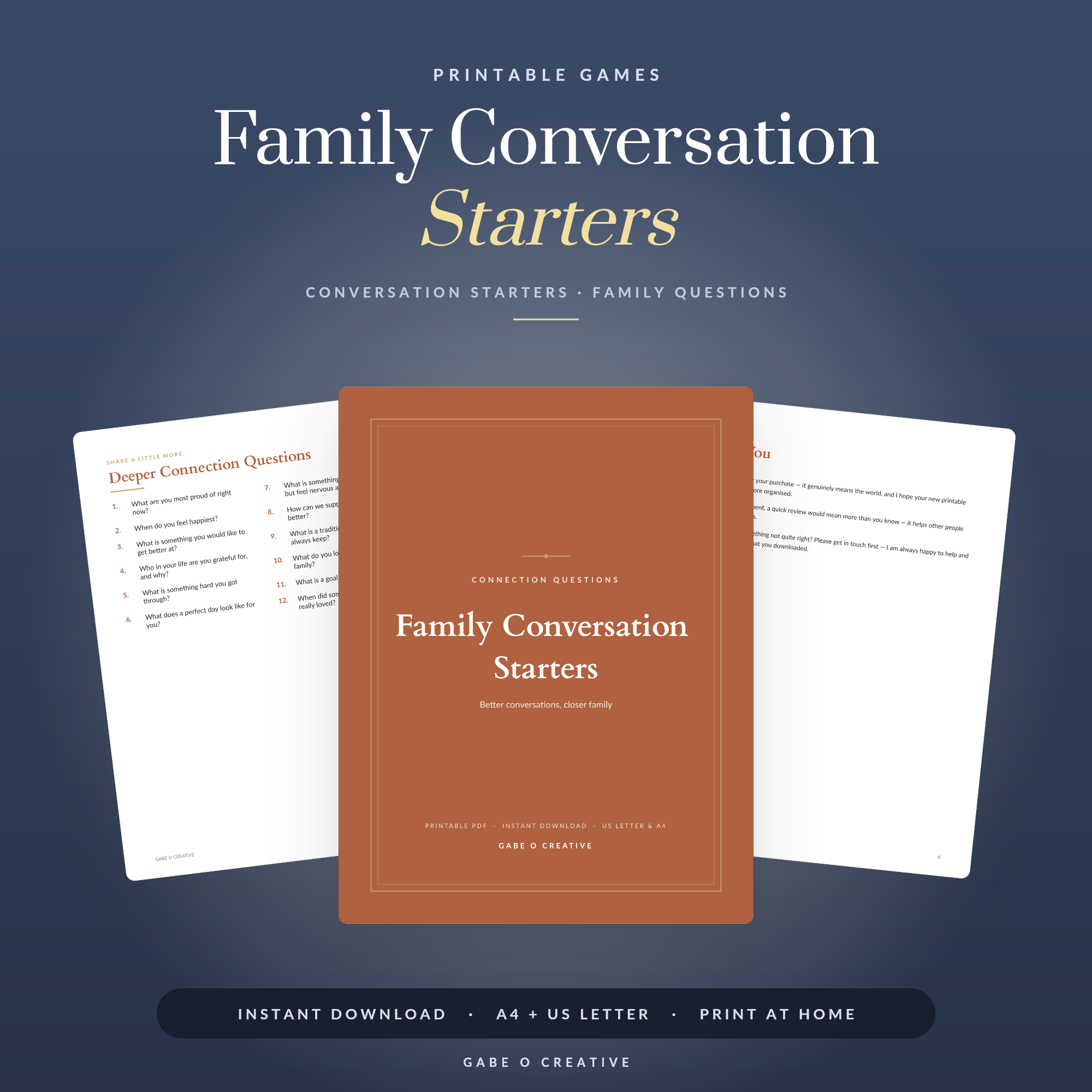
The hard part of family game night is never finding a game. It's finding one where a six-year-old and a fifteen-year-old can sit at the same table and both have a real chance — without anyone being obviously, insultingly let win. Get that right and the evening runs itself. Get it wrong and you spend an hour refereeing while someone sulks on the stairs. The trick is choosing games where the skill that decides the winner isn't one that improves with age. Our family conversation starters handle the gentler half of the evening, when everyone's had enough of competing.
Planning one this week? Print the conversation starter cards and a couple of puzzle sheets, and you've got the whole evening covered without buying a thing.
 Shop Brain Games Mixed Puzzles →
Why Mixed Ages Are the Real Problem
Most family games quietly reward reading speed, general knowledge or vocabulary — every one of which is a proxy for age. The teenager wins, the youngest loses, and everyone learns the evening isn't really for them.
Three mechanics avoid that trap entirely:
- Luck — dice and cards don't care how old you are.
- Bluffing — small children are often startlingly good at it, and adults are worse than they think.
- Creativity — drawing, storytelling and silly voices have no age curve at all.
Anything built on those three levels the field honestly, which matters more than it sounds: children can tell the difference between winning and being allowed to win, and the second one doesn't count.
The team rule that fixes almost everything
If someone is genuinely too young, don't handicap them — pair them with an adult as a team. Handicaps single a child out and they still get knocked out first. Teams keep them at the table for the whole game, and the adult does the fiddly bits while the child makes the decisions.
A Running Order That Works
The sequence matters as much as the games. This shape suits most families:
| Slot | What to play | Why |
|---|---|---|
| First 10 min | Something fast and silly | Gets everyone at the table and laughing before anyone's competitive |
| Middle 25 min | The main game | Attention is highest here — this is where the real one goes |
| Last 15 min | Quiet puzzles or conversation cards | Winds the evening down instead of ending on a loss |
Ending on something non-competitive is the part people skip, and it's why so many game nights finish badly. Whoever lost the main game goes to bed having lost. A puzzle sheet or a round of conversation cards resets the mood in ten minutes.
Games That Need Nothing But Paper
You don't need to buy anything. These work with pens and a scrap of paper, and all of them handle mixed ages:
- Consequences — everyone writes a line, folds the paper, passes it on. The result is nonsense and the youngest child usually writes the best line.
- Categories — pick a letter, race to name an animal, a food, a country. Give younger players a head start of one category.
- Dots and boxes — pure strategy, learnable in thirty seconds.
- Drawing telephone — draw a phrase, pass it, the next person guesses, the next draws the guess. Reliably the loudest ten minutes of the evening.
- Two truths and a lie — quiet, and children learn a surprising amount about their parents.
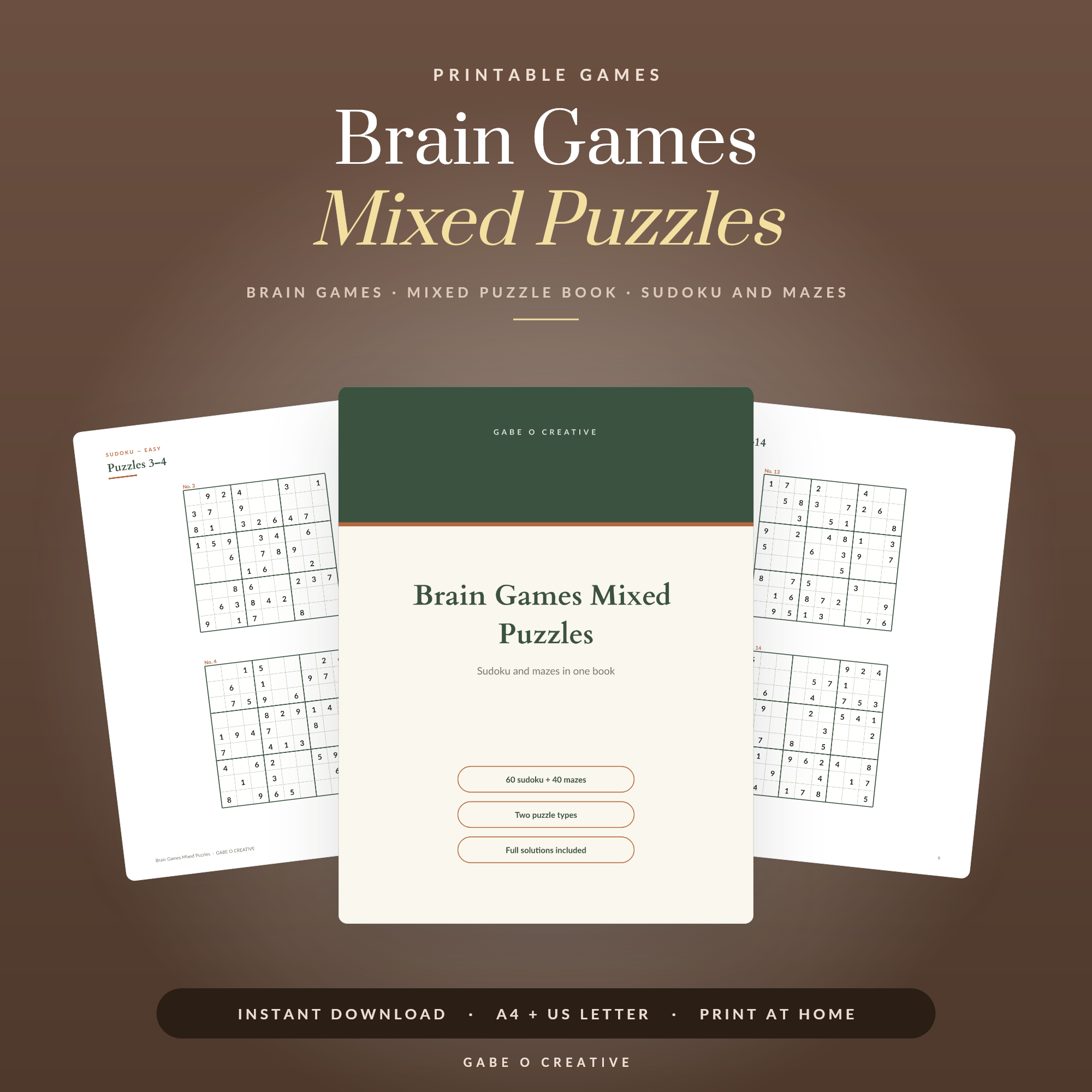
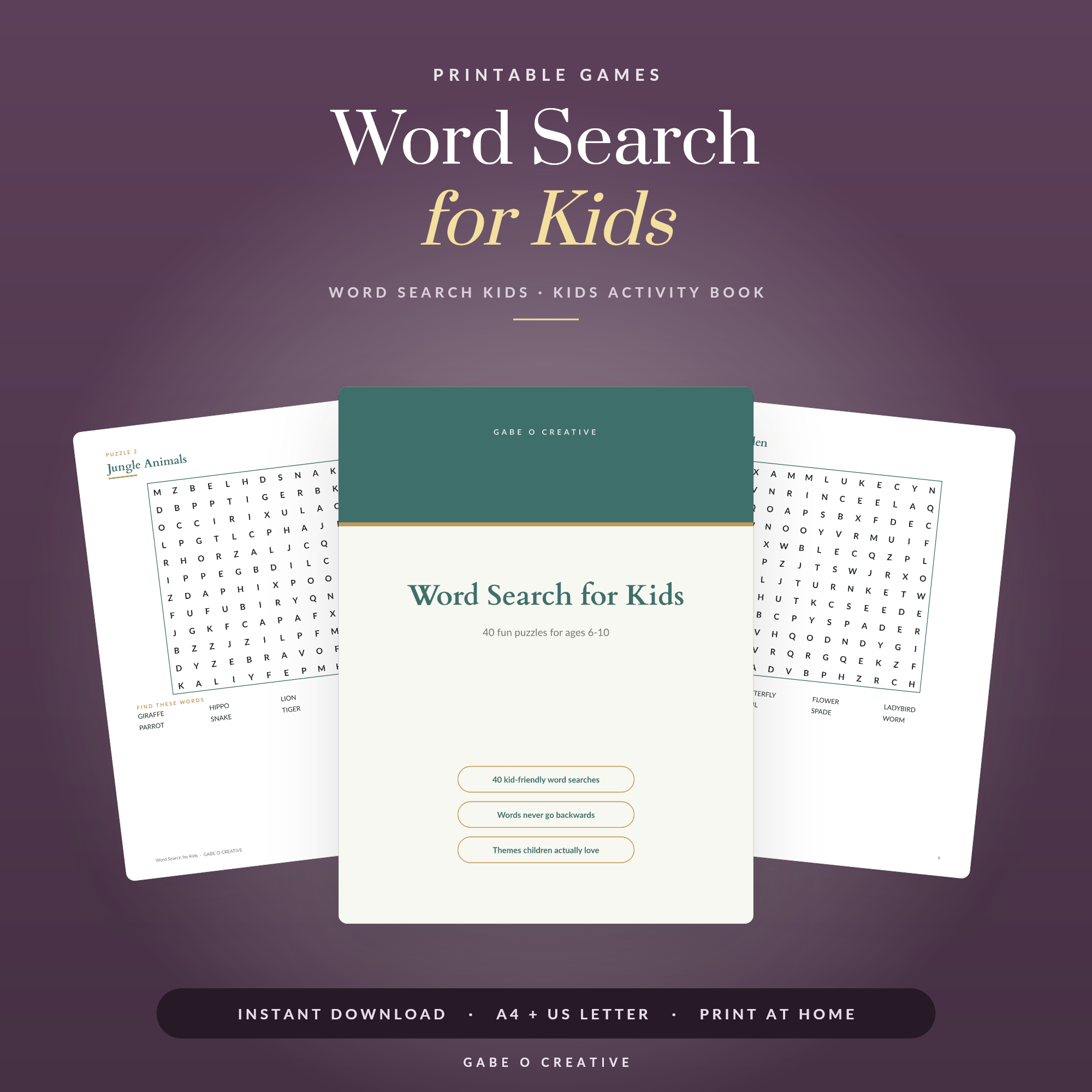
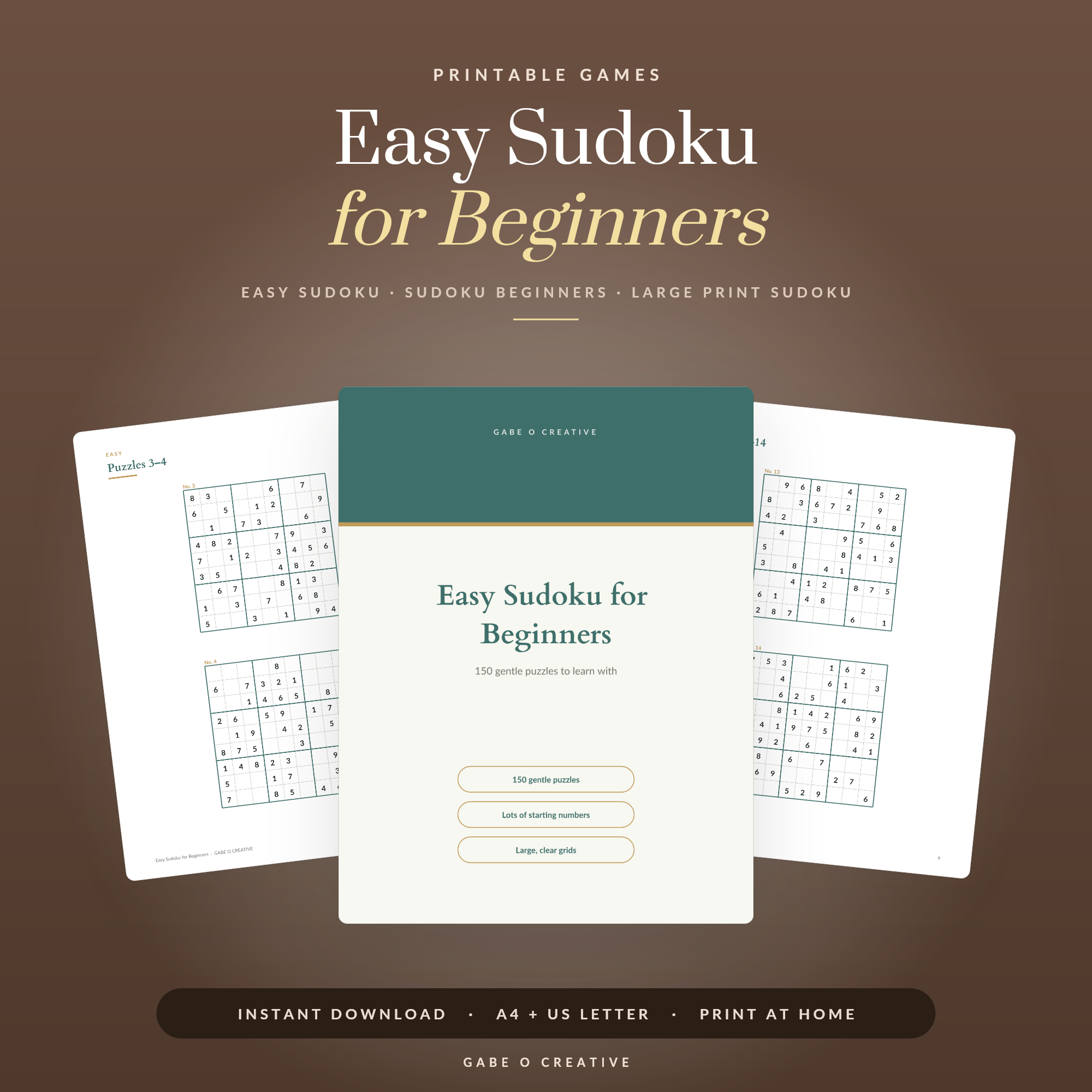
For the quieter stretches, printed puzzles do the job without anyone needing to manage them. The word search for kids and the mixed brain games pack both work alongside a game night rather than instead of one — and if the adults want something with more bite, our beginner's guide to sudoku covers the puzzle most people give up on too early.
 Shop Word Search for Kids →
What to Skip
- Long strategy games on a school night. Anything over an hour will be abandoned halfway, which is worse than not starting.
- General knowledge quizzes, unless you write the questions yourself for each age.
- Anything with fiddly setup. If it takes fifteen minutes to lay out, the youngest player has already left.
- Games with elimination. Being out first and watching for twenty minutes is how children learn to hate game night.
That last one is worth taking seriously. Elimination is the single most common reason a young child refuses to play again. Prefer games where everyone plays to the end and the scores simply differ.
Making It a Habit Rather Than an Event
Fortnightly beats weekly. A regular slot everyone can rely on survives the autumn term; an ambitious weekly plan usually doesn't see October. Put it in the family calendar rather than announcing it on the day, and let whoever's turn it is choose the main game — ownership does more for attendance than any amount of enthusiasm from the adults.
Keep everything in one box: pens, paper, the printed sheets, a pack of cards. The friction of finding things is what turns a good intention into "maybe next week". If you're building the wider family routine, our chore chart guide and boredom busters cover the rest of the week, and the easy sudoku book or the full puzzle book are what the adults reach for once the children are in bed.
 Shop Easy Sudoku for Beginners →
When It Isn't Working
Three failure modes account for nearly every abandoned game night, and each has a specific fix rather than needing more enthusiasm.
A teenager who won't come. Almost always a status problem rather than a boredom one — sitting at a table playing a children's game in front of younger siblings is the objection. Give them a real role: let them run the scoring, choose the music, or be the one who explains the rules. Ownership of some part of the evening converts far better than persuasion, and bluffing games in particular tend to win them round because they can actually be good at them.
One child wins everything. Rotate who picks the game so the same person's strengths don't decide every week, and lean harder on the luck-based games. If one player genuinely dominates, put them in a team with the youngest — it neutralises the advantage and neither of them feels singled out.
Everyone's too tired. Move it. A Friday evening after a full school week is the worst slot in the calendar, and Sunday afternoon works far better for most families — nobody has an early start behind them and nobody is watching the clock for bedtime.
Family Game Night FAQs
What games work with a big age gap?
Anything driven by luck, bluffing or creativity rather than reading speed or general knowledge. Those three level the field naturally, so a six-year-old can genuinely beat a teenager without anyone quietly letting them win.
How long should family game night last?
About 45 minutes to an hour for mixed ages. Stop while everyone still wants one more round — an evening that runs until someone melts down is what makes the next one a negotiation.
How do you stop game night ending in an argument?
Agree the rules and the finish time before you start, and run short games rather than one long one. Most arguments come from an ambiguous rule or from a game outstaying the youngest player's patience.
What can we play with nothing but paper and pens?
Consequences, categories, dots and boxes, and drawing games all need nothing else. Printable puzzle sheets and conversation prompts cover the quieter half of the evening.
How do we include a child who is much younger?
Pair them with an adult as a team rather than giving them a handicap. Teams keep them involved for the whole game instead of being knocked out first and drifting off.
How often should we do family game night?
Fortnightly beats weekly for most families. A regular slot everyone can rely on works far better than an ambitious weekly plan that quietly lapses by October.
Set up this Friday. Print the family conversation starters for the wind-down, or browse the full Games & Activities collection for puzzle books, word searches and printable games.