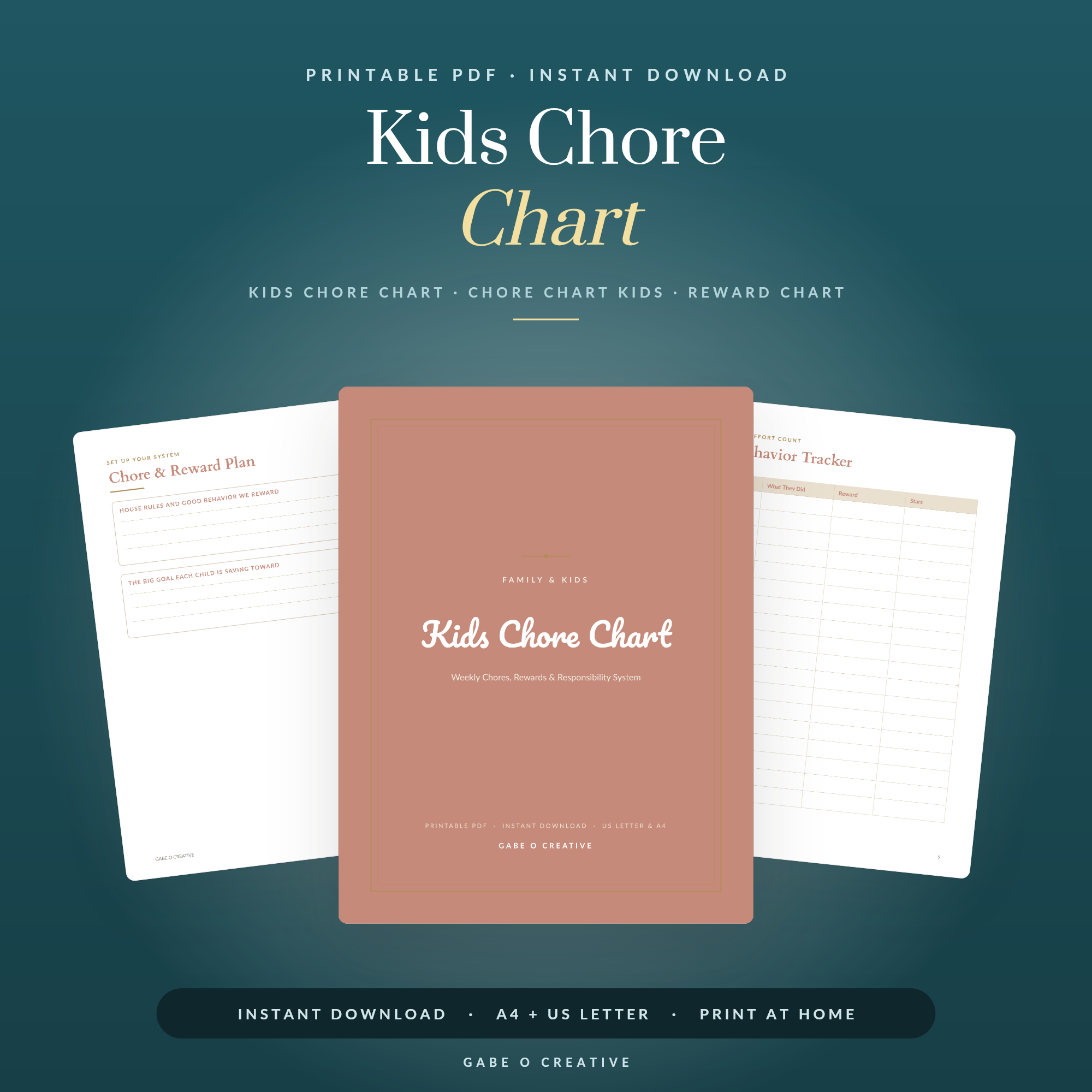
A kids chore chart printable turns chore-time battles into a game your children actually want to play. Instead of repeating yourself ten times a day, you hang one clear chart where everyone can see it, and children tick off each job, earn a star, and swap those stars for rewards they chose themselves. It takes the nagging off your plate and hands your child a real sense of pride and independence. If mornings and tidy-ups have become a daily standoff, the right chore chart for kids is the simplest fix.
Want calmer chore times starting today? Our kids chore chart pairs weekly jobs with a star-and-reward system—print it, stick it on the fridge and let your child take the lead.
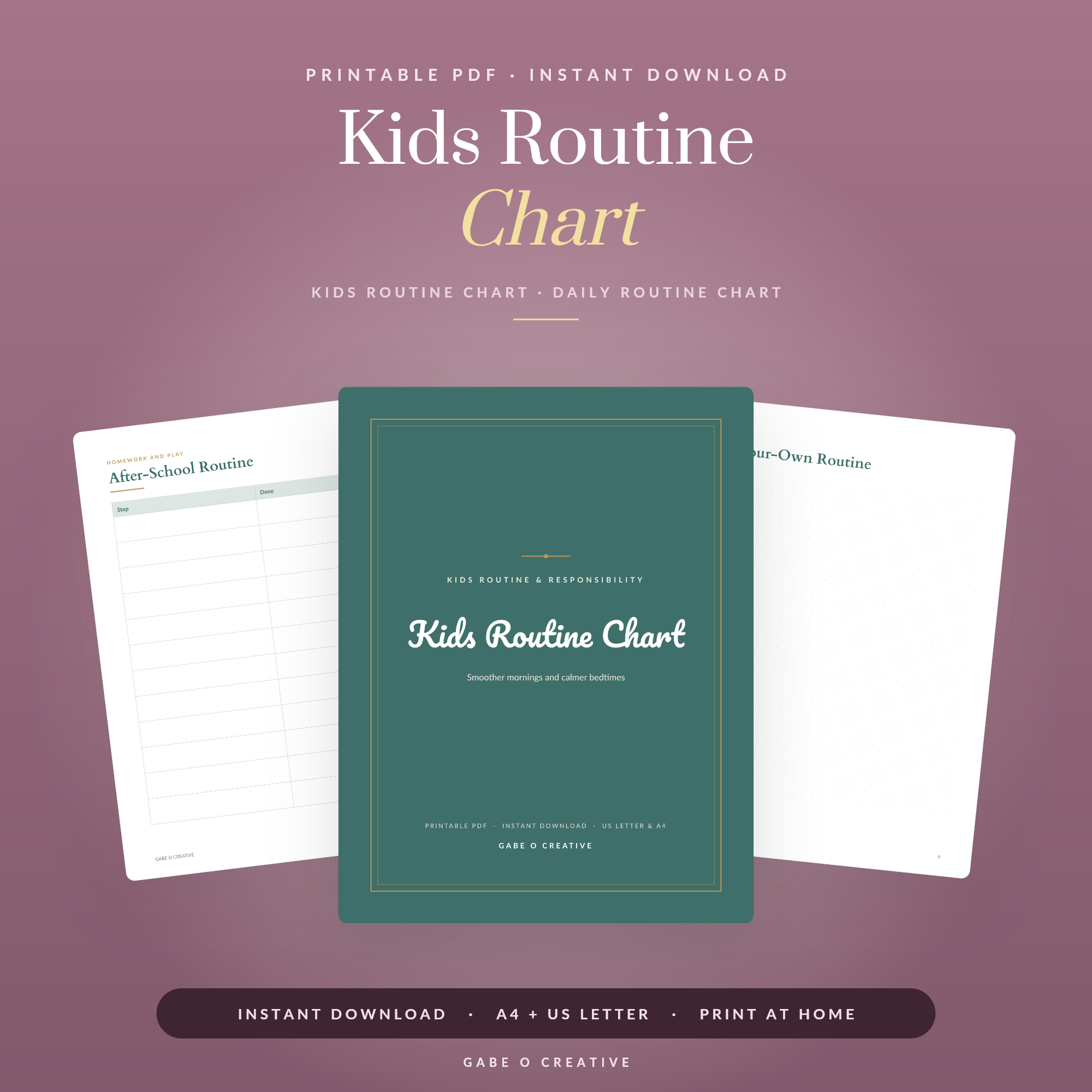 Shop Kids Routine Chart →
What Is a Kids Chore Chart Printable?
A kids chore chart printable is a chart (or small set of pages) that lists your child's weekly responsibilities, with checkboxes for each day and a way to earn stars or points. Most include a reward menu, an allowance log and routine charts for morning and bedtime, so the whole day has a gentle structure your child can follow on their own.
Children genuinely thrive when expectations are clear and effort gets noticed. A good chart helps you:
- Make jobs visible so your child knows exactly what to do without being told.
- Reward effort with stars that turn into allowance or treats.
- Build responsibility by letting children own their tasks.
- Cut the nagging because the chart does the reminding for you.
Because it lives somewhere visible—usually the fridge or a bedroom wall—the chart keeps expectations front of mind for the whole family. Children love seeing their stars add up, and that small daily win is a big part of why chore charts work.
Why rewards beat reminders
Nagging teaches children to wait until you raise your voice; rewards teach them to act on their own. When a job comes with a visible star and a reward they care about, the motivation shifts from 'because Mum said so' to 'because I want to'. Over a few weeks, the routine becomes a habit, and you can gradually lean less on the rewards.
There's a deeper benefit, too. Chores teach children that a home is a shared space everyone contributes to, not a hotel where things magically get done. That sense of belonging and contribution builds genuine self-worth—a child who knows they're a capable, useful member of the family carries that confidence well beyond the kitchen. The chart is really just a gentle, visible way of saying 'you matter here, and we need your help'.
How to Set Up Your Kids Chore Chart
Getting started takes one short sitting with your child:
- List the chores together. Involving your child builds buy-in from the start.
- Match jobs to age. Keep them achievable so early wins build confidence.
- Set the reward menu. Let your child help choose what stars are worth.
- Hang it where they can see it. Visibility is what makes the system run itself.
- Celebrate effort. Praise the trying, not just the perfect result.
A quick example: a five-year-old might earn a star for making the bed, tidying toys and feeding the cat. Ten stars buys a film night; twenty buys a small toy. Suddenly the cat gets fed without a single reminder, because your child is working towards something they actually want.
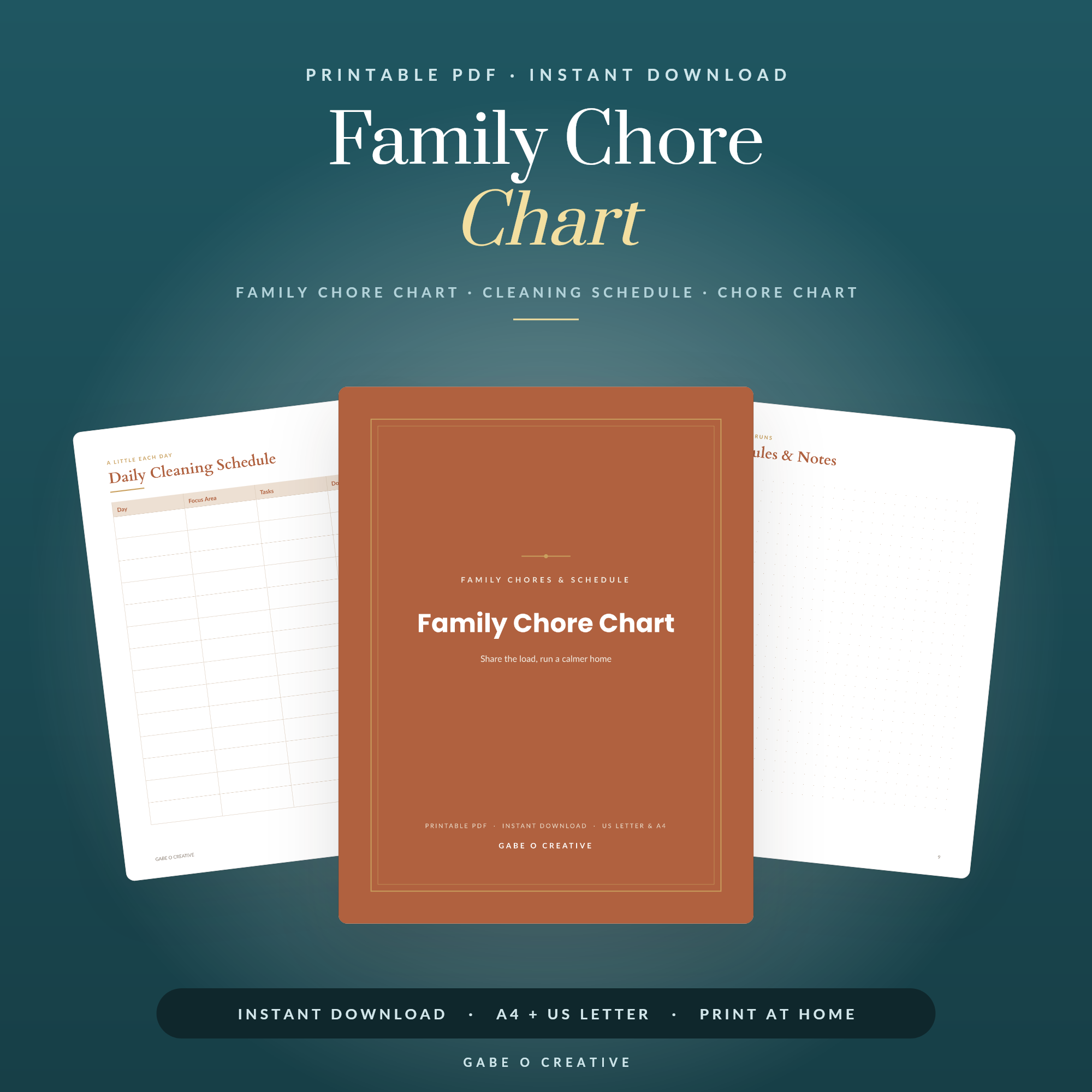 Shop Family Chore Chart →
Age-Appropriate Chores That Actually Work
The fastest way to derail a chore chart is to give a child jobs that are too hard or too dull. Match the task to the age and you set everyone up to succeed. Here's a rough guide to get you started.
| Age | Suitable chores |
|---|---|
| 2 to 4 years | Tidy toys, put books away, help feed a pet |
| 5 to 7 years | Make the bed, set the table, sort laundry |
| 8 to 10 years | Wash up, take out recycling, tidy their room |
| 11 and up | Hoover, prepare simple meals, help with shopping |
Keep the list short to begin with—three or four jobs is plenty. A chart crowded with tasks feels like a punishment; a short, achievable one feels like a winnable game. Add new responsibilities slowly as your child grows in confidence and capability.
It also helps to be specific. 'Tidy your room' is vague and easy to argue about; 'put dirty clothes in the basket and books back on the shelf' is clear and finishable. Children find concrete tasks far less daunting, and a chart full of small, well-defined jobs feels achievable rather than endless. When a child can picture exactly what 'done' looks like, they're far more likely to get there without a fuss.
The Best Ways to Keep Chores Sticking
A chore system needs a little maintenance to keep its sparkle. These tactics keep families on track:
- Refresh the rewards every so often so they stay exciting.
- Pair chores with routines using a kids routine chart so mornings and bedtimes run smoothly too.
- Teach money skills by logging earnings with a kids allowance tracker.
- Share the load fairly across the whole household with a family chore chart.
- Make it visible—keep the chart where your child passes it every day.
Build a Calmer, More Organised Home
A chore chart is brilliant for children, but a tidy household runs on a shared system everyone can see. Pair your chart with the family command center to bring schedules, meals and chores onto one weekly page, or grab the home and family organiser bundle for the whole set at the best value.
For more ideas, see our family planner printables guide, build a tidier routine with a cleaning schedule printable, and explore our home organisation printables to bring calm to the rest of the house.
And as your children grow? Keep evolving the chart with them. Add new responsibilities, raise the reward bar, and let them take on more ownership over time. The habits they build ticking off small jobs today are the same ones that make them capable, considerate adults tomorrow.
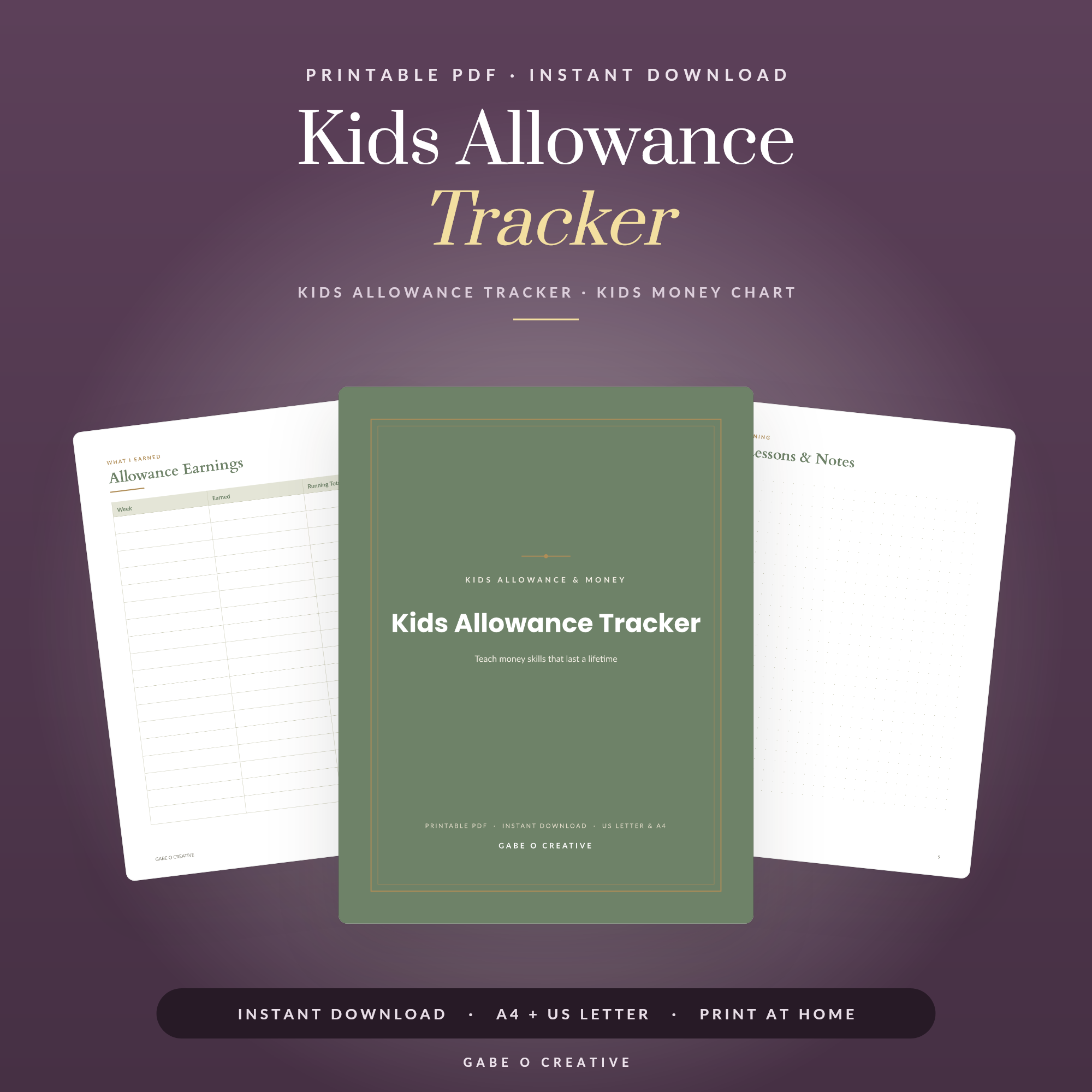 Shop Kids Allowance Tracker →
Kids Chore Chart FAQs
What is a kids chore chart printable?
It's a print-at-home chart where children can see their weekly jobs, tick off each one as they finish, and earn stars or points. Most pair the chores with a reward menu so helping out feels worthwhile rather than like a punishment.
What age should a child start doing chores?
Children as young as two or three can manage simple jobs like putting toys away. Match the task to the age—tidying for toddlers, making beds for primary-age kids, and bigger jobs like washing up for older children—and a visual chart helps every age stay on track.
Should I pay my child for chores?
That's a personal choice. Many families separate everyday 'family contribution' chores from extra paid jobs, so children learn both responsibility and the value of earning. A chore chart with an allowance log lets you run either system, or a blend of both.
How do I get my child to actually do their chores?
Keep expectations clear and visible, make the reward something they genuinely want, and celebrate effort rather than perfection. When children can see their progress and earn stars they chose the rewards for, the nagging largely takes care of itself.
What chores should be on a kids chore chart?
Start with age-appropriate basics: tidying their room, making the bed, feeding a pet, setting the table and putting laundry away. Keep the list short so it feels achievable, then add new responsibilities as your child grows in confidence.
Do reward and star charts really work?
For most children, yes—at least to build the habit. The visible progress and small, frequent wins tap into the same motivation that makes games so engaging. Over time, the routine becomes second nature and you can lean less on the rewards.
Ready to end the chore battles? Grab the kids chore chart and set up your reward system today, or explore the full Family & Baby collection for everything you need to run a calmer home. Every star earned builds a helpful habit.