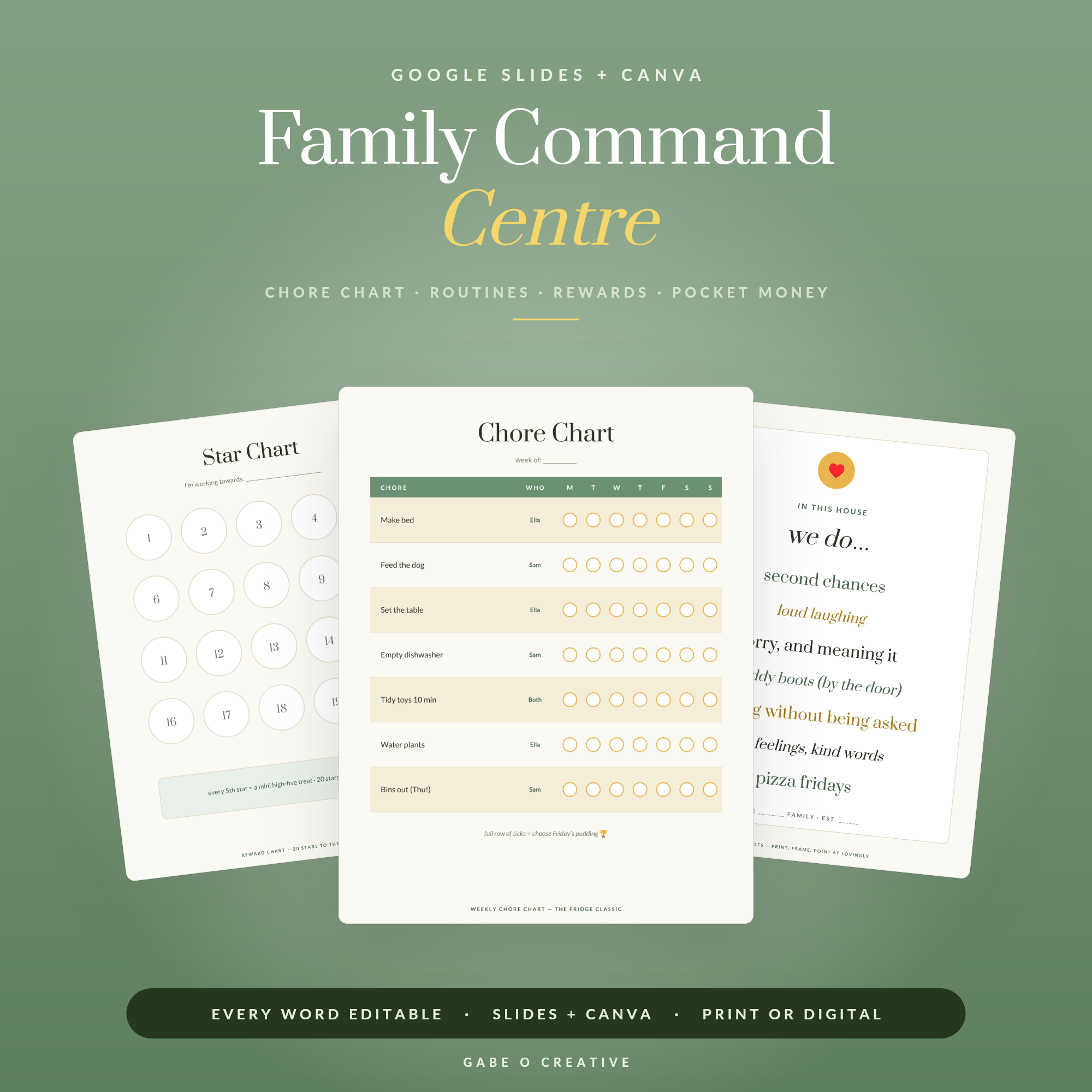
Most chore charts don't fail because kids are lazy. They fail because the jobs don't fit the child — a toddler handed a list they can't read, or a teenager handed tasks a six-year-old would find insulting. Get the match right and a chore chart for kids becomes one of the calmest, most useful things on your fridge; get it wrong and it's wallpaper by week two. Here's exactly what children can genuinely do at each age, from a two-year-old to a school-leaver, plus how to make the whole thing actually stick. (The editable chart, routine cards and reward system that run it are in the Family Command Centre.)
Want the fridge-door system ready-made? The Family Command Centre has the weekly chore chart, morning and bedtime routine cards, a star reward chart and a pocket-money tracker — all matching, all editable in free Google Slides or Canva. Type your kids' names and print it tonight.
Here's the whole thing at a glance before we get into the how:
| Age | What they can genuinely do |
|---|---|
| 2–3 | Put toys away, fetch and carry, 'help' — building the habit, not the labour |
| 4–6 | Make the bed, set the table, feed a pet, sort laundry by colour |
| 7–9 | Own a whole job start to finish — bins, hoovering, their morning routine |
| 10–12 | Cook a simple meal, run a full laundry cycle, clean a bathroom, own an area |
| 13+ | Cook for the family, food shop from a list, manage their own washing entirely |
The one rule that beats every chart
Before the ages, the principle that makes all of them work: match the job to the child, and let it be done imperfectly. The single fastest way to kill a child's helping is to redo it in front of them — a remade bed, a re-loaded dishwasher — because it teaches them their effort didn't count. Done badly by them genuinely beats done perfectly by you, right up until they're old enough for it to matter, by which point they're actually good at it. Every age below assumes you're holding your tongue and your standards, at least at first.
Ages 2–3: the charming, pointless years
A toddler can't clean, and that's fine — you're not after labour, you're planting an identity. At two and three, children love to 'help', so let them: putting toys in a box, dropping washing in the basket, fetching things, wiping a table with a cloth that's mostly for show. It is slower than doing it yourself and that is the entire investment. Build the identity of someone who helps now, while it's adorable and low-stakes, and you skip the fight of introducing chores to a resentful ten-year-old later. A simple picture routine card they can follow works far better than words at this age.
Ages 4–6: real jobs, simple ones
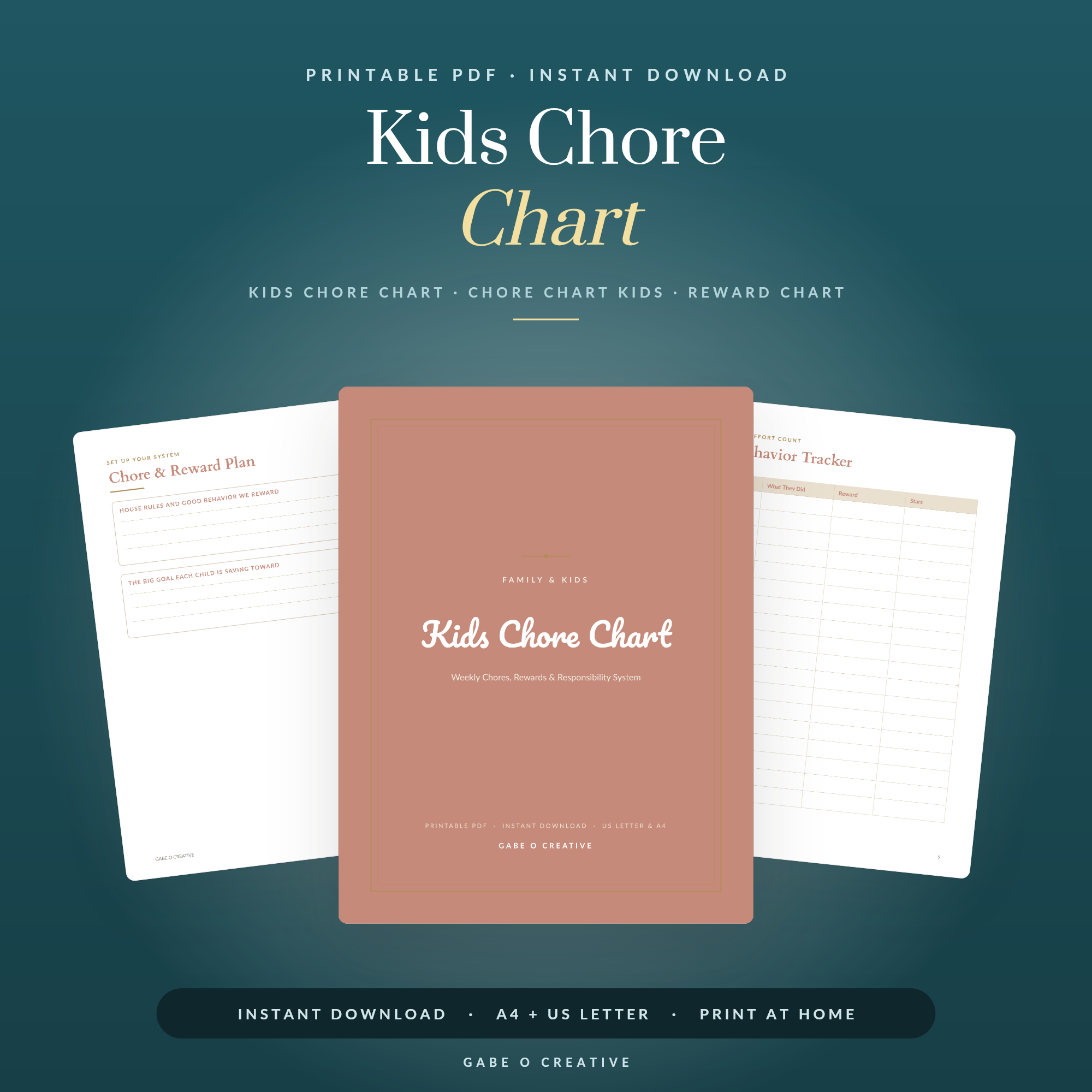
By four to six, children can handle genuine tasks: making their bed roughly, setting the table, feeding a pet with a hand nearby, tidying their room, watering plants, sorting laundry by colour, matching socks. This is the golden age for starting a proper chart, because they still want to and a sticker is a genuine thrill. Keep it to one or two daily habits and a weekly job — the printable Kids Chore Chart is built for exactly this age, with tick circles and a star tracker that make the whole thing feel like a game rather than an instruction.
Ages 7–9: independence and ownership
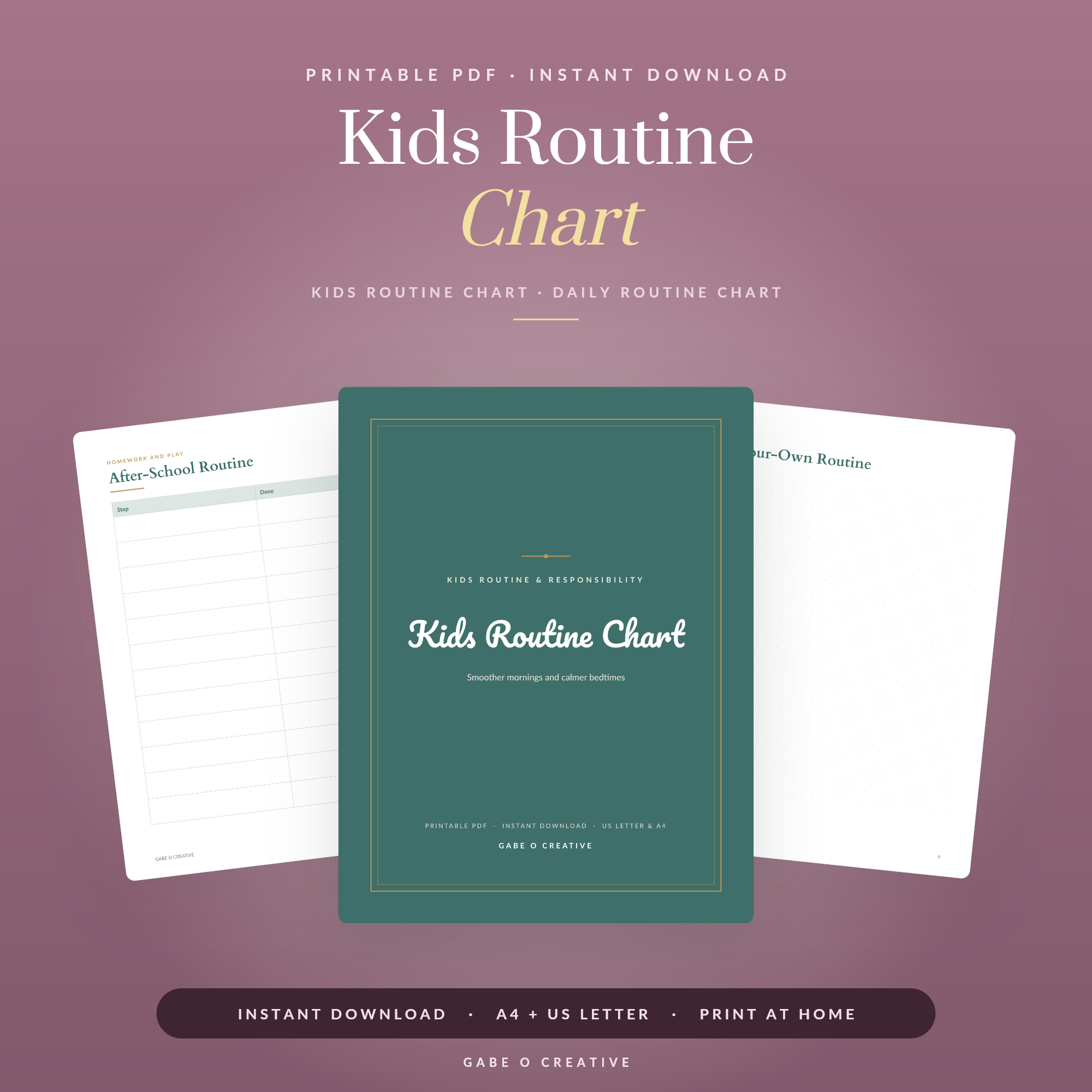
Now they can be trusted with jobs start to finish, and this is where a chart earns its keep. Seven-to-nines can make their own bed properly, tidy the whole table after a meal, sort and start the laundry, take the bin out, hoover a room, prepare a simple snack and manage their own morning routine without you standing over it. The shift at this age is from helping you to owning a job — 'emptying the dishwasher is yours' beats a daily reminder. This is also the natural moment to introduce earning, which we come to below. A morning and evening routine that runs itself matters more than ever here; our guide to a morning and evening routine covers the bookends that make the rest of the day calmer.
Ages 10–12: running a whole area
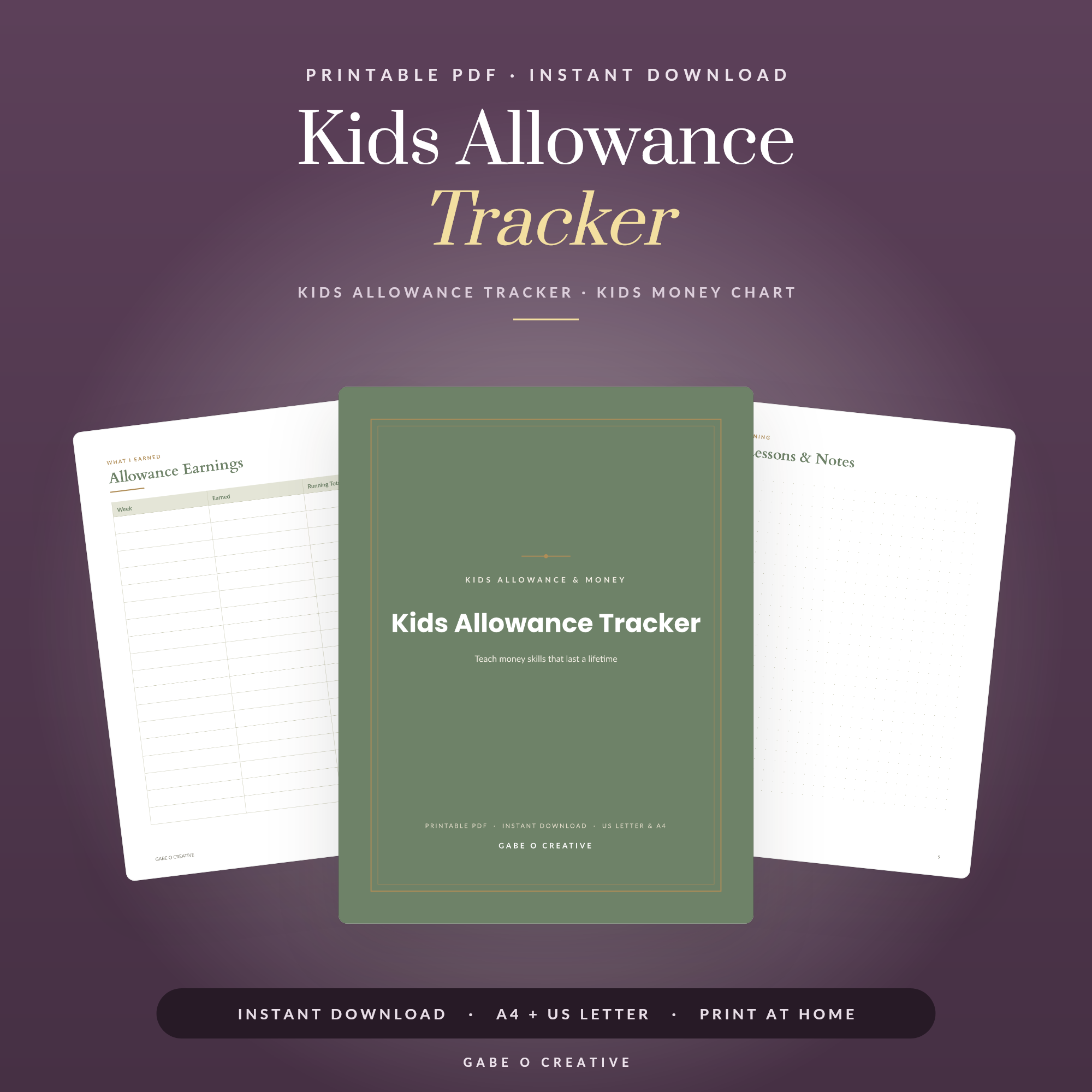
Tweens are capable of far more than most charts ask of them. A ten-to-twelve can cook a simple meal, do a full laundry cycle unsupervised, clean a bathroom, look after a pet properly, help a younger sibling with their routine and take real responsibility for a zone of the house. The trick is to hand over an area rather than a list of tasks — 'you keep the kitchen sorted' respects their growing competence and stops you micromanaging. This is prime time for linking effort to pocket money and letting them save toward something they chose; the Kids Allowance Tracker makes the earning and saving visible, which is where the real money lesson lands.
Ages 13+: the trust years
Teenagers do not respond to being managed — they respond to being trusted, and the chart quietly changes character. At thirteen and up they can genuinely run parts of the household: cook for the family sometimes, do the food shop from a list, manage their own washing entirely, clean properly, and be relied on to look after younger ones. Trade the daily list for whole-area ownership, accept their timing as long as the job's done, and tie contribution to the adult things they want — lifts, wifi, allowance — as natural cause-and-effect rather than punishment. The goal was never a compliant workforce; it was a capable adult, and by now you're most of the way there.
Pay or not? The middle path
The question every parent asks, and the honest answer is: split it. Some chores are simply the price of living in the family and are never paid — you make your bed and clear your plate because you're a person in a home, not a contractor. A few extra jobs, though, can earn pocket money, which teaches the other half of the lesson: money comes from work. Pay for everything and you raise someone who downs tools when the rate's too low; pay for nothing and you miss a brilliant, low-stakes chance to teach earning and saving before the stakes are real. A visible tracker keeps both halves honest.
How to make it actually stick
The reason charts die after a fortnight is always one of two things: the novelty wore off, or the jobs stopped fitting the child. Beat both by keeping the chart genuinely visible (fridge, not a drawer), reviewing it together every month or so, and adjusting as they grow — the chart that thrilled a six-year-old bores a nine-year-old into ignoring it. Build in a little pride: something to tick, a running star total, a goal they picked themselves.
And model it — kids who see the whole family, adults included, doing their bit read chores as just how a home works, not a punishment aimed at them. A shared family hub like the Family Command Centre puts everyone's jobs, routines and rewards in one place, which is what turns a chart from a rule into a rhythm. If a new baby is about to reshuffle everyone's roles, our guide to budgeting for a new baby pairs well with getting the older ones pulling their weight.
Your questions, answered
At what age can kids start doing chores?
Around two — genuinely. A two-year-old can't clean, but they can put toys in a box, hand you washing and 'help' in ways that are slower than doing it yourself. That's the point: you're not after the labour yet, you're building the identity of someone who helps. Start when it's charming and pointless and by the time the chores actually matter, the habit is already there rather than being introduced to a resentful ten-year-old.
What chores are appropriate for a 5-year-old?
By five, children can handle real, if simple, jobs: making their bed roughly, setting the table, feeding a pet with supervision, tidying their room, watering plants and sorting laundry by colour. The rule at this age is that done imperfectly by them beats done perfectly by you. Resist the urge to redo it in front of them — a remade bed teaches a five-year-old that their effort didn't count, which is the fastest way to end the helping.
Should you pay children for doing chores?
The middle path works best: some chores are simply part of being in the family and are never paid, and a few extra jobs can earn pocket money. That split teaches both lessons — that you contribute to your home because you live in it, and that money is earned through work. Paying for everything turns a helpful child into a contractor who downs tools when the rate's too low; paying for nothing misses a great chance to teach earning.
Why do chore charts stop working after a couple of weeks?
Almost always because the novelty wore off and nothing replaced it, or the jobs didn't fit the child. The fix is to keep the chart genuinely visible, review it together every so often, and adjust as they grow — a chart that's right for a six-year-old bores a nine-year-old into ignoring it. Build in a little pride: a place to tick off, a running total, a goal they chose. Charts fail when they become wallpaper; they last when the child still feels something ticking the box.
How do I get my teenager to do chores?
Trade nagging for ownership. Teenagers push back on being managed but respond to being trusted with a whole area — 'the kitchen is yours to keep sorted' lands better than a daily list of instructions. Tie it to the things they want (lifts, wifi, allowance) as natural adult cause-and-effect rather than punishment, and accept their timing as long as the job gets done. You're raising a capable adult, not running a compliant workforce.
How many chores should a child have?
Fewer than you'd think, done consistently, beats a long list done once. One or two daily habits plus a weekly job is plenty for a primary-age child; the aim is a routine they can actually sustain, not a rota that looks impressive on the fridge and collapses by Wednesday. Consistency is what builds the habit, and you only get consistency from a load that's genuinely doable on a busy, tired, ordinary day.
More for a calmer household: our guides to using a kids' chore chart and building a morning and evening routine, plus the full Family & Baby collection for the charts and trackers that run the fridge door.
Right jobs, right ages, one calm system. The Family Command Centre has the chore chart, routine cards, reward chart and pocket-money tracker — all matching and editable. Print it tonight and lose the nagging.