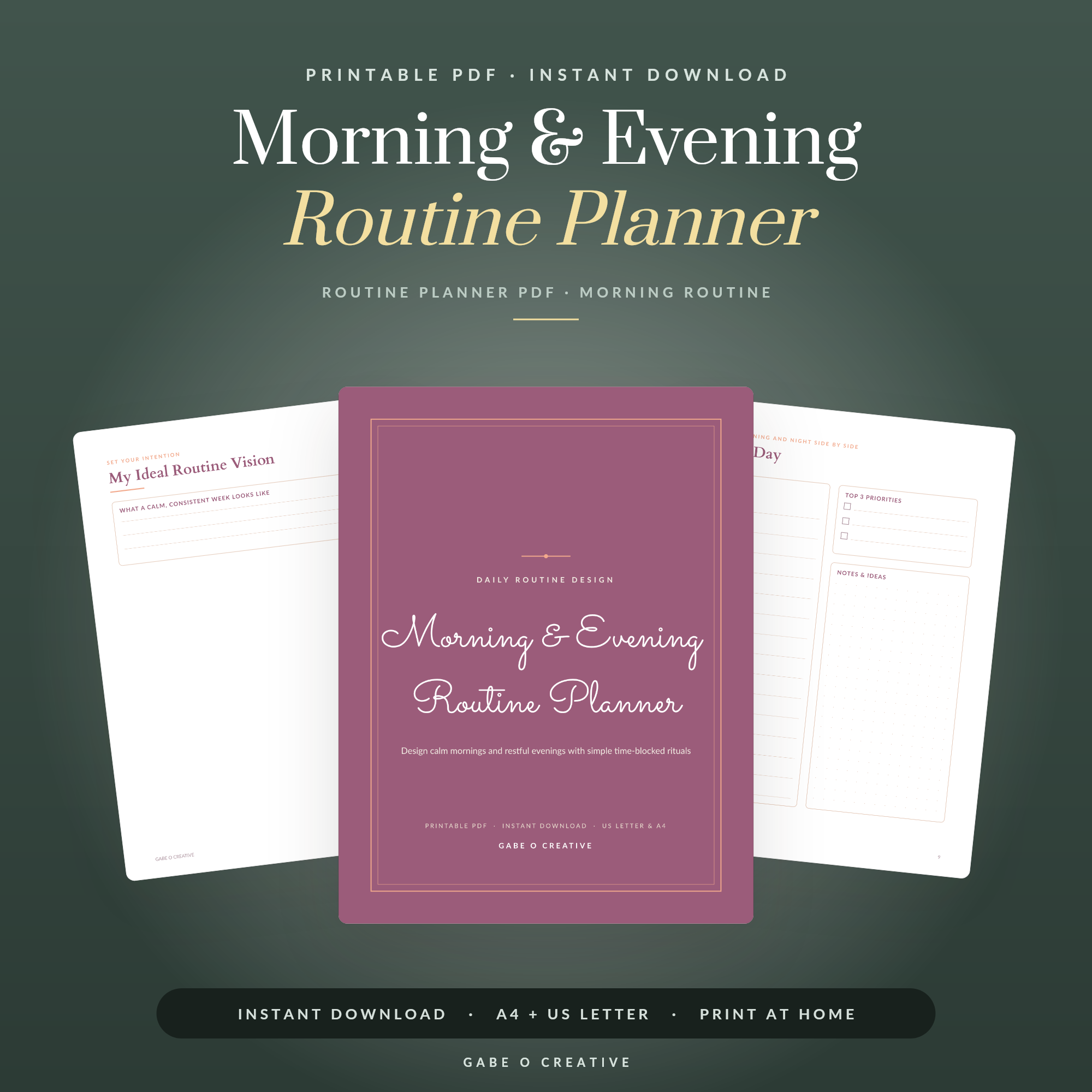
A daily routine planner printable is the quiet secret behind people who always seem calm, on time and weirdly put-together. They're not more disciplined than you; they've simply designed their mornings and evenings once, written them down, and let the page do the remembering. When the first and last hour of your day run on autopilot, everything in between feels lighter. If your mornings are a scramble and your nights dissolve into doom-scrolling, the right morning and evening routine planner is the gentlest possible reset.
Ready to design a day that runs itself? Our Morning & Evening Routine Planner gives you ready-to-fill pages to map both routines, tick them off, and watch the habit take hold—print it and start tonight.
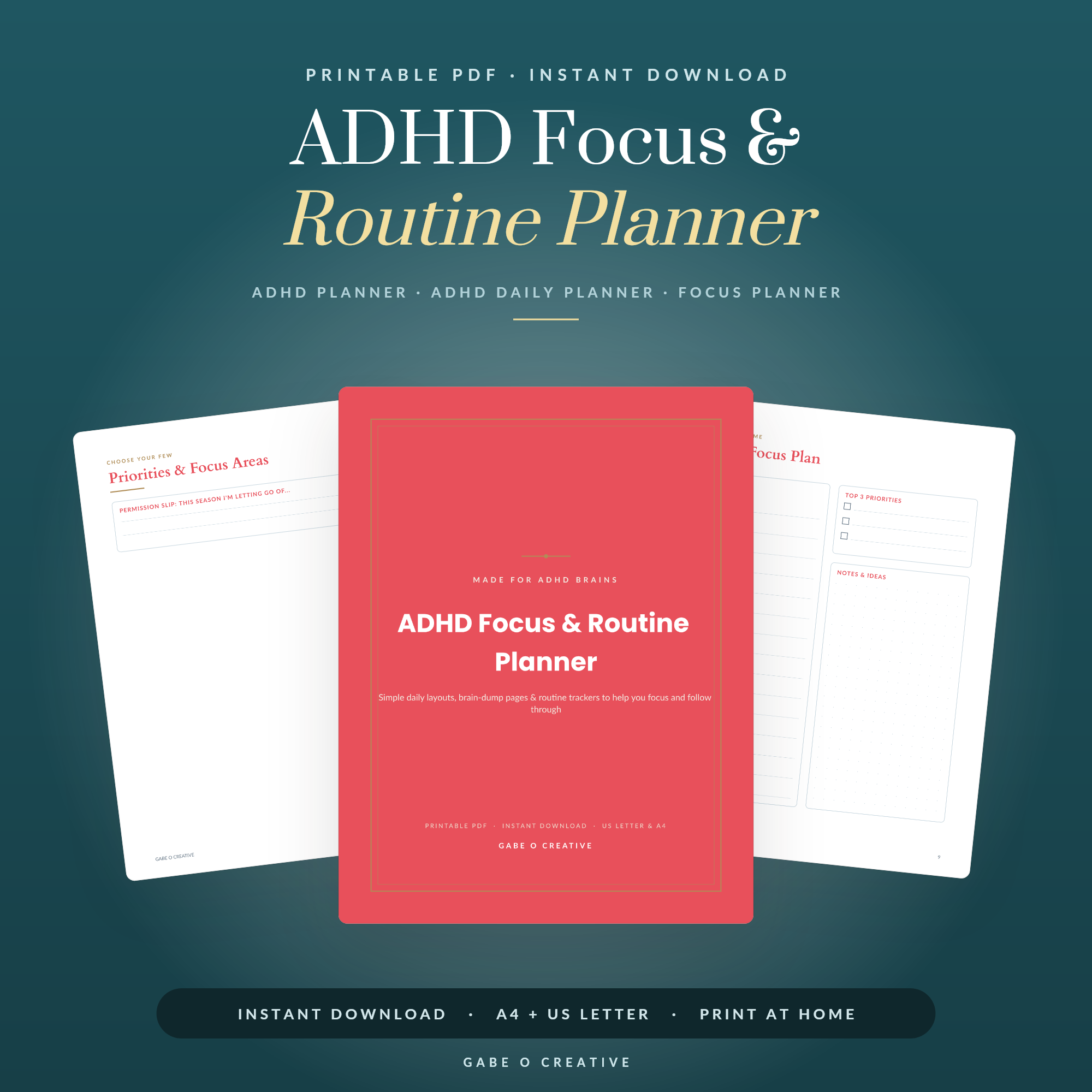 Shop ADHD Focus & Routine Planner →
What Is a Daily Routine Planner Printable?
A daily routine planner printable is a worksheet where you lay out your morning and evening steps in the exact order you'll do them, then check each one off as you go. Instead of vaguely intending to 'be more organised', you have a written sequence: wake, water, stretch, journal, dressed, out the door. The planner removes the moment-by-moment deciding that quietly drains your energy before the day has even begun.
A good routine planner helps you:
- Cut decision fatigue by deciding once, not every single morning.
- Protect your time so the important things happen before the day hijacks you.
- Build momentum with a satisfying line of ticked boxes.
- Wind down properly so sleep comes easier and tomorrow starts ahead.
Because it lives on paper rather than buried in an app, the planner becomes a visible cue. Stick it by the kettle or on the bedside table and it nudges you through the steps without you having to think. That visibility is precisely why a printed routine tends to stick where a mental to-do list never does.
Why routines beat willpower
Willpower is a finite resource, and it's lowest first thing and last thing—exactly when your routines run. A planner shifts the load from willpower to habit. Once a sequence is automatic, it costs almost nothing to perform, which is why the most reliable people lean on systems, not motivation. Your routine planner is simply that system, written down where you can see it.
There's a knock-on benefit too. When your mornings and evenings are handled by habit, you free up an enormous amount of mental space during the day. You're no longer quietly fretting about whether you've forgotten something, or starting from a standstill each morning. That reclaimed headroom is the real prize—it's energy you can spend on the work and people that actually matter, rather than on logistics your routine has already quietly solved.
How to Build a Morning Routine That Sticks
Designing your morning takes one short sitting:
- Pick your anchors. Choose three or four non-negotiables—water, movement, a few lines in a journal, getting dressed.
- Put them in order. Write the sequence top to bottom so there's no thinking required at 7am.
- Attach to a trigger. Tie the first step to something you already do, like the kettle boiling.
- Keep it tiny. A five-minute routine you actually do beats an hour you skip.
- Repeat for a fortnight before adding anything new.
If you want your routine to flow straight into a productive day, pair it with a Time Blocking Planner so the calm carries into how you spend your hours. For a deeper dive on making habits automatic, our guide to the habit tracker printable walks through the exact mechanics of repetition.
How to Design a Calming Evening Routine
Your evening routine has one job: make tomorrow easier and tonight calmer. The best night routines wind the body down while quietly setting up the morning, so you wake to a tidy surface and a clear head rather than yesterday's mess.
- Tidy one surface so morning-you isn't greeted by clutter.
- Lay things out—clothes, bag, keys—to delete morning decisions.
- Empty your head with a quick brain dump so worries don't follow you to bed. A dedicated Brain Dump Planner makes this a thirty-second habit.
- Set a screen-off cue at a fixed time to protect your sleep.
- Pick tomorrow's top three so you wake with direction.
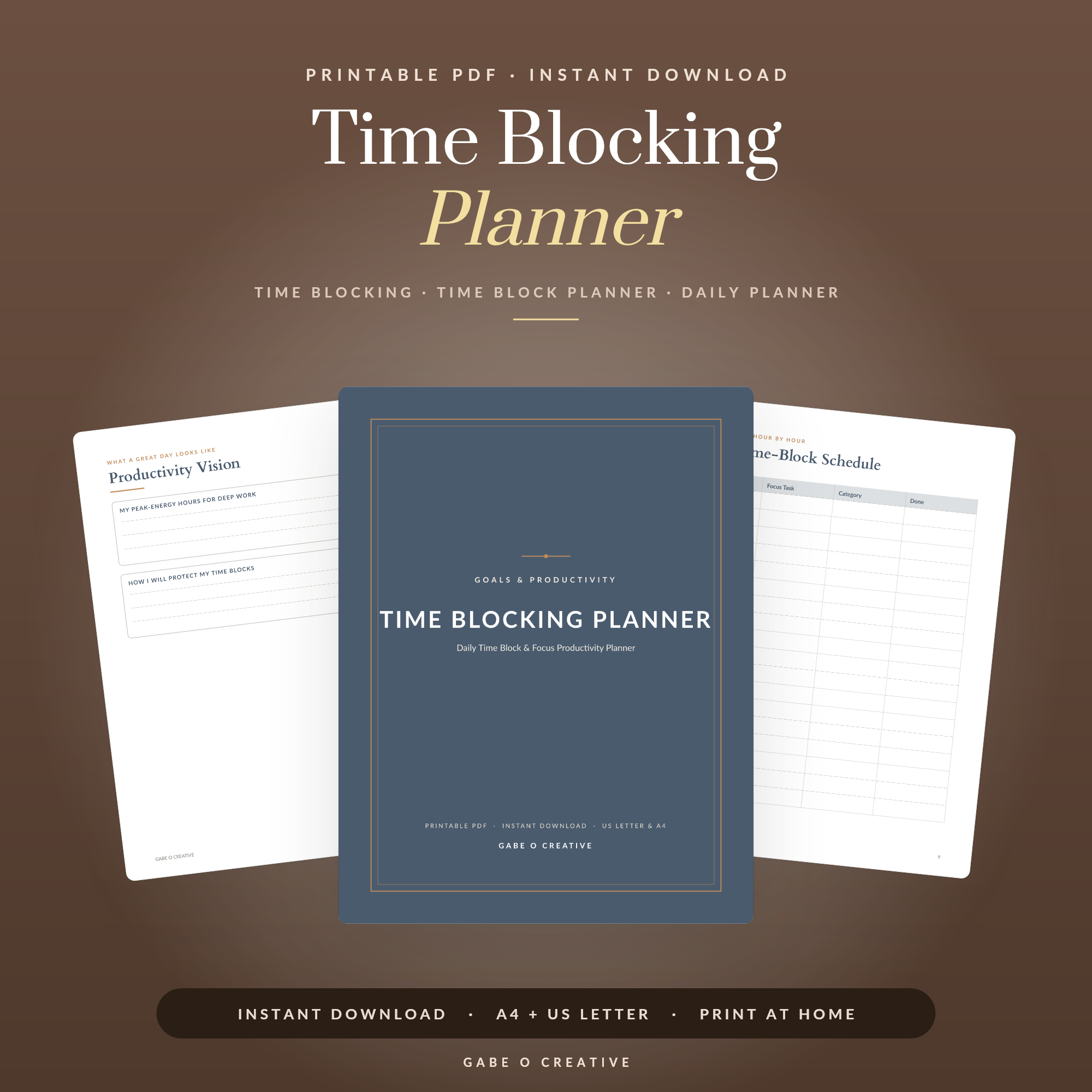 Shop Time Blocking Planner →
Morning vs Evening: What Each Routine Is For
It helps to remember that the two routines do different jobs. Get the purpose right and the steps choose themselves:
| Routine | Its main job |
|---|---|
| Morning routine | Set the tone and protect your priorities before the day takes over |
| Evening routine | Wind down, reset the home, and pre-load an easier tomorrow |
| Minimum version (busy days) | Keep the habit alive with two non-negotiable steps |
Notice that last row. The single biggest reason routines collapse is the all-or-nothing trap—miss the full version once and the whole thing feels broken. A 'minimum viable routine' of just two steps keeps the streak alive on chaotic days, and a living habit you can rebuild beats a perfect one you've abandoned.
Build a Routine System That Lasts
A single planner page is powerful, but routines work best as part of a wider rhythm. Pair your routine planner with a Weekly Productivity Planner to connect your daily habits to weekly goals, or reach for the ADHD Focus & Routine Planner if you need extra structure and gentle prompts to stay on track. Want the lot in one place? The Life Admin Mega Bundle brings your routines, planning and organising together at the best value.
For the bigger picture on staying on top of everything, see our guide to managing ADHD and life admin, and if a busy mind is what keeps derailing you, the brain dump printable is the perfect companion to your evening wind-down.
The real magic isn't any single perfect day—it's the compounding of small, repeated mornings and evenings. Design them once, print them out, and let consistency do the heavy lifting. Within a few weeks the routine stops feeling like effort and starts feeling like who you are.
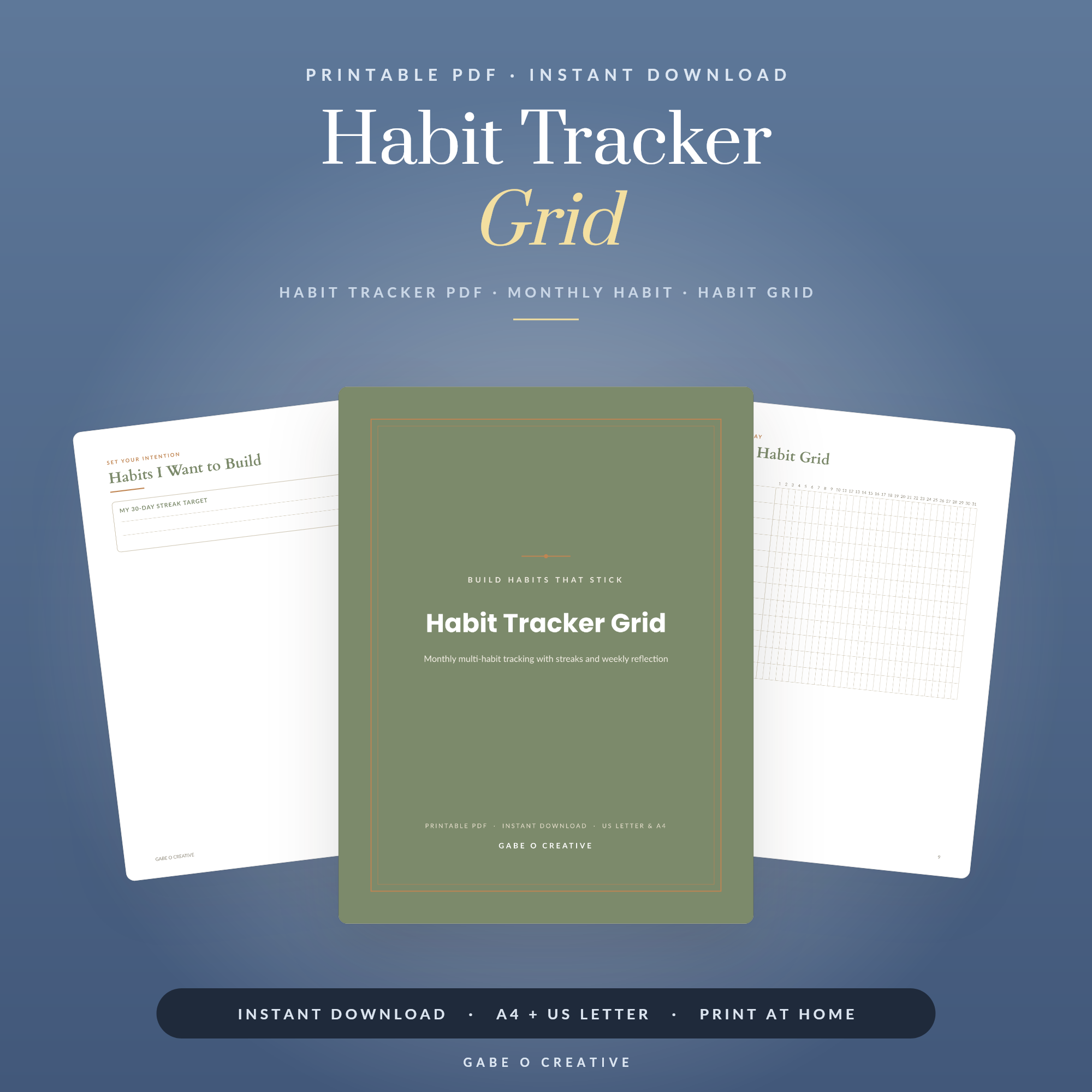 Shop Habit Tracker Grid →
Routine Planner FAQs
What is a daily routine planner printable?
It's a print-at-home page where you map out your morning and evening steps in order, then tick them off each day. It turns scattered habits into a repeatable sequence so you stop relying on willpower and start running on autopilot.
How do I build a morning routine that actually sticks?
Start tiny: pick three or four anchor habits, write them in order, and attach them to something you already do, like the kettle boiling. Keep it the same every day for a fortnight so it becomes automatic before you add anything new.
What should an evening routine include?
A good evening routine winds you down and sets up tomorrow. Think tidying one surface, laying out clothes, a short brain dump to empty your head, and a screen-off cue. The aim is fewer decisions in the morning and a calmer drift into sleep.
How long should my morning and evening routines be?
There is no fixed length. A five-minute routine you do daily beats a one-hour ritual you abandon by Wednesday. Start short, protect it fiercely, and only stretch it once the core feels effortless.
Can I use a routine planner if I have ADHD?
Yes, and a visible, structured planner often helps a great deal. Externalising the steps onto paper reduces the mental load of remembering, and the satisfying tick-off gives the dopamine nudge that keeps you moving through each step.
How do I stay consistent with my routine on busy days?
Build a 'minimum viable' version of each routine for chaotic days, perhaps just two non-negotiable steps. Doing the short version keeps the habit alive, which matters far more than doing the full routine perfectly some of the time.
Ready to bookend your day with calm? Grab the Morning & Evening Routine Planner and map your first routine tonight, or explore the full Goals & Productivity collection for everything you need to run your days on autopilot. Calmer mornings start with one printed page.