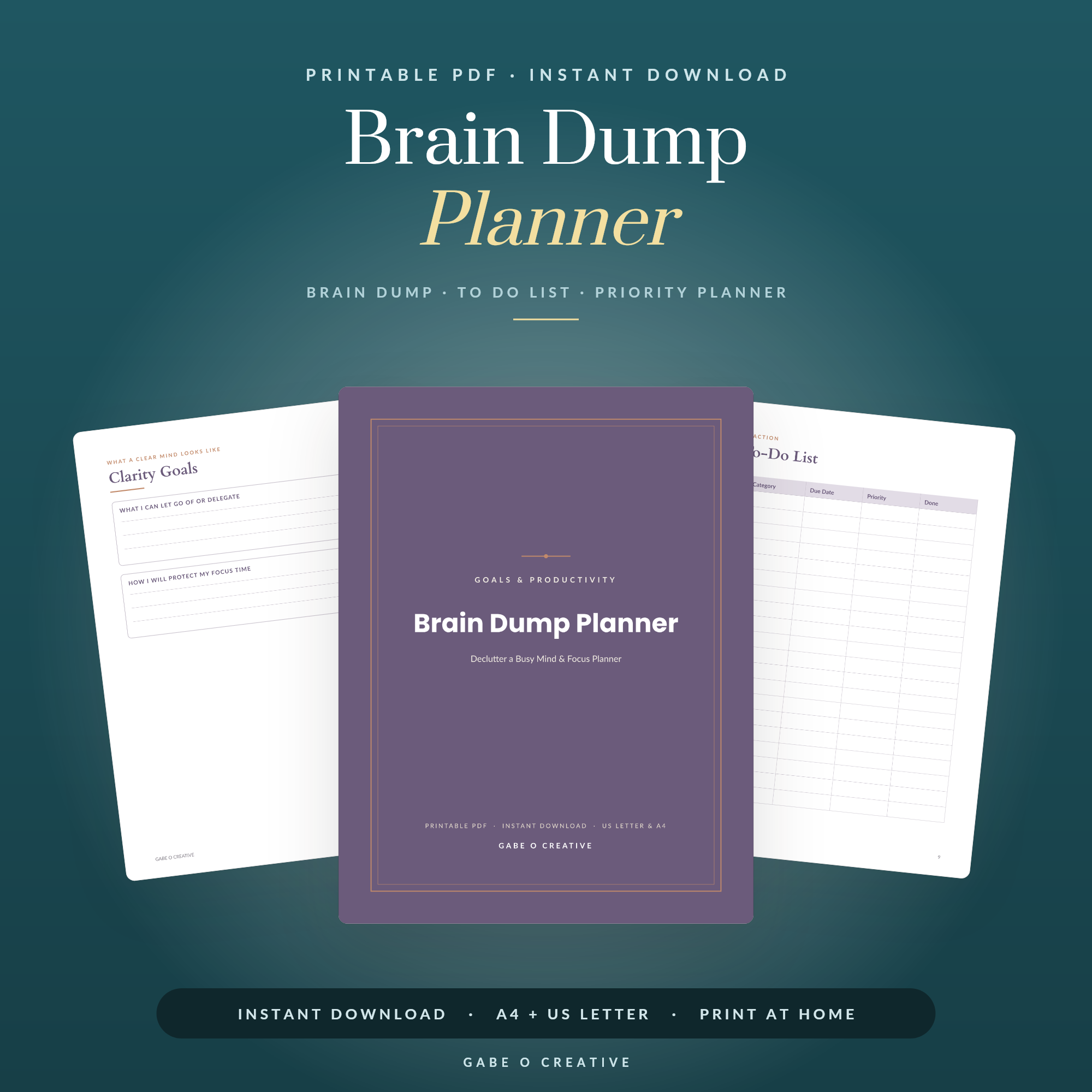
A brain dump printable gives your busy mind a place to land, so every task, worry and idea spills onto the page instead of bouncing around your head. When everything competes for attention at once, nothing gets done well—and the mental noise alone is exhausting. Emptying it all out, then sorting what actually matters, turns an overwhelming pile into a clear, doable plan. If your head feels permanently full, the right brain dump template is the fastest way to think clearly again.
Want a calmer mind in the next five minutes? Our brain dump planner gives you space to empty everything out, then a priority matrix to sort it—print it and clear your head today.
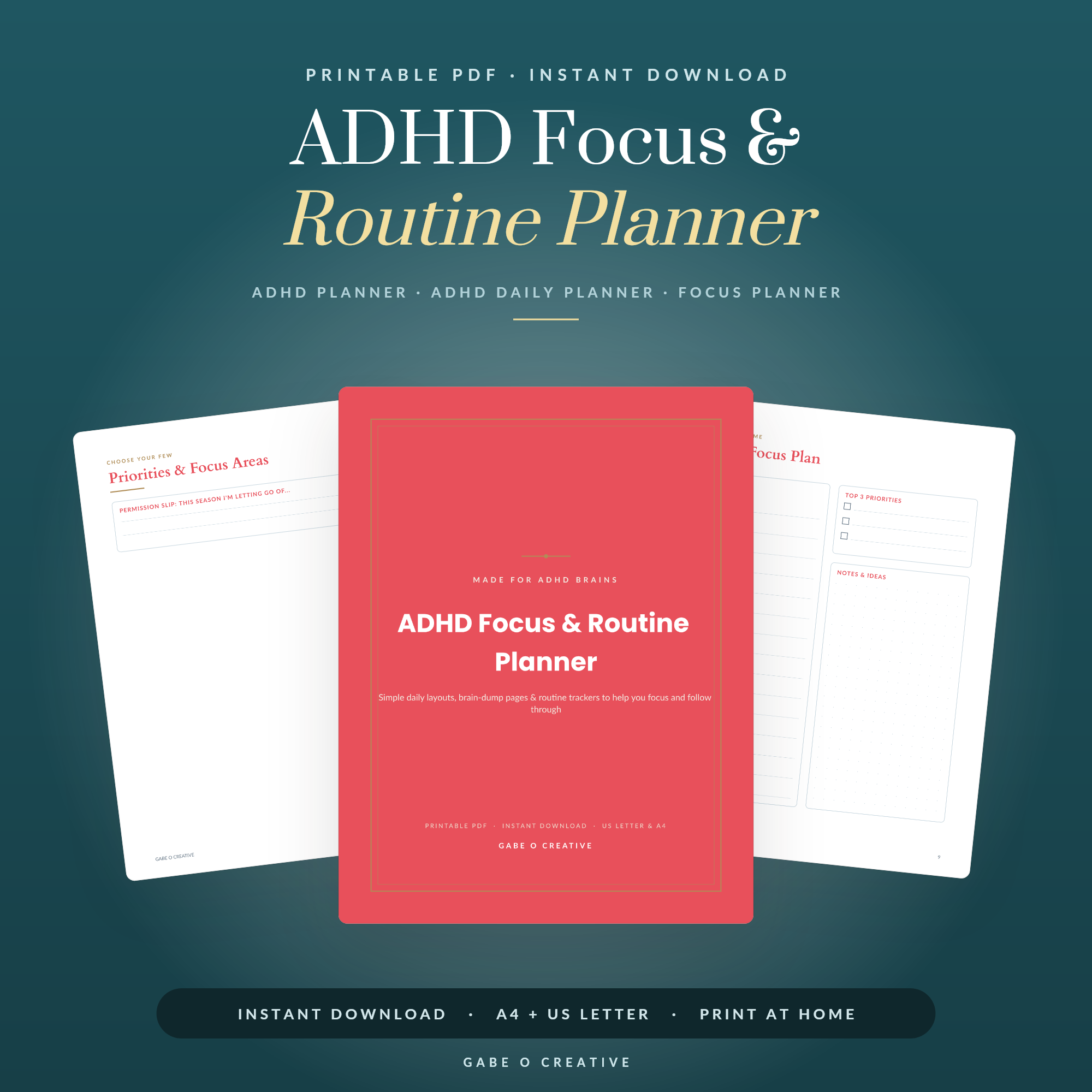 Shop ADHD Focus & Routine Planner →
What Is a Brain Dump Printable?
A brain dump printable is a worksheet (or small set of pages) designed for one job: getting everything out of your head and onto paper. You write down tasks, worries, half-formed ideas and nagging reminders without filtering or ordering them. Most printables then guide you through sorting that raw list—deciding what's urgent, what can wait, and what you can simply let go.
Unlike a to-do app that demands you categorise as you type, a brain dump lets your thoughts arrive messy. A good one helps you:
- Empty your mind fast so nothing keeps circling.
- See the whole load in one place instead of scattered worries.
- Sort by priority so you know what to tackle first.
- Release what you can't control rather than carrying it around.
Because the page holds everything for you, your mind no longer has to. That's the real magic: once a thought is written down, your brain stops anxiously rehearsing it, and you free up energy to actually act.
Why getting it out of your head works
Psychologists call the mental tug of unfinished tasks the Zeigarnik effect—your brain keeps nudging you about anything left open. A brain dump closes those loops by capturing them somewhere trustworthy. The page becomes your external memory, and the relief is often immediate: the pile that felt enormous in your head usually looks far more manageable once it's written down.
There's a focus benefit, too. Your working memory can only juggle a handful of things at once, so every open loop you hold in your head is using up capacity you'd rather spend on the task in front of you. Offloading those loops onto paper is like closing the dozens of browser tabs slowing down your mind. With the clutter externalised, you can give your full attention to one thing at a time—which is exactly when good work actually happens.
How to Do a Brain Dump
The whole process takes one short sitting:
- Set a timer. Five to ten minutes is plenty—the limit keeps you moving.
- Write everything. Tasks, worries, ideas, reminders—no filtering, no order.
- Sort it. Use a priority matrix to mark what's urgent and important.
- Pull out the tasks. Move real actions onto a master to-do list.
- Release the rest. Park ideas for 'someday' and let go of what you can't control.
A quick example: you sit down feeling frazzled and scribble out twenty-three things—from 'book dentist' to 'worried about the presentation' to 'buy birthday card'. Sorting them, only seven are urgent tasks, six can wait, four are worries you can't act on tonight, and the rest are ideas to revisit later. Suddenly twenty-three becomes seven, and seven feels doable.
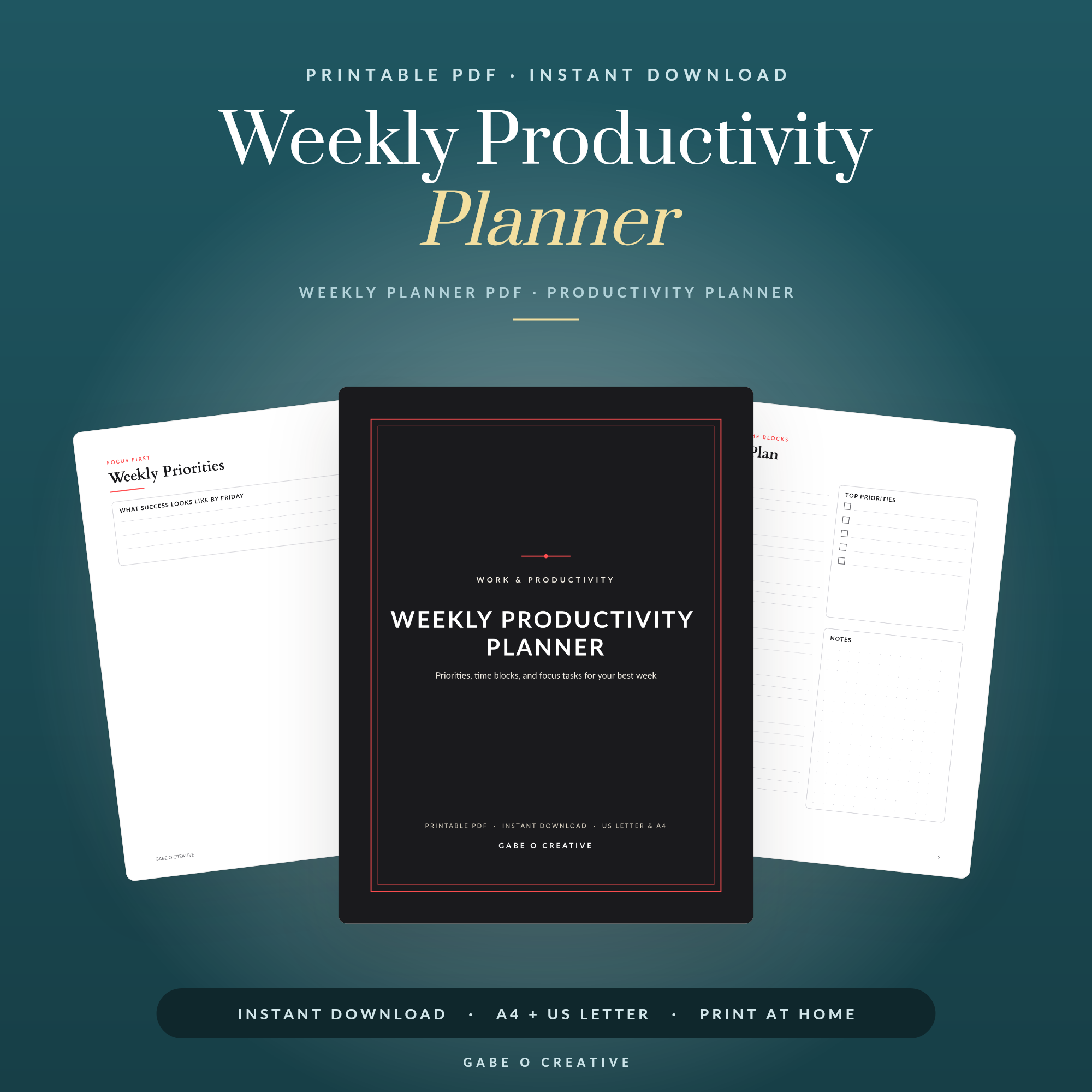 Shop Weekly Productivity Planner →
Brain Dump vs To-Do List: What's the Difference?
People often use the terms interchangeably, but they do different jobs. The brain dump is the raw, unfiltered emptying; the to-do list is the tidy result you pull from it. Skip the brain dump and your to-do list tends to miss the worries and half-thoughts that were quietly draining you.
| Brain dump | To-do list |
|---|---|
| Unfiltered and messy | Sorted and prioritised |
| Includes worries and ideas | Just actionable tasks |
| Comes first | Comes after sorting |
| Clears your head | Directs your day |
Think of the brain dump as taking everything out of an overstuffed cupboard, and the to-do list as putting back only what you need, neatly. You have to empty it before you can organise it, which is exactly why the brain dump always comes first.
This is also why jumping straight to a to-do list often fails. If you only ever write the tasks you happen to remember in the moment, the worries and half-thoughts keep circling in the background, quietly stealing your focus. The brain dump catches them all—including the ones that aren't tasks at all but still weigh on you—so your to-do list reflects your whole reality, not just the bits that surfaced first.
The Best Ways to Make Brain Dumping a Habit
A single brain dump feels great, but the real benefit comes from doing it regularly. These tactics keep your mind clear for good:
- Bookend your day—a quick dump each morning and evening with a morning and evening routine planner.
- Turn tasks into time by scheduling them with a time blocking planner.
- Plan your week from your sorted list using a weekly productivity planner.
- Do a bigger weekly sweep on a Sunday to catch anything that's built up.
- Keep a page handy so you can dump a racing thought the moment it strikes.
Build a System That Keeps Your Mind Clear
A brain dump clears the clutter, but a gentle daily system stops it building back up. If your mind moves fast and traditional planners feel like one more thing you've failed at, the ADHD focus and routine planner keeps the layout low-clutter and the wins quick. For everyday planning, pair your brain dump with the weekly productivity planner so your sorted tasks always have a home.
For more ideas, see our guide to the best productivity planner printables, learn how to handle the boring-but-essential tasks in our ADHD and life admin guide, and set up a system that wins every week with a weekly planner printable.
And once your head feels clear? Protect it. A five-minute brain dump whenever the noise creeps back keeps overwhelm at bay long before it builds. The habit is tiny, but the calm it buys you is enormous—a clear mind is the foundation everything else is built on.
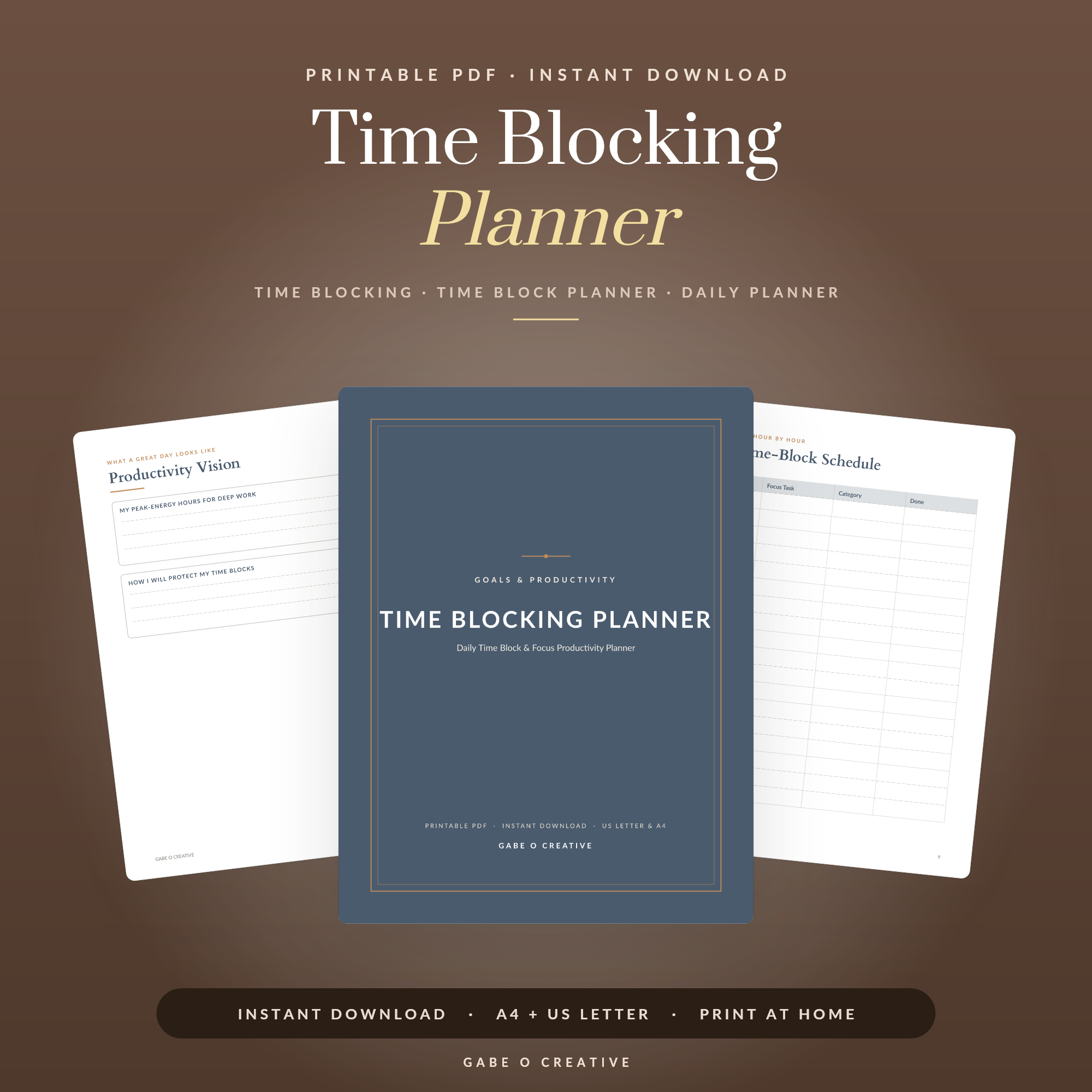 Shop Time Blocking Planner →
Brain Dump FAQs
What is a brain dump printable?
It's a print-at-home worksheet where you write down every task, worry and idea bouncing around your head, with no filtering. Most then help you sort those thoughts by priority and move the real tasks onto a clear to-do list.
How do you do a brain dump?
Set a timer for five to ten minutes, then write down absolutely everything on your mind—tasks, worries, ideas, reminders—without judging or ordering them. Once it's all on the page, you can sort what's urgent, what can wait and what you can let go of entirely.
How often should I do a brain dump?
Whenever your head feels full. Many people do a quick brain dump each morning or evening, with a bigger weekly sweep on a Sunday. The aim is to empty your mind regularly so thoughts don't pile up and turn into overwhelm.
What's the difference between a brain dump and a to-do list?
A brain dump is the raw, unfiltered emptying of everything in your head, including worries and ideas that aren't tasks. A to-do list is the tidy, prioritised result. The brain dump comes first; the to-do list is what you pull out of it afterwards.
Can a brain dump help with anxiety and overwhelm?
For many people, yes. Holding everything in your head at once is exhausting and stressful. Getting it onto the page externalises the load, helps you see that it's more manageable than it felt, and separates real tasks from worries you can release.
Do brain dumps work for ADHD brains?
They can be especially helpful. Brain dumping suits a busy, distractible mind because it captures fast-moving thoughts before they vanish, then provides a simple structure for sorting them. Pages designed for ADHD keep the layout low-clutter and the wins quick.
Ready to quiet the mental noise? Grab the brain dump planner and empty your head today, or explore the full Goals & Productivity collection for everything you need to think clearly. A clear mind starts with one page.