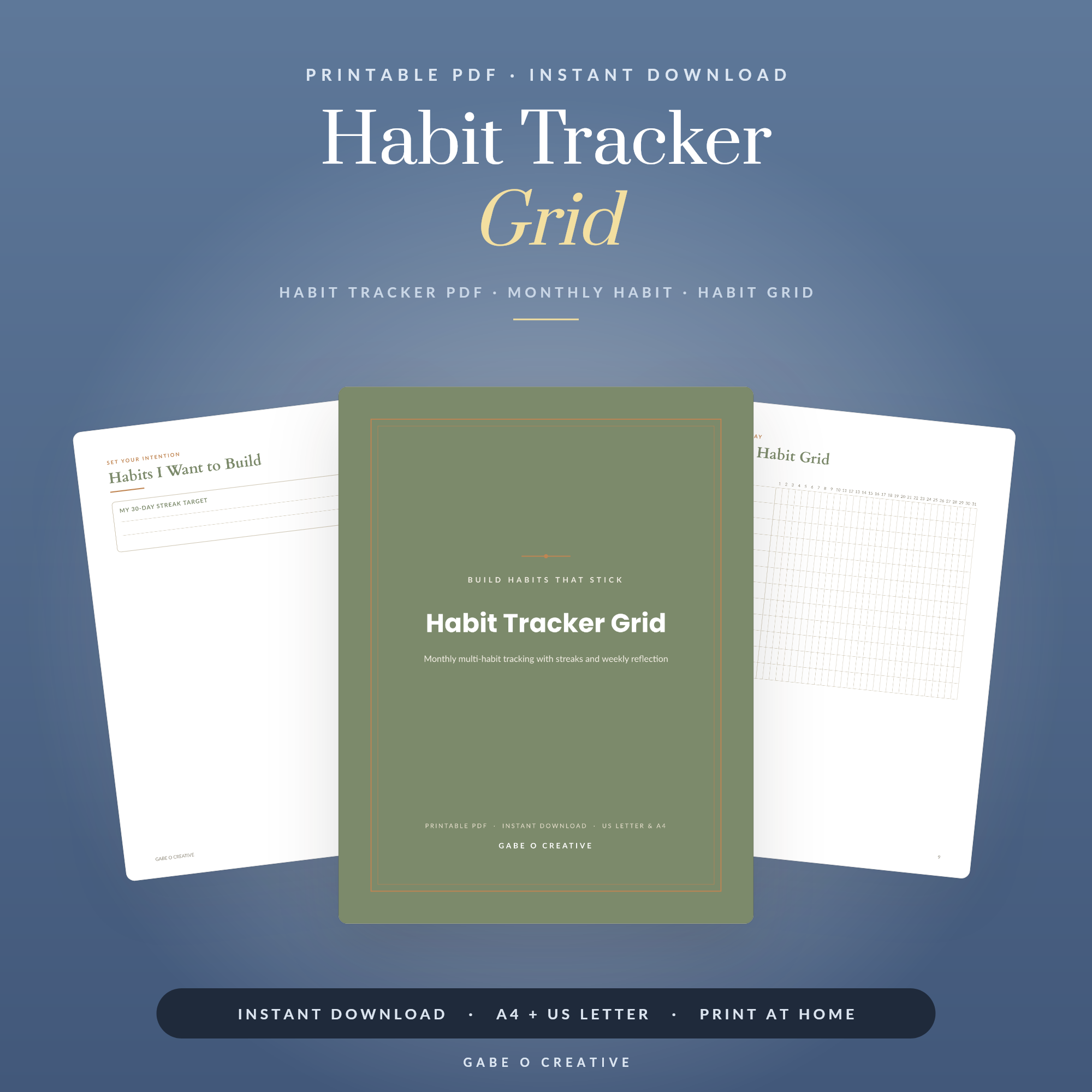
A habit tracker printable turns good intentions into something you can actually see filling up. Instead of relying on willpower, you tick off each habit as you do it, and that growing row of marks becomes a streak you won't want to break. It's one of the simplest, most reliable ways to make new behaviours stick, because progress you can see is progress you keep. If you're tired of starting habits on Monday and quietly dropping them by Wednesday, the right habit tracker grid is the easiest first step.
Want to start building habits today? Our Habit Tracker Grid lets you list your habits and tick off every day at a glance—print it and start your first streak in minutes.
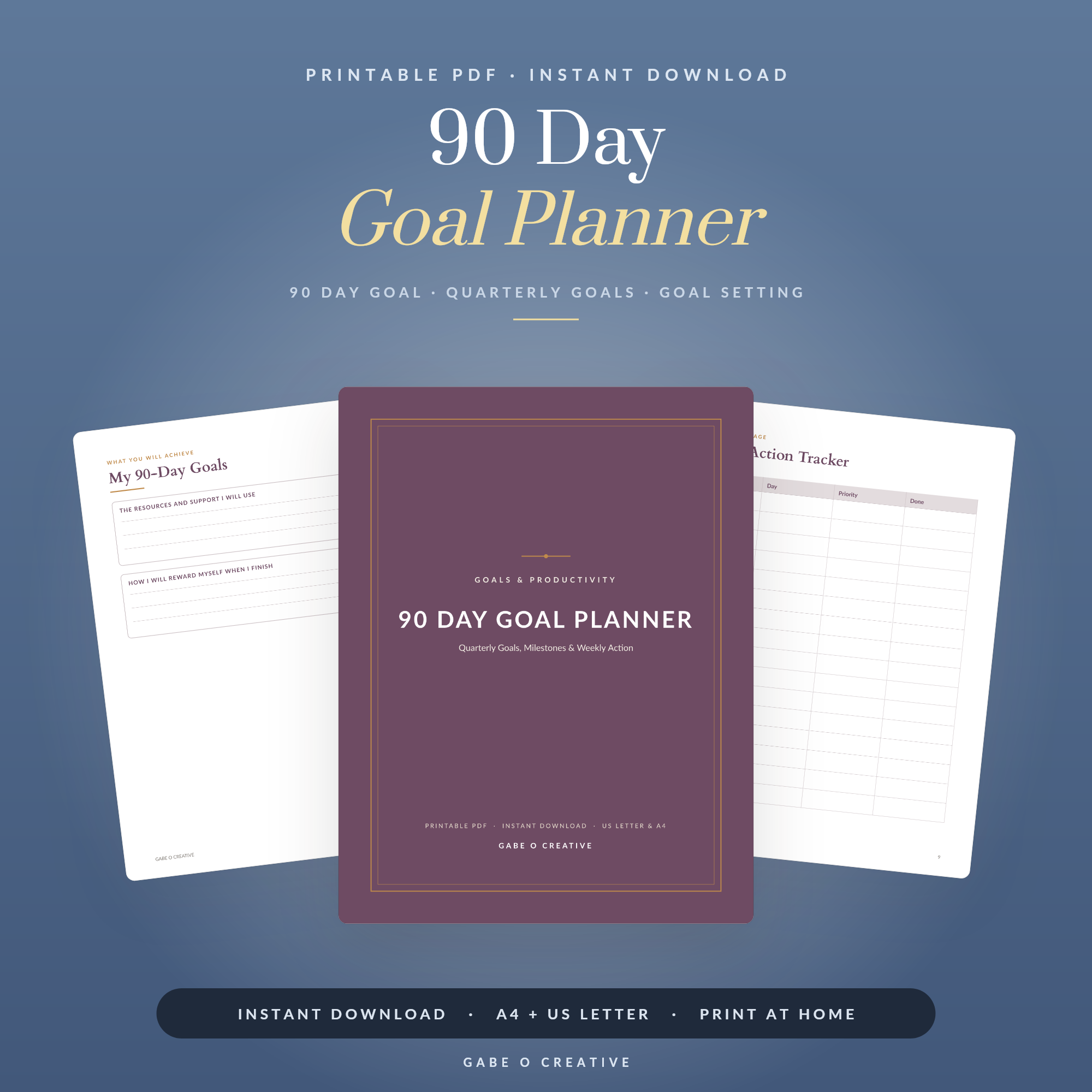 Shop 90 Day Goal Planner →
What Is a Habit Tracker Printable?
A habit tracker printable is a grid where you list the habits you want to build down one side and the days across the top, then tick each box as you complete a habit. Most include space for a handful of habits and a full month of days, so a single page shows you exactly how consistent you've been. Unlike a vague mental note to 'drink more water' or 'read every night', a printable tracker makes your follow-through visible, measurable and oddly satisfying.
A good tracker helps you:
- See all your habits in one place rather than scattered across reminders.
- Build streaks you'll feel reluctant to break.
- Spot patterns—the days or weeks where things slip.
- Stay motivated with visible, daily progress.
It's also a brilliant accountability tool. Because the tracker is physical and visible, it keeps your goals front of mind in a way an app buried on your phone rarely does. Plenty of people stick theirs to the fridge or keep it on their desk—every walk past is a nudge to do the thing, and that constant reminder is a big part of why printable trackers help people follow through.
Daily vs monthly: which layout suits you?
There are two common formats, and many trackers offer both. A daily habit tracker focuses on the here-and-now, giving you a clear checklist of a few key habits to tick off each day. A monthly habit tracker dedicates a whole month grid to your habits, so you can stand back and watch streaks and patterns build over weeks. If you're a 'one day at a time' person, start daily; if you love seeing the bigger picture, go monthly—or use both together.
The Science of Why Tracking Works
Tracking isn't just tidy admin—it taps into how our brains actually form habits. Every time you tick a box, you get a small hit of satisfaction, a tiny reward that makes you more likely to repeat the behaviour. String a few together and you've created a streak, and that's where it gets powerful: once you can see an unbroken chain of marks, your brain really doesn't want to break it. This 'don't break the chain' effect turns motivation, which is unreliable, into momentum, which compounds.
Visual progress matters too. A row of ticks is proof that you're becoming the kind of person who does this thing, and that quiet identity shift is what makes habits durable. You stop white-knuckling your way through and start thinking, 'I'm someone who runs', or 'I'm someone who reads before bed'. The tracker simply gives that identity somewhere to live—on paper, where you can see it growing.
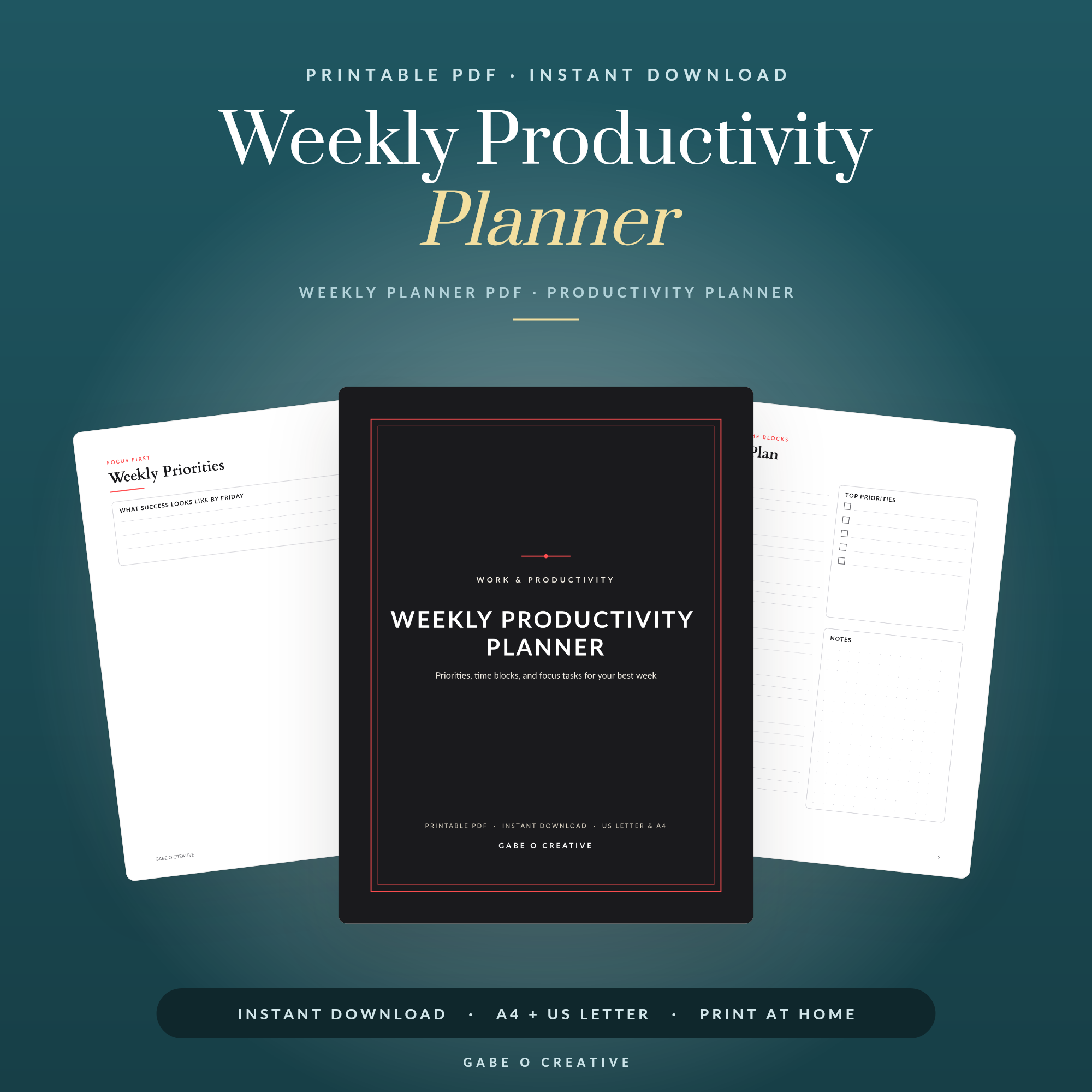 Shop Weekly Productivity Planner →
How to Choose the Right Habits to Track
The biggest mistake people make is trying to change everything at once. A fresh tracker is exciting, so it's tempting to list ten ambitious habits—and then quietly abandon all of them within a fortnight. The trick is to start small.
- Pick just one to three habits. Fewer habits, done consistently, beat ten you can't keep up with.
- Make them tiny. 'Read one page' is easier to keep than 'read for an hour', and once you've started, you'll often do more anyway.
- Choose habits tied to a goal. If you want to feel calmer, track meditation; if you want to get fit, track a daily walk.
- Be specific. 'Drink 2 litres of water' is trackable; 'be healthier' is not.
To make this easier, here are some example goals and the small, trackable habits that support them. Notice how each habit is concrete enough to tick off in seconds:
| Goal | Habit to track |
|---|---|
| Feel calmer and less stressed | 10 minutes of meditation |
| Get fitter | A 20-minute walk |
| Read more books | Read one page before bed |
| Drink more water | Finish 2 litres of water |
| Be more productive | Plan tomorrow the night before |
| Sleep better | Phone away by 10pm |
Once your first one to three habits feel automatic—usually after a few weeks—you can swap one out or add another. Consistency first, ambition second.
How to Use Your Habit Tracker Day to Day
Getting started takes one short sitting:
- List your habits. Write one to three small, specific habits down the side of your grid.
- Pick your window. Decide whether you're tracking daily or across a full month.
- Tick as you go. Mark each box the moment you complete a habit, while it's fresh.
- Review weekly. Glance back each Sunday to see your streaks and any slips.
- Adjust gently. If a habit keeps getting missed, make it smaller rather than scrapping it.
The single most important rule is this: never miss twice. Missing one day is just life—you'll have busy days, off days and the occasional forgotten box. But missing two days in a row is how a skipped habit quietly becomes a dropped one. So if you miss, don't spiral or write off the week. Simply tick the next day and carry on. One blank box won't undo your progress; giving up will.
Habit Stacking: The Trick That Makes Habits Effortless
One of the most effective ways to make a new habit stick is to attach it to something you already do. This is called habit stacking, and the formula is simple: 'After I [existing habit], I will [new habit].' Because the existing habit is already automatic, it acts as a built-in reminder for the new one.
For example: 'After I pour my morning coffee, I will write down my top three tasks.' Or, 'After I brush my teeth at night, I will read one page.' You're not relying on memory or motivation—you're borrowing a trigger that already exists. Use the notes column on your tracker to jot which existing routine each new habit is stacked onto, and ticking the box becomes second nature.
To go further, pair your tracker with a wider system. A Weekly Productivity Planner gives your habits a home alongside your tasks, while the 90 Day Goal Planner connects your daily ticks to a bigger target you're working towards. If you'd like a flexible all-rounder, the Undated Productivity Planner lets you start any day without wasting pages, and a few productivity stickers make ticking off your wins genuinely fun.
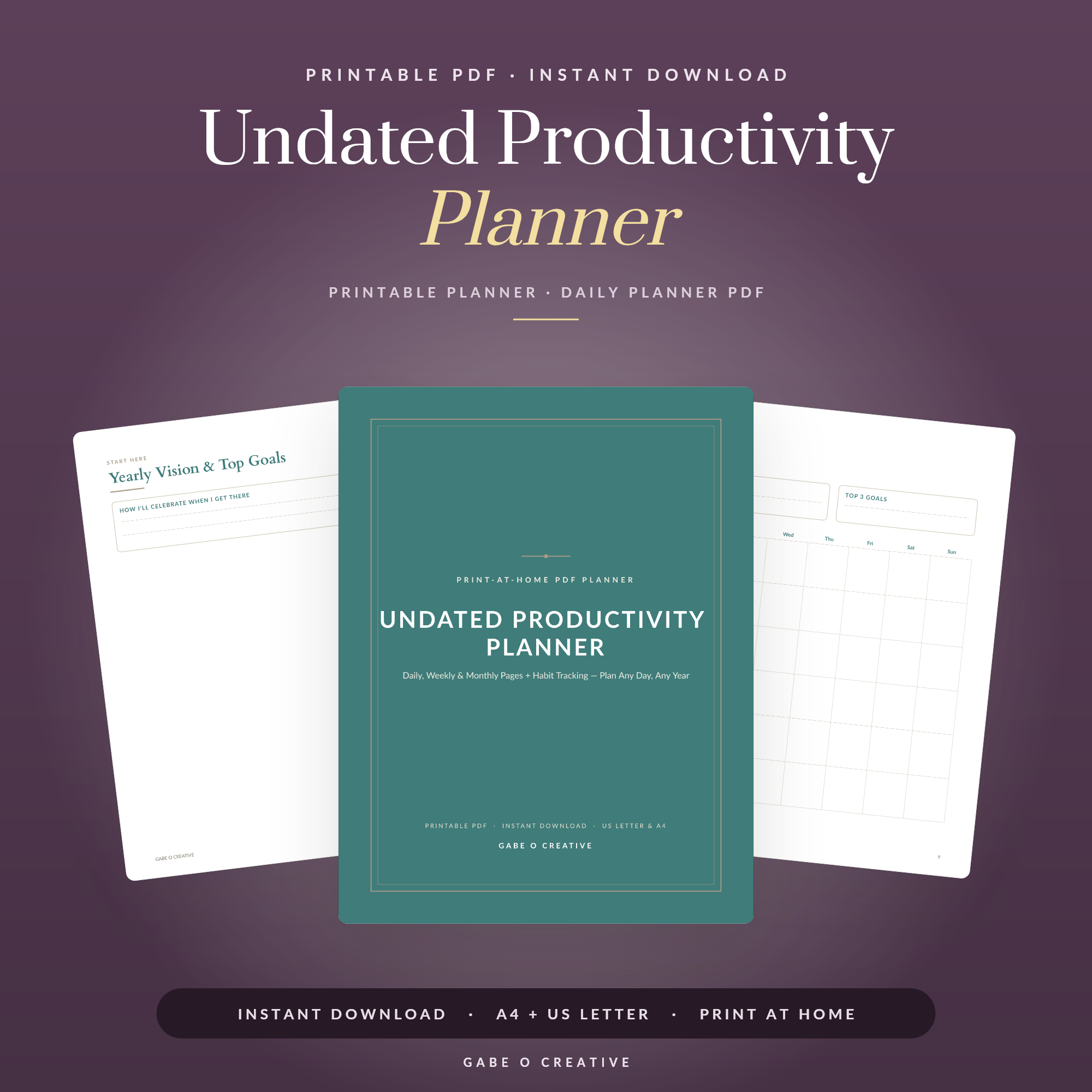 Shop Undated Productivity Planner →
Printable vs App: Which Habit Tracker Wins?
Apps are convenient and they buzz you with reminders, but a printable tracker has a quiet advantage: it's visible and it's tactile. There's something about physically marking a box that feels more rewarding than a digital tap, and a tracker on your wall or desk can't be swiped away or buried under notifications. You don't get distracted by other apps the moment you open it, either.
That said, you don't have to choose. Many people print their tracker for the wall and load the same PDF into a tablet app like GoodNotes for tracking on the go. Whichever you prefer, the principle is identical—make your progress visible, and habits get easier to keep.
For more ways to build a system that lasts, see our guide to the best productivity planner printables. If wellbeing is your focus, a self-care journal pairs beautifully with habit tracking, and students will find plenty of structure in our student planner printables guide too.
Habit Tracker FAQs
What is a habit tracker printable?
It's a print-at-home grid where you list the habits you want to build and tick off each day you do them. The visible row of marks becomes a streak you won't want to break, which makes consistency far easier than willpower alone.
How many habits should I track at once?
Start with just one to three. Trying to overhaul everything at once is the fastest way to quit. Pick a couple of small, daily habits, get consistent, and only add more once they feel automatic.
What's the difference between a daily and monthly habit tracker?
A daily habit tracker focuses on ticking habits off each day, often with space for a few habits at a glance. A monthly habit tracker gives you a full month grid per habit, so you can see streaks and patterns build over the whole month.
Does habit tracking actually work?
Yes, for most people. Tracking adds visual feedback and a sense of momentum, so each tick is a tiny reward. Seeing an unbroken streak triggers a powerful 'don't break the chain' instinct that keeps you going on the days motivation dips.
Can I use a habit tracker on my phone or tablet?
Yes. Load the PDF into an app like GoodNotes or Notability and tick your habits off with a stylus, so you can track anywhere without printing. You get the satisfaction of a grid with the convenience of your tablet.
What should I do if I miss a day?
Never miss twice. Missing one day is an accident; missing two starts a new habit of skipping. Just tick the next day and carry on. One blank box won't undo your progress, but giving up will.
Ready to build habits that actually stick? Grab the Habit Tracker Grid and start your first streak today, or explore the full Goals & Productivity collection for everything you need to stay consistent. Every tick gets you closer.