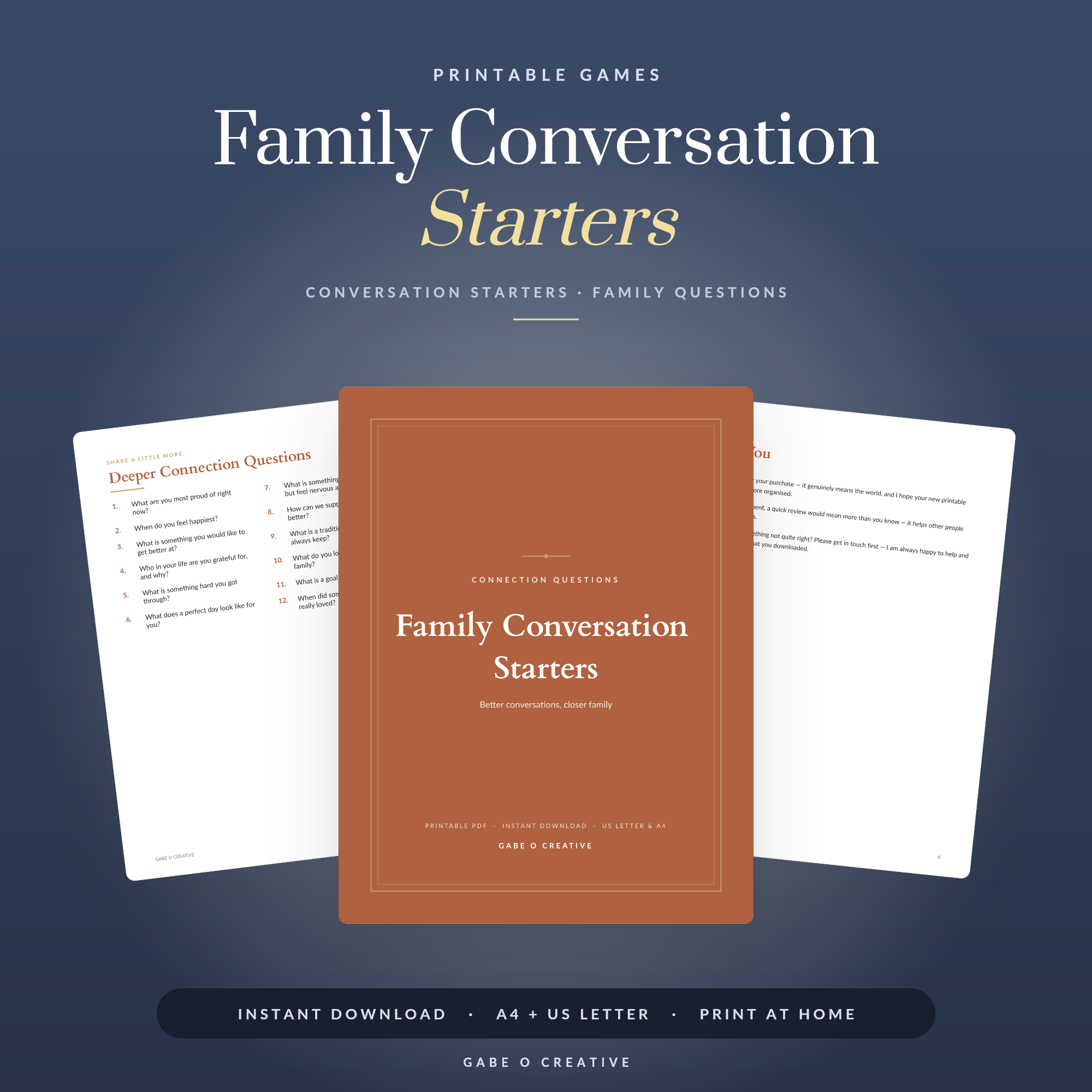
Family conversation starters are the quiet fix for one of modern family life's most familiar frustrations: you ask 'how was your day?' and get a shrug and a 'fine' before everyone drifts back to their own world. Meaningful conversation with children rarely happens on demand — but it happens beautifully when you give it a gentle nudge and a good question. A deck of ready-made prompts turns dinner, the car journey or the bedtime wind-down into a moment everyone actually looks forward to. Our Family Conversation Starters pack gives you a whole set of them, sorted by mood, so you never sit there thinking 'what do I even ask?'.
Print a set, pop them in a jar on the table, and let a single question turn 'fine' into a proper chat.
Why the dinner table matters more than you think
Family mealtimes are one of the most reliably good things you can do together, and the research backs up what most parents feel instinctively: children who regularly talk with their family tend to feel more connected, more confident and more secure. But the value isn't in the food — it's in the talking. The trouble is that 'how was school?' is a closed question that invites a closed answer. Swap it for something open, specific and a little bit playful, and the whole dynamic changes. Conversation starters simply make that swap easy, every single day, without you having to be endlessly inventive after a long day of your own.
 Shop Would You Rather →
Fun and silly starters to break the ice
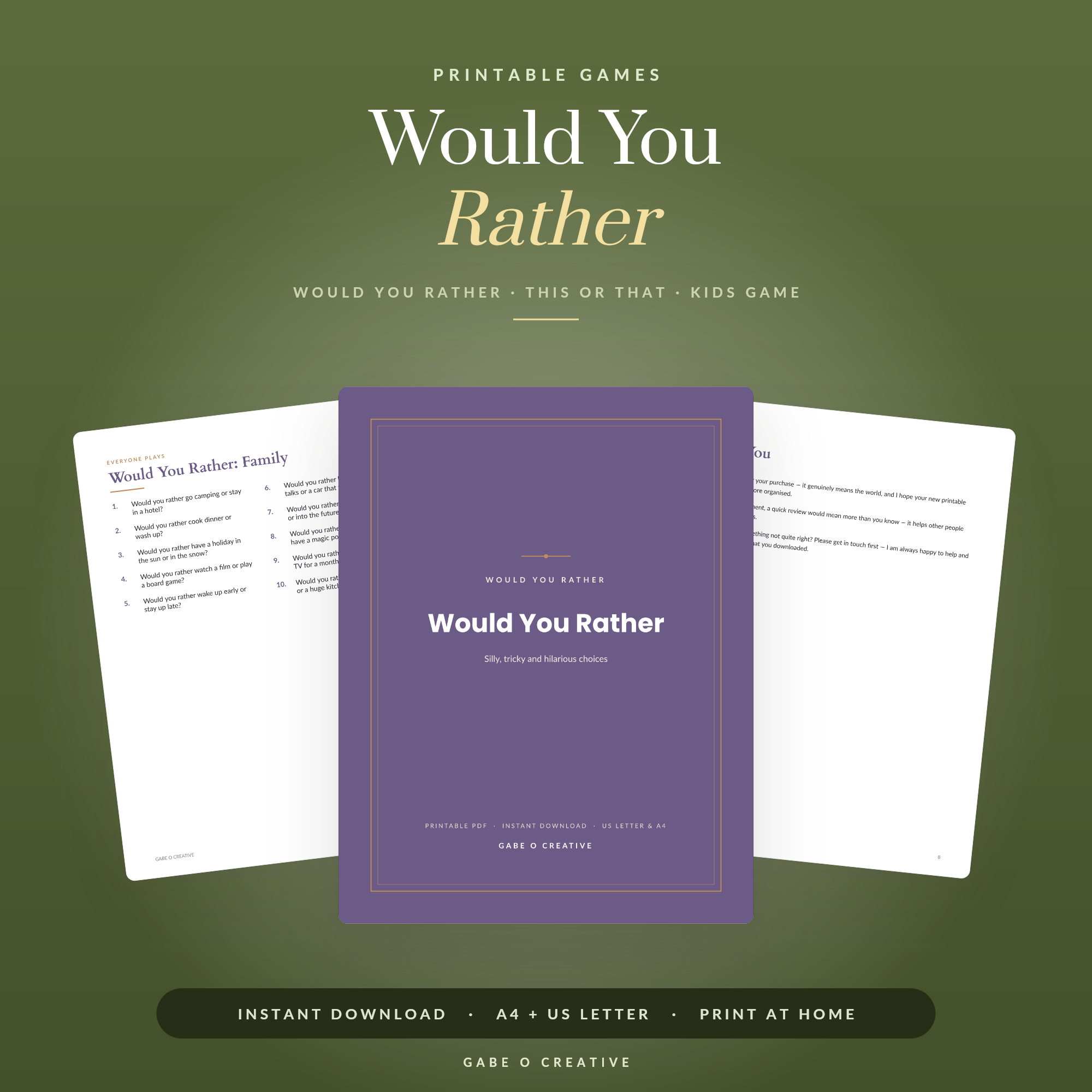
Start light — laughter opens people up faster than earnestness ever will. Try: 'If you could be any animal for a day, which would you pick and why?' 'What's the most ridiculous thing you'd buy if money didn't matter?' 'If our family had a theme tune, what would it be?' 'Would you rather have fingers for toes or toes for fingers?' Silly questions are brilliant because there's no wrong answer, so even a shy or tired child can dive in. A round of would you rather is the perfect warm-up before anything deeper, and it works from about age four right up to grumpy teenager.
Thoughtful questions that go deeper
Once the giggles are flowing, you can gently steer somewhere more meaningful. 'What's something you did today that you're proud of?' 'When did you feel really happy this week?' 'What's something that was tricky, and how did you handle it?' 'Who was kind to you today — and who were you kind to?' These invite children to reflect without feeling interrogated, and they quietly teach emotional vocabulary along the way. The golden rule: answer them yourself, honestly and first. When a parent shares a real 'today I found this hard' moment, children learn that the table is a safe place to be honest too.
Beyond the dinner table
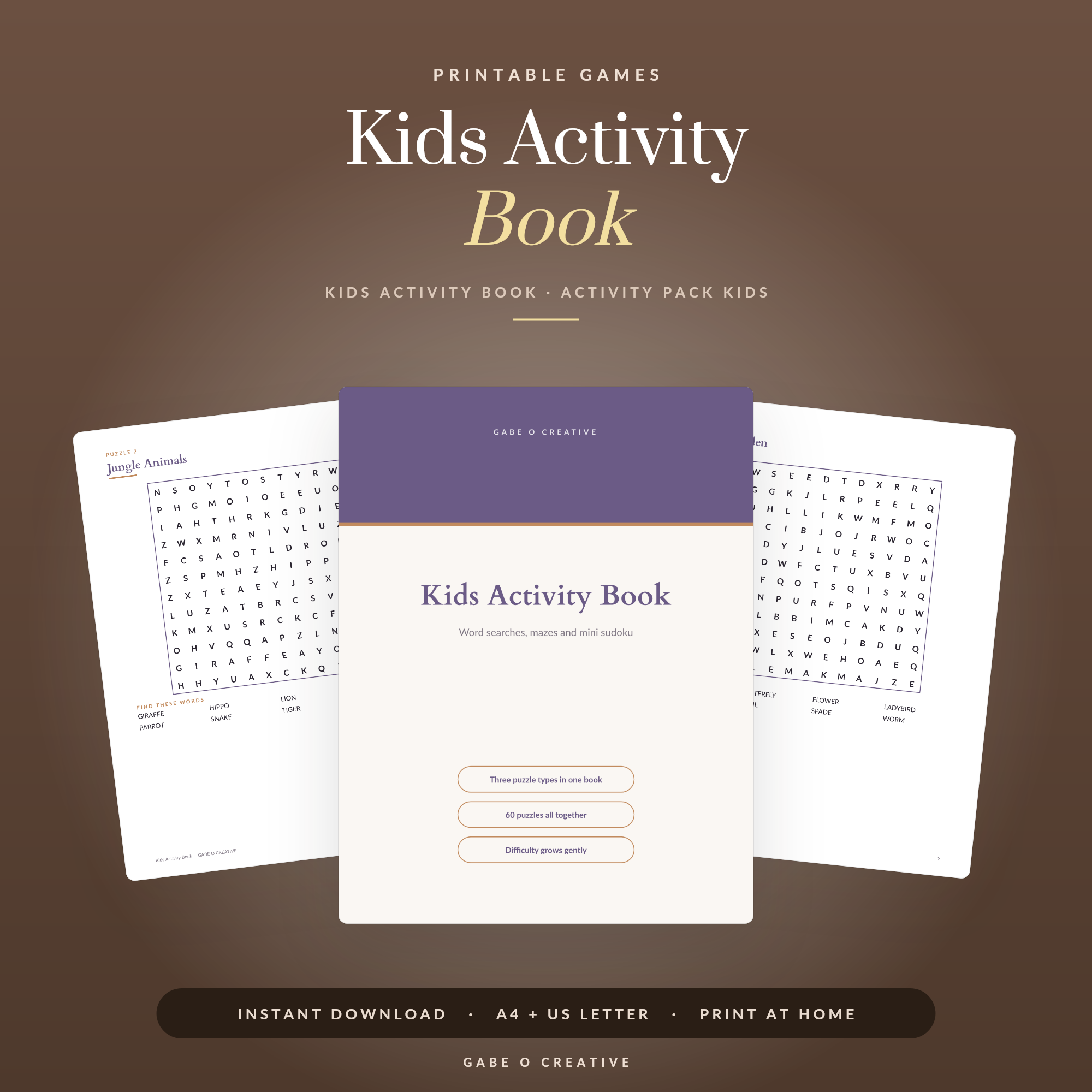
The dinner table is the classic home for conversation starters, but it's not the only one — and sometimes not even the best one. The car is magic: with no eye contact and a captive audience, children often say things they'd never volunteer face to face, so keep a few cards in the glovebox for the school run or a long journey. Bedtime is another sweet spot, when a calm 'what was the best bit of today?' becomes a lovely nightly ritual. And a walk together, shoulder to shoulder, loosens tongues in the same way the car does. Pair a set with a kids activity book for journeys and you've got quiet time and connection time both covered.
 Shop Kids Activity Book →
Make it a family ritual
The trick to making conversation starters stick is turning them into a small, repeatable ritual rather than a one-off novelty. Let a different person draw the card each night. Give everyone the right to 'pass' — pressure kills honesty, and a child who can opt out today will often opt in tomorrow. Keep phones off the table so the questions have room to breathe. And don't rush to fix or judge an answer; just being curious ('oh, tell me more about that') is what keeps children talking. Over weeks and months, these tiny moments add up to something real: children who are used to talking to you, which pays off enormously when the questions they need to ask get bigger.
| Moment | Best question type | Why it works |
|---|---|---|
| Dinner | Mix of silly and thoughtful | Everyone's together and relaxed |
| Car | Would-you-rather, this-or-that | No eye contact = more honesty |
| Bedtime | Calm, reflective | Gentle wind-down and connection |
| Walks | Open, hypothetical | Side-by-side loosens tongues |
| With teens | Light, opinion-based | Low pressure keeps them in |
Bring it all together
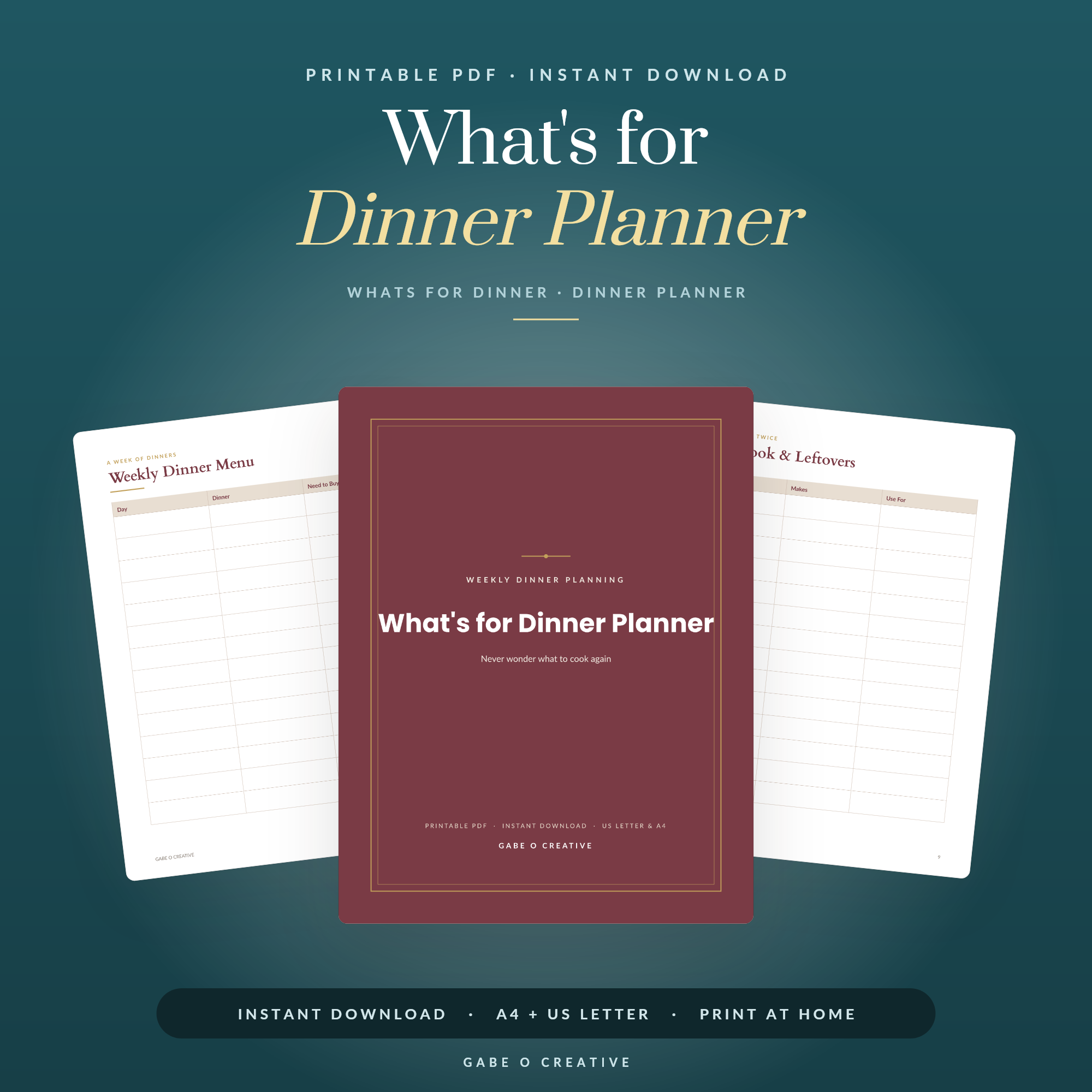
Family connection is built from small, consistent moments, not grand gestures — and a good question at the right time is one of the simplest ways to create them. Keep a deck in the kitchen, a few in the car, and make 'draw a card' a normal part of your evening. If regular family meals are something you're trying to protect, our What's for Dinner planner takes the daily 'what are we even eating?' stress off the table so the focus can be on the people around it, and our guide to a gentle evening routine helps carve out the space. For more screen-free family ideas, see our boredom-busters and scavenger hunt guides.
Browse more printable games and prompts in our Games & Activities collection — conversation starters, would-you-rather packs and activity books, all instant downloads.
Frequently asked questions
What are family conversation starters?
They're simple prompts or questions — 'what made you laugh today?', 'would you rather...?', 'what's one thing you're proud of this week?' — designed to spark real conversation instead of one-word answers. Families keep them on cards or a printable list and pull one out at dinner, in the car, or at bedtime.
How do I get my kids to actually talk at dinner?
Ditch the closed 'how was your day?' for open, specific questions, answer them yourself first, and keep phones off the table. A jar or deck of conversation-starter cards makes it a game rather than an interrogation, which is what gets children opening up.
What are good dinner conversation starters for kids?
'If you could have any superpower, what would it be?', 'what's your favourite memory with our family?', 'if you ran the school for a day, what would you change?', and 'what's one kind thing you did or saw today?' all work brilliantly. Mix silly with thoughtful so it never feels like homework.
Are conversation starters good for teenagers?
Yes — teens often talk more freely when it doesn't feel like prying. Choose lighter, opinion-based or hypothetical questions, let them pass if they want to, and resist turning their answer into a lecture. Low pressure keeps an older child in the conversation.
When's the best time to use conversation starters?
Dinner is the classic slot, but the car, bedtime wind-down, and long walks all work well. Keep a set in the kitchen and a few in the glovebox so you can reach for them whenever the moment's right.
How many conversation starters do I need?
A pack of 100 or so keeps things fresh for months without repeating too soon. Sort them by type — funny, thoughtful, would-you-rather, 'this or that' — so you can match the question to the mood of the table.
 Shop What's for Dinner Planner →
Ready for better family chats? Grab the Family Conversation Starters pack, print a set tonight, and turn tomorrow's dinner into a conversation worth having.