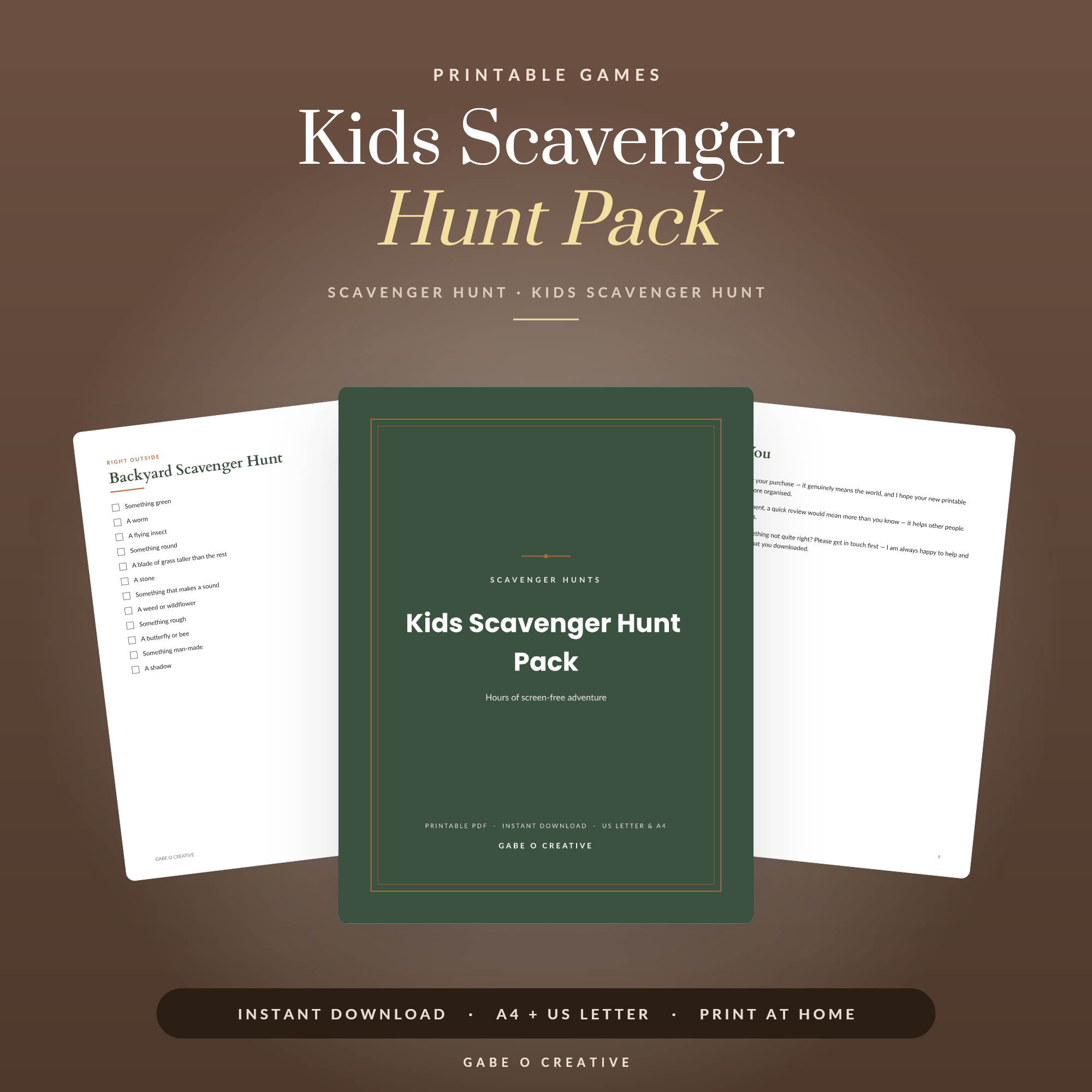
Scavenger hunt ideas for kids are the ultimate low-effort, high-joy activity: a few minutes to set up, no screens, and a burst of focused, giggly energy that can fill an entire afternoon. Whether it's a rainy-day hunt around the house, a nature trail in the garden, or a spotting game to survive a long car journey, the format flexes to any space and any age. Our Kids Scavenger Hunt pack gives you ready-made lists and clue cards so you can start playing in minutes instead of scribbling lists on the back of an envelope.
Print a hunt today, hand over a pencil, and watch an ordinary afternoon turn into a proper adventure.
Why scavenger hunts work so well
A good hunt hits every note parents care about. It's screen-free and active. It builds observation, reading and problem-solving without feeling like schoolwork. It works solo or in teams, indoors or out, for one child or a whole party. And crucially, it channels restless energy into a goal — which is far easier than trying to invent an activity from scratch when everyone's already grumpy. Pair a hunt with a few other boredom busters and you've got a full toolkit for the holidays.
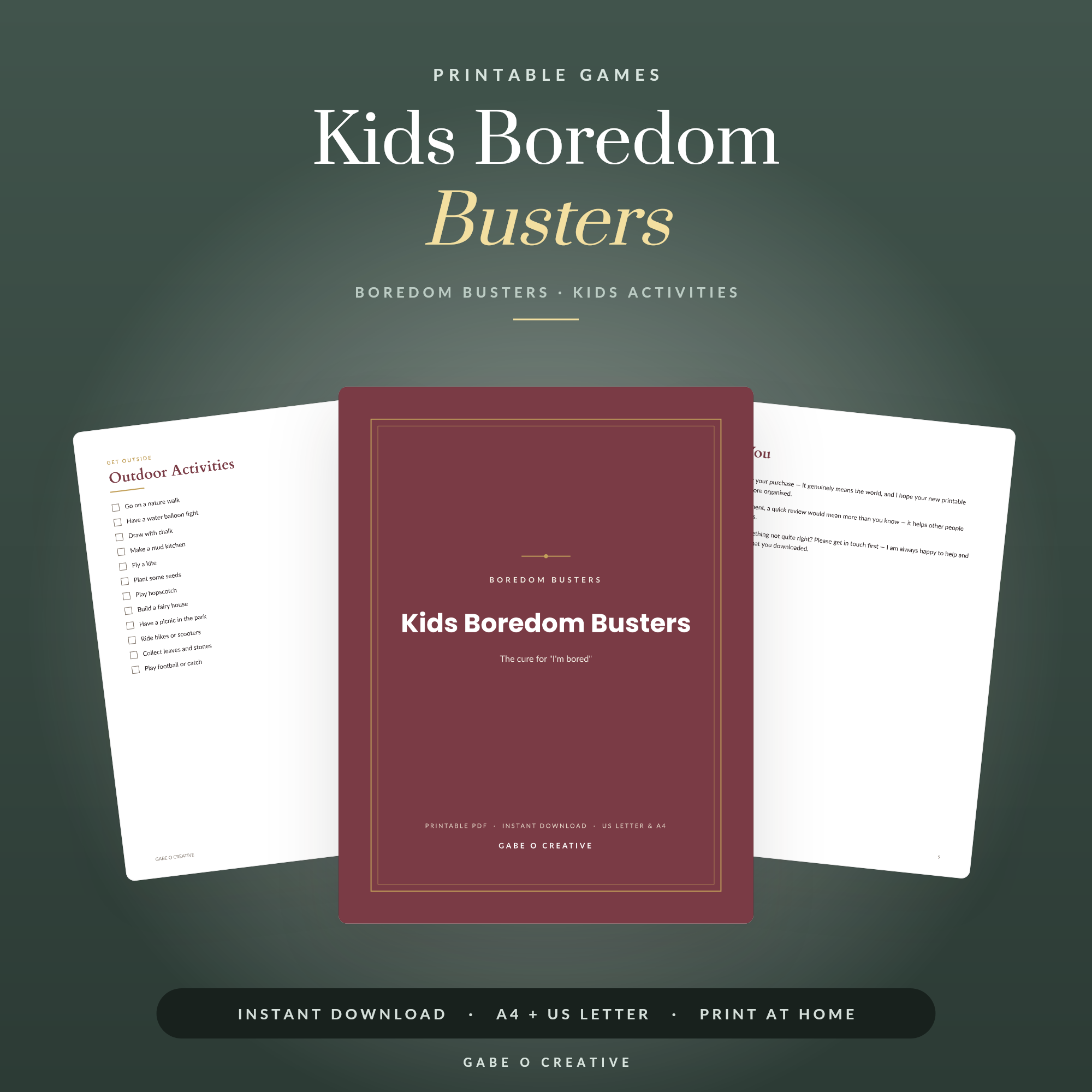 Shop Kids Boredom Busters →
Indoor scavenger hunt ideas
Perfect for wet afternoons. Try an object hunt (something soft, something that makes a sound, a book with a red cover), a colour hunt (find five blue things), or an alphabet hunt where children find an item for each letter. For a bit more challenge, hide ten numbered objects and give a clue for each. Add mini physical challenges between finds — hop to the next room, do five star jumps — so indoor energy has somewhere to go. Keep a printable indoor list in the drawer alongside your activity book for instant rainy-day rescue.
Garden and park nature hunts
Outdoors, a nature hunt is unbeatable. Ask children to find something rough, something smooth, a Y-shaped twig, a feather, a bug, something that grew and something that fell. In the park, add a spotting version — a dog, a red flower, a bird, a bench — that needs no collecting. Nature hunts double as gentle science: talk about what they found, sort it on a nature table, and you've turned a game into a learning moment without anyone noticing.
Road-trip and 'on the move' hunts
Long journeys are where scavenger hunts earn their keep. A spotting list — a tractor, a bridge, a caravan, a yellow car, a lorry with an animal on it — keeps eyes on the window instead of on a screen and the clock. Our Road Trip Activity Pack bundles spotting hunts with other travel games, and a round of Would You Rather fills the gaps between motorway junctions. It's the calmest way to cover the last hour before 'are we nearly there yet?' takes hold.
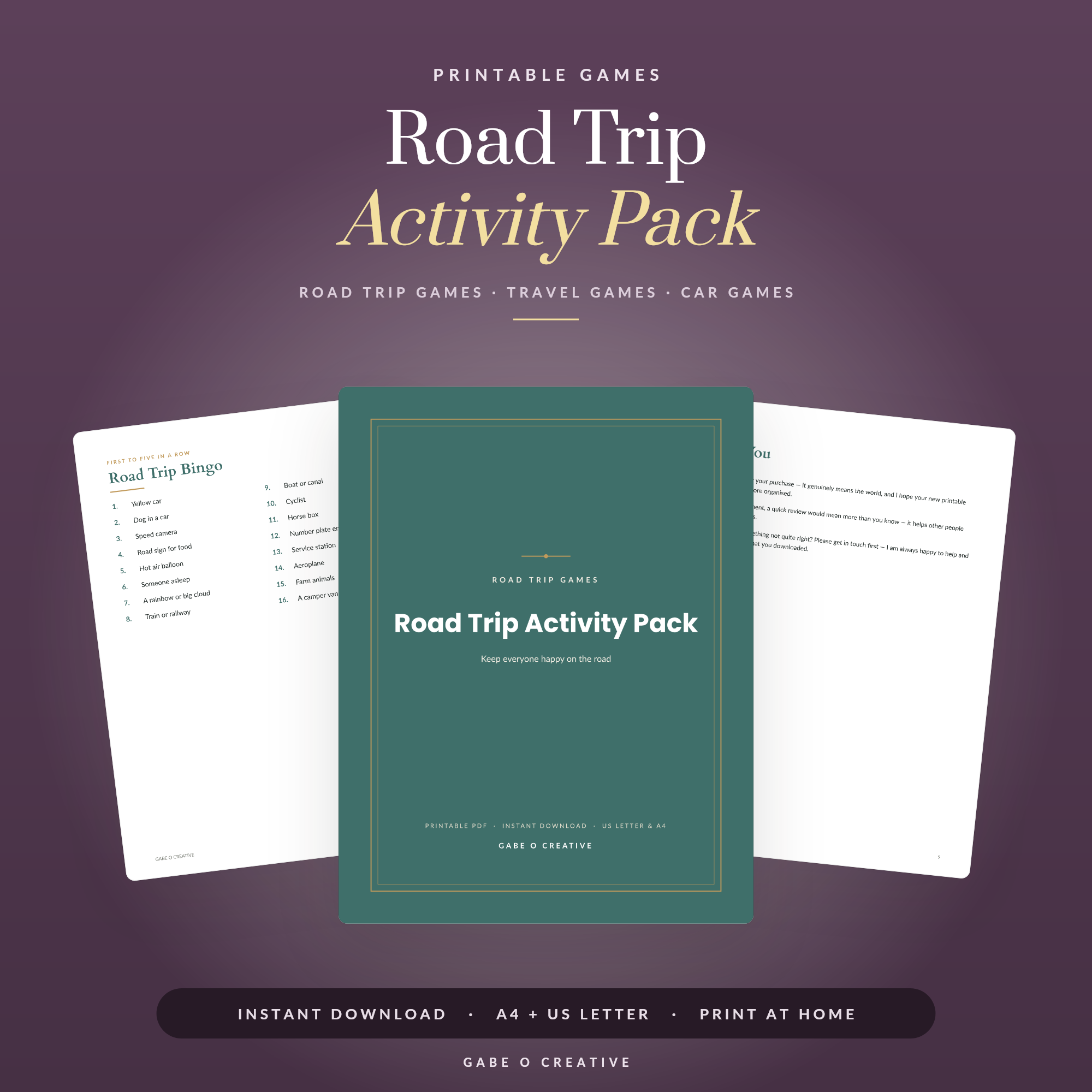 Shop Road Trip Activity Pack →
How to write clues kids will love
The difference between a flat hunt and a brilliant one is the clues. For little ones, use picture clues or a simple rhyme that points at a place: 'I keep your milk cold — look inside me.' For older children, layer in riddles, mirror-writing, or a small word puzzle they solve to reveal the next location. Keep a clue trail to six to ten stops so momentum holds, and finish with a modest 'treasure' — a sticker, a snack, or the chance to choose tonight's film. The reveal is the payoff that makes them beg to play again.
A few small touches make any hunt feel special. Give each child a 'kit' — a clipboard or paper bag, a pencil and, for extra glamour, a magnifying glass — and they instantly take it more seriously. Use a timer for teams to add friendly urgency, or drop the timer entirely for younger ones who just want to potter and find. If the weather turns, keep a laminated indoor list ready so you can switch without a meltdown. And keep hunts short the first few times: a quick win leaves them wanting more, whereas a marathon that fizzles out teaches them the game is boring. Once they know the format, they'll happily design hunts for each other — which is a boredom-buster all of its own.
| Hunt type | Best for | What you need |
|---|---|---|
| Indoor object hunt | Rainy days, ages 3–8 | A printable list and a pencil |
| Nature hunt | Garden and park, all ages | A collecting bag or checklist |
| Clue trail | Birthdays, ages 6+ | Written clues and a small prize |
| Road-trip spotting | Long journeys | A spotting sheet per child |
| Photo hunt | Older kids, ages 8+ | A tablet or camera and a list |
Scavenger hunts for parties
For a party, a scavenger hunt is the game that runs itself. Theme the list to match — paw prints for a puppy party, gems for a pirate treasure hunt — split children into small teams, hand each a printable checklist, and set a timer. It keeps a big group busy, needs almost no kit, and produces a natural winner. Slot it into your plan alongside a party planning checklist so nothing gets forgotten in the excitement, and add a few summer bucket-list ideas if the party spills into the holidays.
Browse more printable games in our Games & Activities collection — scavenger hunts, puzzle books, road-trip packs and conversation games, all instant downloads.
Frequently asked questions
What is a scavenger hunt for kids?
A scavenger hunt is a game where children work through a list of items to find or spot, or follow clues from one place to the next. It can be a simple checklist ('find something red, something round, a leaf') or a full clue-to-clue treasure trail ending in a small prize.
What are good scavenger hunt ideas for kids?
Indoor object hunts, garden nature hunts, park 'I-spy' lists, colour and shape hunts for younger children, alphabet hunts, and photo hunts where kids snap each item on a tablet. Match the type to the space and the ages involved.
How do I write scavenger hunt clues?
For younger children use picture clues or simple rhymes that point to a location ('I keep your milk cold — look inside me'). For older kids, add riddles, mirror-writing or a word puzzle at each stop. Keep the trail to 6–10 clues so it stays exciting without dragging.
What can I use for an indoor scavenger hunt?
Everyday household items work perfectly: something soft, something that makes a sound, a book with a red cover, a matching pair of socks. Add small challenges between finds — do five star jumps — to burn energy on a rainy day.
Are scavenger hunts good for parties?
Excellent — they entertain a group, need almost no equipment and can be themed to any party. Split children into small teams, give each a printable list, and set a time limit so it stays lively and fair.
What ages are scavenger hunts suitable for?
From about three upwards. Toddlers do colour and shape spotting with an adult; primary-age children handle written lists and simple clues; older kids love multi-clue treasure trails and photo challenges. The same hunt can be levelled up or down for mixed ages.
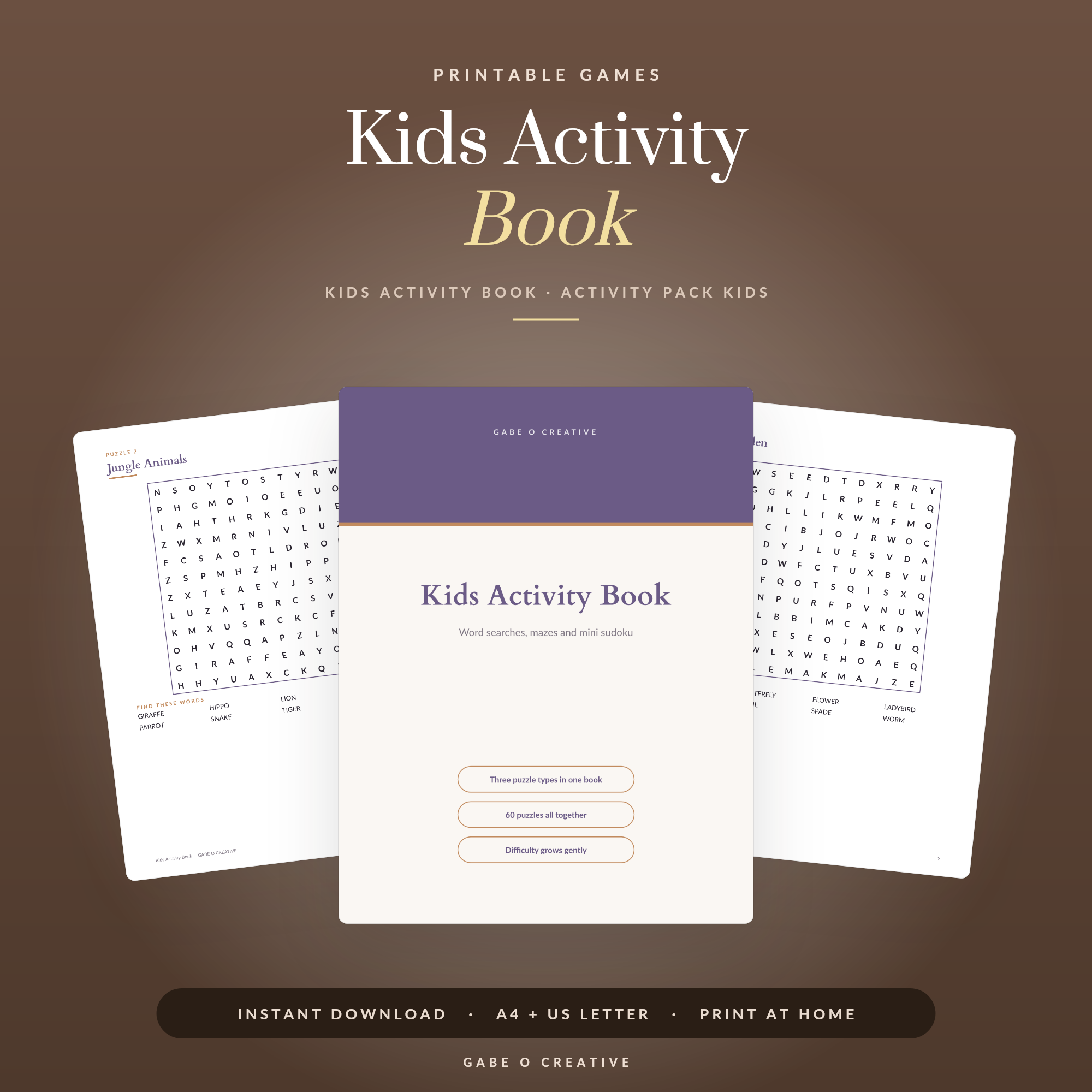 Shop Kids Activity Book →
Ready to play? Download the Kids Scavenger Hunt pack, print a list, and turn today into a treasure hunt the kids will ask to do again tomorrow.