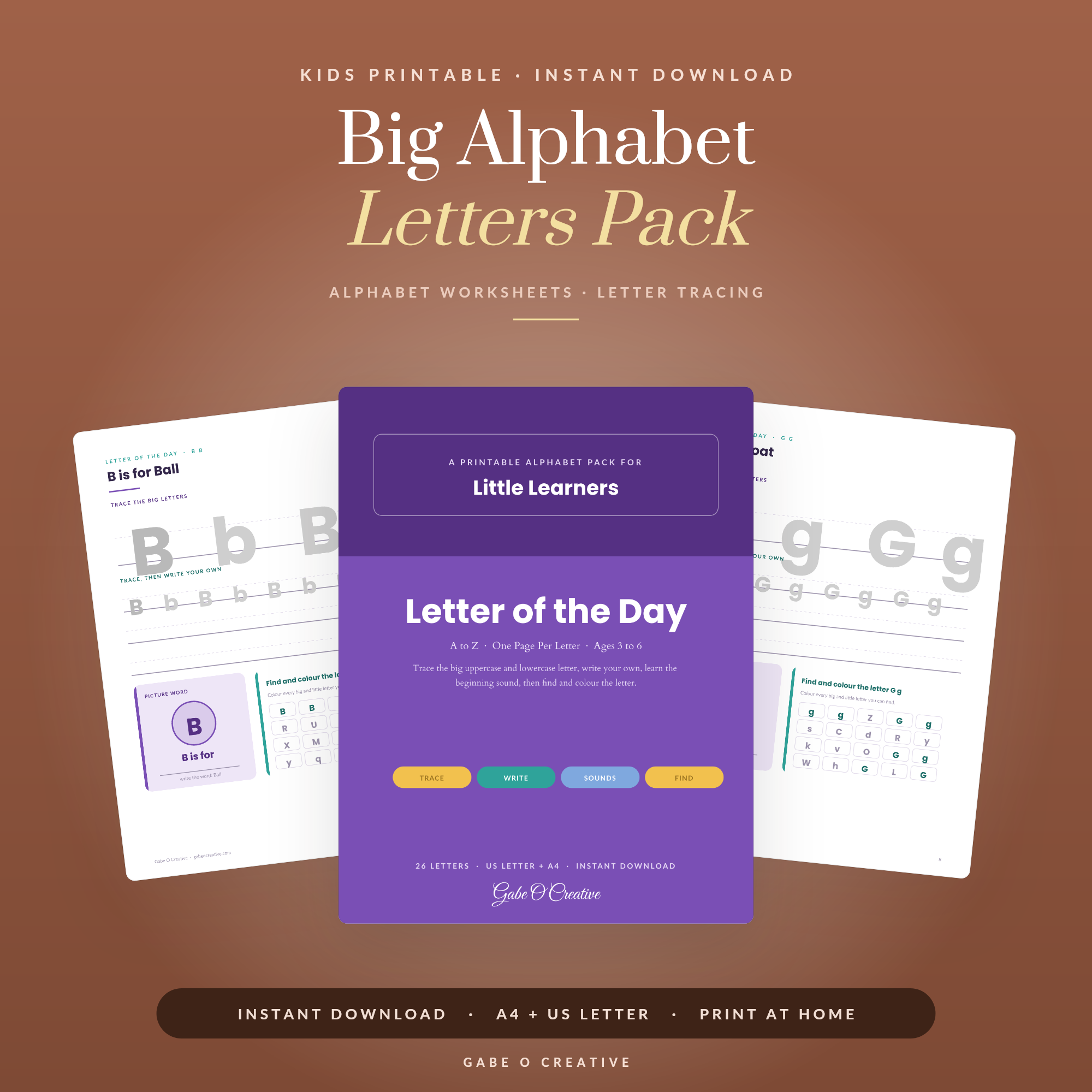
Alphabet tracing worksheets are one of the simplest, most effective ways to help a young child learn their letters. By tracing dotted or faded letters again and again, children build the muscle memory behind each shape—so that recognising letters, sounding them out and eventually writing them freehand all start to click. It's quiet, low-pressure practice that turns the daunting job of "learning to write" into one friendly letter at a time.
Want a complete A to Z set to print today? Our Big Alphabet Letters Pack gives you a letter-of-the-day worksheet for every letter, with uppercase, lowercase and beginning-sound practice—just print and hand over a pencil.
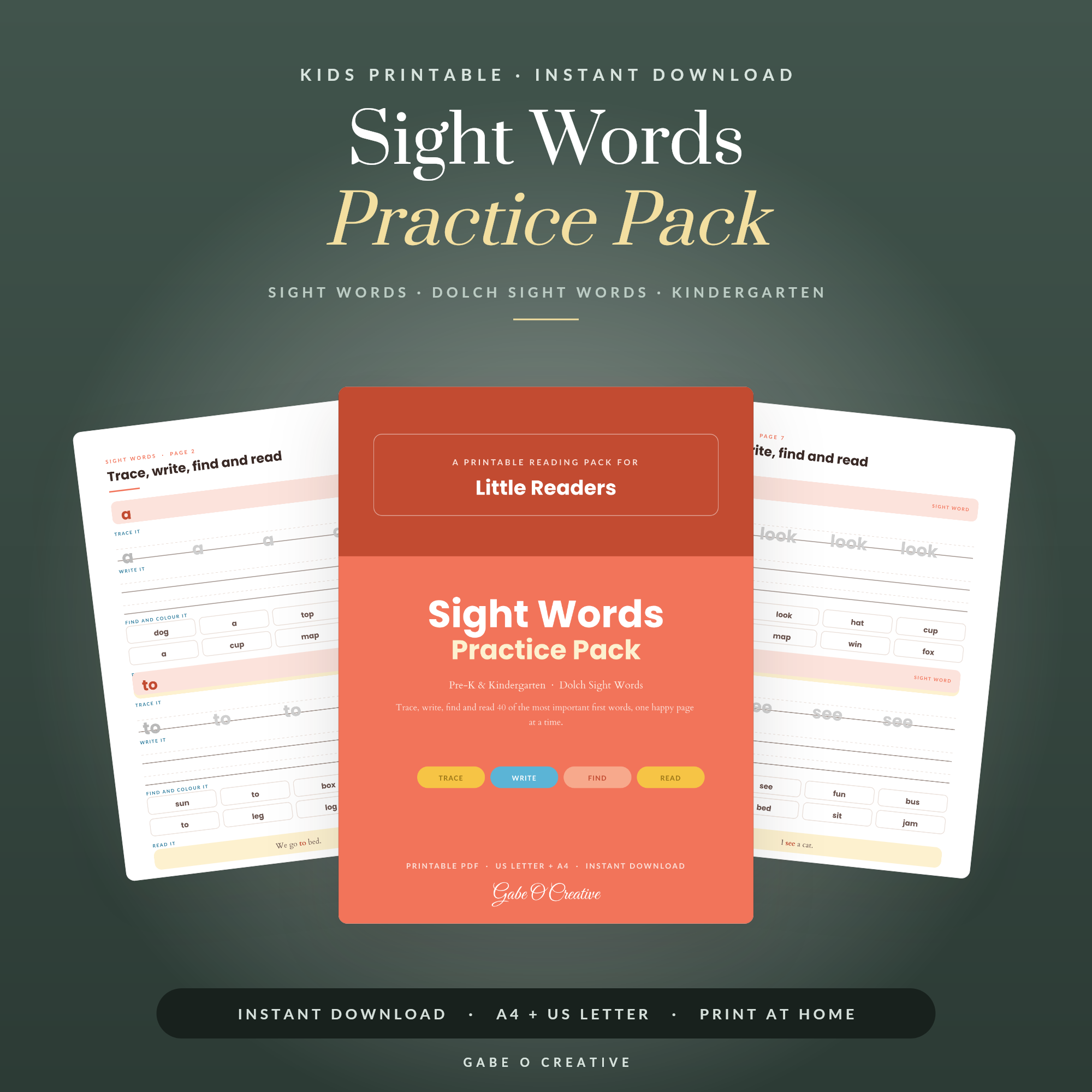 Shop Sight Words Practice Pack, Printable Pre-K and Kindergarten Dolch Sight Word Worksheets, Trace Write Find and Color, PDF →
What Are Alphabet Tracing Worksheets?
Alphabet tracing worksheets are printable pages that show each letter as a dotted or faded outline for your child to trace over. As their pencil follows the lines, they learn how each letter is formed—where to start, which direction to go, and how the strokes join up. Most good packs cover both uppercase and lowercase, and many add a picture and beginning sound (A is for apple) to tie the letter to its sound.
The reason tracing works so well is that it builds two skills at once. First, letter recognition: seeing the same shape repeatedly helps it stick. Second, fine motor control: the small, careful movements of tracing strengthen the hand and finger muscles needed for neat handwriting later on. A good worksheet pack helps your child:
- Learn each letter's shape through repetition that doesn't feel like a drill.
- Connect letters to sounds with pictures and beginning-sound practice.
- Build the hand strength that confident handwriting depends on.
- Feel proud, because finishing a worksheet is a small, visible win.
When are children ready to start?
Most children are ready to begin tracing somewhere between three and five, once they can comfortably hold a crayon or chunky pencil and enjoy making marks on paper. There's no rush. Let your child's interest set the pace rather than the calendar—ten happy minutes of tracing beats a forced half hour every time.
If your child isn't quite ready for letters, that's perfectly normal. Start with pre-writing shapes—straight lines, circles, zig-zags and curves—which build the very same control letters need. Big movements help too: drawing letters in the air, in sand or with chalk on the patio all strengthen the hand and make the eventual jump to paper feel natural rather than daunting.
How to Use Alphabet Tracing Worksheets Well
A worksheet is only as good as the way you use it. These simple habits make practice stick:
- Keep sessions short. Five to ten minutes is plenty for little hands and attention spans.
- Start with uppercase. Capital letters use simpler straight lines and circles, so they're often an easier place to begin.
- Say the sound. As your child traces, say the letter's name and sound to link writing with reading.
- Celebrate effort. Praise the trying, not just the tidy lines—confidence is the real goal.
- Make it a routine. A "letter of the day" gives gentle structure without pressure.
One brilliant trick for saving paper: slip each printed worksheet into a clear plastic wallet and let your child trace with a dry-wipe marker. Wipe it clean and they can practise the same letter as many times as they like—no reprinting required.
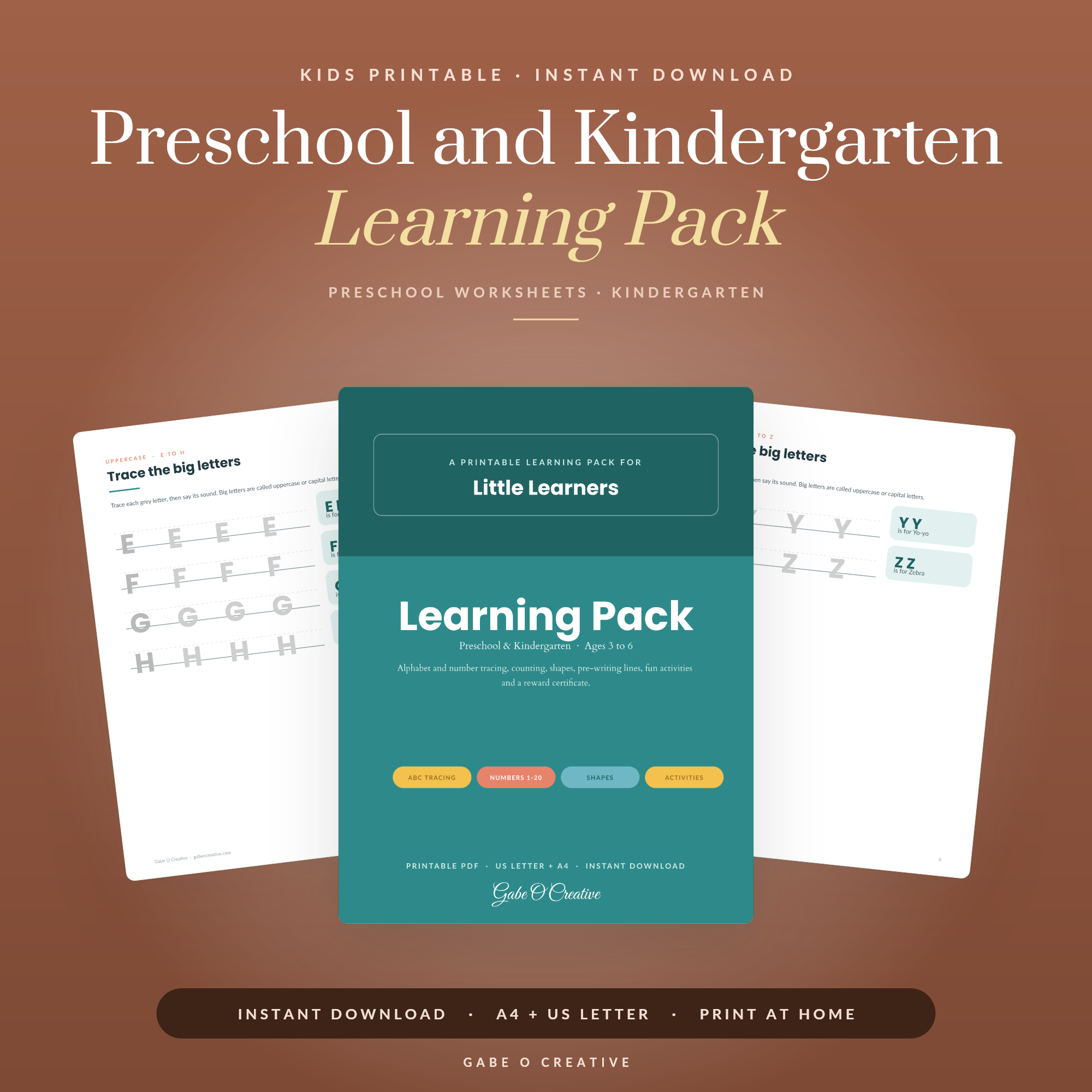 Shop Preschool and Kindergarten Learning Pack, Printable Alphabet and Number Tracing Worksheets, Counting Shapes and Activity Pages, PDF →
What to Look for in a Good Tracing Pack
Not all worksheets are created equal. The best ones share a few features. Here's a quick comparison of what to look for versus what to skip:
| Look for this | Skip this |
|---|---|
| Clear dotted letters with start points | Cramped, busy pages |
| Uppercase and lowercase together | Uppercase only |
| Pictures and beginning sounds | Letters with no context |
| Reusable, print-at-home format | One-use, no-print files |
A well-designed pack grows with your child. Early on, they'll trace big letters and shout out the sounds; a few months later, the same pages help them write their name and the first words they recognise. That's the kind of pack worth printing.
It's also worth thinking about how a pack feels to a child. Bright, uncluttered pages with friendly pictures invite a little one in, while busy, text-heavy sheets can feel like homework before they've even started. Look for a clear starting dot on each letter and arrows showing which way to go—those small touches teach correct letter formation from the very first try, which saves a lot of unlearning of bad habits later on. Get the formation right early and freehand writing becomes far easier when it arrives.
Building a Complete Early-Learning Routine
Letters are the foundation, but they're more powerful alongside a couple of other skills. Once your child is confident tracing, the natural next step is reading: our Sight Words Practice Pack helps them recognise the most common words on sight, which is where real reading begins. For broader practice, the Preschool and Kindergarten Learning Pack blends alphabet and number tracing with counting and activity pages, and the Kindergarten Math Practice Pack brings early numbers into the mix.
If you'd rather grab everything at once, the Kids Learning Bundle combines four preschool and kindergarten packs—alphabet, sight words, maths and tracing—at the best value, so you've got months of activities ready to print.
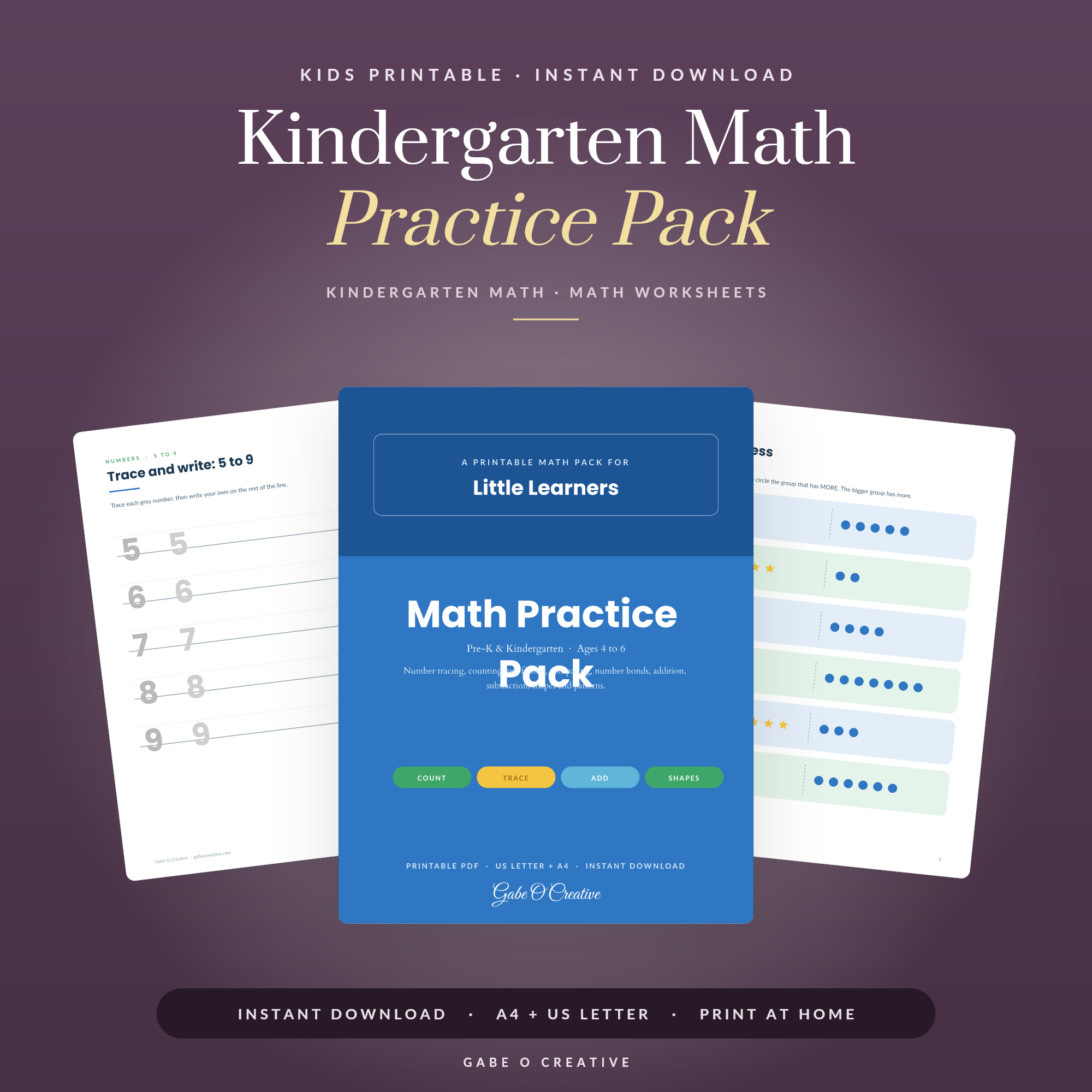 Shop Kindergarten Math Practice Pack, Printable Number Worksheets, Counting Addition Subtraction Ten Frames and Shapes, PDF →
The lovely thing about printable packs is that they grow with your child and stretch across siblings. Print a fresh copy whenever you need one, reuse pages in plastic wallets, and dip into different activities as your child's interest shifts from day to day. There's no app to manage, no screen time to ration—just paper, a pencil and a few unhurried minutes together. That simplicity is often what keeps the habit going long after a flashier gadget has been forgotten in a drawer.
Fit it into your week
A little structure goes a long way. If you're teaching at home, our homeschool planner guide shows how to map out a calm weekly rhythm, and our back-to-school printables guide is full of ideas for easing little ones into learning routines.
The Bottom Line
Alphabet tracing is small, steady practice that pays off big. By tracing each letter a few minutes a day, your child builds the recognition, hand strength and confidence that neat handwriting and early reading are built on. Keep it short, keep it cheerful, celebrate the effort—and let the letters add up. Before long, those dotted lines turn into a child writing their own name, proud as anything.
Alphabet Tracing Worksheets FAQs
What are alphabet tracing worksheets?
They're printable pages where children trace dotted or faded letters to learn each letter's shape and build the muscle memory for neat handwriting, usually covering both uppercase and lowercase forms.
What age should children start tracing letters?
Most children are ready around three to five, once they can hold a crayon and enjoy mark-making. Start with big, simple strokes and let interest, not age, set the pace.
Should kids learn uppercase or lowercase first?
Uppercase letters are made of simpler straight lines and circles, so many children find them easier to start with. A good pack covers both so you can follow your child's confidence.
How do I make letter tracing fun?
Keep sessions short, celebrate effort over neatness, and mix it up with a letter of the day, beginning-sound games and colourful pens. Ten happy minutes beats a forced half hour.
Can I reuse alphabet tracing worksheets?
Yes. Slip a printed page into a clear plastic wallet and use a dry-wipe marker, so your child can trace each letter again and again without printing more.
Do tracing worksheets really help handwriting?
They do when used regularly. Tracing builds the fine motor control and letter formation habits that neat, confident handwriting is built on, especially before children write freehand.
Ready to help your little one learn their letters? Grab the Big Alphabet Letters Pack and print your first letter today, or explore the full Kids & Learning collection for more printable practice that makes learning a joy.