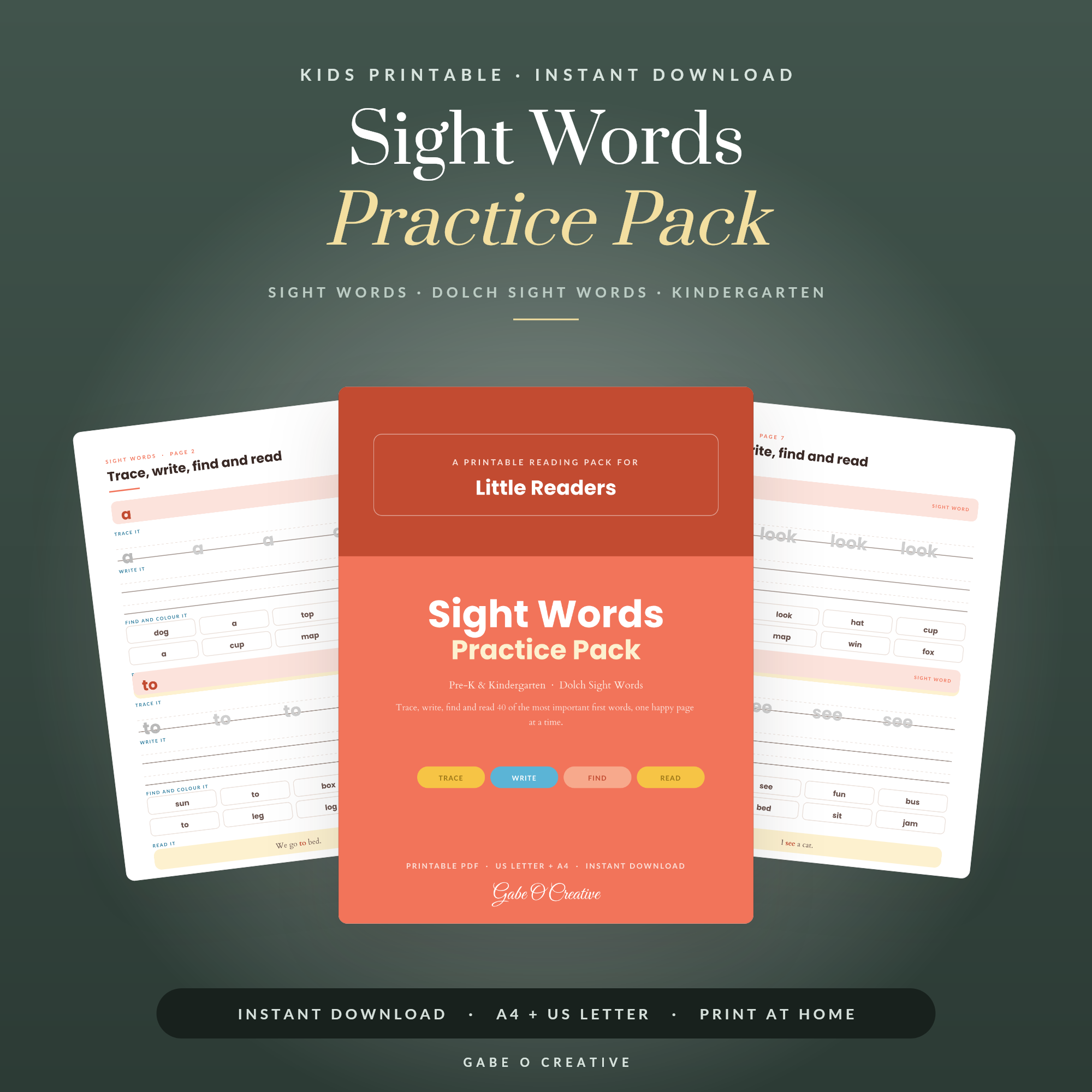
Sight words worksheets are one of the most powerful tools for turning a child who recognises letters into a child who can actually read. Sight words are the common, high-frequency words—the, and, said, was, you—that appear on nearly every page of a children's book. When a child can read them instantly, without stopping to sound each one out, their brain is free to focus on the story itself. That's the moment reading starts to feel easy and exciting rather than like hard work.
Want a ready-made practice set? Our Sight Words Practice Pack covers the Dolch Pre-K and kindergarten words with trace, write, find and colour activities—just print and watch your child's reading confidence grow.
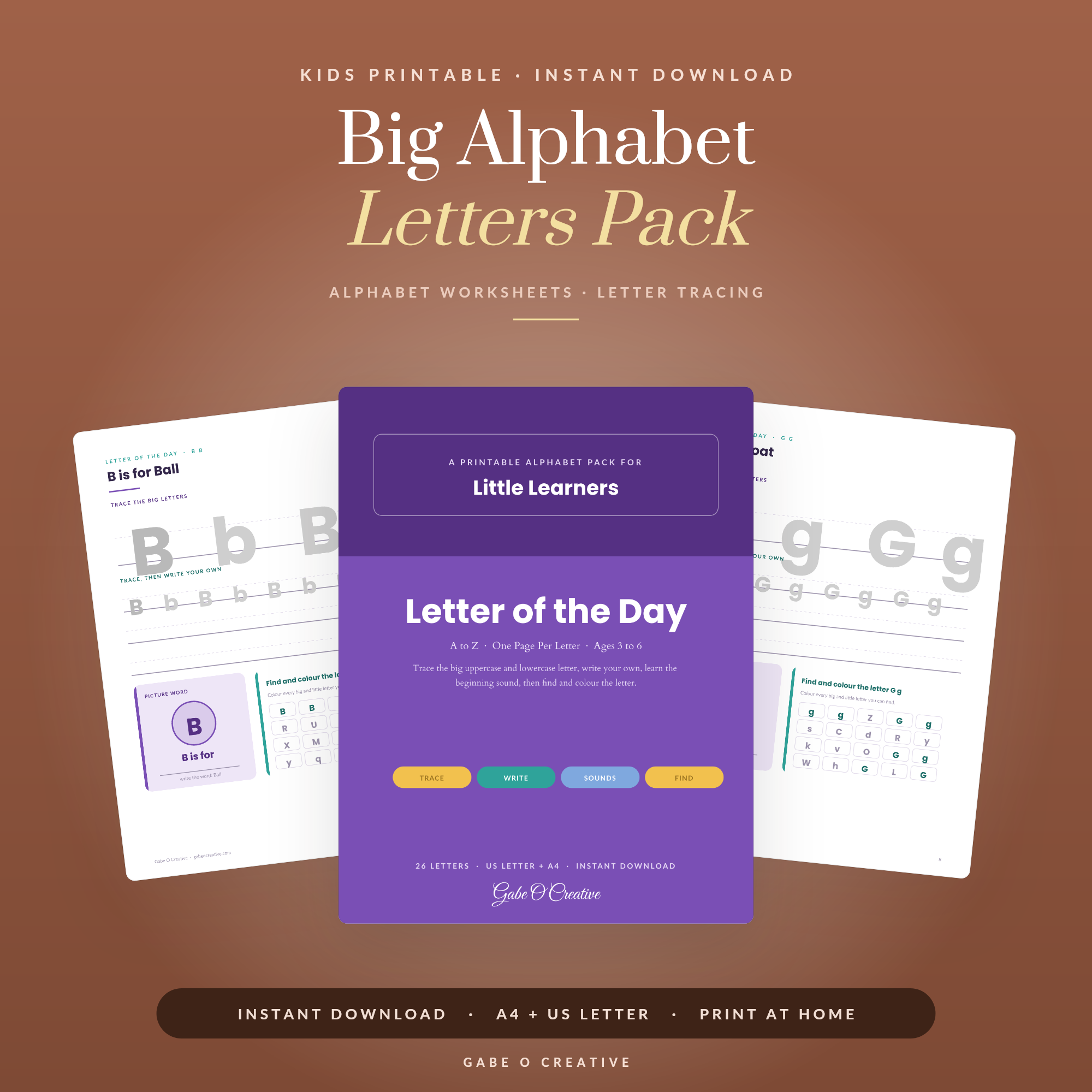 Shop Big Alphabet Letters Pack, Printable A to Z Letter of the Day Worksheets, Trace Uppercase Lowercase and Beginning Sounds, PDF →
What Are Sight Words?
Sight words are the words children learn to recognise on sight rather than decode letter by letter. Many of them are tricky to sound out using normal phonics rules (think said or was), and they're so common that pausing to work them out would slow reading to a crawl. By committing them to instant memory, children read more smoothly and, crucially, understand more of what they read.
That's where sight words worksheets come in. Rather than dull flashcard drilling, good worksheets build recognition through variety—tracing the word, writing it, finding it in a grid, colouring it in. Each activity reinforces the same word in a slightly different way, which is exactly how young brains lock learning in. A strong sight word pack helps your child:
- Recognise common words instantly, the foundation of fluent reading.
- Practise in different ways so the words stick without boredom.
- Build writing skills alongside reading, since they write each word too.
- Gain confidence as they start to read whole sentences on their own.
Sight words vs phonics: how they fit together
Parents often ask whether sight words replace phonics. They don't—the two work hand in hand. Phonics gives children the tools to decode brand-new words by sounding them out. Sight words handle the common, sometimes irregular words that pop up constantly. A confident young reader uses both: sounding out the unfamiliar, recognising the familiar, and gliding through the page as a result.
How to Teach Sight Words at Home
You don't need to be a teacher to do this well. A simple, playful routine works wonders:
- Introduce a few words a week. Three to five new words is plenty; too many at once overwhelms.
- Practise with worksheets. Trace, write, find and colour each word to build recognition from different angles.
- Play games. Hunt for the word in a book, write it in chalk outside, or build it with magnetic letters.
- Revisit often. Mix old words back in so they don't fade—little and often beats one long session.
- Read together. Point out the new words in favourite stories so the learning feels real.
The Dolch list is a brilliant roadmap for this. It groups the most common children's-book words by level, from pre-primer upward, so you always know which words to teach next. Most quality worksheet packs—including ours—are built around it.
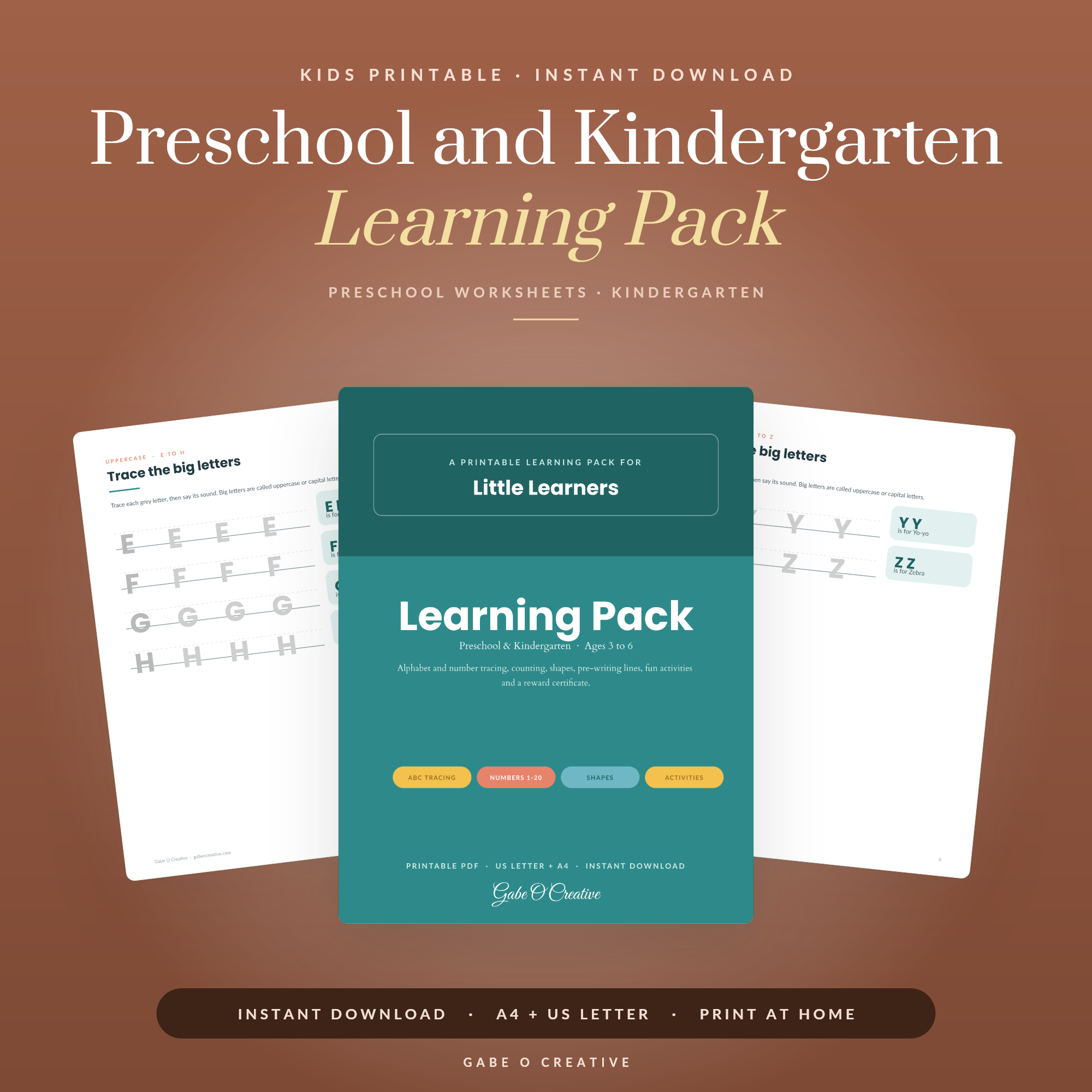 Shop Preschool and Kindergarten Learning Pack, Printable Alphabet and Number Tracing Worksheets, Counting Shapes and Activity Pages, PDF →
Choosing the Right Sight Words Worksheets
The best worksheets do more than ask a child to copy a word ten times. Here's what separates a great pack from a forgettable one:
| Great sight word worksheets | Weaker worksheets |
|---|---|
| Multiple activities per word | Repetitive copying only |
| Based on the Dolch word list | Random word selection |
| Clear, large, child-friendly fonts | Tiny, cramped text |
| Print-at-home and reusable | One-and-done pages |
Variety is the secret ingredient. When a child traces, writes, finds and colours the same word, they meet it four different ways—and that repetition with variety is exactly how a word moves from "new" to "instantly known". Pages that simply ask for the same word over and over tend to lose little learners fast.
Pacing matters just as much as the activities. The temptation is to race ahead, but sight words stick best when a child genuinely owns a small set before moving on. A handy rule of thumb: a word is "learned" when your child reads it instantly, out of context, on three separate days. Until then, keep folding it back into practice. This gentle, spaced repetition feels slower in the moment but builds far sturdier recall—and it spares your child the frustration of a list that always feels like it's getting harder. Celebrate the words they've mastered, and the next few feel like a reward rather than a chore.
Building a Complete Early-Reading Toolkit
Sight words shine brightest as part of a wider foundation. If your child is still mastering letters, start with our Big Alphabet Letters Pack to nail letter shapes and sounds first—reading is far easier once the alphabet is secure. For all-round practice, the Preschool and Kindergarten Learning Pack blends letters, numbers and activity pages, and the Kindergarten Math Practice Pack keeps early numeracy moving alongside reading.
Want the lot in one purchase? The Kids Learning Bundle brings together four preschool and kindergarten packs—alphabet, sight words, maths and tracing—for the best value, giving you months of print-and-go learning.
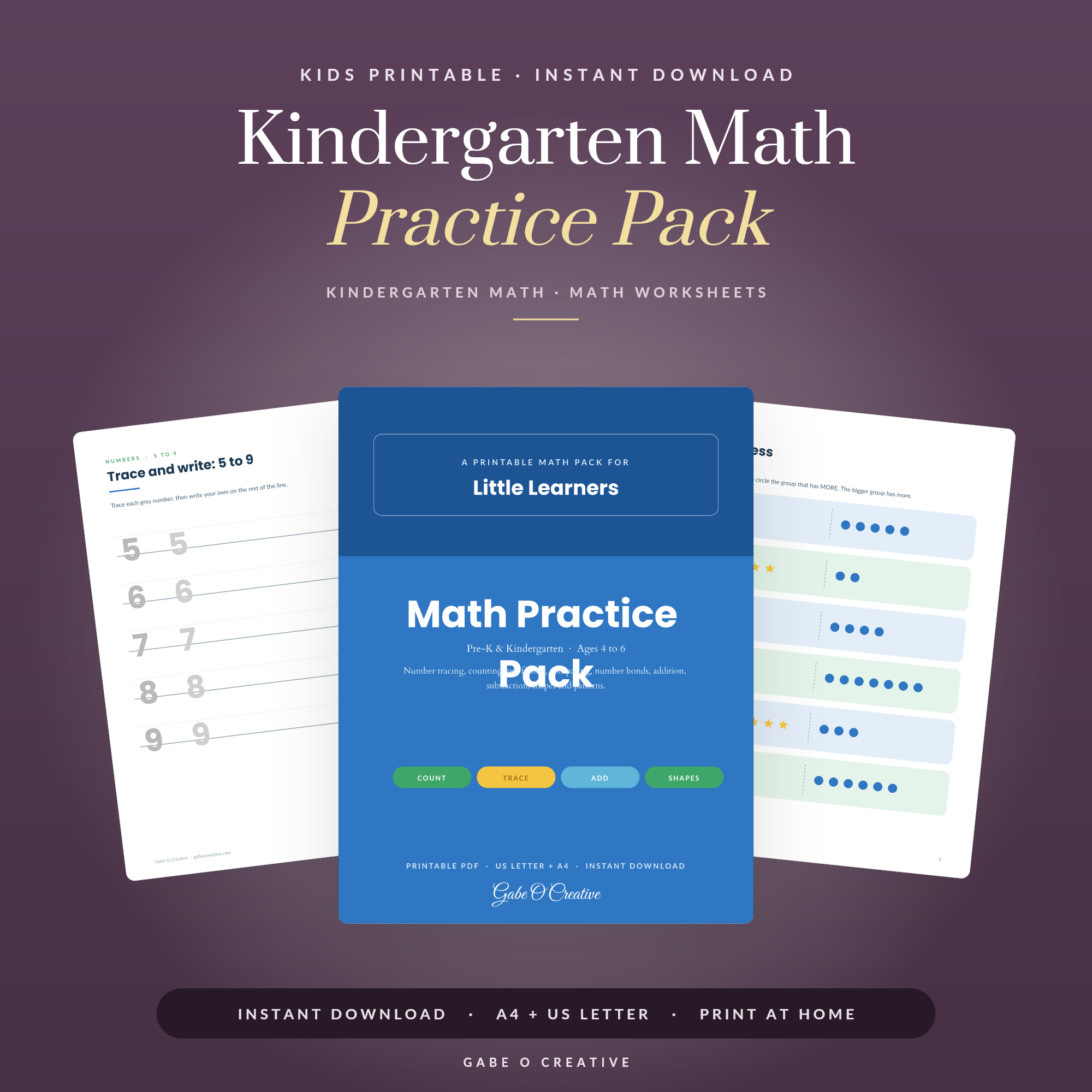 Shop Kindergarten Math Practice Pack, Printable Number Worksheets, Counting Addition Subtraction Ten Frames and Shapes, PDF →
The real magic happens when worksheet practice meets real reading. Once your child knows a handful of sight words, point them out in a bedtime story and watch their face light up when they read a whole line on their own. That moment—"I can read it!"—is the spark that turns a reluctant reader into an eager one. Worksheets build the words; books give those words a purpose. Keep both in the mix and the progress feeds on itself, with each new word opening up a few more pages your child can tackle alone.
Make a calm learning rhythm
A little structure helps it all stick. Our alphabet tracing worksheets guide pairs perfectly with sight words for children just starting out, and if you're teaching at home, our homeschool planner guide shows how to build a gentle weekly routine that doesn't feel like school.
The Bottom Line
Sight words are the bridge between knowing letters and truly reading. With a few minutes of varied, playful practice a day—tracing, writing, finding and reading common words—your child builds the instant recognition that makes reading flow. Follow a clear list like the Dolch words, keep sessions short and cheerful, and celebrate every word they read on sight. One by one, those words add up to a confident young reader.
Sight Words Worksheets FAQs
What are sight words?
Sight words are the common, high-frequency words children learn to recognise instantly rather than sound out, like the, and, said and was. Reading them on sight frees up brainpower for understanding the story.
What are sight words worksheets?
They're printable pages that help children practise recognising and writing sight words through activities like trace, write, find and colour, building instant recognition through varied, low-pressure repetition.
What's the difference between sight words and phonics?
Phonics teaches children to sound out words letter by letter, while sight words are learned by instant recognition. The two work together: phonics decodes new words, sight words handle the common ones reading is full of.
How many sight words should a child learn?
Pre-schoolers often start with around 40 words, and many children know a few hundred by the end of their early school years. Focus on steady progress through a list like the Dolch words rather than a target number.
How do I teach sight words at home?
Keep it short and playful: introduce a few words a week, practise with worksheets and games, and revisit old words often. Spotting them in favourite books makes the learning feel real and exciting.
What are Dolch sight words?
The Dolch list is a classic, research-based set of the most common words in children's books, grouped by level from pre-primer up. Many sight word worksheets, including ours, are built around it.
Ready to unlock your child's reading? Grab the Sight Words Practice Pack and start with your first few words today, or explore the full Kids & Learning collection for more printable practice that makes learning a joy.