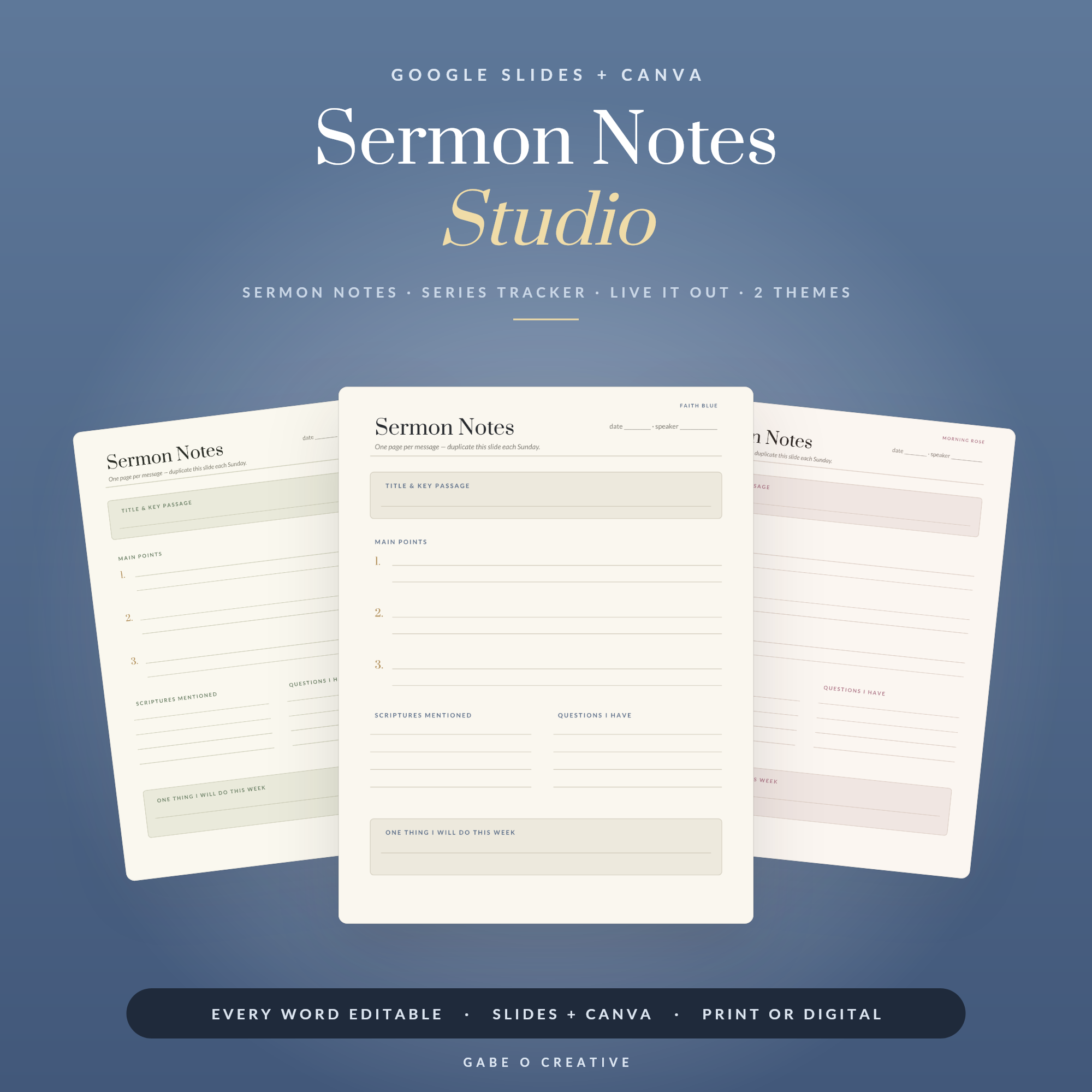
Most people who ask how to take sermon notes are already taking them — pages and pages, week after week, that nobody ever opens again. The problem isn't effort; it's that transcribing and understanding are different activities, and doing the first well tends to prevent the second. Notes worth keeping are short, structured the same way every week, and contain one line that turns listening into doing. Our editable sermon notes template is built around exactly that structure.
Sunday coming up? Print the sermon notes pages and take one with you — the headings do the thinking so you can listen.
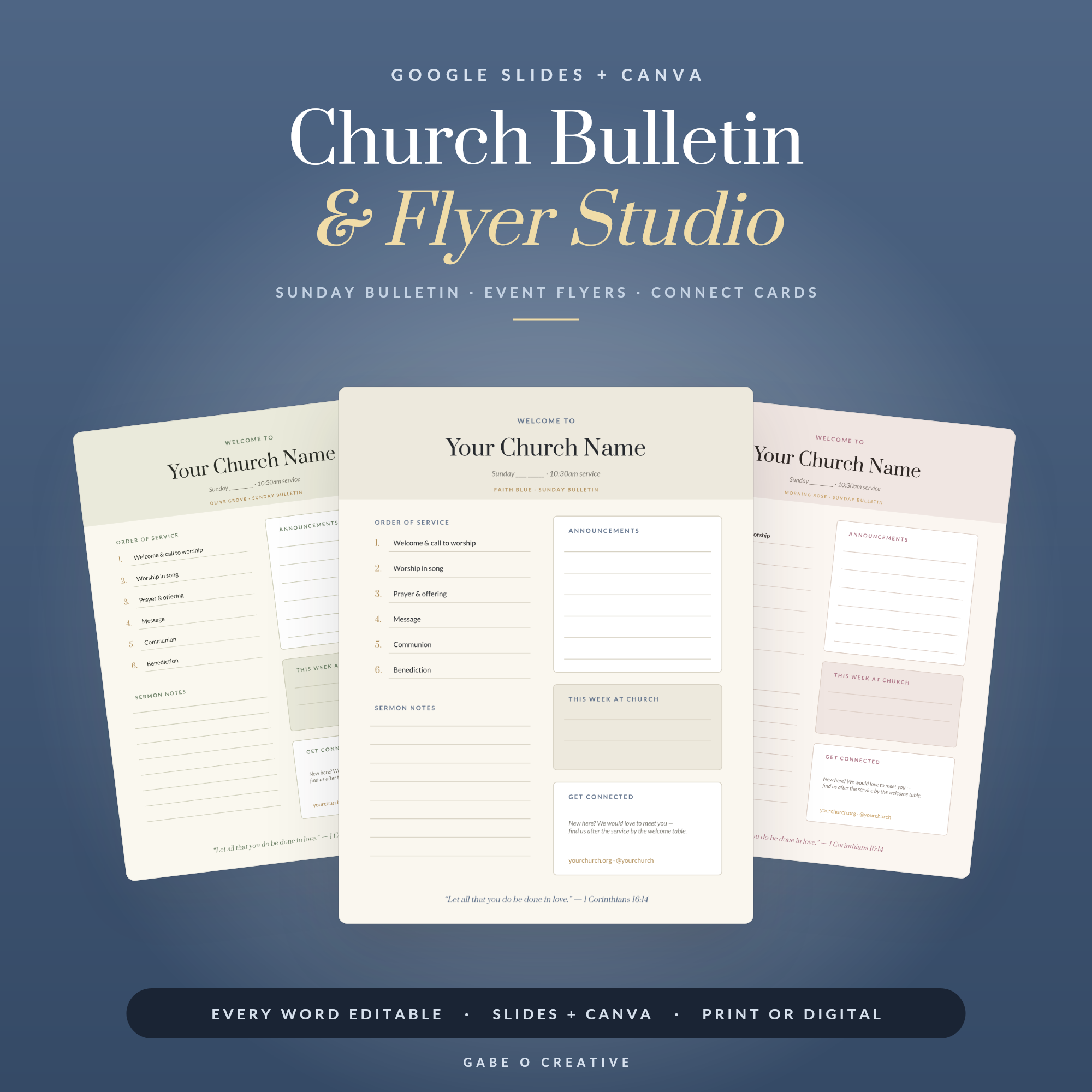 Shop Church Bulletin Template — Editable Google Slides + Canva Studio: Sunday Bulletin, Event Flyer & Connect Cards, 3 Themes, No Designer Needed →
Stop Transcribing
Writing down everything feels diligent and quietly stops you listening. While you're capturing the last sentence, you're missing the next one — and you end up with three pages that reproduce the talk without recording a single thing you thought about it.
The test is simple: if your pen never stops, you're transcribing. Aim to write during the pauses — when the speaker moves between points, or repeats themselves for emphasis. Those gaps are deliberate, and they're where your notes belong.
Write less than feels comfortable
A useful page is closer to a dozen lines than a hundred. If that feels lazy, remember what the notes are for: you are not producing a record for someone else, you're leaving yourself something you'll actually reread.
The Four Things Worth Writing
| Write | Why |
|---|---|
| Passage and date | Makes the note findable later; without it a page is orphaned |
| The main point, one sentence | Forces you to understand rather than record |
| What surprised you | Surprise marks the bit you hadn't already assumed — the actual new information |
| One thing to do | The line that makes the note useful on Wednesday |
That's the whole system. The middle two need thought and the outer two take seconds, which is a good ratio for something you're doing while listening.
The surprise line is underrated
Most of what we hear confirms what we already think, and that's the part that feels comfortable and teaches nothing. Noting what genuinely caught you off guard — a word that doesn't mean what you assumed, a claim you'd want to argue with — is the fastest way to find the part of the talk that was actually for you.
A Format That Works Every Week
- Top of the page: date, speaker, passage.
- Left column, wide: notes as they come, in fragments. No sentences required.
- Right margin, narrow: your own reactions, questions and disagreements — kept visually separate so you can tell later what was said from what you thought.
- Bottom strip: the one sentence summary and the one action.
The separation in step three is the part people find most useful once they try it. Six months later, a page where your questions are mixed into the content is confusing; one where they're in the margin is a conversation you can pick back up.
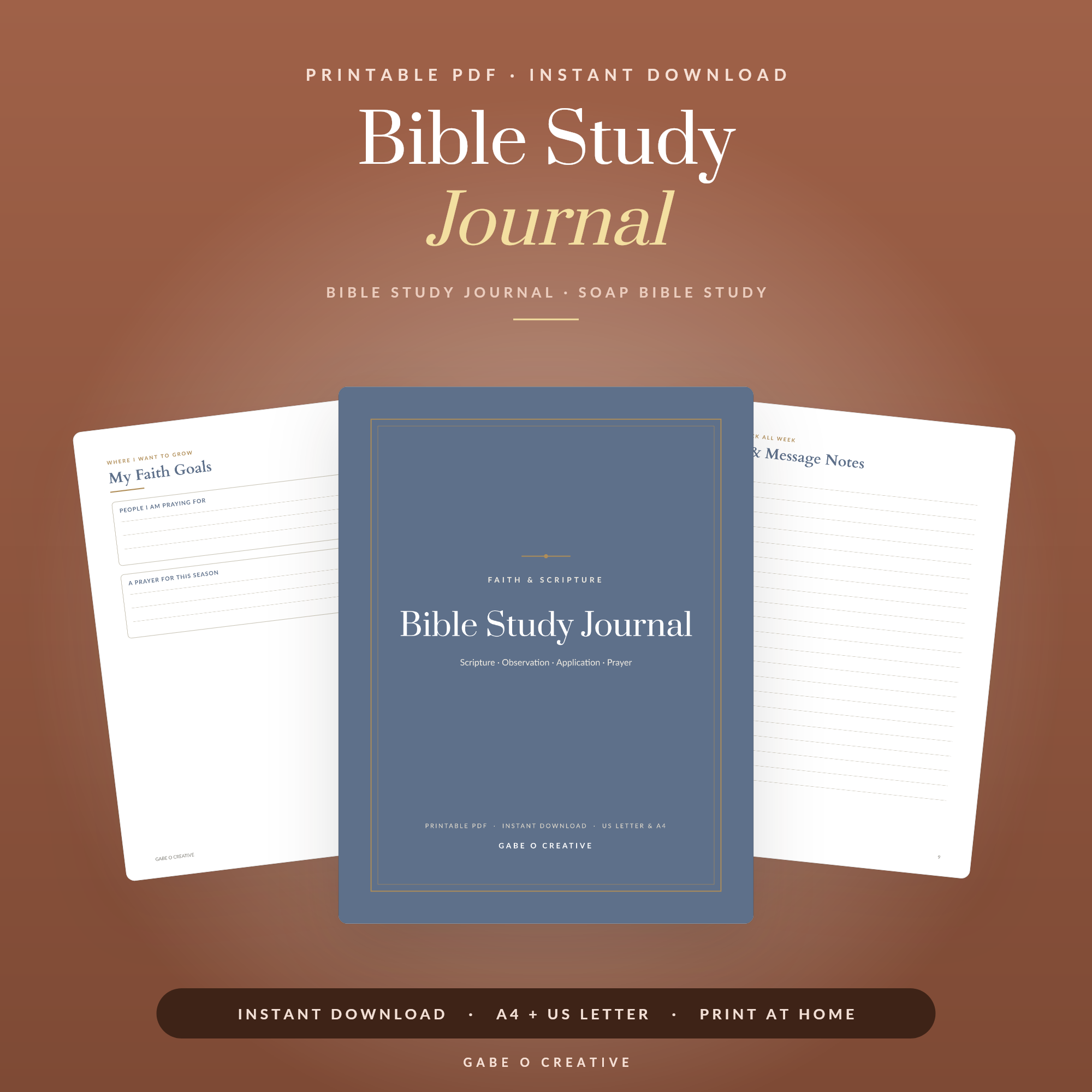 Shop Bible Study Journal →
Making Sunday Last Past Tuesday
Notes taken and never reopened are a hobby, not a practice. One habit changes that: reread Sunday's page once midweek. Wednesday works well — far enough that the talk has faded, close enough that it comes back quickly. Two minutes is genuinely enough.
When you reread, do one thing: check the action line. Did you do it? If not, is it still worth doing, or was it aspirational at the time? That question, asked weekly, does more than any amount of extra note-taking.
Questions that accumulate over a few weeks are worth somewhere to go, too. That's where a fuller study format earns its place — our guide to starting a Bible study journal covers working through them properly, and the Bible study journal gives it structure. If you're also building a reading habit alongside Sundays, our beginner's reading plan is designed to survive past January.
Note taking on a tablet
It works, with one caveat: turn on Do Not Disturb first. The advantage is searchability — being able to find every note mentioning a passage is genuinely useful after a year. The disadvantage is that typing is fast enough to let you transcribe again, which is the habit you're trying to break. If you type, force yourself to keep the same short structure.
If You're the One Preparing Them
Handing out a partly-filled note sheet — passage and headings printed, the rest blank — measurably increases how many people follow along, particularly with children and teenagers. It removes the "what should I even write" hesitation that stops most people starting.
The sermon notes studio is editable for that reason, so you can set the week's passage and headings before printing. If you produce a weekly bulletin as well, the church bulletin studio matches it, and the faith and prayer bundle collects the journals and prayer pages alongside. For a personal prayer habit either side of Sunday, the prayer journal pairs naturally — our prayer journal guide covers how.
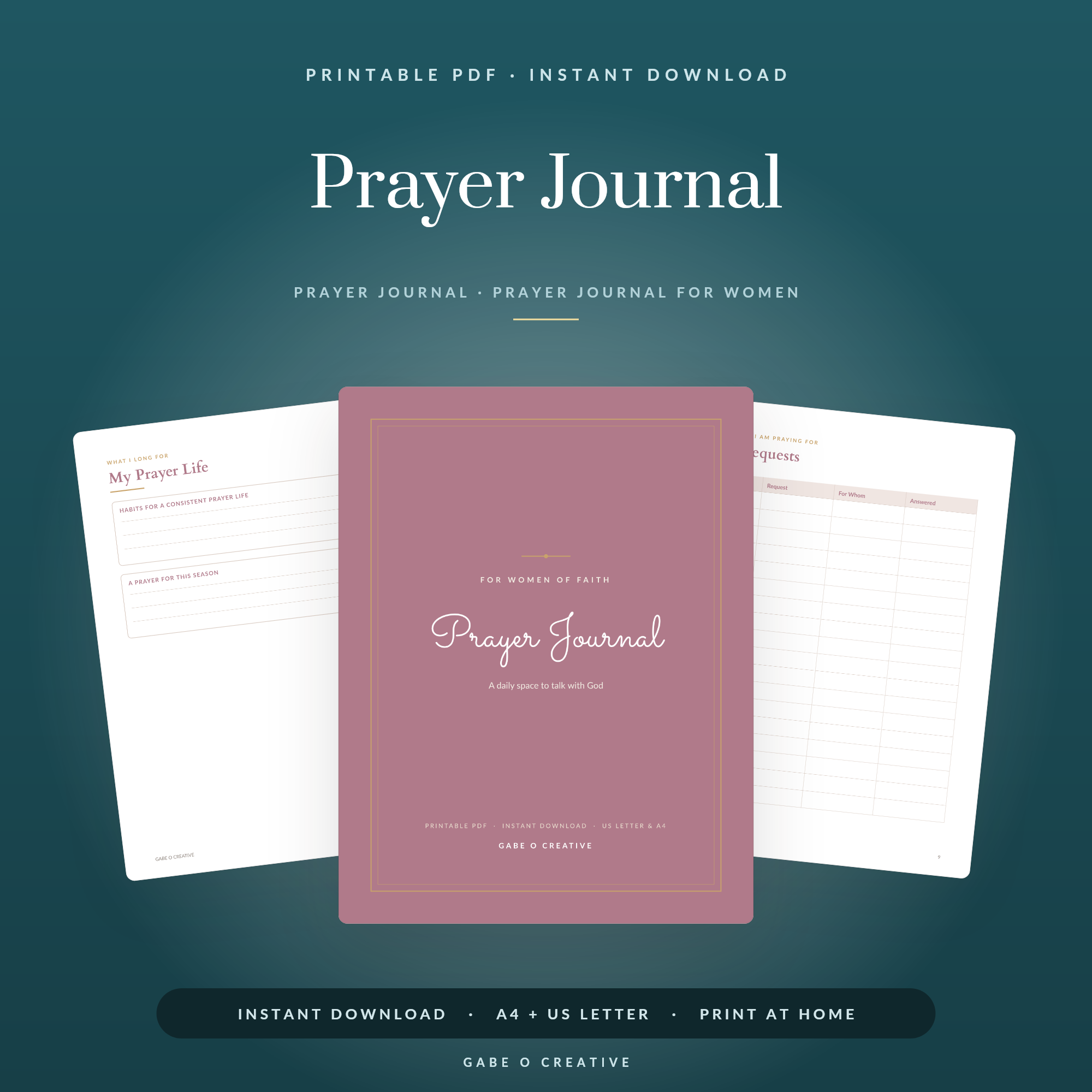 Shop Prayer Journal →
Common Problems, Honestly Answered
"I can't listen and write at the same time." Then don't. Listen for the whole talk and write four lines immediately afterwards, while people are still standing up. You'll capture less detail and more meaning, and for most people that's the better trade.
"My notes are just the speaker's points." That's transcription with extra steps. Add the margin column — even one reaction per page changes what the note is for. "Not sure I agree" is a perfectly good note, and often the most useful one you'll write.
"I never look at them again." Fix the retrieval, not the notes. Date every page, keep them in one place rather than several notebooks, and reread Wednesday's. Most people's notes fail because they're scattered across three notebooks and a phone, not because they were badly written.
"I've missed several weeks." Start with this Sunday. There's no backlog to clear — sermon notes aren't a series where you need the earlier episodes.
Notes with children
A partly-filled sheet works far better than a blank page for children and teenagers: the passage and two headings printed, everything else blank. For younger children, replace one heading with a box to draw in. The aim isn't good notes at that age — it's the habit of paying attention to something for twenty minutes, which is worth more than anything they write down.
Sermon Notes FAQs
What should you write down during a sermon?
The passage, the main point in one sentence, anything that genuinely surprised you, and one thing to do about it. Everything else is optional — and transcribing the whole talk is what makes notes unreadable later.
Should I take sermon notes on paper or a phone?
Paper, if you can. Handwriting is slower, which forces you to summarise rather than transcribe, and a phone in your hand during a service invites every notification you own.
How do I take notes without missing what's being said?
Listen first, write in the gaps. Aim to write during pauses and transitions rather than continuously — if your pen never stops, you're transcribing rather than listening.
What is the most useful part of a sermon note?
The single line about what you'll do differently. Notes without it are a record of what someone said; notes with it are something you can act on and check back against.
How do I actually use my notes during the week?
Reread Sunday's page once midweek — Wednesday works well. Two minutes is enough, and it's the difference between a sermon lasting a day and lasting a week.
Do I need a special sermon notes template?
No, but a consistent structure helps enormously. The same few headings every week mean you stop deciding what to write and can concentrate on listening.
Take one this Sunday. Print the sermon notes template, or browse the full Faith & Christian collection for journals, trackers and prayer pages.