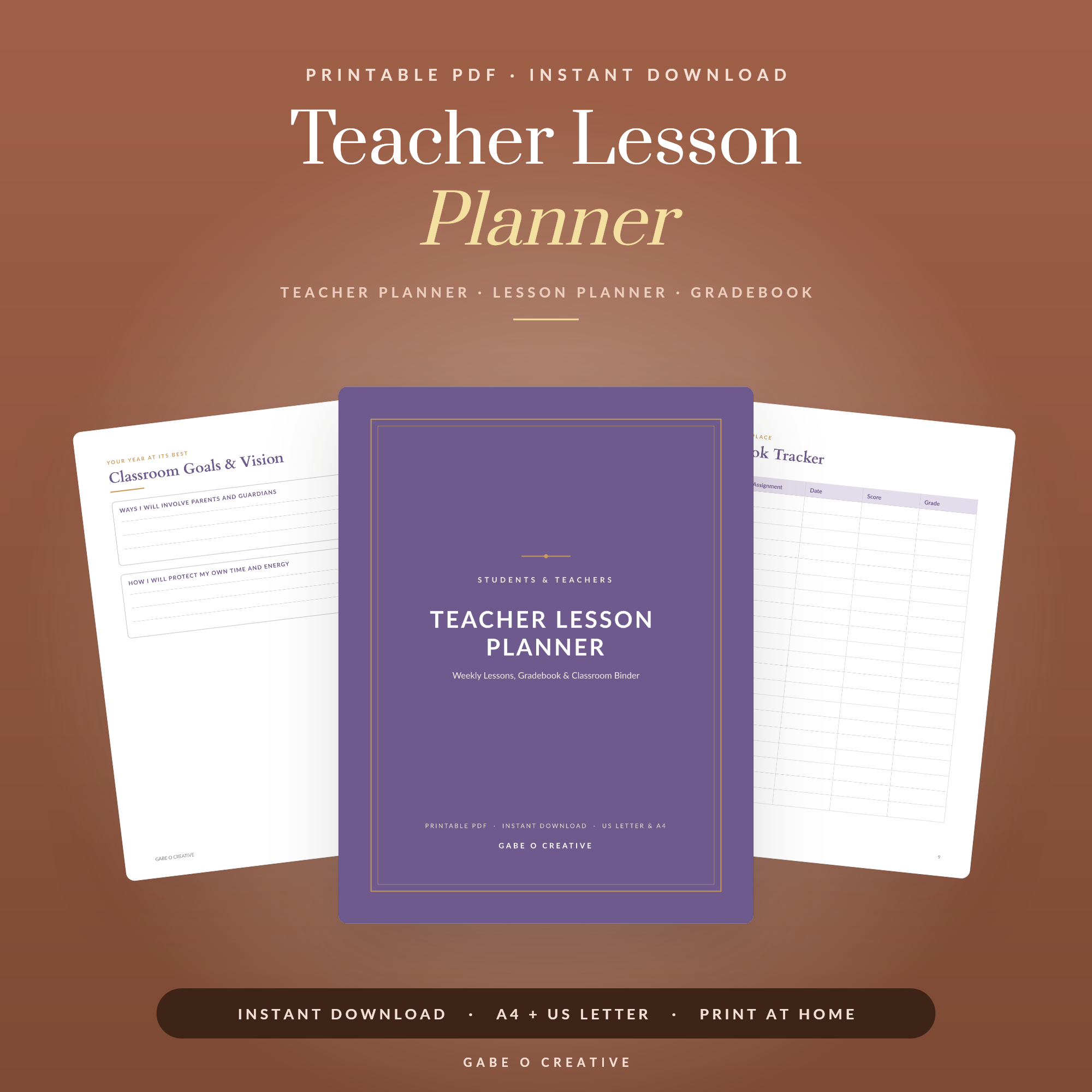
Lesson planning tips tend to promise the world and deliver another elaborate template that takes even longer to fill in. What teachers actually need isn't more planning — it's a faster, repeatable system that still covers the objectives, differentiation and assessment your school expects, without swallowing every evening and Sunday afternoon. The good news is that most planning time is wasted on the same two things: staring at a blank page, and rebuilding a format you've already used a hundred times. Fix those, and you can halve the time without losing an ounce of quality. Our Teacher Lesson Planner gives you a ready structure so the week's plan lives in one calm place.
Plan smarter, not longer — reclaim your evenings and keep the classroom running just as well.
Plan in weekly blocks, not lesson by lesson
The single biggest time-saver is to zoom out. Instead of planning each lesson in isolation, sketch the whole week first: what's the arc of learning, where does each objective land, how do the lessons build on each other? Once you can see the week's shape, filling in the daily detail is far quicker because every lesson has a clear job. Weekly planning also stops the common trap of over-planning Monday and scrambling by Thursday. Block out one protected planning slot, do the week's overview in that sitting, and you've removed the daily 'what am I even teaching tomorrow?' panic.
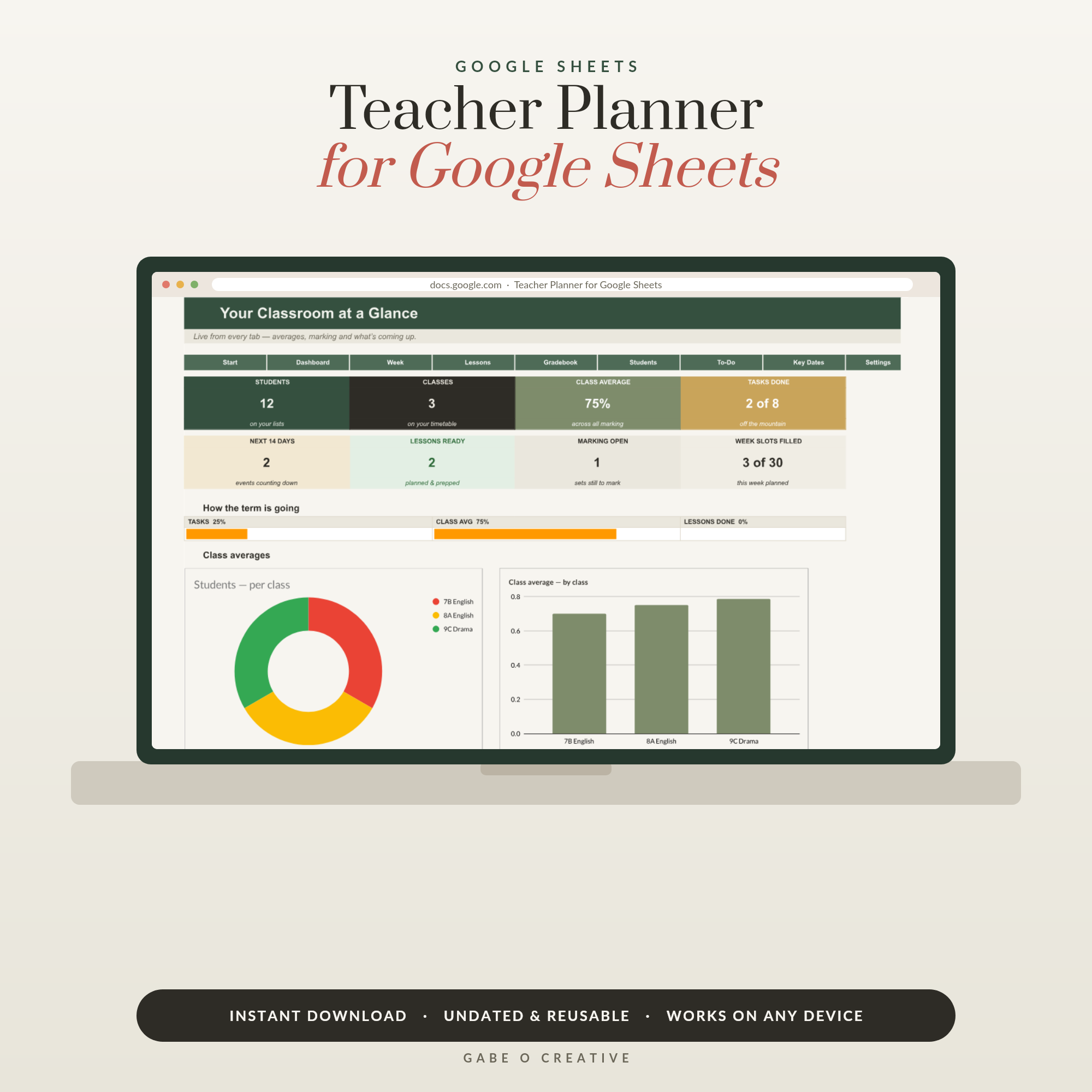 Shop Teacher Planner Google Sheets, Digital Lesson Planner Spreadsheet, Gradebook with Class Averages, Student Tracker, Undated & Reusable →
Reuse a consistent lesson structure
You don't need a new format for every lesson — you need a reliable one you can pour content into. A simple, repeatable shape works across almost any subject: a hook or starter to engage, clear teaching input, a main activity where students do the work, a check for understanding, and a short plenary to consolidate. When the structure is automatic, your brain is free to focus on the actual content and the children, not the layout. This is where a printable planner earns its keep: the framework is already there, so you're never starting from a blank page.
Build a bank of go-to activities
Great teachers aren't inventing brand-new activities every day — they're drawing from a well-stocked toolkit. Keep a running list of formats that reliably work: think-pair-share, exit tickets, quick-fire quizzes, card sorts, jigsaw reading, mini-whiteboards. When you plan, you're then choosing from a menu rather than conjuring from nothing, which is dramatically faster. Note which activities landed well and which flopped, so your bank sharpens over time. A little activity and puzzle resource can also fill early-finisher gaps without extra planning.
The same logic applies to resources: the second time you teach a topic should always be faster than the first. Save your best worksheets, slides and starters in a clearly labelled place the moment you make them, so next term — or next year — you're adapting rather than rebuilding. Swap resources with colleagues who teach the same year group; there's no prize for everyone reinventing the same lesson on the water cycle in three separate classrooms. A shared bank quietly gives every teacher back an evening a week, and the pooled quality is usually higher than anything one exhausted person makes at 9pm.
Differentiate without doubling the work
Differentiation is where planning time balloons if you let it — but it needn't. Rather than writing three separate lessons, plan one strong core task and add a light support scaffold (sentence starters, a worked example, a writing frame) and one stretch extension (a challenge question, a 'prove it' task, an open-ended twist). That covers the vast majority of needs in most classes. Jot the differentiation as a single line on your plan so it's baked in from the start, not bolted on in a panic the night before. Planned once, it becomes second nature.
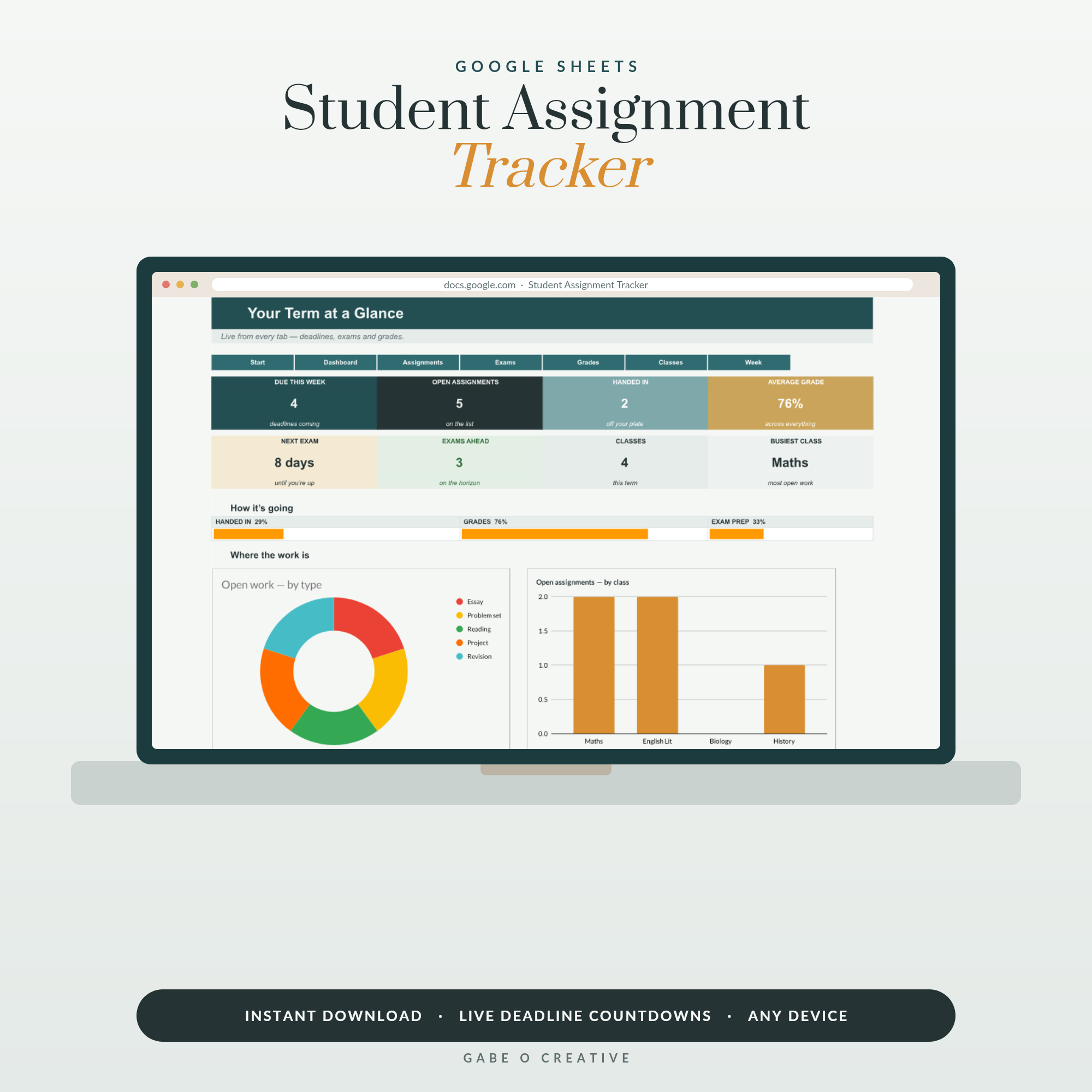 Shop Student Assignment Tracker Google Sheets, Homework Planner Spreadsheet with Deadline Countdown, Exam & Grade Tracker, Academic Organizer →
Keep everything in one place
An enormous amount of planning time is lost simply hunting: where's last term's plan, which folder has that worksheet, what did I do this time last year? A single home for your planning — one planner, one clearly organised set of resources — removes that friction entirely. Whether you prefer paper or a spreadsheet, consistency is what matters. Many teachers like a printable weekly planner for the day-to-day and a digital system for records and marking; our Teacher Planner for Google Sheets keeps gradebooks and class lists in one automated place, while a student assignment tracker helps the older students take ownership of their own deadlines.
| Time-drain | Faster approach | Result |
|---|---|---|
| Blank-page paralysis | Reusable lesson template | Start writing content immediately |
| Lesson-by-lesson planning | Weekly block planning | See the arc, plan once |
| Inventing activities | Go-to activity bank | Choose from a menu |
| Separate differentiated lessons | One core + scaffold + stretch | Covers the class, half the work |
| Hunting for resources | One organised home | No time lost searching |
Make the system stick
The best planning system is the one you'll keep using when you're tired and busy — so keep it simple and protect it fiercely. Set a firm time limit for planning and a fixed weekly slot, and resist the urge to make plans prettier than they need to be; a clear plan you can read mid-lesson beats a beautiful one you never open. New teachers especially should borrow and adapt rather than build from scratch, and remember that speed comes with a repeatable system, not with working later. For more on setting up a calm, organised classroom, see our guides to classroom organisation, classroom setup for new teachers and choosing a teacher planner.
Explore the full range in our Students & Teachers collection — lesson planners, gradebooks, trackers and classroom printables, all instant downloads.
If you would rather the planner did the sums for you, our guide to the Google Sheets teacher planner walks through a gradebook that averages marks automatically.
Frequently asked questions
How can I plan lessons faster?
Plan in weekly blocks rather than lesson by lesson, reuse a consistent lesson structure, build a bank of go-to activities, and batch similar tasks. A repeatable template removes the blank-page problem, which is where most planning time disappears.
What should a lesson plan include?
The essentials are a clear learning objective, a hook or starter, the main teaching and activity, a way to check understanding, differentiation for support or stretch, and any resources needed. Keep it concise — a plan you can read at a glance beats a beautiful one you never look at.
How do I plan for differentiation without doubling my workload?
Plan one core task, then add a simple support scaffold and one stretch extension rather than three separate lessons. Sentence starters, worked examples and challenge questions cover most needs. Note differentiation as a quick line so it's built in, not bolted on.
Should I plan weekly or daily?
Weekly planning is faster and less stressful for most teachers, because you see the whole week's flow. Sketch the week first, then add daily detail in one sitting. Daily-only planning tends to eat more time and makes it harder to see the bigger picture.
How do new teachers get lesson planning under control?
Start with a reliable template, borrow and adapt rather than building from scratch, and aim for clear and repeatable rather than perfect. Keep a running bank of activities that worked, and protect one planning slot a week. It gets much faster with a system.
How do I stop lesson planning taking over my evenings?
Set a firm time limit and a fixed planning slot, plan in blocks, reuse structures and resources, and keep everything in one place. The goal isn't to plan more — it's to plan smarter so your evenings are yours again.
 Shop Kids Activity Book →
Ready to get your evenings back? Grab the Teacher Lesson Planner, set up your weekly system this weekend, and spend less time planning and more time teaching.