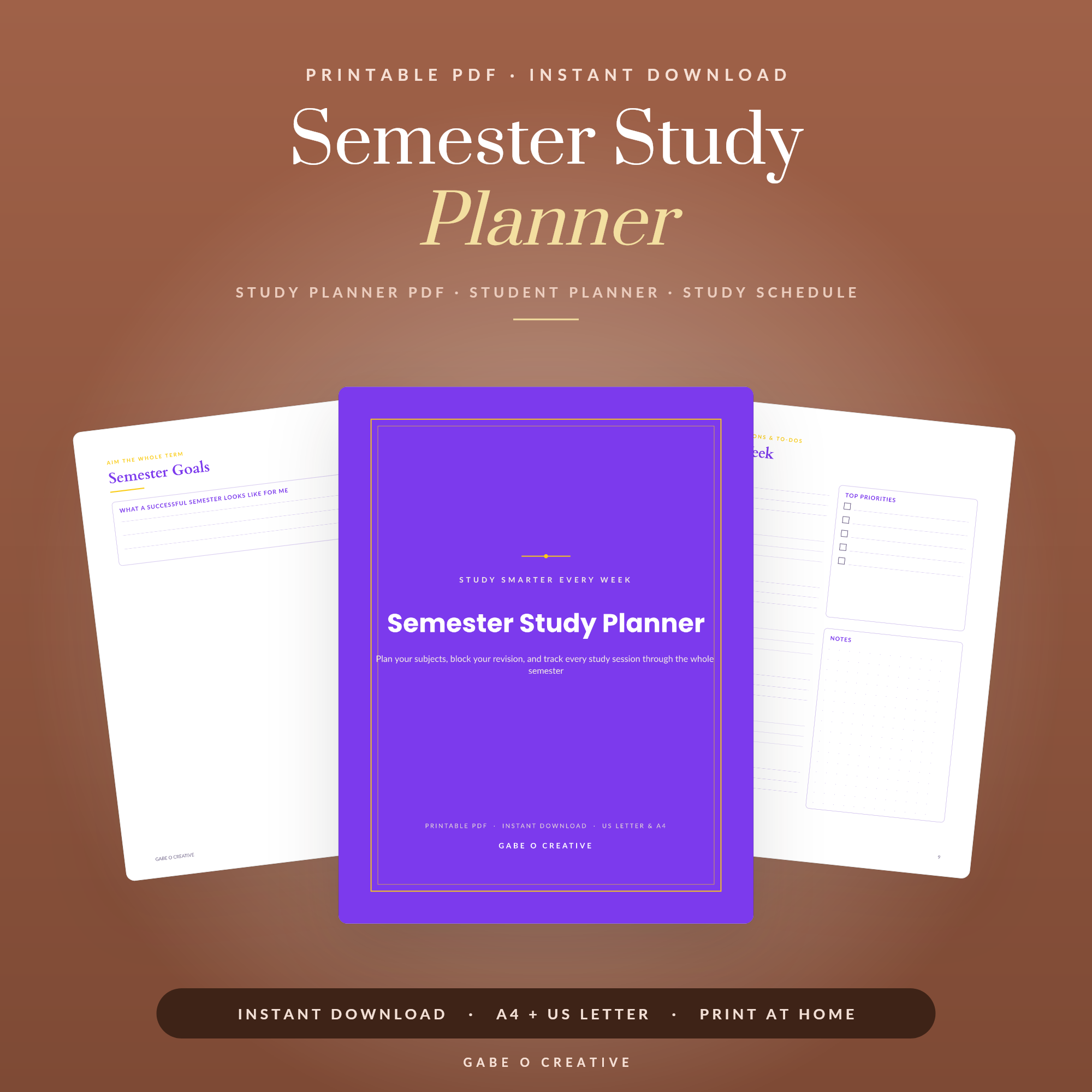
A study schedule printable does something no burst of motivation can: it decides, in advance, when the work happens — so exam season runs on a plan instead of panic. The students who seem effortlessly on top of things rarely study more hours than everyone else; they study on purpose, in focused blocks, spread sensibly across the weeks. This guide shows you how to build that schedule — realistic, spaced, with actual rest — and the printable study planner that holds the whole system together.
Exam season looming? The study planner gives you weekly spreads, session planners and revision trackers — print it and plan your first week in ten minutes.
 Shop Exam Revision Planner →
Why Schedules Beat Cramming (Every Time)
Cramming feels productive because it's intense — but memory doesn't reward intensity, it rewards repetition over time. A topic you visit three times for 40 minutes across two weeks sticks; the same two hours the night before evaporates by the exam hall. That's spaced revision, and it's the single most evidence-backed technique in learning science. The catch: spacing can't happen by accident. It needs someone to decide that Tuesday 4pm is cell biology and next Friday is the revisit — and that someone is your schedule.
A schedule also kills the two great time-thieves of studying: deciding (twenty minutes of 'what should I even do?') and guilt (rest that isn't restful because you feel you should be working). When the plan says the session is done, you're actually free.
Build Your Schedule in 5 Steps
- Map your real week first. Classes, job, training, dinner — block what already exists. A schedule built on a fantasy week fails by Wednesday.
- Find your genuine gaps. Most students find 8–15 usable slots. You need fewer than you think.
- Place 25–50 minute sessions. One subject per session, with a 5–10 minute break after. Two sessions back-to-back is a heavy block; three is exam-season only.
- Assign topics, not just subjects. 'Maths' invites drift; 'Maths — differentiation past-paper Qs 1–6' has a finish line.
- Protect rest. One full evening off per week minimum, plus one buffer slot for catch-up. The buffer is what stops one bad day sinking the whole week.
Colour-code by subject when you print it — the wall copy becomes a dashboard you can read from across the room. The study planner has the weekly spreads and session pages laid out for exactly this.
The Exam-Season Version: Work Backwards
When exams are dated, the schedule flips: start from the exam and plan in reverse.
| Weeks before exam | Focus |
|---|---|
| 4–6 weeks out | First pass — every topic visited once, notes condensed |
| 2–4 weeks out | Second pass — active recall: flashcards, blurting, practice questions |
| Final 2 weeks | Past papers under timed conditions + weak-spot repairs |
| Last 2 days | Light review of summaries only — sleep is the revision now |
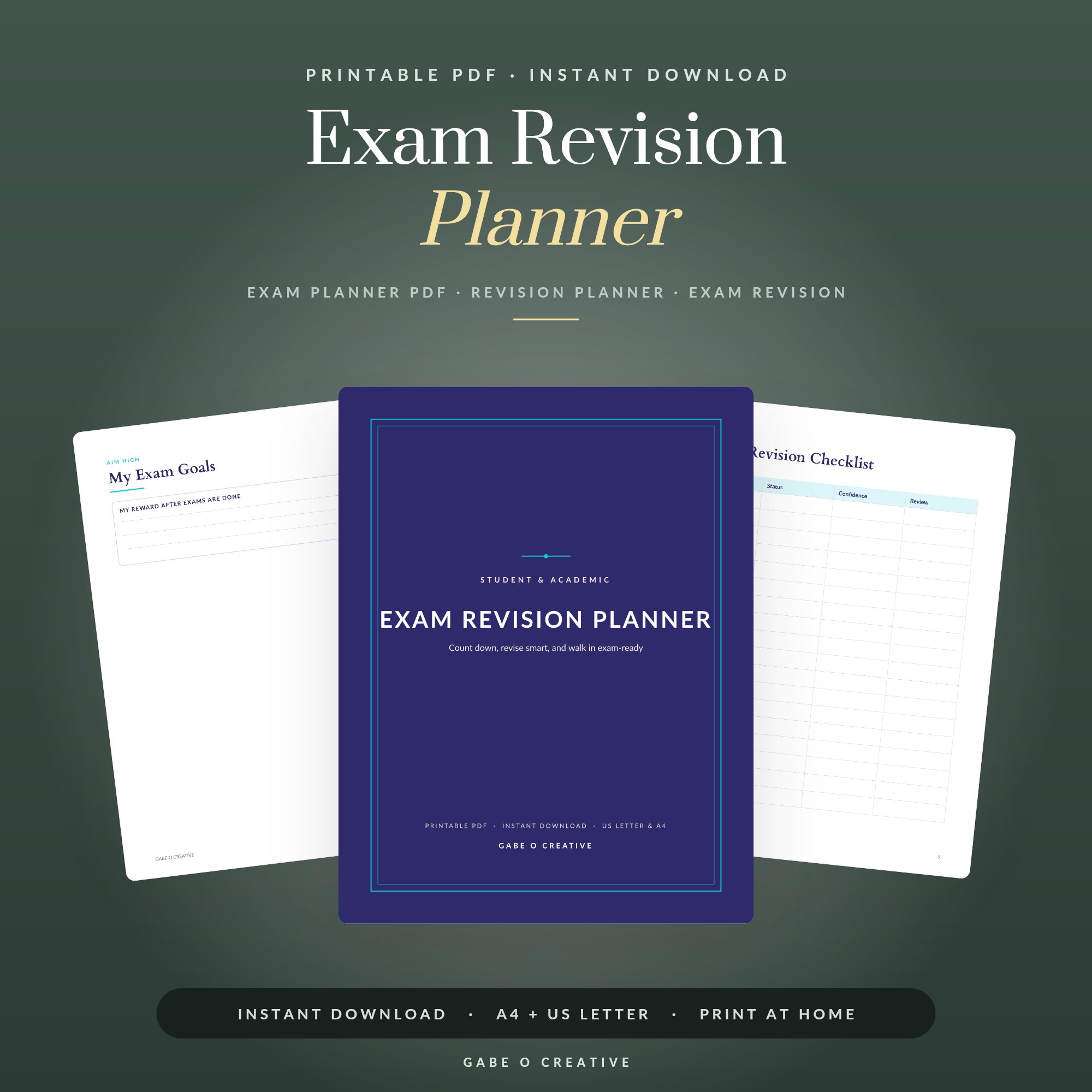
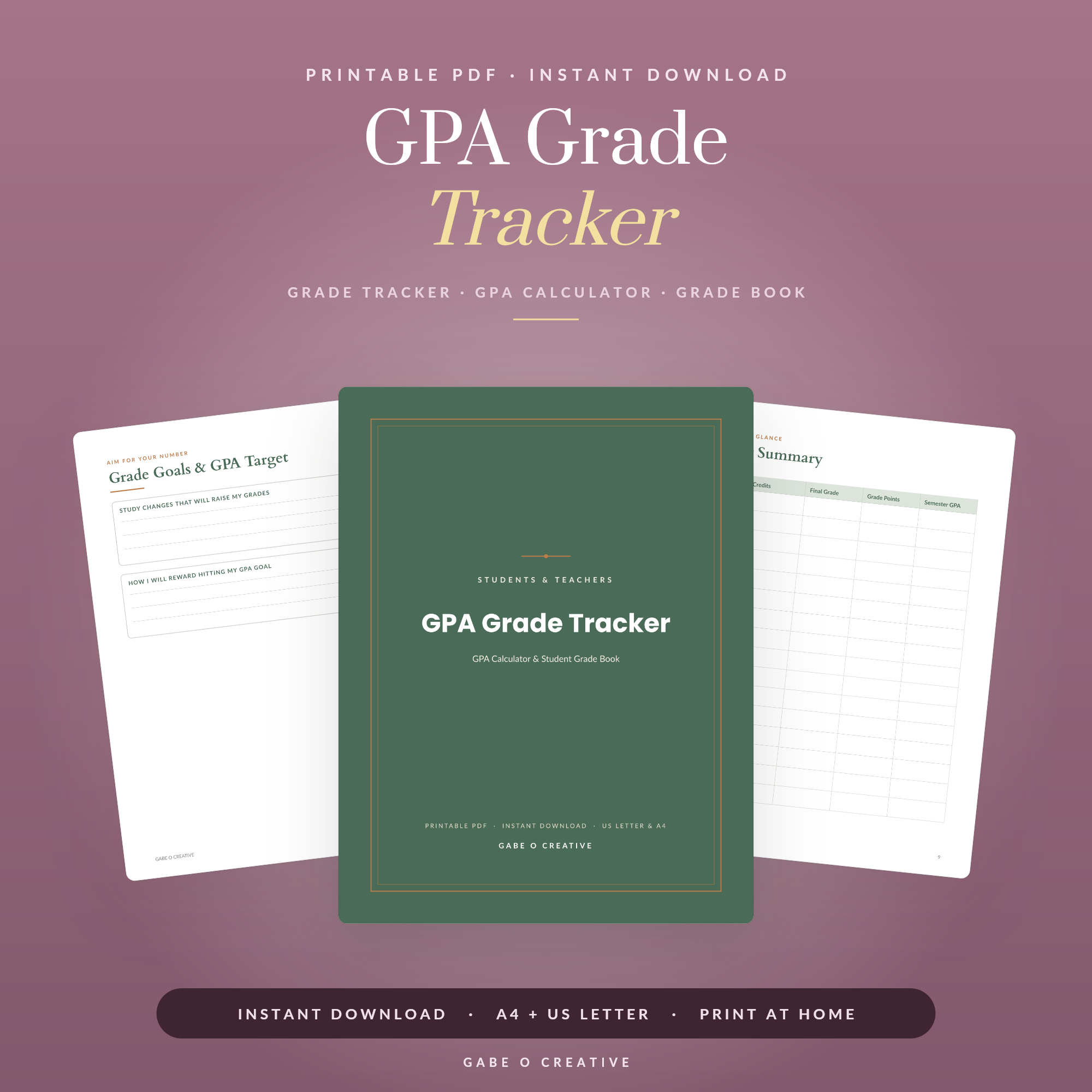
List every topic per subject, count your available sessions, and spread topics so each gets 2–3 visits. If the maths doesn't fit, cut topic depth — never sleep or rest days. The exam revision planner is built around this backwards plan, with topic checklists and countdown pages, and the grade tracker shows you which subjects actually need the extra visits.
 Shop Assignment Tracker →
Make the Sessions Themselves Work
A beautiful timetable full of passive re-reading is still a losing plan. Inside each block, use techniques that force your brain to retrieve:
- Active recall — close the notes, write everything you remember, then check.
- Past-paper questions — the exam format is a skill of its own.
- Teach it aloud — if you can't explain it simply, you've found tomorrow's session.
- Flashcards for facts — a few minutes daily beats an hour weekly.
- Phone in another room — willpower is a terrible app-blocker.
If focus is the hard part — wandering attention, ADHD, or a phone that magnetises your hand — shrink the unit of work, not the ambition. Plan 15–20 minute sessions instead of 45, start each one with the easiest possible entry task (“open the notes, read one heading”), and use a visible timer so the end is always in sight. Body-doubling helps enormously too: studying alongside a friend or a library full of strangers makes starting easier and drifting harder. The schedule stays the same — only the block size changes to fit the brain using it.
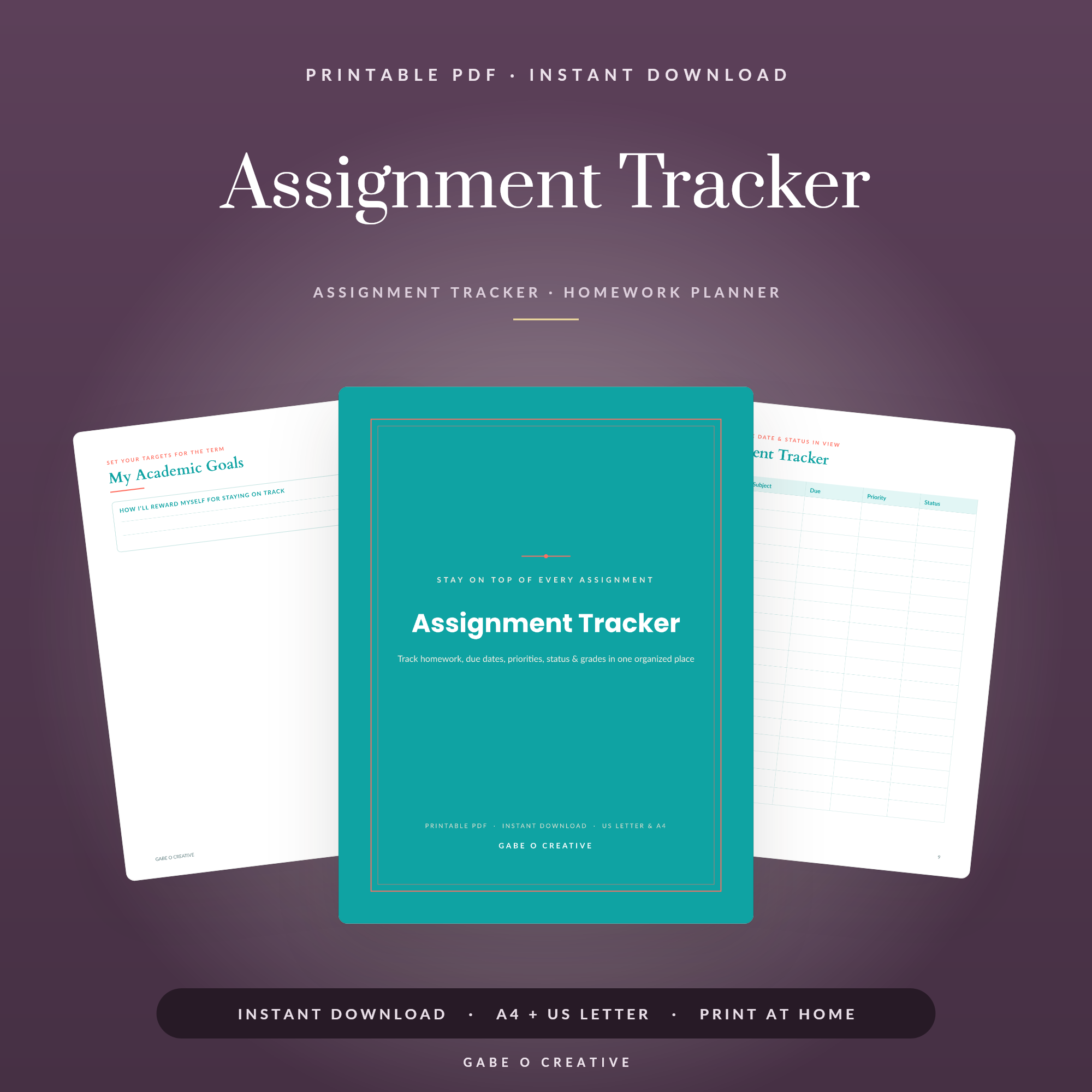
Track assignments alongside revision with the assignment tracker so coursework never ambushes your exam plan, and keep the whole year's dates in the academic planner 2026–2027. For the bigger organisational picture, our guides to student planner printables and productivity planners pair perfectly with this one.
Keep It Alive: The Sunday Ten Minutes
Every schedule drifts — the good ones get re-anchored weekly. Each Sunday, spend ten minutes: tick off what happened, move what didn't (into the buffer slot, not the bin), glance at upcoming deadlines, and print or pencil the week ahead. That tiny ritual is the difference between a schedule that lasts a week and a system that carries you calmly through the year. Print fresh pages each term — a clean timetable is oddly motivating — and let the routine, not adrenaline, get you to exam day.
 Shop GPA Grade Tracker →
Study Schedule FAQs
How do I make a study schedule I'll actually stick to?
Start from your real week, not an ideal one: block existing commitments first, then place 25–50 minute study sessions in the gaps, each assigned to a specific subject and topic. Keep at least one rest evening and one buffer slot — schedules fail when they assume a perfect week.
How many hours a day should I study?
Quality beats duration. Three focused 45-minute sessions with breaks outperform six distracted hours. During term, 1–2 planned sessions per day is sustainable; in exam season, 3–4 with proper breaks is a realistic ceiling for most students.
What is spaced revision and why does it work?
Instead of studying a topic once for a long time, you revisit it in shorter sessions spread across days and weeks. Each revisit interrupts forgetting and strengthens memory — it's the most evidence-backed study technique there is, and a schedule is what makes it happen.
Should I schedule by time or by task?
Both: block the time, then give the block one specific task ('Biology — cell transport past-paper questions', not just 'Biology'). Time gives structure; the task gives the session a finish line so you know when you're done.
How far ahead should I plan revision for exams?
Work backwards from the exam dates: list topics per subject, spread them across the available weeks so each gets 2–3 spaced visits, and keep the final week for past papers and weak spots — never first-time learning.
Is a printable study schedule better than an app?
For most students, yes — a printed timetable on the wall is visible all day, can't be swiped away by notifications, and ticking off sessions by hand is genuinely motivating. Print fresh pages each term and adjust as you learn what works.
Ready to plan a calm exam season? Grab the study planner and the exam revision planner, or browse the full Students & Teachers collection — and let the schedule carry the stress for you.