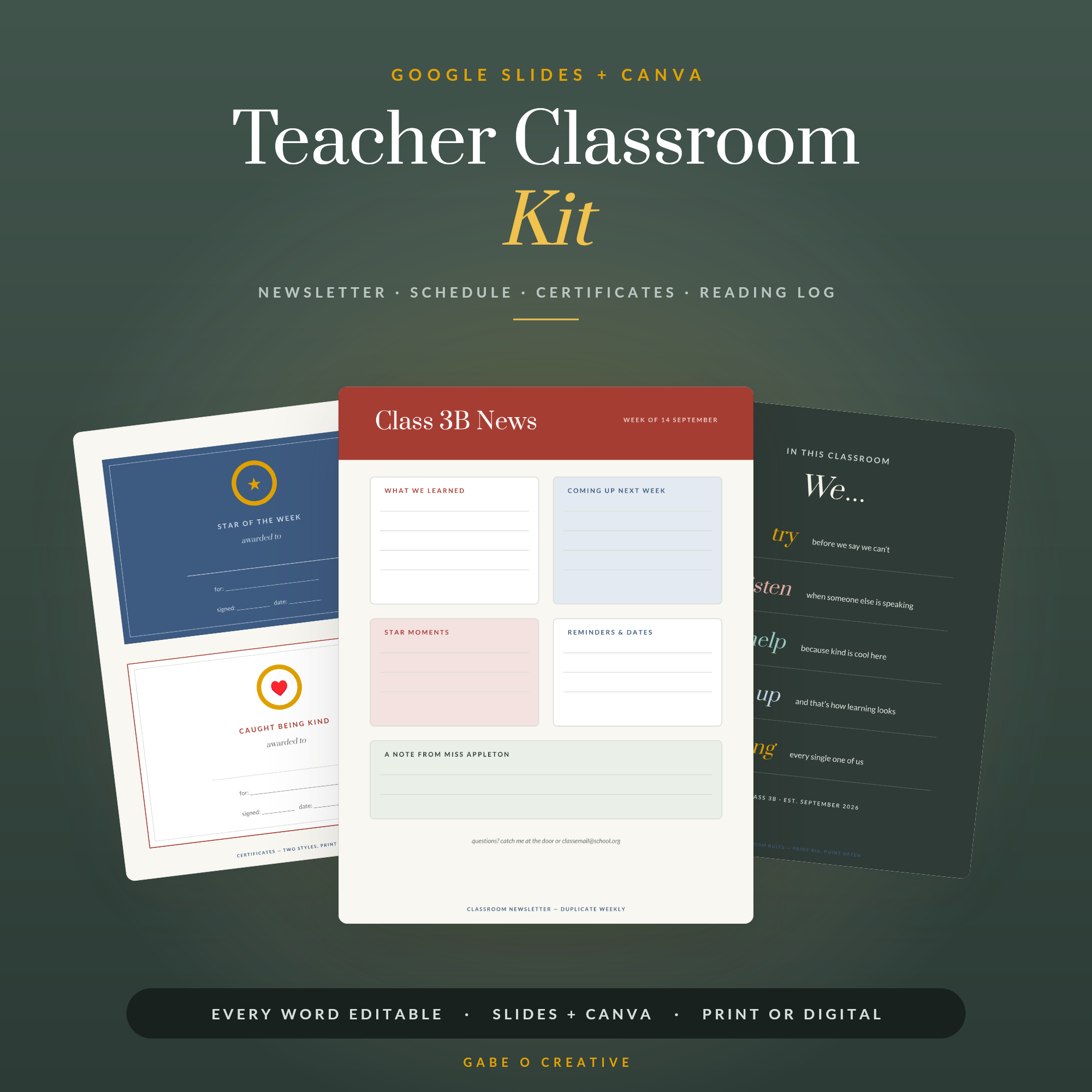
A new classroom is just an empty box until you give it systems — and the difference between a first year that runs and one that runs you is almost entirely down to setup. A good classroom setup checklist isn't about laminating until midnight; it's about laying the room out so it teaches children where to be, storing things so tidying takes two minutes, and quietly finishing the admin that decides whether day one goes smoothly. Here's the whole thing in order, from furniture to the first-week paperwork. (The editable displays, labels and parent notes that go with it are in the Teacher Classroom Kit.)
Setting up your first room? The Teacher Classroom Kit gives you the newsletter, weekly schedule, name labels, certificates, reading log, parent notes and a rules poster — all matching, all editable in free Google Slides or Canva. Set the room up in one evening and reuse it all year.
Rather than one exhausting marathon, spread setup across three short sessions in the week before term:
| Session | Focus | Why it comes here |
|---|---|---|
| 1 · Big moves | Furniture & zones | Needs space and energy — settle it first |
| 2 · Systems | Labels, trays, functional displays | The quiet work that saves you all year |
| 3 · Finishing | Admin, name labels, sub folder | Decides whether day one actually runs |
Start with the layout, not the decoration
The most common new-teacher mistake is reaching for the display paper first. Don't. The layout comes before anything touches a wall, because everything else depends on it. Decide three things: where you teach from, where the children sit, and how people move around the room without a traffic jam. Then do the thing almost nobody does — sit in a child's chair at the back and check you can actually see the board. If they can't, no display in the world will fix the lesson.
Get the flow right and the room quietly manages itself. Get it wrong and you'll be dragging tables around in October wondering why the back corner is always chaos. Our fuller guide to classroom organisation ideas goes deeper on layouts that survive a real class.
Build the four zones
Once the flow works, define your zones — most classrooms want four, and defined zones do a huge amount of behaviour management for you because children read the space and know what each part is for.
- Teaching zone — the front, visible from every seat, uncluttered so the board is the focus.
- Working zone — the tables, grouped or rowed to suit how you teach, not how the last teacher left them.
- Quiet zone — a reading corner or calm space; even a rug and a book box changes the feel of a room.
- Resource zone — where supplies live, set up so children fetch and return things themselves.
That last one is the secret weapon of a calm classroom. If a seven-year-old can find the glue and put it back without asking you, you've bought yourself a hundred small interruptions back every day.
Systems and labels: the boring bit that saves you
Now the room gets its systems, and this is where an evening's effort pays off all year. Label the trays, the pegs, the drawers, the resource boxes — everything with an obvious, child-readable home. The test is simple: could a child tidy this away correctly without asking? If yes, your end-of-day reset takes two minutes instead of twenty.
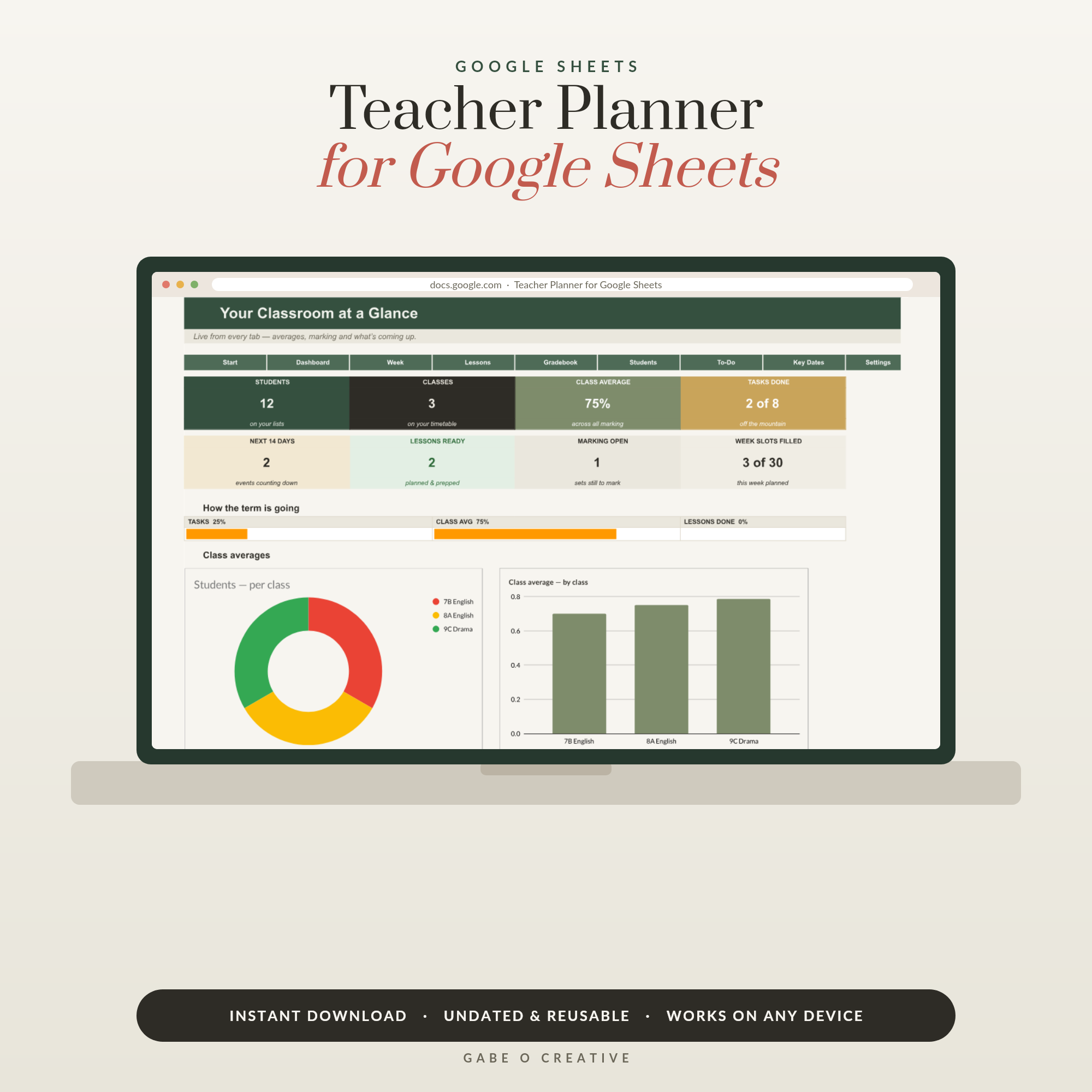
Keep what you use daily within arm's reach of where you teach, and box up the occasional stuff so it's off your surfaces. The Teacher Classroom Kit has name labels eight-to-a-page for trays and pegs, and a rules poster you can print for the wall — the functional displays that actually earn their space. For the admin and marking side, a teacher planner in Google Sheets keeps your class lists, timetable and assessment in one place from day one.
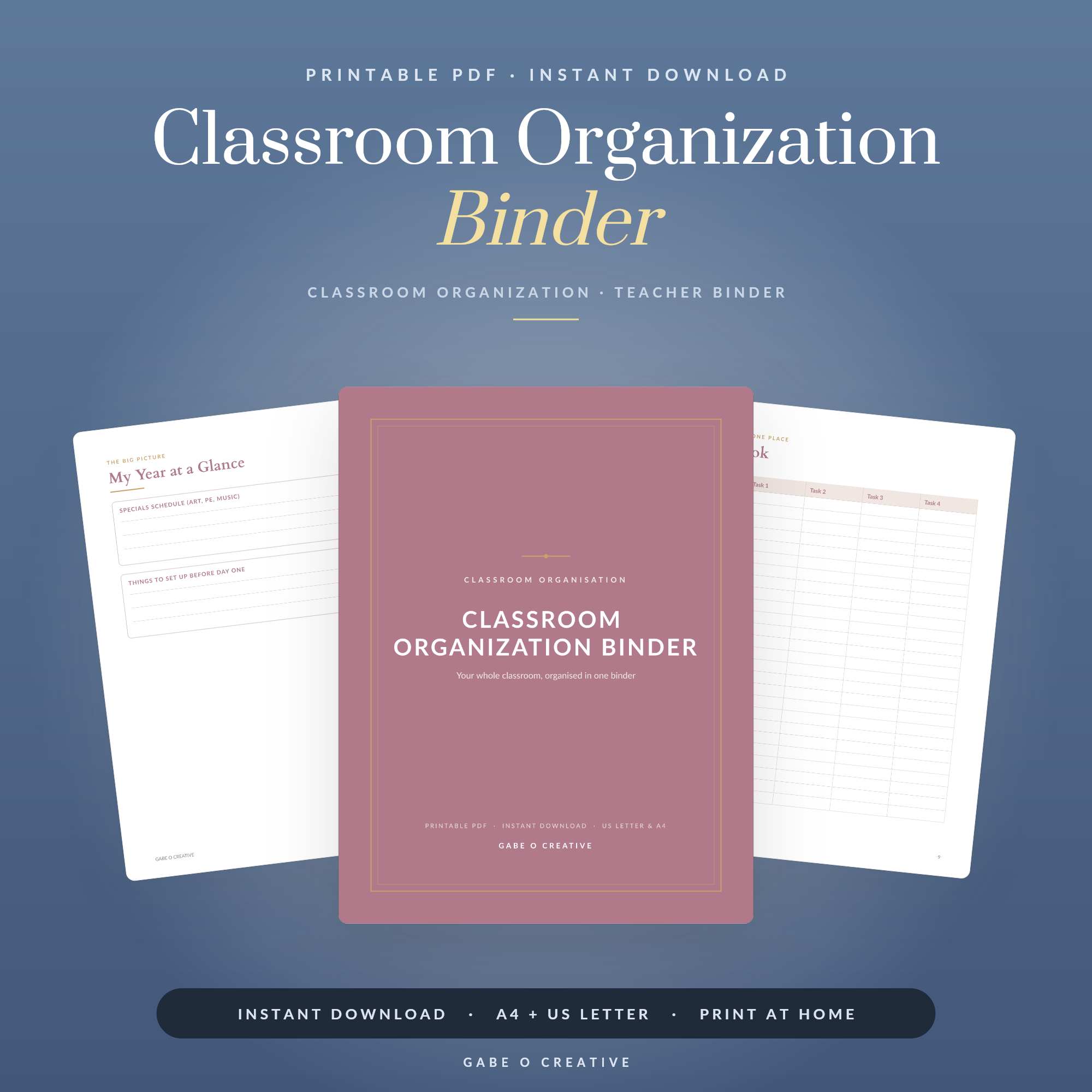 Shop Classroom Organization Binder →
The invisible half: first-week admin
Here's what the Pinterest photos never show — the half of setup that has nothing to do with how the room looks and everything to do with whether the first week runs. Before the children arrive, get these done:
- Name labels on trays, pegs and books.
- A seating plan — even a rough one; you'll change it, but start with intent.
- Your first week of lessons at least sketched out.
- A class list with the notes that matter — allergies, needs, who sits where and why.
- A plan for the daily routines: register, dinner numbers, lining up, handing out.
A pretty room with none of this is a stage set. A plain room with all of it is a classroom that works on Monday morning. If you only have limited setup time, spend it here first.
Start the sub folder now, thank yourself later
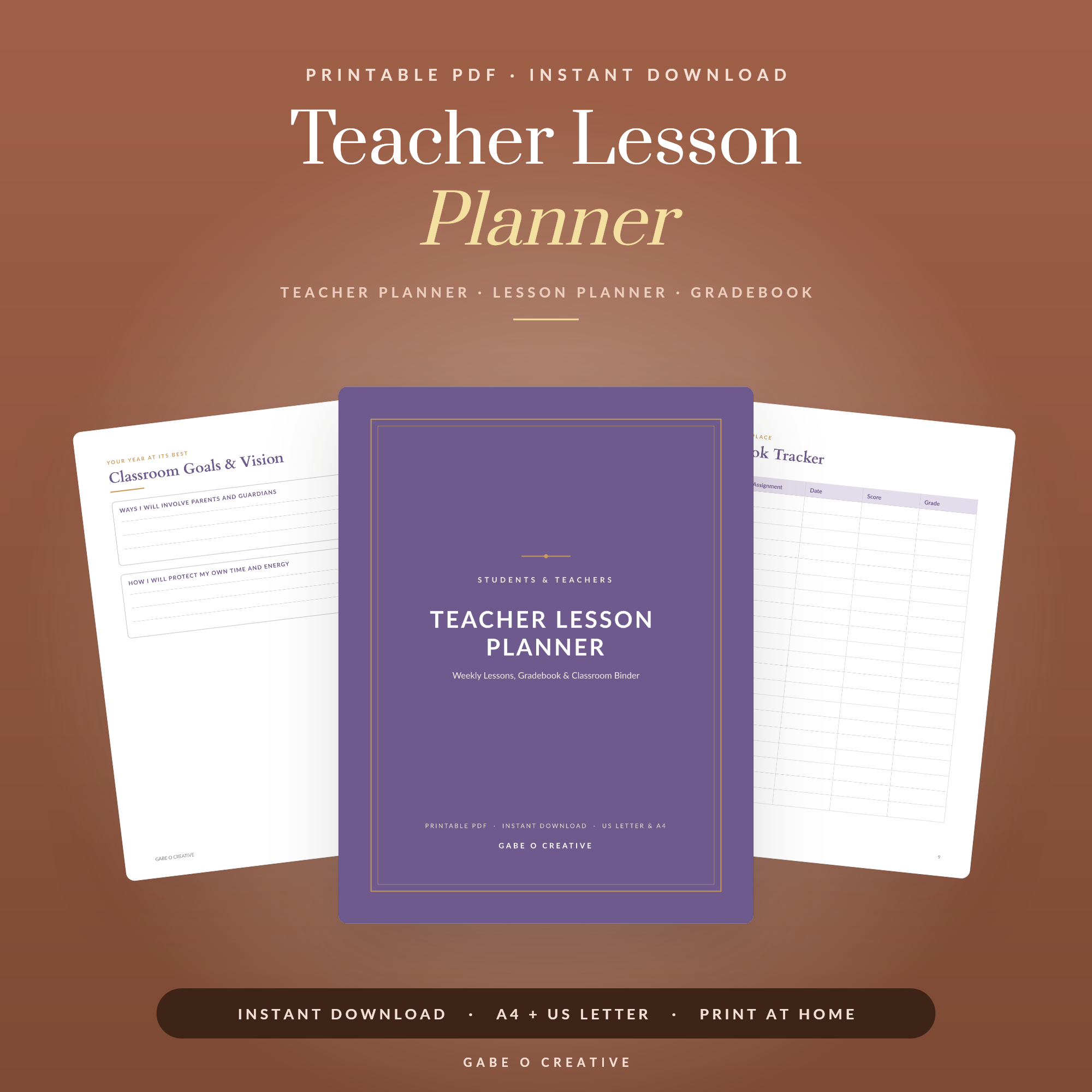
The job nobody does in week one and everybody wishes they had: start a supply folder before you ever need it. A class list, the timetable, seating plan, a note on your routines and a couple of easy standalone lessons — that's a bad morning turned into a phone call. You will be ill at some point; the version of you that prepared for it is a kind gift to the version that's running a temperature at 6am. Our guide to sub plans that actually work has the full template, and the printable Substitute Teacher Binder gives you the whole folder ready to fill.
Set up parent communication before parents ask
The last piece of setup is the one that pays off all year: decide how you'll talk to parents before the first note needs to go home. A simple weekly newsletter — even five lines — heads off the majority of parent questions before they're asked, and a stack of good-news notes ready to send changes the whole tone of your relationship with a class's families. The Classroom Kit includes an editable newsletter you duplicate each Friday and parent notes that are good news only, on purpose. Getting this scaffolding up in setup week means you're never scrambling to write your first newsletter at 9pm on a Sunday in September.
If you would rather the planner did the sums for you, our guide to the Google Sheets teacher planner walks through a gradebook that averages marks automatically.
Your questions, answered
How early should new teachers set up their classroom?
Give yourself two or three sessions in the week before term, not one marathon the day before. The first session is furniture and zones — the big moves that need space and energy. The second is systems: labels, trays, the display backing. A final short one is the finishing touches. Spread out, it's calm and considered; crammed into one evening it's exhausting and you miss the things that matter most.
What should you set up first in a classroom?
The layout, before anything goes on a wall. Decide where the teaching happens, where children sit, and how bodies move around the room, because every other decision flows from the traffic. Sit in a child's chair and check the sightlines to the board. Sort the flow first and the room works; decorate first and you'll be moving furniture in October.
What are the essential classroom zones?
Most rooms want four: a teaching zone the whole class can see, a working zone of tables, a quiet or reading corner, and a resource zone where supplies live and children can fetch and return them independently. Defined zones do quiet classroom management for you — children read the space and know what each part is for, which cuts the low-level chaos that eats a new teacher's energy in the first term.
How do I organise classroom supplies as a new teacher?
Label everything and give every item one obvious home, because a system a seven-year-old can follow is a system that survives contact with a real class. Store what you use daily within arm's reach of where you teach; box up what you only need occasionally. The goal isn't a photogenic room — it's a room where tidying up at the end of the day takes two minutes because everything has a place to go back to.
What admin should be ready before the first day?
The invisible half of setup: name labels on trays and pegs, a seating plan, your first week of lessons at least sketched, a class list with the notes that matter, and a plan for the register and dinner numbers. Have a good-news note ready to send home and a sub folder started in case you're ever off. The room being pretty matters far less than these being done.
Do I need to laminate and decorate everything?
No — and the pressure to is one of the quiet traps of the first year. A calm, clearly organised room beats a heavily decorated one, and too much on the walls actively overwhelms some children. Do the functional displays that earn their place — the timetable, a working word wall, somewhere to celebrate work — and leave real wall space blank. You can always add; stripping an over-decorated room back mid-term is far harder.
More for your first year: our guides to the first day of school and classroom organisation, plus the full Students & Teachers collection for the planners and kits that carry you through.
Room ready in one evening. The Teacher Classroom Kit has the newsletter, schedule, labels, certificates, reading log and parent notes — all matching and editable. Set it up once, reuse it every year.