If every fresh planner has ended up abandoned by day three, you are not lazy and you have not failed. An ADHD planner printable is built for a neurodivergent brain rather than the steady, linear, neurotypical one most stationery is designed around. The problem was never your willpower. It was the tool. When the layout fights how your attention actually works, friction wins. When the layout flexes around you, planning finally becomes something you can return to on a good day and a foggy one alike.
This guide is warm, practical and free of shame. We will look at why standard planners quietly set you up to fail, and then walk through the gentle, evidence-friendly habits that genuinely help: low-demand daily pages, brain dumps, breaking tasks into tiny steps, body doubling, routines as soft anchors, and tracking wins instead of only chasing an endless to-do list.
Why standard planners fail, and what an ADHD planner printable changes
Most planners assume three things you cannot reliably promise: consistent energy, neat daily entries, and a memory that keeps the planner front of mind. ADHD brains run on interest, urgency and novelty, not on a tidy hourly grid. So the rigid layout slowly becomes invisible, and a single missed day leaves a row of accusing empty boxes.
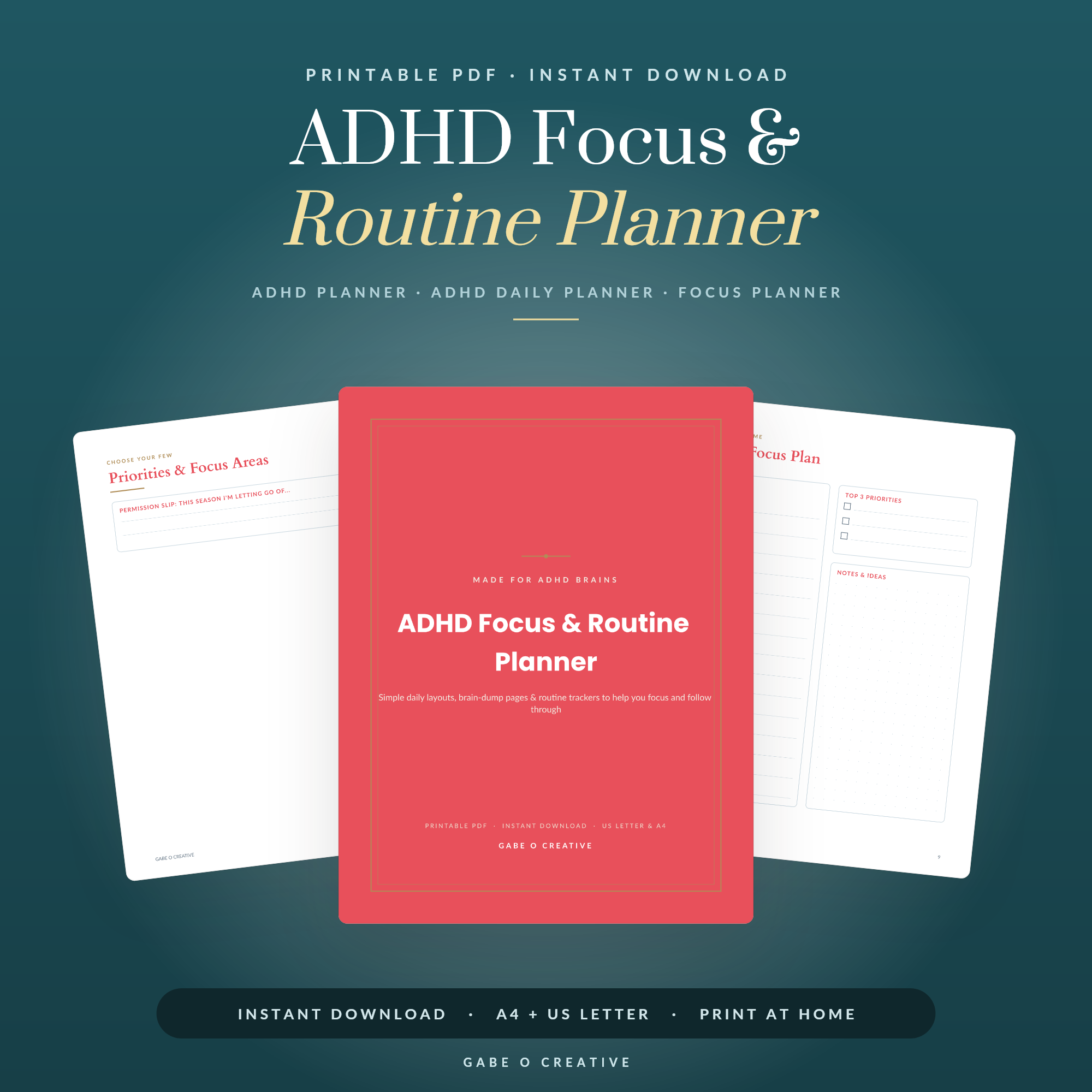 Shop ADHD Focus & Routine Planner →
The streak trap
Streaks feel motivating until you break one. For a neurodivergent brain, that broken chain often reads as proof you cannot stick to anything, and the whole system gets quietly dropped. A kinder planner has no streaks to shatter. You simply begin again on the next page, no penalty, no guilt.
Out of sight, out of mind
If the planner lives in a drawer, it does not exist. ADHD brains struggle with object permanence, so the tool has to be visible and low-effort to open. A page you can leave flat on the desk, or a PDF pinned open on your tablet, beats a beautiful book you forget to lift.
Too pretty to use
There is a quiet trap in a gorgeous, expensive planner: it feels too precious to scribble in. The fear of ruining a beautiful spread can freeze you completely. A printable sidesteps this entirely. If a page goes wrong, you reprint it for pennies or duplicate it on your tablet. Nothing is sacred, so nothing is intimidating, and that freedom to make a mess is exactly what keeps a neurodivergent brain coming back.
What makes an ADHD planner printable feel low-demand
The single most useful shift is moving from high-demand pages, crammed with timed slots, to low-demand ones. A low-demand page asks for a little and forgives a lot. Instead of mapping every fifteen minutes, you choose a small handful of things that would make today feel okay.
A gentle daily layout usually holds just a few elements:
- One main intention, the single thing that matters most today.
- Two or three supporting tasks, no more, so the page never feels like a wall.
- A flexible space for appointments or fixed points.
- A small spot to note how you feel, because capacity is data.
Our neurodivergent planner printable is designed exactly this way, with breathing room baked into every page so a half-finished day still looks like progress rather than a mess. When the page expects less, you paradoxically tend to do more, because starting no longer feels like climbing a wall.
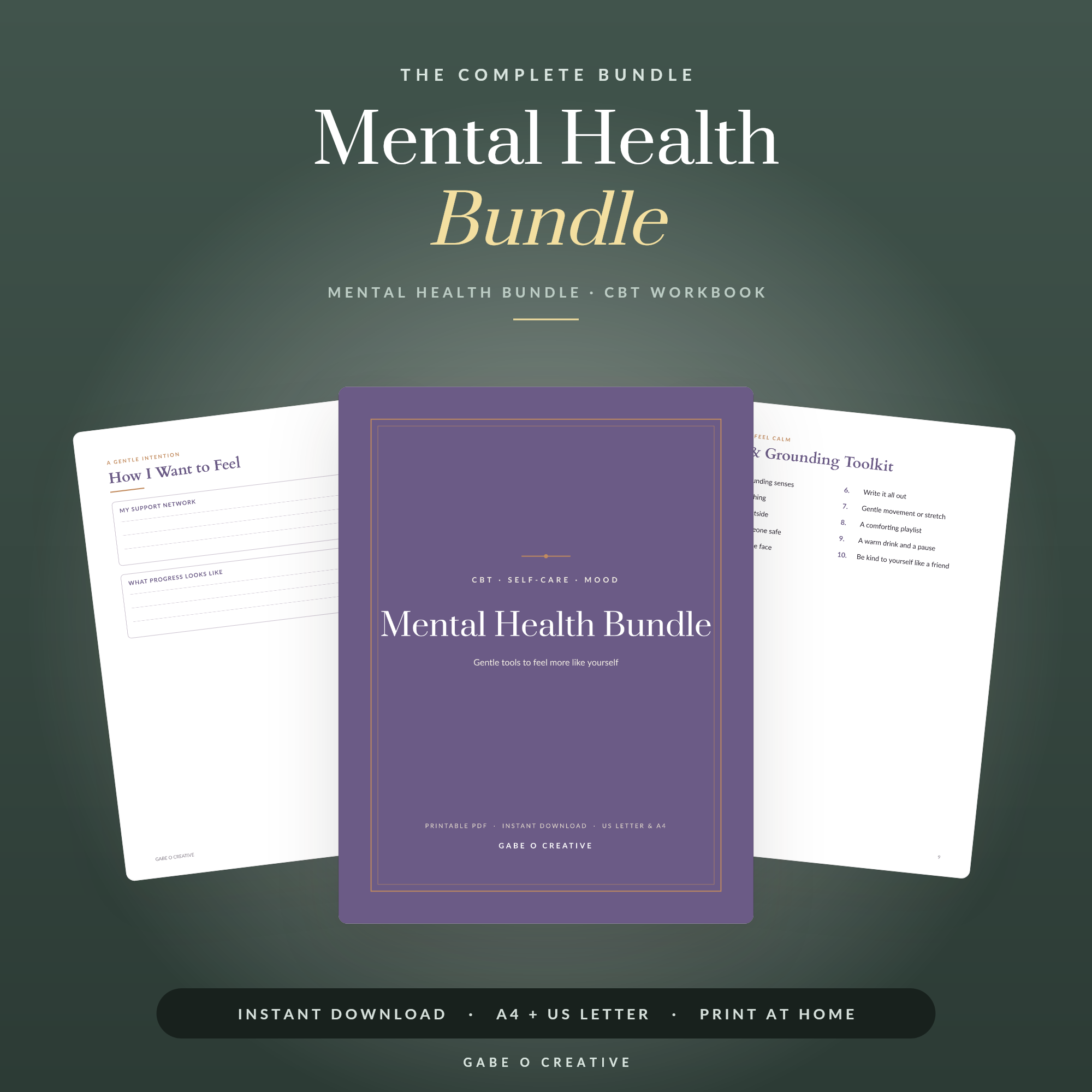 Shop Mental Health Bundle →
Brain dumps and breaking tasks into tiny steps
Two tools do most of the heavy lifting for executive function: the brain dump and the tiny step. Together they handle the two hardest moments, the noisy overwhelmed mind and the stuck, will-not-start task.
The brain dump
A brain dump is one page where you pour out every thought, task, worry and half-idea with no order and no judgement. The goal is not to organise; it is to empty. Holding a dozen open loops in your head is exhausting and steals the focus you need for the actual work. Once everything is on paper, your mind can let go of guarding it.
Do a brain dump whenever your head feels loud: first thing in the morning, before bed when worries circle, or mid-afternoon when overwhelm builds. Only afterwards do you gently sort the page, pulling two or three items onto today and parking the rest without guilt. The point worth repeating is that you never sort while dumping. Mixing the two reintroduces the very pressure you are trying to release, so keep the dump messy and the sorting separate.
Tiny steps for executive function
Big tasks stall because the brain cannot find the entry point. The fix is to shrink the first step until it feels almost silly. Sort the kitchen becomes put one mug in the sink. Do the tax return becomes open the folder. You are not lowering your standards; you are giving a reluctant brain a doorway it can actually walk through.
- Name the very first physical action, not the whole project.
- Make that action so small it would feel odd to refuse.
- Let momentum, not motivation, carry you to the next step.
A dedicated ADHD focus and routine planner gives you ready-made space for both, pairing a daily brain dump zone with a step-breakdown prompt so the heaviest task on your list has somewhere gentle to begin.
Body doubling, routines and gentle anchors
Some of the most effective ADHD strategies are about environment and rhythm rather than discipline. They reduce the effort it takes to begin, which is usually the real obstacle.
Body doubling
Body doubling means doing a task alongside another person, in the room or on a video call, even in silence. Their quiet presence anchors your attention and makes starting far easier. Pair it with your planner: write the one task you will tackle during a focus session, then sit down with a friend or a body-doubling stream and begin together.
Routines as soft anchors, not strict rules
Routines work best when you treat them as gentle anchors rather than rigid commands. A morning anchor might be three small things in any order: water, medication, one tidy action. An evening anchor might be a quick brain dump and tomorrow's single main intention. Because the order is flexible, a disrupted day does not collapse the whole routine. If you miss the morning anchor entirely, you simply pick up at the next one. There is no broken chain to mourn, only the next gentle handhold whenever you reach for it. Over time these anchors become quietly automatic, doing some of the remembering so your tired executive function does not have to.
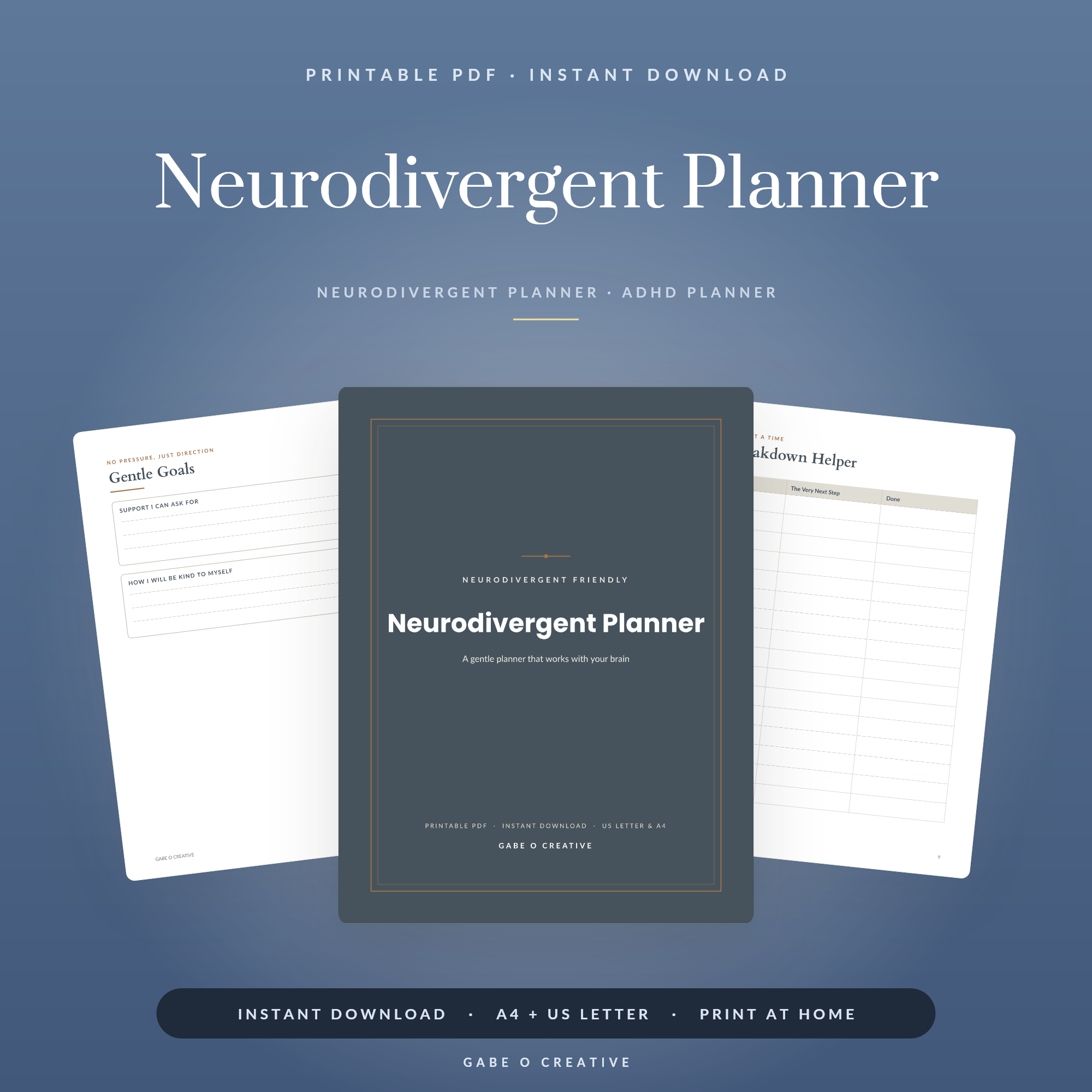 Shop Neurodivergent Planner →
The neurodivergent planner includes flexible routine pages built on this idea, so your anchors support you on full-capacity days and still hold on the foggy ones.
Track wins, not just to-dos, and be kind on low days
Traditional planners measure you only by what is left undone, which is brutal for a brain already prone to rejection sensitivity. Flipping that around changes everything. When you record what you did manage, however small, you build evidence that you are capable, and that evidence quietly fuels the next day.
A simple wins list
Keep a running wins column or page. Replied to one message, drank water, rested when you needed to, started the hard task even briefly: all of it counts. Reviewing your wins at week's end often reveals far more progress than your inner critic admitted.
Self-compassion on low-capacity days
Some days the brain simply has less to give, and pushing harder only deepens the slump. On those days, lower the bar on purpose. Choose one tiny anchor, do a short brain dump to offload the worry, and let the rest wait. A low-capacity day handled with kindness is not a wasted day; it is you working with your brain instead of against it.
- Shrink the day to one gentle action.
- Talk to yourself as you would a struggling friend.
- Remember that rest is part of getting things done, not the opposite of it.
A good focus and routine planner makes this kindness structural, giving wins their own space and keeping low-energy options visible so you always have a smaller path forward.
Planning with an ADHD brain is not about forcing yourself into a system that was never built for you. It is about finding tools that flex, forgive and notice your wins. If that sounds like the kind of gentle structure you have been missing, explore the neurodivergent planner printable and start planning with your brain, not against it.
If anxiety or low mood often rides along with ADHD, our Mental Health Bundle pairs gently with this planner.
Related reading: self-care journal printables and productivity planner printables, or browse the full Self-Care & Wellbeing collection.