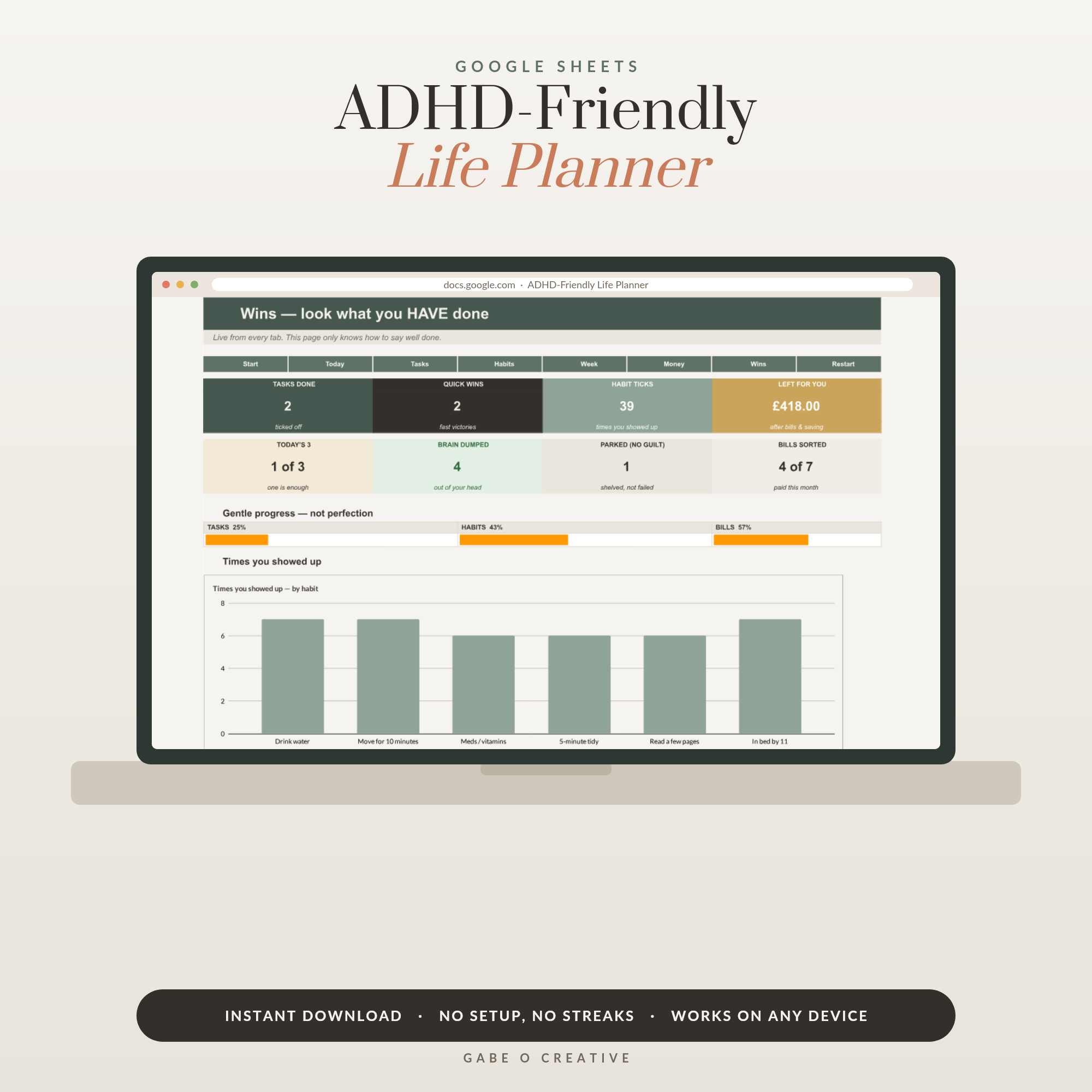
Here's the sentence every late-diagnosed adult deserves to hear: an ADHD planner failing you is not evidence about your discipline — it's evidence about the planner. Most planning systems are designed for steady, obedient attention: fill this in daily, keep the streak, never miss. ADHD attention doesn't work that way, and no amount of buying prettier notebooks changes that. What changes it is a system built around how your brain actually behaves — which is exactly what the ADHD-Friendly Life Planner is.
Want the system ready-built? The ADHD-Friendly Life Planner is a Google Sheets dashboard you can use within 60 seconds of opening it: brain dump inbox, Top 3 picker, habit totals that never streak, a Wins tab, and a judgement-free Restart button.
Why the usual advice keeps failing
Conventional planning rests on three assumptions that are quietly hostile to ADHD brains. First, that setup is free — but a planner needing twenty minutes of weekly ceremony loses to executive dysfunction before Monday lunch. Second, that consistency is the goal — so every layout celebrates unbroken chains and makes gaps visually loud, turning a wobbly fortnight into a wall of shame. Third, that remembering is reliable — that you'll transfer the thought from your head to the page later. There is no later. The thought is already gone.
Flip all three and planning starts working: zero-setup capture, progress that only counts up, and a system that assumes gaps as a feature of the terrain rather than a moral failing.
The brain dump: stop paying rent on your own thoughts
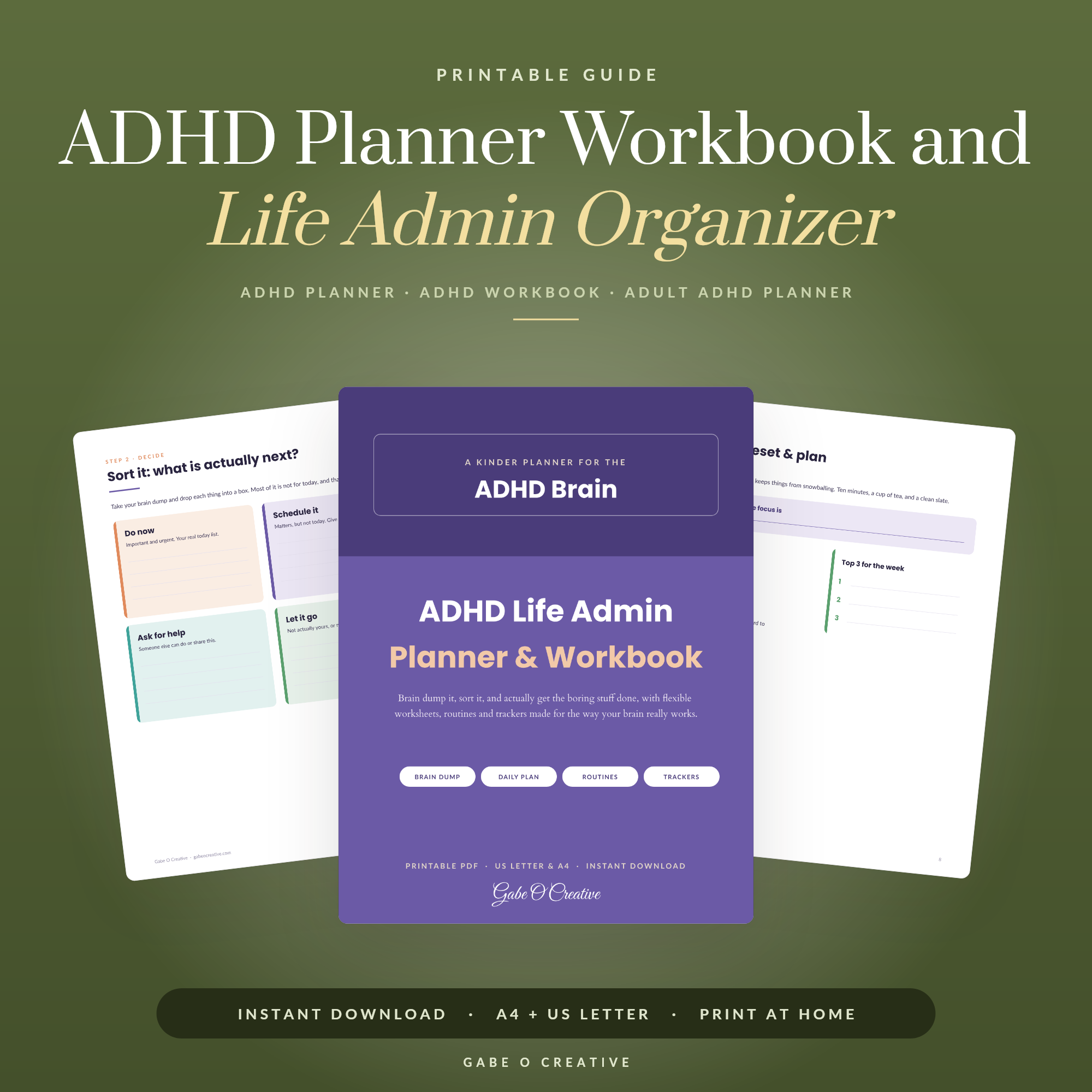
Working memory is the most expensive real estate an ADHD brain has. Every un-captured task — ring the dentist, buy a birthday card, that email — sits there costing attention until it either gets done or gets dropped. The fix is embarrassingly simple: one inbox, always open, zero rules. Everything goes in the moment it appears, exactly as it arrives: "dentist???", "mum bday", "the invoice thing". No categories at capture time — categorising is a decision, decisions cost fuel, and the whole point is making capture free. Sort later, in one sitting, when sorting is the interesting task. Our Brain Dump Planner is the paper version; the Life Planner builds the inbox into its Today tab with a "Do Next" panel that quietly surfaces the urgent-and-quick wins for you.
The Top 3: a floor, not a ceiling
Every morning (or the night before, if mornings are hostile), pick three things from the dump that would make today a win. Write them somewhere you'll see them. That's the entire daily practice.
Why three works when fifteen fails:
- Finishing feels different from failing. Completing a 3-item list and adding a bonus task is momentum; doing 4 items off a 15-item list is somehow defeat. Same work, opposite story.
- Choosing three forces honesty about what actually matters today — the prioritising happens once, cheaply, instead of all day expensively.
- Bad days can still win. On the worst days, "shower, one email, feed us" is a legitimate Top 3. The system bends instead of breaking.
Totals, never streaks
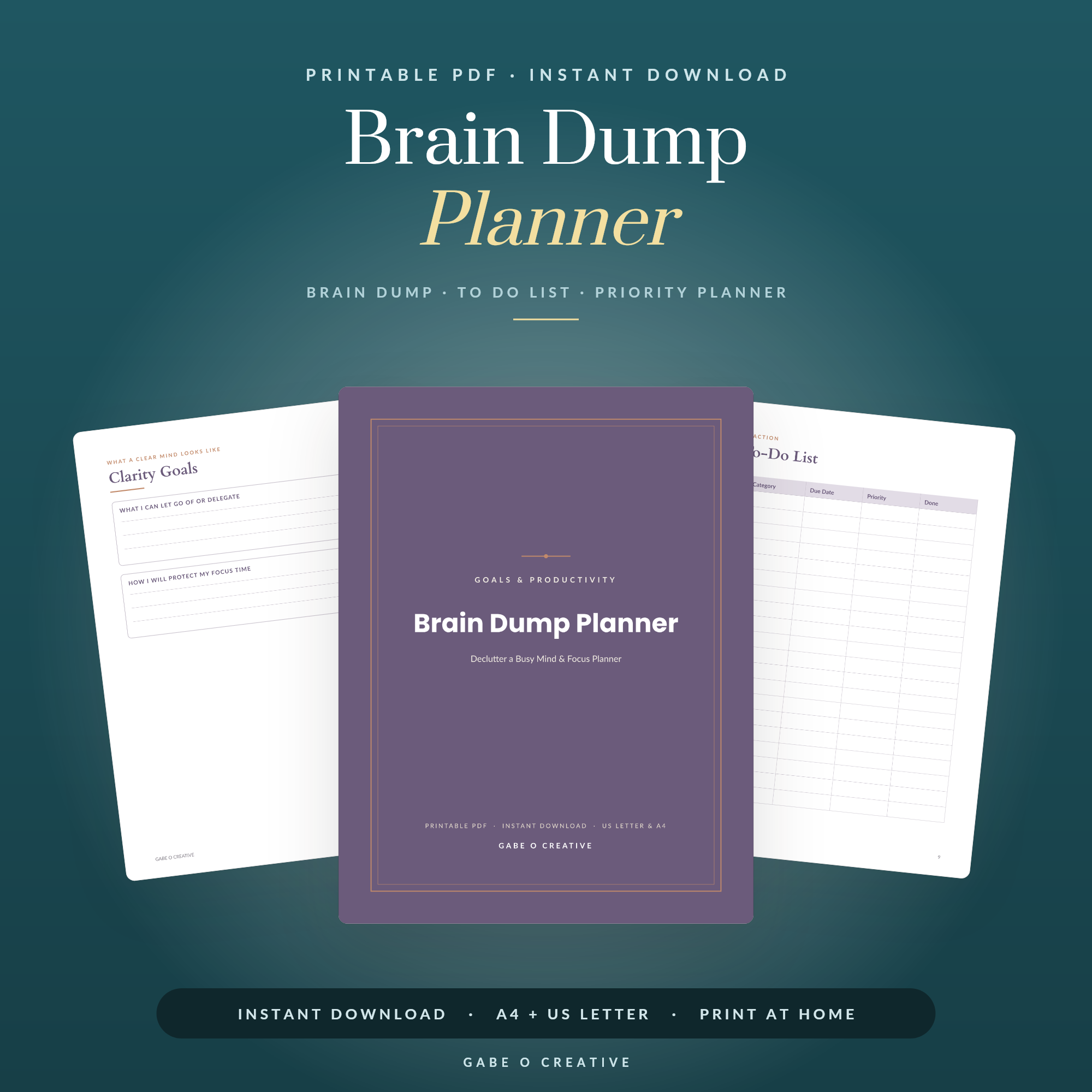
This is the hill worth dying on. A streak says: 21 days, missed one, zero. A total says: 21 days this month — and tomorrow it can only become 22. Nothing you do can make a total go down, which means the record of your effort is permanently safe from one bad Tuesday. The Life Planner's habit grid counts totals only, and pairs it with a Wins tab — a running list of things that went right, because ADHD memory is brutally selective about failures and needs the evidence bank. (The same philosophy runs through our ADHD Life Admin Planner & Workbook for the paperwork side of life, and the Focus & Routine Planner for time-blind days.)
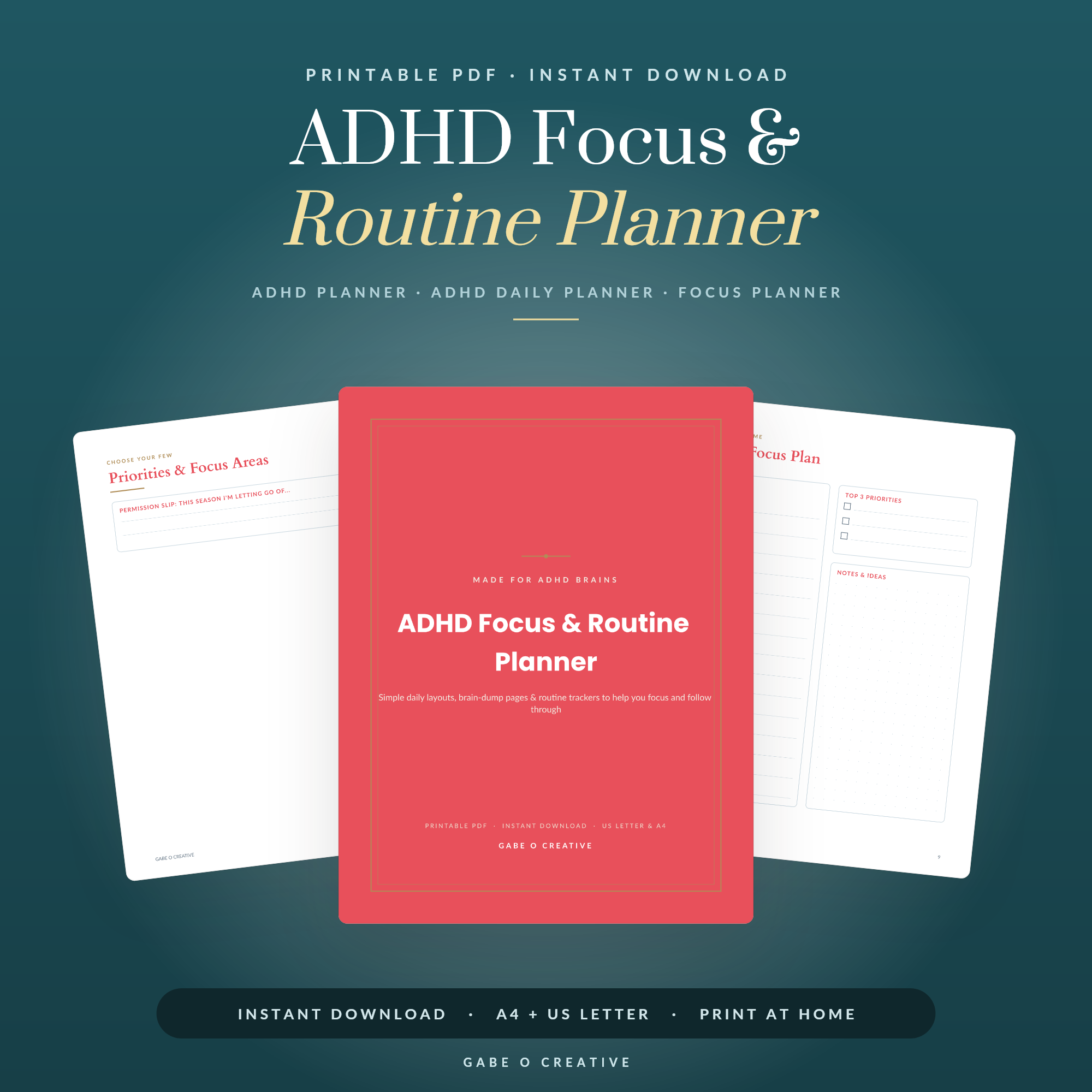 Shop ADHD Focus & Routine Planner →
The restart ritual: the feature nobody builds
You will abandon the system. This is not pessimism; it's weather. The difference between a system you abandoned and a system you use is only this: how expensive is coming back? If returning means confronting three empty weeks and back-filling guilt, you won't return. So build the restart in advance: open the planner, write today's date, dump whatever's in your head, pick three. No reconciliation, no catch-up, no apology paragraph. The Life Planner has an actual Restart tab for exactly this — a one-page ritual that treats the gap as finished business. Parking counts too: the ♻ Park move (shelving a task with no shame attached) is how the task list stays a tool instead of becoming an archaeology site of old intentions.
A day in the system
| Moment | What you do | Time |
|---|---|---|
| Morning (or night before) | Dump whatever's in your head → pick the Top 3 | 5 min |
| All day | Thoughts go straight into the inbox, zero sorting | seconds each |
| When a task completes | Tick it — the totals and Wins update themselves | seconds |
| Weekly-ish (no fixed day) | Ten-minute sort: do, park, or delete inbox items | 10 min |
| After any gap | Restart ritual: date, dump, three. No back-filling | 5 min |
Notice what's absent: no colour-coding ceremony, no weekly spread decoration, no reviewing cascades. The system's entire job is to be cheaper than remembering.
Your questions, answered
Why don't normal planners work for ADHD brains?
Most planners assume steady daily attention, punish missed days with visible gaps, and require setup before they're useful. ADHD attention is interest-driven and bursty, so streak-based systems become guilt machines within a fortnight. Planners that work flip those assumptions: instant to use, forgiving of gaps, and built around capture rather than ceremony.
What is the brain dump method?
One always-open inbox where every thought, task and worry gets written the moment it appears — no sorting, no categories, no judgement. Sorting happens later (or never, for some items). It works because ADHD working memory is expensive: every remembered task costs attention you could be spending on the actual task.
Why totals instead of streaks?
A streak counts consecutive days and resets to zero when you miss one — so one bad day erases three weeks of evidence that you're doing well. A total only ever goes up: 19 workouts this month is 19 workouts whether or not two of them were adjacent. Same data, opposite emotional effect.
How many tasks should I plan per day with ADHD?
Three. Not because you can only do three things, but because choosing three forces prioritisation while the choosing is cheap, and finishing a list (then adding more) feels completely different from failing a list of fifteen. The Top 3 is a floor you can hit on a bad day, not a ceiling for a good one.
What should I do when I abandon my planner for two weeks?
Restart without back-filling. The urge to catch up — logging a fortnight retroactively — is exactly what makes restarting feel expensive enough to avoid. A good ADHD system has a restart ritual: today's date, a fresh brain dump, today's top 3. The gap is not a debt; it's just a gap.
Is a paper or digital planner better for ADHD?
Whichever one is nearest when a thought strikes — capture speed beats format every time. Paper offers friction-free jotting and no notification rabbit holes; digital offers your phone always being in your pocket and totals that count themselves. Many people run a paper brain dump plus a digital dashboard, and that's a system, not a failure.
One honest boundary: this is an organisational system, not treatment — planning tools work alongside whatever support you and your clinician have chosen, never instead of it. For related systems, see the Neurodivergent Planner, and our guides to choosing an ADHD planner and building routines that survive real life.
Ready for a planner that forgives you? Copy the ADHD-Friendly Life Planner — usable in 60 seconds, totals that never reset, and a Restart button instead of a guilt trip.