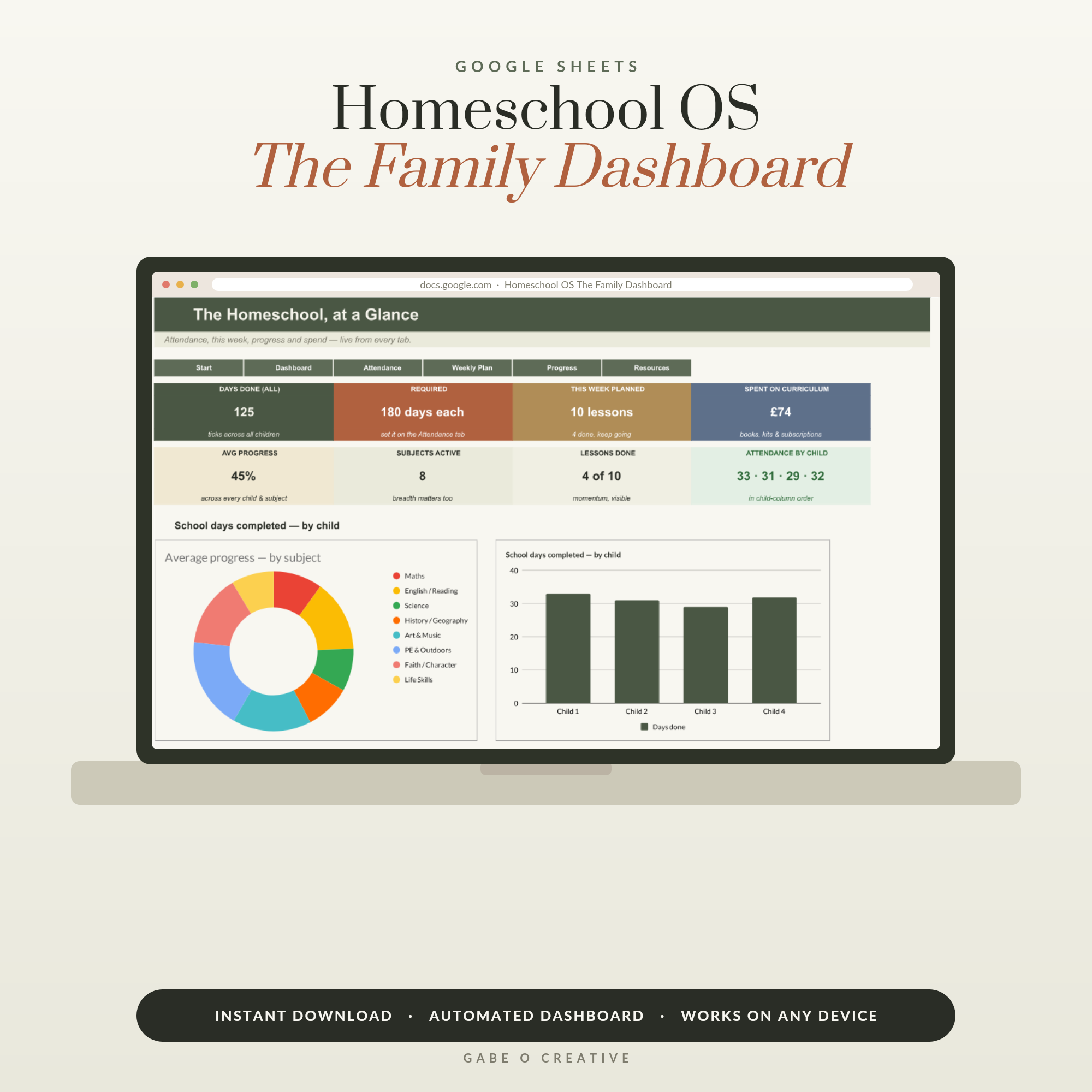
A homeschool attendance record is the least glamorous part of home education — and the part that saves you the most stress. Whether your state requires a set number of instruction days or your local authority simply asks what learning looks like at yours, a tidy record answers the question in thirty seconds. The good news: it takes two minutes a day once you have a system, and a tool like the Homeschool OS spreadsheet does all the counting for you.
Want the whole system ready today? The Homeschool OS is a complete Google Sheets homeschool planner with a built-in attendance tracker, lesson planner, gradebook and reading log — type a tick, and the totals update themselves.
Why bother keeping an attendance record at all?
Three reasons, in order of importance. First, legal cover: several US states require roughly 180 days of instruction per year and can ask to see evidence; other regions, including England, have no register requirement but do allow authorities to make informal enquiries about the education you're providing. A consistent record is the single easiest piece of evidence to produce. Second, your own visibility: homeschool days blur together, and it's genuinely hard to know in February whether you're ahead or behind without a running total. Third, the child's story: if your child ever returns to school, applies to college or needs a transcript, dated records of consistent education make every conversation easier.
What actually counts as an attendance day
This is where new homeschoolers over-worry. An attendance day is a day with intentional learning — not a day that mimics a school timetable. All of these count:
- Formal lessons at the table (obviously)
- Museum, gallery, farm and library trips
- Science experiments, baking-as-maths, gardening-as-biology
- Co-op classes, sports sessions, music lessons
- Online courses and educational documentaries with discussion
- Nature walks with a sketchbook or journal
Most families use a simple rule: if you could write one honest sentence about what was learned, it's an attendance day. That sentence, by the way, is worth writing down — more on that below.
What to record (the two-minute version)
A useful record has four columns and no more. Date, present/absent tick, a one-line note of what you covered, and — if you track multiple children — who it applies to. Here's the difference between a bare minimum record and a strong one:
| Level | What you log | Time per day | How it holds up |
|---|---|---|---|
| Bare minimum | Date + tick | 10 seconds | Proves days happened, nothing else |
| Recommended | Date + tick + one-line note | 2 minutes | Proves days and content — strong evidence |
| Portfolio level | The above + reading log + occasional work photos | 5 minutes | A full learning portfolio, transcript-ready |
The recommended tier is the sweet spot. One line — "fractions with pizza, chapter 4 of Charlotte's Web, swimming" — turns an attendance sheet into a learning log, and a learning log is what actually reassures officials, partners and your own doubting mind at 11pm.
Paper chart or spreadsheet?
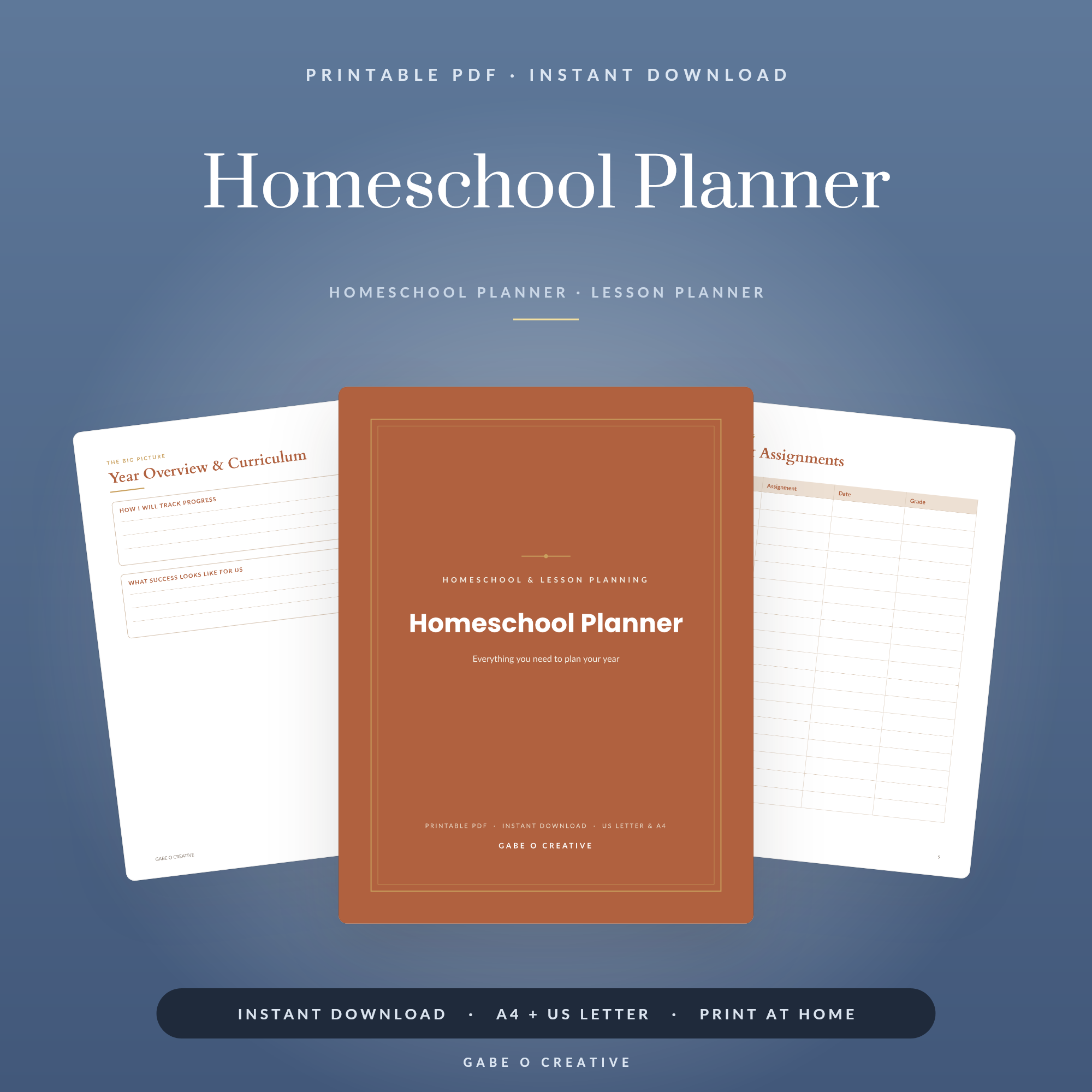
Both work; they solve different problems. A paper grid on the fridge is a lovely daily ritual and children enjoy adding the tick themselves. But paper doesn't count. At the end of term you're tallying boxes by hand, and if you need "days completed by subject since September" you're in for a long evening. A spreadsheet does that arithmetic invisibly: tick the day, and the year total, term totals and percentage-toward-180 update themselves. The Homeschool OS takes this further — attendance feeds a dashboard alongside the lesson planner, gradebook and reading log, so the attendance record isn't a separate chore but a by-product of planning you're doing anyway. If you'd like the fridge-door version too, our printable homeschool planner includes attendance grids you can pin up and tick daily, then transfer weekly.
Setting up a system you'll still be using in March
Every abandoned attendance record dies the same way: it lived somewhere you didn't look daily. So anchor it to an existing habit. The strongest pattern we've seen is tick at tea-time — the day's learning is fresh, the children can contribute the one-line note, and it takes less time than boiling the kettle. A few more habits that keep records alive:
- Log the day, not the hours. Counting minutes is a fast track to burnout and no authority expects it.
- Batch on Sundays if you miss days. Five minutes with a calendar reconstructs the week honestly while it's still recent.
- Keep one record per child once they diverge. Under about age eight, a family record is fine; after that, separate tabs make transcripts far easier later.
- Note the why on gap days. "Off — chickenpox" written in the moment beats a suspicious blank block discovered a year later.
If your household runs on shared charts anyway, the Family Command Centre pairs well here — its routine cards and chore charts keep the non-academic half of the day running so the learning half actually happens.
From attendance record to portfolio
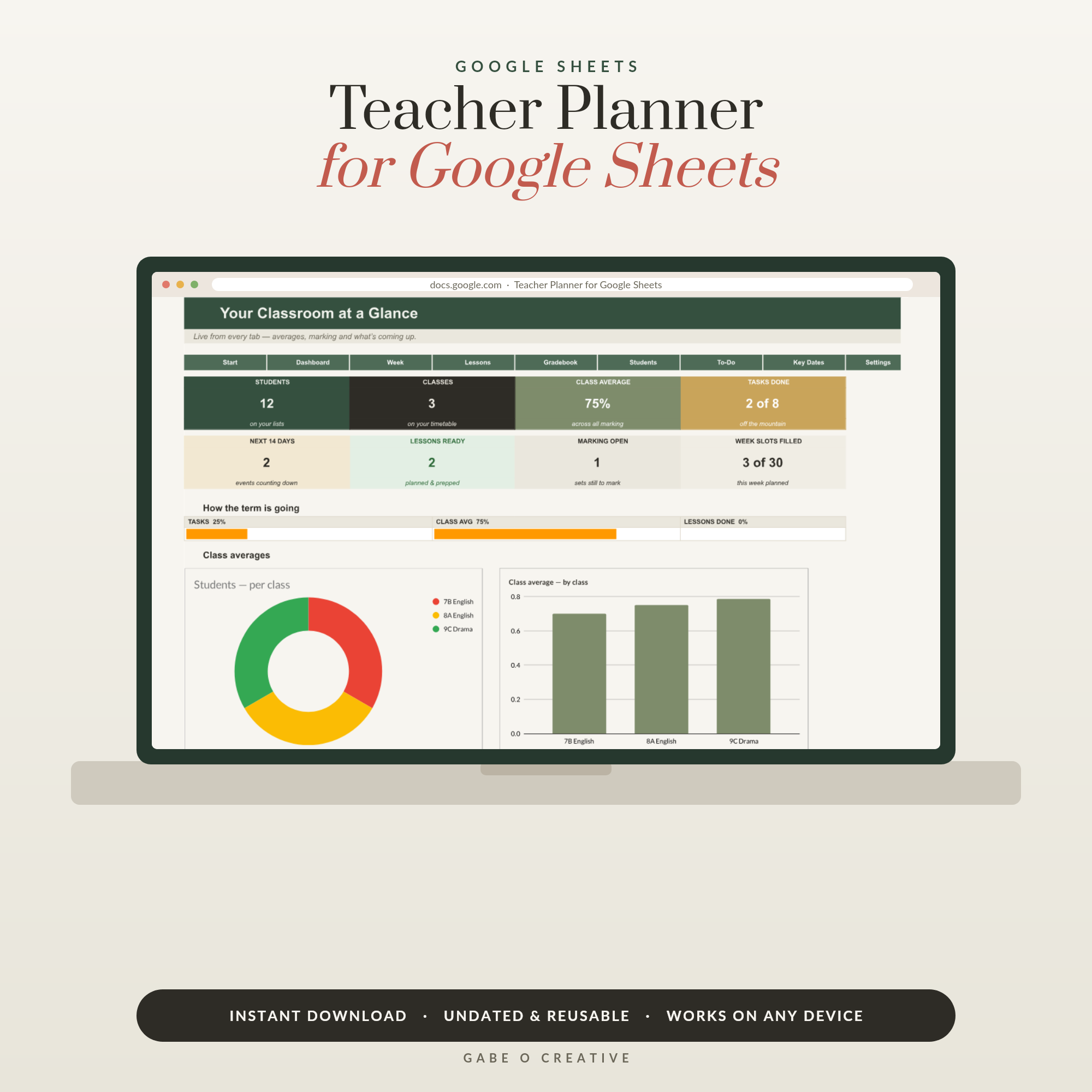
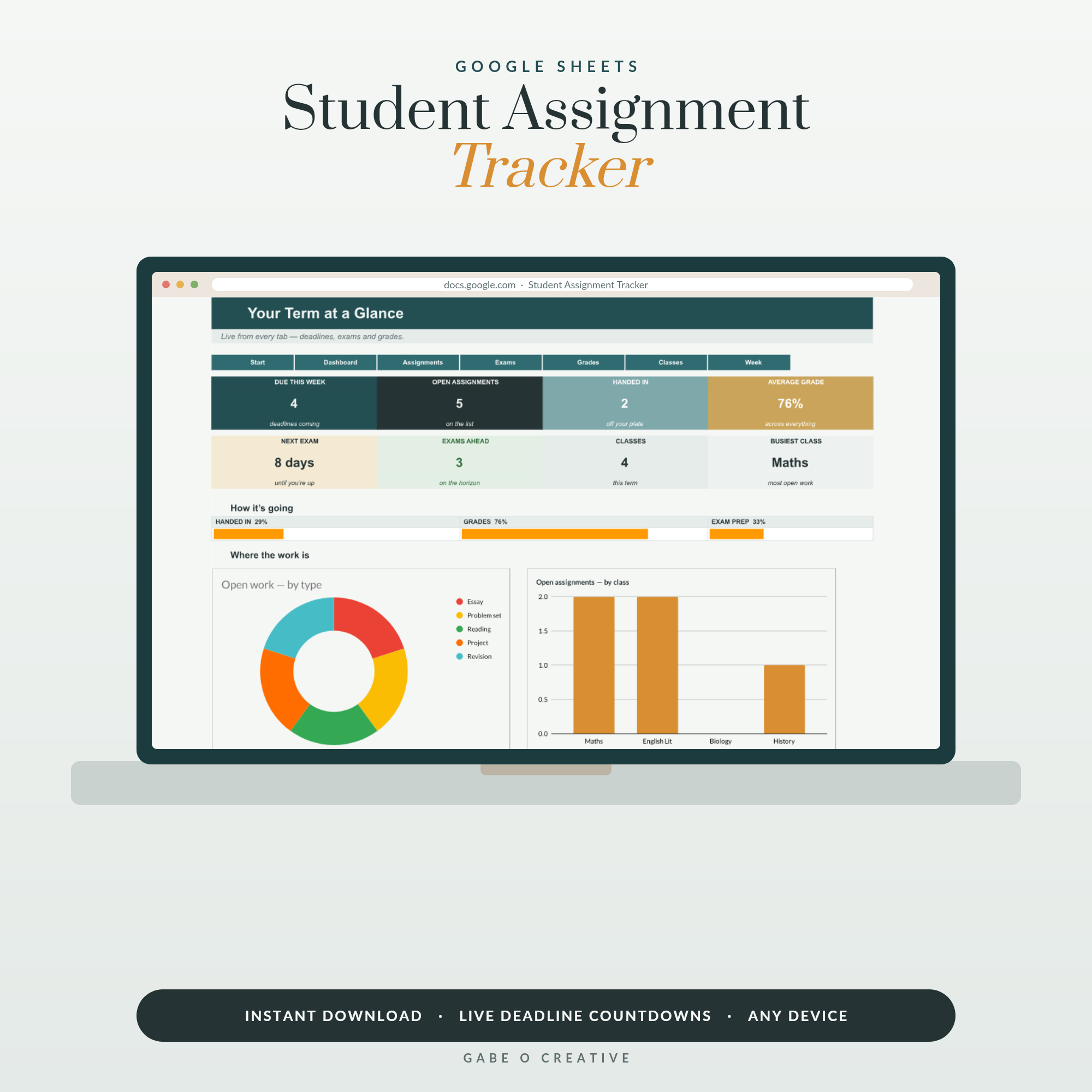
Once the daily tick is habit, you're one small step from a portfolio that would sail through any review. Add a reading log (title, author, date finished), keep a photos folder on your phone for standout work, and jot a short progress note per subject at each half-term. For older students, pair the record with the Student Assignment Tracker so deadlines and grades accumulate in the same place — by exam years you'll have a genuine transcript rather than a scramble. And if you're the planning-loving sort, the Teacher Planner for Google Sheets gives you the same term-by-term lesson structure schools use, minus the staff meetings.
Common questions, honestly answered
Do I legally have to keep a homeschool attendance record?
It depends where you live. Some US states set a required number of instruction days (often around 180) and expect records on request, while in England there's no legal duty to keep attendance registers — but a simple record is still your best evidence of consistent education if the local authority ever makes informal enquiries. Check your own state or council's rules, then keep a record anyway.
What counts as a homeschool 'attendance day'?
More than you'd think. A museum trip, a science experiment in the kitchen, a nature walk with a sketchbook, co-op classes and online lessons all count as instruction. Most families log any day with intentional learning — it doesn't need to look like six hours at a desk.
How many homeschool days should I aim for each year?
Around 180 days is the common benchmark, because it mirrors a typical school year and satisfies the strictest US state requirements. If your area has no set number, 170–190 days of logged learning puts you comfortably in line with school-educated peers.
Is a paper attendance sheet or a spreadsheet better?
Paper is lovely for a fridge-door habit, but a spreadsheet counts the days for you, totals by term automatically and never gets lost. Many families do both: tick a paper chart daily, then the spreadsheet is the master record they'd actually show an official.
What else should I record besides attendance?
A one-line note of what you covered each day turns an attendance record into a learning log — far more persuasive evidence than ticks alone. Add reading lists, occasional photos of work, and grades or progress notes per subject and you have a portfolio with almost no extra effort.
What if we miss a chunk of days through illness or a house move?
Don't panic and don't backfill fiction. Log the gap honestly, note the reason, and remember homeschooling's superpower: you can extend into the summer or add learning-rich weekends to catch up. The record shows the recovery, which is exactly what reviewers want to see.
For more on structuring the whole homeschool year, see our guides to choosing a homeschool planner, planning lessons in Google Sheets and student planner printables.
Ready to make record keeping a two-minute job? The Homeschool OS spreadsheet tracks attendance, lessons, grades and reading in one beautiful dashboard — copy it once, use it for your whole homeschool journey.