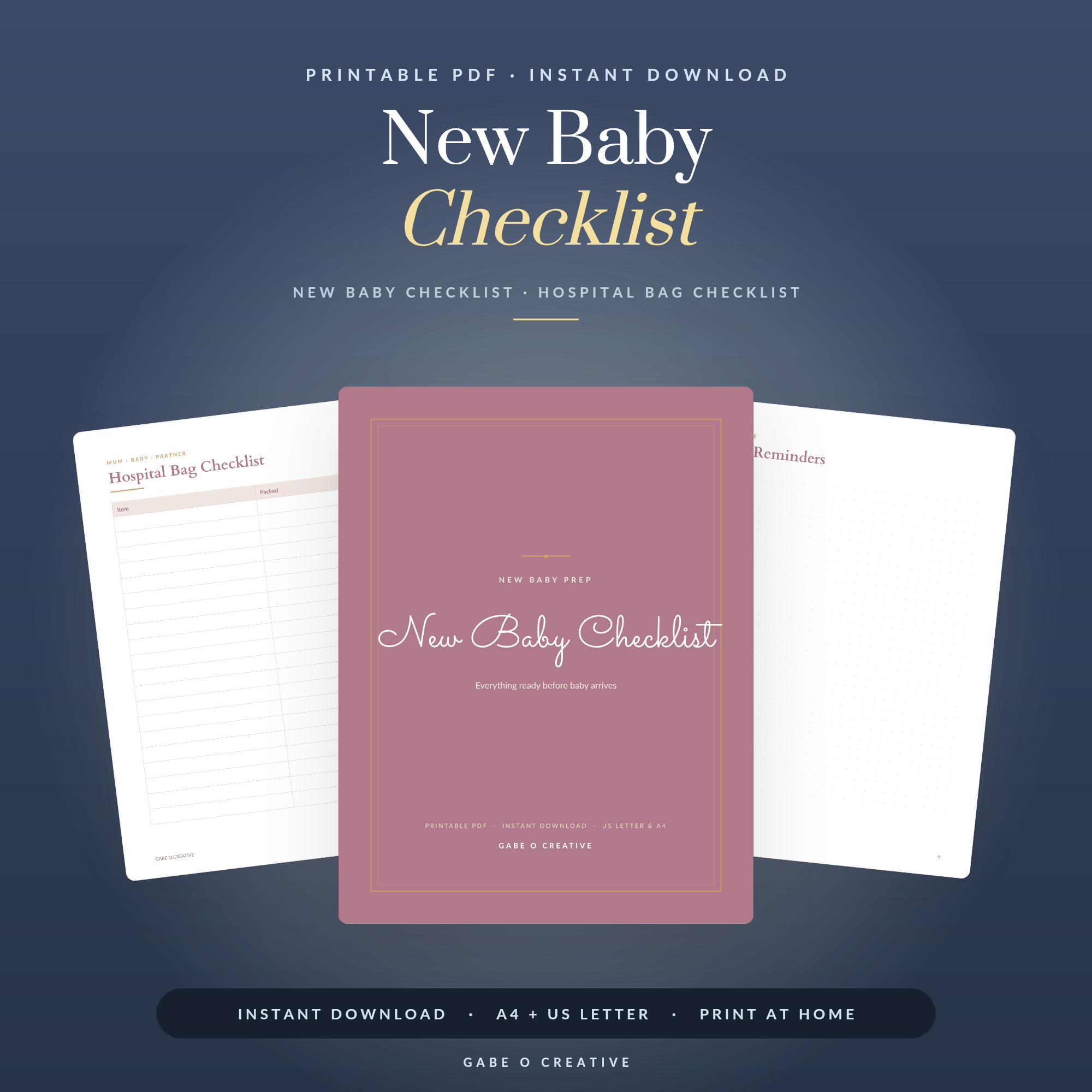
A hospital bag checklist is one of those late-pregnancy jobs that sits on your mind for weeks — equal parts exciting and slightly panic-inducing. What do you actually need? How much is too much? What will you kick yourself for forgetting at 3am mid-contraction? The honest answer is that you need far less than the internet suggests for labour itself, and a few specific things you'll be very glad you packed. This guide breaks it down clearly into labour, baby and birth partner, so you can pack once, calmly, and stop second-guessing. Our New Baby Checklist includes a printable hospital bag list you can tick off as you go.
Pack it by 36 weeks, keep it by the door, and walk out with confidence when the moment comes.
When to pack — and how to organise it
Aim to have your bag ready by around 36 weeks, because babies rarely read the calendar. Pack in a relaxed moment, not in early labour, and keep it somewhere you can grab instantly — by the front door or straight in the car. The single best organising tip is to use two bags: a small labour bag with only what you need during birth, and a larger bag for your postnatal stay and the baby. That way your partner isn't emptying everything onto a hospital floor to find your lip balm between contractions. Label both clearly so anyone helping can find things fast.
 Shop Baby Feeding & Sleep Tracker →
For labour: what you'll actually use
Keep this bag light. The genuinely-used essentials are your maternity notes and ID, a comfortable old nightie or long T-shirt you don't mind getting messy, flip-flops for the shower, lip balm (gas and air dries your lips out fast), hair ties, and a long phone charging cable — hospital sockets are never near the bed. Add snacks and drinks for energy, a handheld fan or water spray for cooling down, and anything from your birth plan for comfort. Don't overthink outfits for labour itself; comfort and 'don't mind ruining it' are the only two rules that matter.
For the baby
Your newborn needs surprisingly little, but pack more of it than feels necessary. Include nappies (newborn size), cotton wool or water wipes, several sleepsuits and vests — babies get through them at an astonishing rate — a hat, a cardigan, muslins for the inevitable spills, and a going-home outfit with a blanket. Crucially, you'll need a correctly fitted car seat to leave, as most hospitals won't discharge you without one, so practise fitting it before the big day. This is also the moment a feeding and sleep tracker earns its place, ready to start logging those first feeds from day one.
For your birth partner
It's easy to pack for everyone except the person doing the supporting. A birth partner should bring their own snacks and drinks (hospital vending machines are grim at 4am), a change of clothes, a phone charger, a pillow, and — importantly — cash or a card for parking and machines. Hours on a hard hospital chair are long and draining, and a well-supported partner is far more use to you than an exhausted, hungry one. A few small comforts make a genuine difference to how you both experience those first days.
It's also worth agreeing a couple of practical things in advance so nobody's improvising under pressure: who is the first person to call or text, roughly what you do and don't want shared, and where the car will be parked so it can be found quickly on the way home. Jot these into your notes or on the checklist itself. It sounds fussy in the calm of pregnancy, but in the happy chaos after a birth, having the little logistics already decided means your partner can focus entirely on you and the baby rather than fielding a dozen 'any news?' messages.
 Shop Baby Daily Log →
For after the birth (your postnatal bag)
The bag you'll actually live out of is the postnatal one, so give it proper thought. Pack comfortable, dark, loose clothing, several pairs of cheap high-waisted underwear you won't mind discarding, maternity pads, nursing bras and breast pads if you're planning to breastfeed, toiletries, a towel, and going-home clothes for you (not just the baby — this is a classic miss). Add your phone, a book or something to pass quiet moments, and any medication you take. Comfort is the whole brief here: you've just done something enormous, and soft, forgiving clothes are a small kindness to yourself.
| Bag | Key items | Don't forget |
|---|---|---|
| Labour | Notes, nightie, lip balm, snacks | Long charging cable |
| Baby | Nappies, sleepsuits, hat, blanket | Fitted car seat |
| Partner | Snacks, clothes, pillow | Cash for parking |
| Postnatal (you) | Comfy clothes, pads, toiletries | Going-home outfit for you |
The things everyone forgets
Even the most organised parents forget a handful of the same things, so it's worth a special mention: a long phone cable, snacks for after the birth (not just labour), spare underwear, dark old towels, going-home clothes for yourself, and coins or a card for parking. A printable checklist you physically tick is the single best defence against the 3am 'oh no, we didn't bring...' moment. Once the bag's done, you can turn your attention to the practical side of the first year — our New Baby Budget and guide to budgeting for a new baby help you feel in control, and our newborn feeding tracker guide gets you ready for those first days at home.
Find everything for the fourth trimester in our Family & Baby collection — checklists, trackers, logs and memory books, all instant downloads.
Frequently asked questions
When should I pack my hospital bag?
Have it ready by around 36 weeks, since babies don't always keep to the plan. Many parents pack earlier and keep it by the door or in the car. Prepare it in a calm moment rather than in early labour, and keep your notes and documents somewhere you can grab them instantly.
What do I actually need in my hospital bag for labour?
The genuinely-used essentials are your maternity notes and ID, a comfortable nightie or old T-shirt, flip-flops, lip balm, hair ties, snacks and drinks, a phone charger with a long cable, and something for comfort like a fan. Pack light for labour and keep bulkier things separate.
What should I pack for the baby?
Nappies, cotton wool or wipes, several sleepsuits and vests, a hat, a cardigan, muslins, and a going-home outfit plus a blanket. You'll also need a properly fitted car seat to leave. Pack more sleepsuits than you think; newborns get through them fast.
What should my birth partner bring?
Their own snacks and drinks, a change of clothes, a phone charger, some cash or a card for parking and vending machines, and a pillow. Nights on a hospital chair are long, so a few comforts make a real difference.
Should I pack one bag or two?
Two is easier: a smaller labour bag with just what you need during birth, and a larger bag for your postnatal stay and the baby. That way your partner isn't rummaging through everything mid-contraction. Label them clearly.
What do people forget to pack?
Commonly forgotten items are a long phone charging cable, dark old towels, spare underwear, snacks for after the birth, going-home clothes for you (not just baby), and coins or a card for parking. A printable checklist is the easiest way to make sure nothing slips through.
 Shop Baby Memory Book →
Ready to pack with confidence? Download the New Baby Checklist with its printable hospital bag list, tick it off this weekend, and cross one big worry off before your due date.