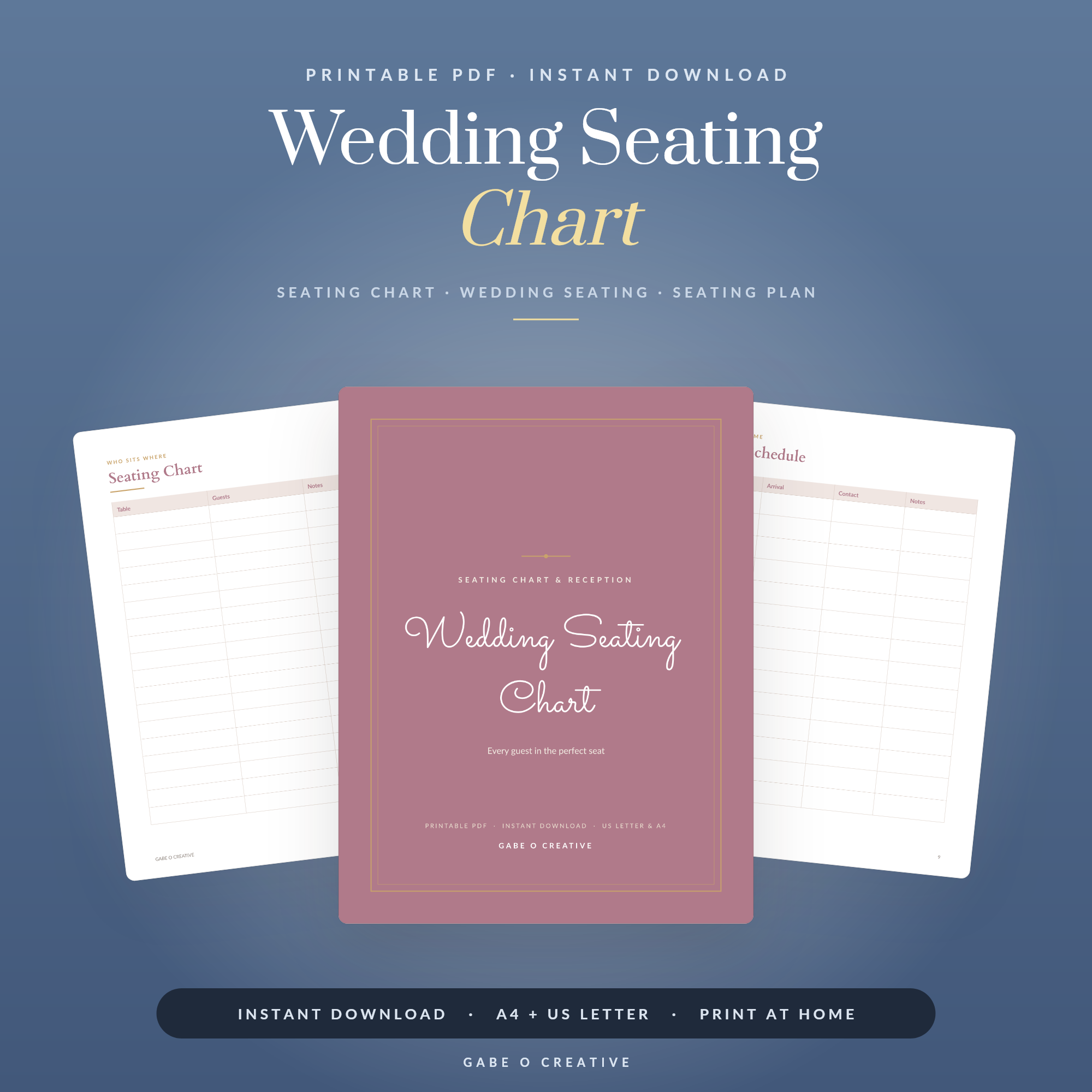
A wedding seating chart printable is the secret weapon for the one job almost every couple dreads: deciding who sits where. It sounds simple until you are juggling late RSVPs, divorced parents, plus-ones whose names you are not sure of, and a venue with an awkward pillar in the middle of the room. The good news is that a clear printable turns a stressful jigsaw into a calm, step-by-step process you can update right up to the morning of the wedding. Here is exactly how to build your plan, table by table, without the meltdown.
Short on time? The Wedding Timeline and Seating planner gives you ready-made table pages and a master guest list in one print-at-home kit, so you can start slotting names in this afternoon rather than wrestling with a blank page.
 Shop Wedding Day Timeline →
Start Your Wedding Seating Chart Printable With a Guest List
Every good seating plan begins long before you think about tables. It begins with one reliable master guest list. If your names are scattered across texts, a notebook and three different apps, the seating chart will feel impossible. Pull everything into a single sheet first, and the rest falls into place.
Your master list should track more than just names. For each guest, note:
- Invited and RSVP status so you always know your real headcount.
- Plus-one as a clear yes or no, with the partner's name once confirmed.
- Meal choice and dietary needs, which the caterer and your table plan both depend on.
- Side or group, such as your family, their family, university friends or work, to make grouping easier later.
- Notes, for example mobility needs, who must not sit together, or a high chair required.
Chase RSVPs before you start seating
Do not try to seat guests who have not replied. Set an RSVP deadline three to four weeks before the wedding, then follow up with anyone who has gone quiet by a quick message or call. Only when your numbers are close to final should you begin assigning tables. A wedding planner and organiser keeps your guest list, RSVP tracking and meal choices in one place, so nothing slips through the cracks.
Build a 'definite' and 'maybe' column
There will always be a handful of stragglers. Keep a clearly marked maybe column for the late repliers and pencil them lightly onto a table so you have a plan ready. The moment they confirm, you ink them in. A printable shines here, because erasing and rewriting one line beats rebuilding an entire diagram.
Map Your Reception Floor Plan and Table Layout
Before you assign a single guest, you need to know the shape of your room. Ask your venue for a floor plan, or sketch one yourself with the key fixed points marked: the entrance, the head table, the dance floor, the bar, the cake table and any pillars, doors or speakers.
 Shop Wedding Planner & Organizer →
Once you can see the space, count how many tables you can realistically fit and how many guests sit at each. Round tables of eight to ten are the most common, while long banquet tables seat more but feel more formal. Number your tables on the plan so every guest can be assigned to a spot, and keep that numbering consistent across your printable pages.
Decide who goes near the action
Position matters more than people expect. As a rule of thumb:
- Closest to the head table: immediate family, the wedding party and your nearest friends.
- Near the dance floor: the lively crowd who will get up first and keep the energy going.
- Away from the speakers: elderly relatives and anyone who values a chat over the volume.
- Near an exit: parents with babies or toddlers who may need to slip out.
Mapping the room first means you assign people to real, physical spaces rather than abstract table numbers, which makes the whole plan click into place. The wedding day timeline planner pairs neatly here, so the flow of the room and the flow of the day line up.
Sort Out the Head Table and VIP Seating
The head table sets the tone of the room, so settle it early. The traditional top table seats the couple in the centre with both sets of parents, the best man and the maid or matron of honour. But tradition is optional, and plenty of modern couples choose something that suits their families better.
Popular head-table alternatives
- Sweetheart table: just the two of you, which sidesteps every awkward parent question in one move.
- Wedding party table: the couple with their bridesmaids, groomsmen and partners, keeping it young and relaxed.
- Family-style top table: the couple with their closest family, ideal when parents are the people you most want beside you.
Whatever you choose, decide where divorced or remarried parents will sit before you finalise anything, and tell them quietly in advance. Surprises on the day are what cause tension, not the seating itself. Note your final decision clearly on your seating printable so the venue and stationer both work from the same plan.
Do not forget your other VIPs. Officiants, grandparents and any guest of honour deserve a thoughtfully chosen spot near the front. A complete wedding planner binder gives you a dedicated seating section alongside your budget and vendor pages, so your VIP list never gets lost in the shuffle.
Handle the Tricky Guests With Grace
Every wedding has a few seating puzzles. The trick is to plan for them deliberately rather than hope they sort themselves out on the night.
Divorced or estranged family
Give divorced parents their own tables, each surrounded by their own friends and relatives, rather than seating them together and hoping for the best. Keep feuding relatives at opposite ends of the room with a buffer of friendly faces between them. A quick, private heads-up to anyone affected goes a long way.
Plus-ones and single guests
Seat couples together, and group your single friends at a fun, sociable table rather than scattering them awkwardly or, worse, creating an obvious singles table. Aim for a mix of people who will actually get along. Confirm every plus-one's name before you order place cards, because guessing leads to a flustered last-minute fix.
Children at the wedding
You have a few good options for younger guests:
- With their parents, which works well for babies and toddlers who need close supervision.
- A dedicated kids table for older children, ideally with activities, an entertainer or a babysitter nearby.
- A separate room for evening do's, so parents can relax while little ones wind down.
Note high chairs, children's meals and any allergies directly on your master list so nothing is forgotten on the day.
 Shop Wedding Planner Binder →
Why a Wedding Seating Chart Printable Beats Last-Minute Stress
Here is the part nobody warns you about: your seating chart will change. A guest drops out the week before, a cousin's new partner appears, the venue swaps a round table for a long one. With a printable, none of this is a crisis.
A flexible printable system lets you:
- Pencil in uncertain guests and ink them once confirmed.
- Reprint a single table page in seconds rather than redrawing the whole plan.
- Keep a master copy to hand to your venue, caterer and day-of coordinator.
- Make place cards from the final list, knowing every name and meal is already logged.
Keep a working copy and a final copy
Plan in pencil on your working pages, then create one clean final version a week or two before the day. Share that final copy with your venue and coordinator so everyone is reading from the same plan. If you want maximum value, the wedding and events bundle brings your seating chart, timeline and full planner together at one friendly price, so every moving part of the day lives in a single kit.
A simple last-week checklist
- Confirm final numbers with your caterer.
- Lock the seating plan and print the clean version.
- Write or order place cards and a display chart.
- Hand copies to your venue, coordinator and the head of catering.
Do this and you will walk into your reception knowing every guest has a seat, every meal is accounted for, and any wobble has a plan B already pencilled in.
Ready to make seating the easy part of your wedding? Start with the Wedding Timeline and Seating planner and you can have your tables mapped, your guests grouped and your last-minute changes sorted before the kettle has even boiled. Calm, confident and chart in hand, you will be free to enjoy the part that matters most.
Related reading: wedding planner printables and party printables, or browse the full Celebrations & Events collection.