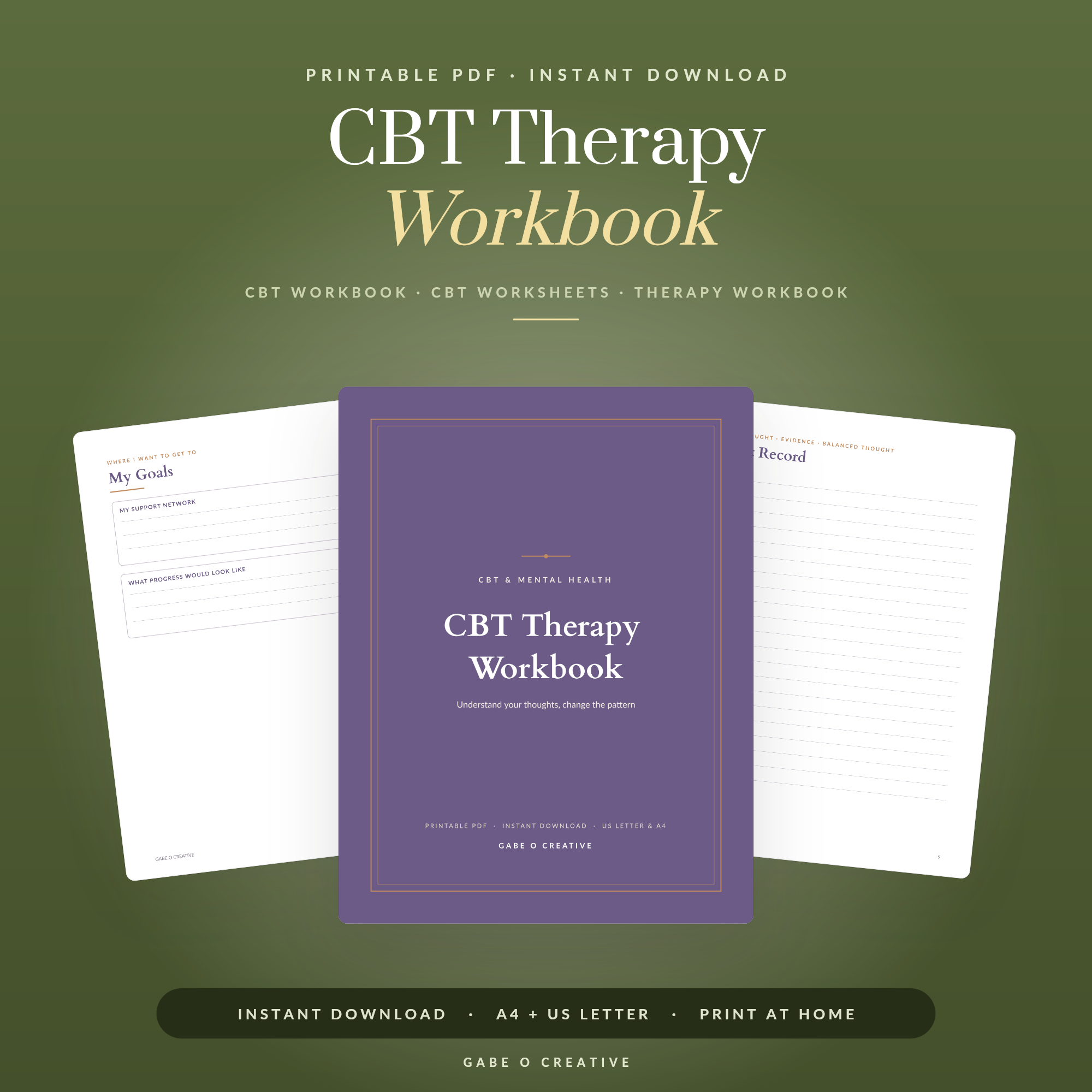
A CBT thought record is one of the simplest, kindest tools in all of mental health self-help, and yet it can quietly change how you move through hard days. When an anxious or self-critical thought hits, it tends to feel like a fact. A thought record gently slows that moment down, puts it on paper, and lets you look at it with fresh eyes. In this beginner's guide we will explain what a thought record is, the science in plain English, how to fill one in step by step, the common thinking traps to watch for, and how a printable workbook helps the habit actually stick. No jargon, no pressure, just a calm, practical place to begin.
Before we start, a gentle note: this is self-help support, not a replacement for professional care. If you are really struggling, feeling hopeless, or your worries are getting in the way of daily life, please reach out to a qualified therapist or your GP. You deserve support, and a worksheet works best alongside it, not instead of it.
 Shop CBT Therapy Journal →
What a CBT Thought Record Is and Why It Helps
Cognitive behavioural therapy (CBT) is built on a simple, well-evidenced idea: our thoughts, feelings and behaviours are all linked. A passing thought such as "I always mess things up" can spark anxiety, which then shapes how we act, often by avoiding or withdrawing. A CBT thought record is a worksheet that breaks that loop. It gives you a few structured columns to catch the thought, examine it honestly, and replace it with something fairer and more realistic.
Here is what a well-designed thought record helps you do:
- Notice the thought instead of being swept along by it without realising.
- Separate fact from feeling, because a thought feeling true is not the same as it being true.
- Weigh real evidence on both sides, the way a fair-minded friend would.
- Build a balanced thought that is believable, not forced positivity.
- See your patterns over time, so the same traps lose their grip.
The science, in plain English: when you repeatedly catch and reframe an unhelpful thought, you are gently teaching your brain a new, calmer default. It is a skill, like learning an instrument, and it grows with practice. You will not get it perfect on day one, and you do not need to.
The thought-feeling-behaviour link
It helps to picture a simple triangle. A situation triggers a thought, the thought triggers a feeling, and the feeling drives a behaviour, which then feeds back into more thoughts. The good news is that you can step in at the thought corner. Change the thought from "everyone noticed me stumble" to "I felt awkward, but most people were focused on themselves", and the feeling softens, and the behaviour shifts with it. The CBT Therapy Workbook walks you through this triangle with worked examples, so the idea clicks before you try it on your own life.
How to Fill In a CBT Thought Record, Step by Step
A classic thought record has a handful of columns. Work through them slowly, in order, ideally soon after a difficult moment while it is still fresh. Find five to ten quiet minutes and a pen.
Step 1: The situation
Write down the plain facts of what happened, like a camera would record it. Where were you, who was there, what were you doing? Keep it neutral: "A friend did not reply to my message by the evening." No interpretation yet, just the scene.
Step 2: The automatic thought and feeling
Now write the exact thought that flashed up, in your own words: "They are annoyed with me and pulling away." Note the feeling it created and rate its strength out of 100, for example anxious 80, sad 60. Rating it matters, because at the end you will see the number drop, which is quietly motivating.
 Shop Anxiety Relief Journal →
Step 3: Evidence for the thought
Be fair and list any genuine evidence that supports the thought. Maybe: "They usually reply quickly." This step stops the exercise feeling like denial. You are not pretending the worry is silly, you are examining it honestly.
Step 4: Evidence against the thought
Now, like a kind detective, gather the evidence that does not fit. "They mentioned a busy week. They have gone quiet before and it was nothing. People forget to reply all the time." This is usually the column that opens things up. Most anxious thoughts have far less evidence than they pretend to.
Step 5: The balanced thought
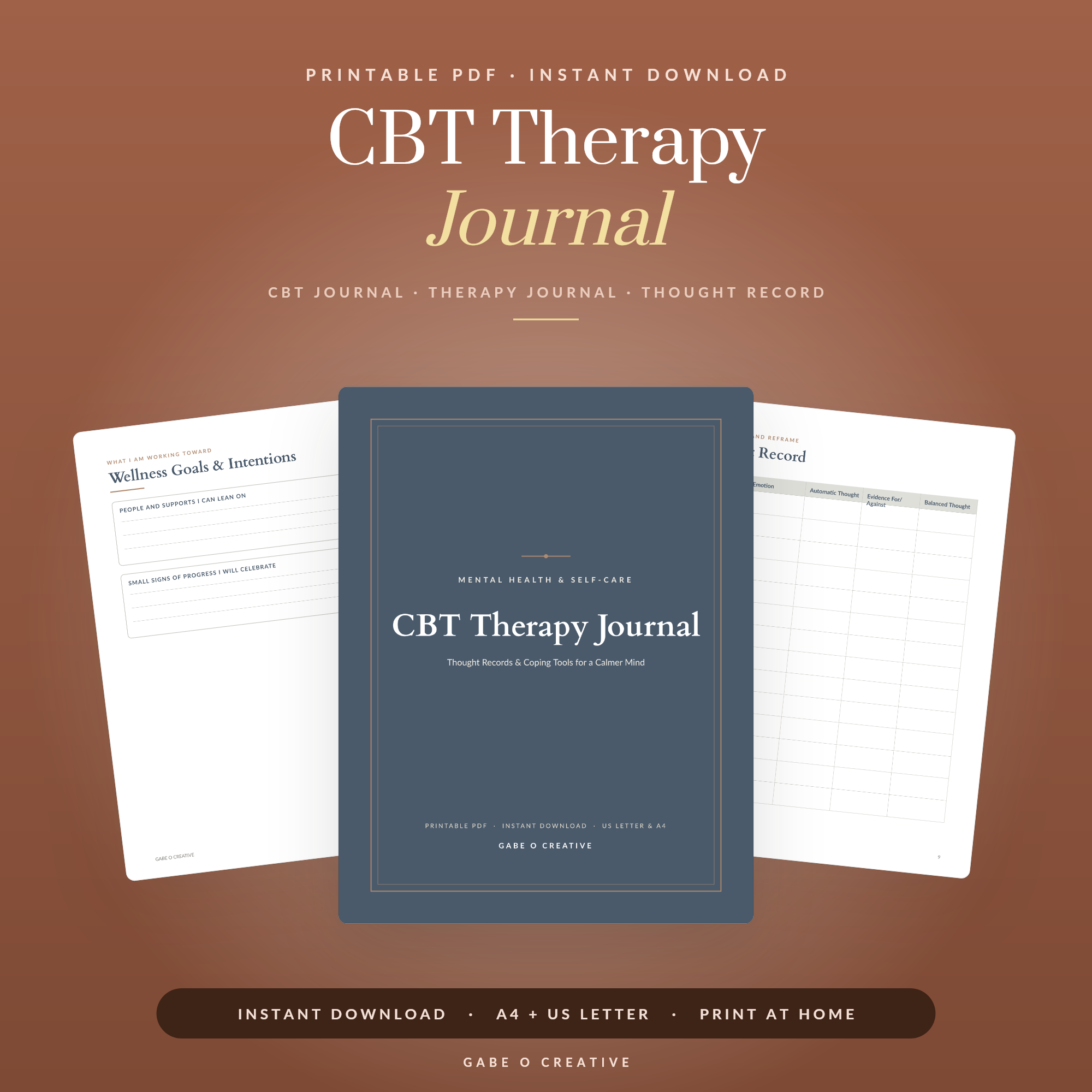
Weigh both columns and write a new thought that holds the whole picture: "They might just be busy. One slow reply does not mean the friendship is in trouble, and I can check in tomorrow if I am still worried." Re-rate your feelings. You will often see that anxious 80 settle to a 40. That shift is the whole point, and it is real. A guided format like the CBT Therapy Journal keeps these prompts in front of you so you never lose your place.
The Common Cognitive Distortions to Watch For
Once you start using thought records, you will notice your mind has favourite thinking traps. These are called cognitive distortions: habitual, unhelpful ways of reading a situation. Spotting which one you have fallen into is half the battle, because naming it instantly loosens its grip.
- Catastrophising: jumping to the worst possible outcome. "I made one mistake, I will be sacked."
- All-or-nothing thinking: seeing things in black and white with no middle. "If it is not perfect, it is a total failure."
- Mind reading: assuming you know what others think. "They think I am boring."
- Overgeneralising: treating one event as a never-ending pattern. "I always get this wrong."
- Emotional reasoning: believing something is true because it feels true. "I feel like a burden, so I must be one."
- Filtering: noticing only the negatives and dismissing anything good.
When you fill in a thought record, gently ask which trap might be at play. Logging the feelings alongside it with a printable mood tracker helps you spot which distortions tend to show up on your lower days, so you can be ready for them.
 Shop Therapy Notes Journal →
Coping and Grounding Tips for the Hard Moments
Sometimes a thought hits so hard that sitting down to weigh evidence feels impossible. That is completely normal. In those moments, soothe the body first, then return to the worksheet once the wave has passed. Here are gentle techniques that pair well with thought records:
- 5-4-3-2-1 grounding: name five things you can see, four you can hear, three you can touch, two you can smell and one you can taste. It anchors you in the present.
- Box breathing: breathe in for four counts, hold for four, out for four, hold for four. Repeat until your shoulders drop.
- Name it to tame it: simply saying "this is anxiety, not fact" creates a small, helpful gap between you and the thought.
- Worry postponement: tell yourself you will tackle the worry at a set "worry time" later, then return to it with your thought record.
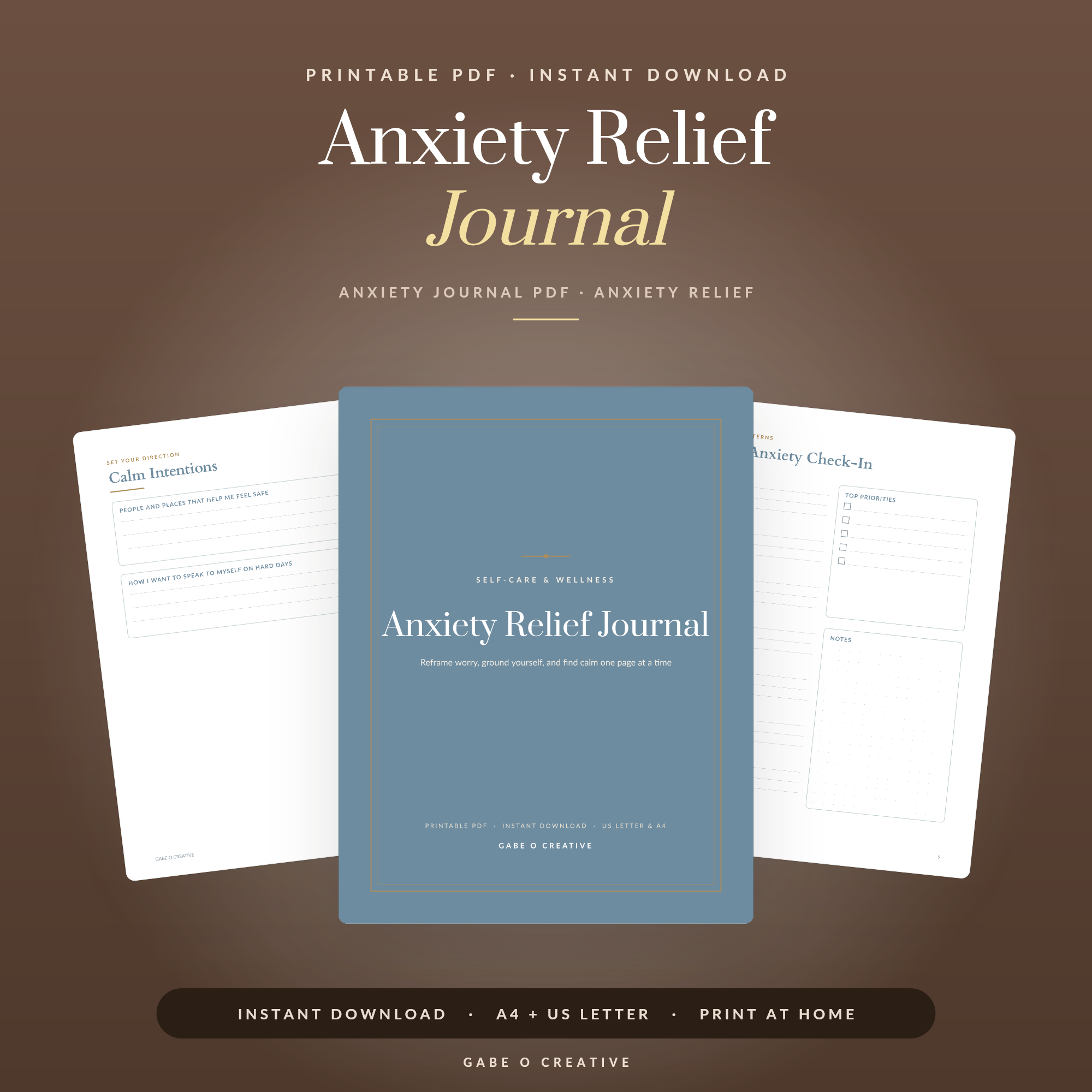
For the toughest evenings, a dedicated anxiety relief journal gives you worry-dump pages and grounding exercises in one calming place, so you are never staring at a blank page when you most need structure.
Be kind to the process
You will have days when the balanced thought feels flimsy, and that is fine. The goal is not to argue yourself into relentless cheerfulness, it is to find a thought that is fair and believable. Self-compassion is part of the method, not a distraction from it. Speak to yourself the way you would to a friend going through the same thing.
How a Printable Workbook Makes the Habit Stick
The hardest part of CBT is not understanding it, it is remembering to do it when life is busy and your mind is loud. This is exactly where a printable workbook earns its place. A blank notebook leaves you guessing; a structured workbook hands you the columns, the prompts and the examples every single time, so there is no friction and no excuse to skip it.
A good printable helps the habit stick because it:
- Removes the guesswork with ready-made prompts, so you start writing in seconds.
- Keeps your records together, letting you flip back and see how far you have come.
- Reveals patterns across weeks that you would never spot one day at a time.
- Reuses forever, because you simply reprint a fresh sheet whenever you need one.
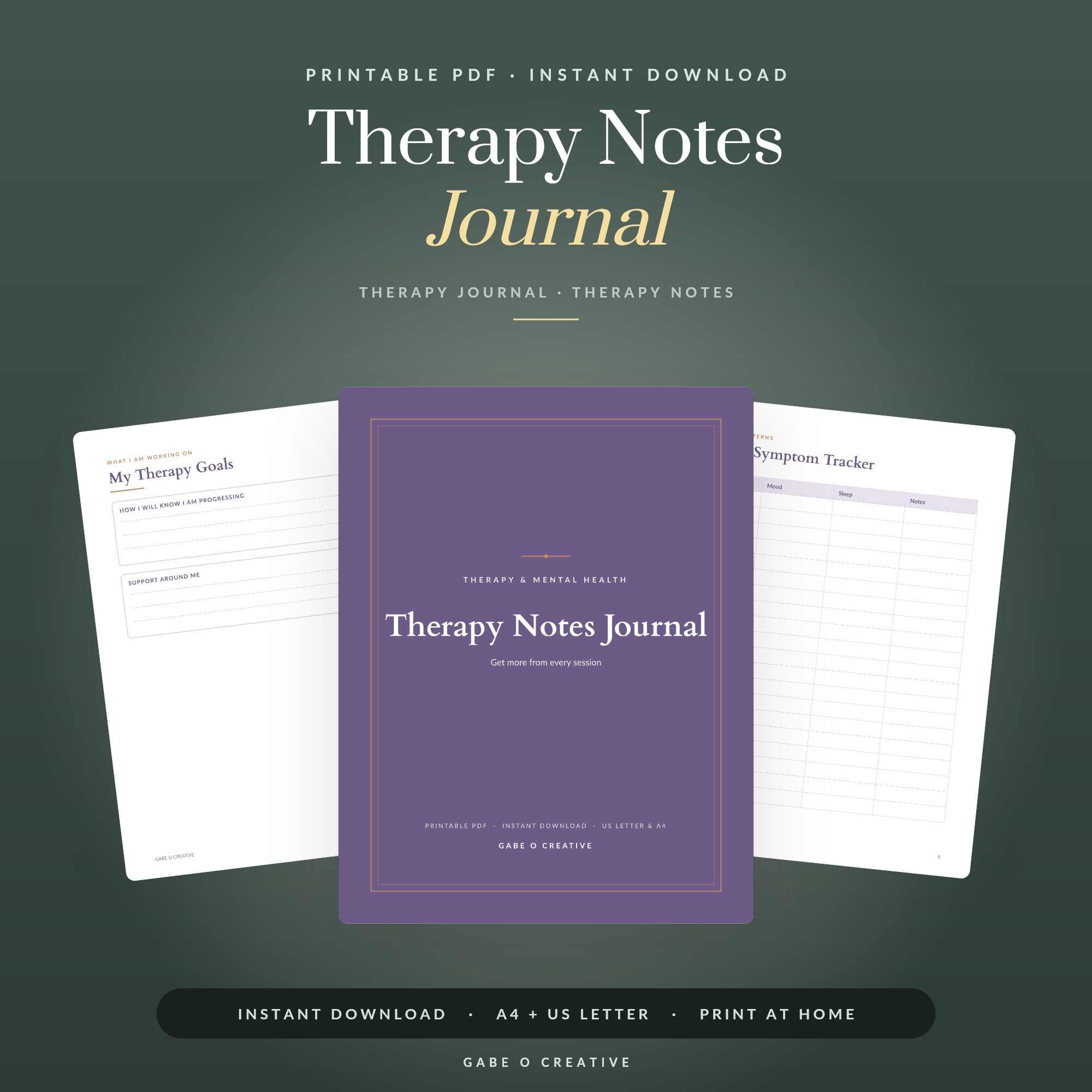
If you want everything in one place, the therapy notes journal is lovely for capturing reflections between sessions, and the mental health bundle pairs thought records, mood tracking and reflection pages at a gentler price, so your whole toolkit lives together. Print only the pages you need, keep them on your nightstand, and let the structure do the remembering for you.
A simple weekly rhythm
Try this gentle routine: complete one thought record whenever a moment genuinely rattles you, jot your mood daily, and spend five quiet minutes at the weekend reading back. That small review is where the real insight lives, because patterns you could never notice in the moment leap out across a week. Consistency, not perfection, is what rewires the habit.
Ready to start catching those thoughts before they spiral? The CBT Therapy Workbook gives you guided thought records, worked examples and a cognitive distortions reference in one calming, printable place, so you can begin tonight with everything you need at your fingertips. Be patient and kind with yourself, reach out for professional support if you need it, and trust that a calmer, fairer way of thinking really can be learned, one thought record at a time.
Related reading: self-care journal printables and sobriety tracker printable, or browse the full Self-Care & Wellbeing collection.