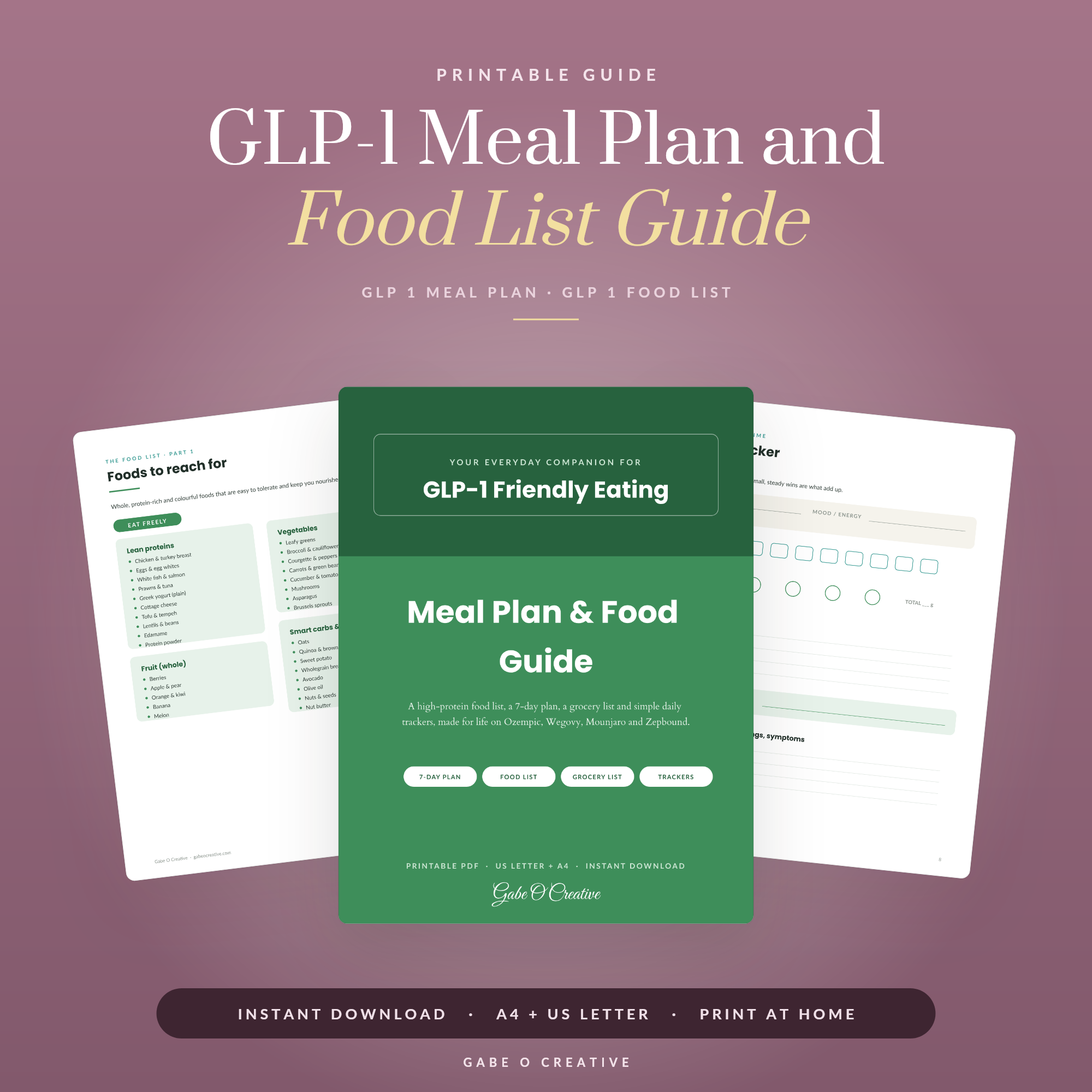
If you are on GLP-1 medication and keep staring into the fridge wondering what is actually worth eating, you are not alone. A good GLP-1 meal plan answers that question for you. With a smaller appetite, every bite matters more, so the goal is simple: lead with protein, keep meals easy, and make sure the food you do eat leaves you steady rather than sluggish. Get that right and the medication has far more to work with.
Want the eating side sorted in one place? Our GLP-1 Meal Plan and Food List guide is a beautifully designed printable PDF with a protein-first food list, a 7-day plan and a ready-to-shop grocery list, so you can stop guessing and just eat well.
 Shop Weight Loss Journal →
Why Protein Comes First on a GLP-1 Meal Plan
GLP-1 medications such as Ozempic, Wegovy, Mounjaro and Zepbound work partly by slowing digestion and quietening appetite. That is brilliant for eating less, but it comes with a catch: if you only fit in a few small meals a day, it is easy to fall short on protein. Protein is the nutrient that protects your muscle while you lose fat, keeps you fuller for longer, and stops you feeling shaky and tired between meals.
So the single most useful habit is protein-first eating. Whatever is on your plate, eat the protein before the bread, rice or pasta. On a smaller appetite you may genuinely fill up before you reach the carbs, and that is fine. You have given your body the most important part first.
A protein-first GLP-1 plan helps you:
- Protect muscle so more of the weight you lose is fat, not lean tissue.
- Stay fuller for longer between smaller meals.
- Keep energy steady instead of crashing mid-afternoon.
- Hit your targets even when you can only manage a little food.
How much protein do you actually need?
General guidance often points to somewhere between 60 and 100g of protein a day, frequently split into roughly 20 to 30g per meal. Your own number depends on your weight, your goals and your doctor's advice, so treat that as a starting point, not a rule. The easy version is this: make a palm-sized portion of protein the centre of every meal, and add a protein-rich snack if you have room. Track it loosely for a week and you will quickly see whether you are close.
What to Eat: Your GLP-1 Food List
You do not need exotic ingredients. The best GLP-1 foods are simple, high in protein and gentle on a smaller appetite. Reach for these often:
- Lean proteins: chicken, turkey, white fish, salmon, prawns, eggs and lean mince.
- Dairy proteins: Greek yoghurt, cottage cheese, skyr and milk.
- Plant proteins: beans, lentils, chickpeas, tofu, tempeh and edamame.
- Vegetables: leafy greens, peppers, courgette, broccoli and anything colourful.
- Smart carbs and fibre: oats, wholegrains, fruit and a little potato, eaten after your protein.
- Healthy fats in moderation: olive oil, avocado, nuts and seeds.
Foods many people choose to limit
Nothing is strictly banned, but plenty of people find that very greasy, fried or rich foods, large sugary portions and fizzy drinks sit heavily on a smaller appetite and can make side effects worse. Gentle swaps usually feel better than hard rules. Try grilled instead of fried, a small square of chocolate instead of a whole bar, or sparkling water with fruit instead of a fizzy can. The aim is meals that leave you comfortable, not stuffed or queasy.
 Shop Water Intake Tracker →
A Simple 7-Day GLP-1 Meal Plan Template
You do not need a different recipe every day. A rotation of easy, protein-first meals is far more sustainable. Here is the shape of a week you can copy and tweak:
| Meal | Protein-first idea |
|---|---|
| Breakfast | Greek yoghurt with berries, or scrambled eggs with spinach |
| Lunch | Chicken or tofu with a big salad, or a bean and vegetable bowl |
| Dinner | Salmon or lean mince with roasted vegetables and a little wholegrain |
| Snack | Cottage cheese, a boiled egg, edamame or a protein shake |
The trick is to keep options ready so you never have to make a decision while hungry and low. Cook a little extra protein at dinner and you have lunch sorted. Keep yoghurt, eggs and pre-chopped veg in the fridge. A smaller appetite is much easier to manage when the good choice is also the easy choice.
Hydration, Habits and Tracking How You Feel
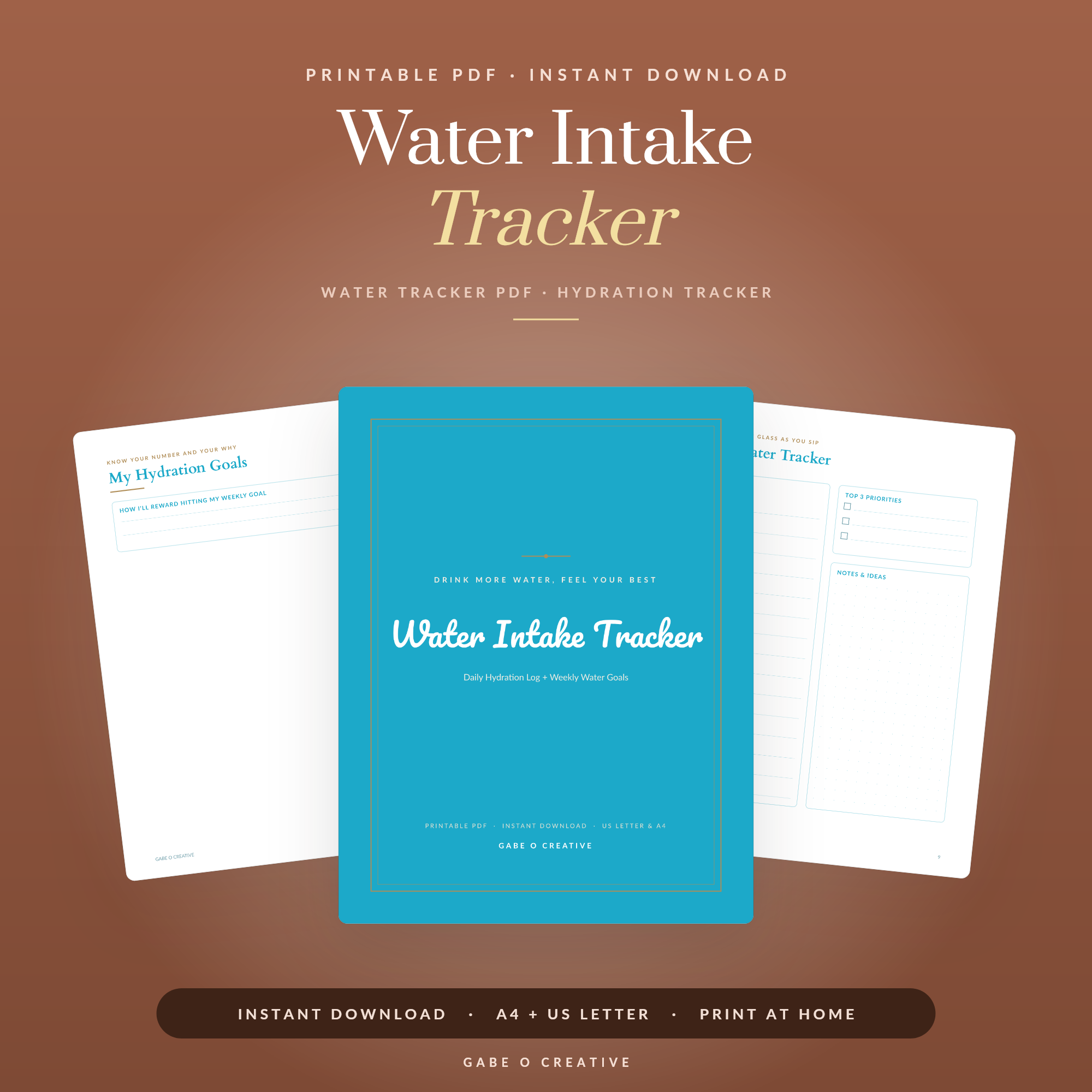
Food is only half the picture. On GLP-1 medication, staying hydrated genuinely helps, both for energy and for easing common side effects. It is easy to forget to drink when you are not very hungry, so a simple cue helps, like a glass of water with each meal and a refill on your desk. A water intake tracker turns sipping enough into a satisfying daily tick rather than an afterthought.
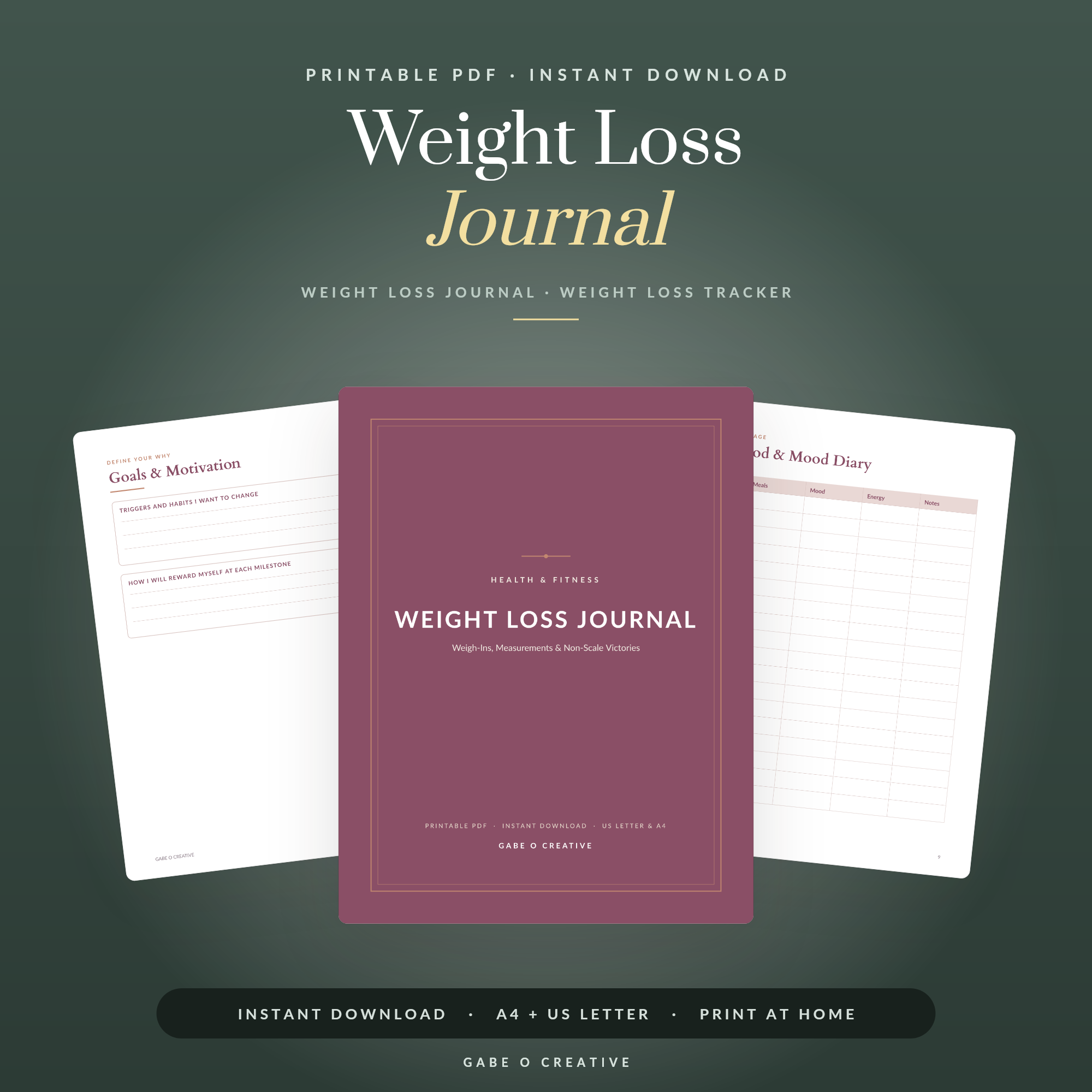
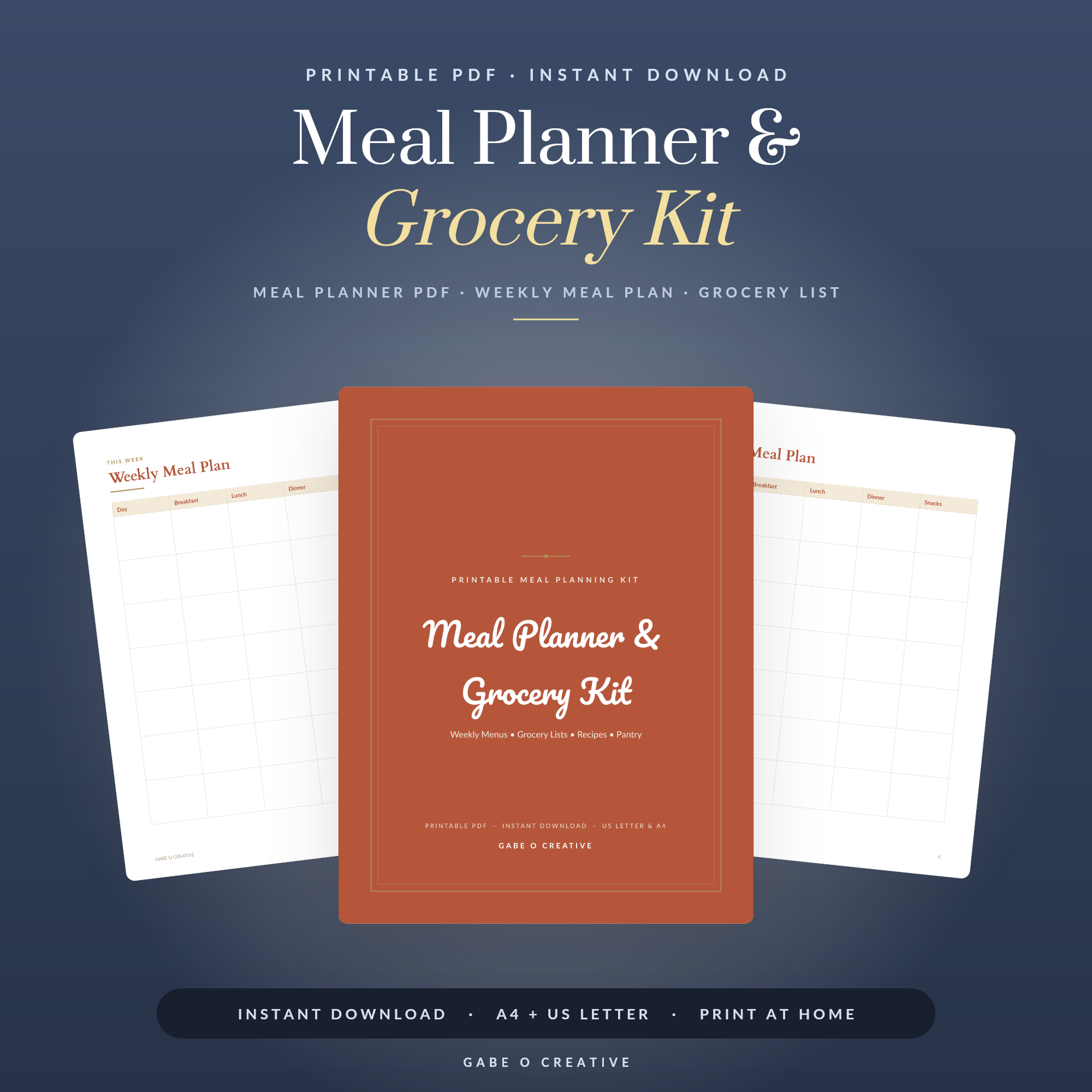
It also helps to notice patterns. Logging your protein, your meals and how you feel for a couple of weeks tells you far more than the scale alone. You start to spot which meals leave you steady, which sit heavily, and how energy tracks with what you ate. A weight loss journal is perfect for this, with weigh-ins, measurements and a food and mood diary in one calm place. Pair it with a simple meal planner and grocery kit so the week is planned and the shopping is done before hunger ever makes the call for you.
For more on building the eating routine, see our guides to meal planner printables and meal prep that saves time and money. And if you want to add gentle movement, the best fitness planner printables round-up is a calm place to start.
 Shop Meal Planner & Grocery Kit →
Make Protein-First Eating Automatic
The people who do best on GLP-1 are rarely the ones with willpower of steel. They are the ones who made the good choice the default. A food list on the fridge, a planned week, a grocery list that is already done, and a quick daily check-in remove the decisions that derail you when your appetite is low and your energy dips. That is exactly what our GLP-1 Meal Plan and Food List guide is built to do, and if you want the wider toolkit, the health and fitness bundle brings the trackers and planners together at the best value.
GLP-1 Meal Plan FAQs
What should I eat on a GLP-1 meal plan?
Lead with protein at every meal, add plenty of vegetables and some fibre, then a little healthy fat. Lean meat, fish, eggs, Greek yoghurt, beans and tofu are easy wins. Because your appetite is smaller, every bite needs to earn its place, so protein-first keeps you steady and protects muscle.
How much protein do I need on GLP-1 medication?
Most general guidance lands around 60 to 100g of protein a day, often split into 20 to 30g per meal, but the right amount depends on your body and your doctor's advice. The simplest rule is to make protein the first thing on your plate at every meal and snack.
Which foods should I limit on a GLP-1 meal plan?
Many people feel better limiting greasy, fried and very rich foods, fizzy drinks, and large sugary portions, which can sit heavily on a smaller appetite. You do not have to ban anything. Smaller portions and gentle swaps usually feel better than strict rules.
How do I deal with a smaller appetite on GLP-1?
Eat smaller meals more often, start with the protein on your plate, chew slowly and stop when you feel comfortably full rather than stuffed. Sipping water through the day and keeping easy high-protein options ready makes the smaller appetite work for you, not against you.
Can I follow a GLP-1 meal plan if I am vegetarian?
Yes. Build meals around eggs, Greek yoghurt, cottage cheese, beans, lentils, tofu, tempeh, edamame and a quality protein powder. The same protein-first approach works, you just lean on plant and dairy proteins instead of meat and fish.
Is a printable GLP-1 meal plan worth it?
If you find yourself staring into the fridge unsure what to eat, a printable plan removes the daily decision. Having a food list, a 7-day plan and a ready grocery list in one place makes protein-first eating automatic, which is exactly what helps the habit stick.
Ready to eat well on GLP-1? Grab the GLP-1 Meal Plan and Food List guide and pop it on your fridge today, or browse the full Health & Fitness collection for trackers and planners to match. This guide is general nutrition information only and not medical advice, so always follow your own doctor or dietitian.