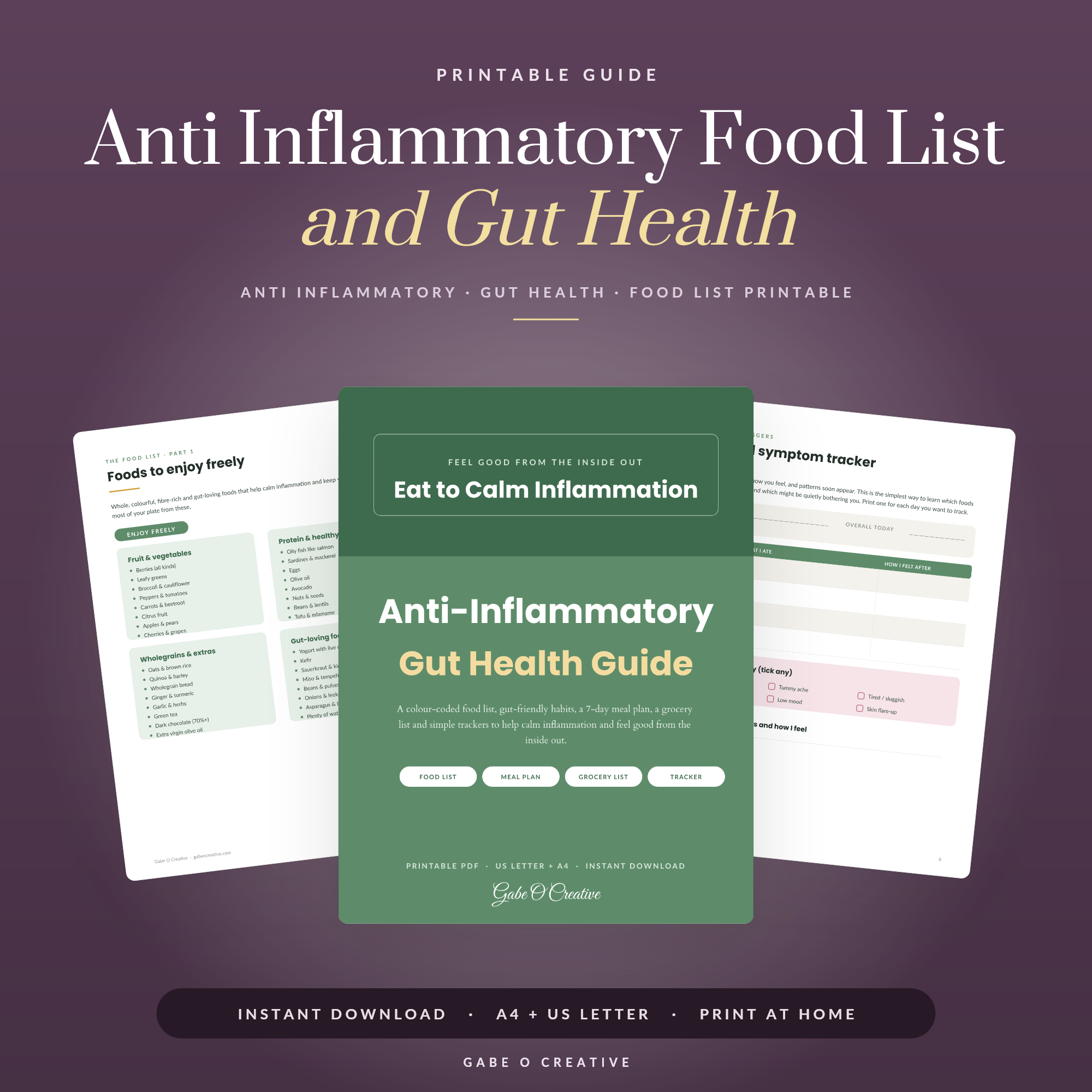
An anti-inflammatory food list takes the guesswork out of eating well by sorting everyday foods into what to enjoy, what to limit and what to avoid. Instead of following a rigid, joyless diet, you simply tilt your plate toward foods that help your body settle inflammation—and away from the ones that stoke it. The result tends to be a calmer gut, less bloating and steadier energy, without you ever needing to count a single calorie.
Want it all on one clear chart? Our Anti-Inflammatory Food List and Gut Health Guide lays out the enjoy, limit and avoid foods plus a simple meal plan—print it, stick it on the fridge and start eating well today.
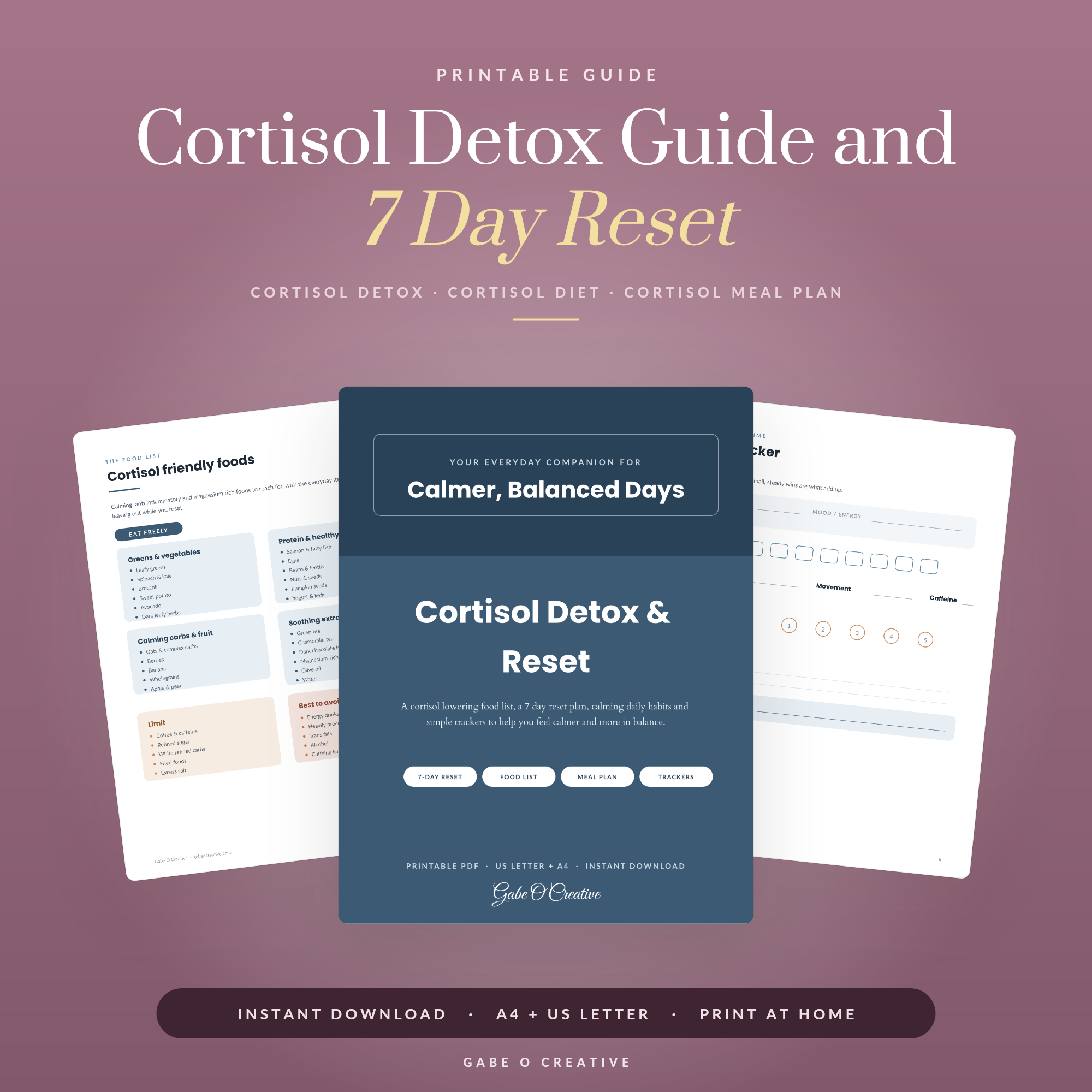 Shop Cortisol Detox Guide and 7 Day Reset Plan, Cortisol Lowering Food List, Meal Plan and Stress Relief Tracker, Printable PDF →
What Is an Anti-Inflammatory Food List?
An anti-inflammatory food list is a practical reference that groups foods by how they affect inflammation in the body. Chronic, low-grade inflammation is linked to all sorts of everyday niggles—fatigue, bloating, achy joints, brain fog and stubborn weight—so eating in a way that calms it can make a real difference to how you feel day to day.
The beauty of a list is that it removes decision fatigue. You don't have to memorise the science behind omega-3s or polyphenols; you just glance at the chart and build your plate around the green column. A good list helps you:
- See at a glance which foods to lean into and which to ease off.
- Shop with purpose so your trolley fills with the right things.
- Plan calmer meals without obsessing over every ingredient.
- Stay consistent, because simple systems are the ones you actually keep.
It's also forgiving by design. This isn't about banning whole food groups or chasing perfection—it's about gently shifting the balance of your plate so the helpful foods become your default and the inflammatory ones become occasional treats.
Why inflammation matters for your gut
Your gut and your inflammation levels are closely linked. The fibre-rich whole foods that calm inflammation also feed the friendly bacteria in your gut, helping your digestion run more smoothly. That's why so many people who switch to this way of eating report less bloating, more comfortable digestion and a noticeable lift in energy within a couple of weeks.
Think of your gut as a garden. The fibre, polyphenols and fermented foods on the list are the compost that helps the good bacteria flourish; the ultra-processed foods and refined sugars are the weeds that crowd them out. Tend the garden well and a healthier balance of gut bacteria follows—and a happier gut tends to mean fewer of the everyday symptoms that send people searching for answers in the first place. You don't need to overhaul everything overnight; even a handful of better choices each day shifts the balance in your favour.
Foods to Enjoy, Limit and Avoid
Here's the short version of the food list. Build most meals from the first column, treat the middle column as occasional, and keep the last column for genuine treats.
| Enjoy freely | Limit | Avoid most of the time |
|---|---|---|
| Oily fish, leafy greens, berries, olive oil, nuts, beans, colourful veg | Red meat, white bread, full-fat dairy, sweet fruit juices | Ultra-processed snacks, refined sugar, deep-fried foods, processed meats |
The foods in the first column do the heavy lifting. Oily fish like salmon and mackerel deliver omega-3 fats; berries and colourful vegetables bring polyphenols and antioxidants; beans, nuts and seeds add the fibre your gut loves. Olive oil and a daily sprinkle of herbs and spices—turmeric, ginger and garlic in particular—round it all off.
The middle column isn't off-limits—it's simply where you apply a little moderation. A Sunday roast or a slice of good bread now and then is part of a happy, sustainable diet. The trick is balance: let the enjoy column dominate your week, and the limit column stops causing problems. And the last column? Those foods are the ones most strongly linked to flare-ups, so the less often they appear, the calmer most people feel. Nobody's asking for perfection; you're just changing the ratio so the helpful foods win most days.
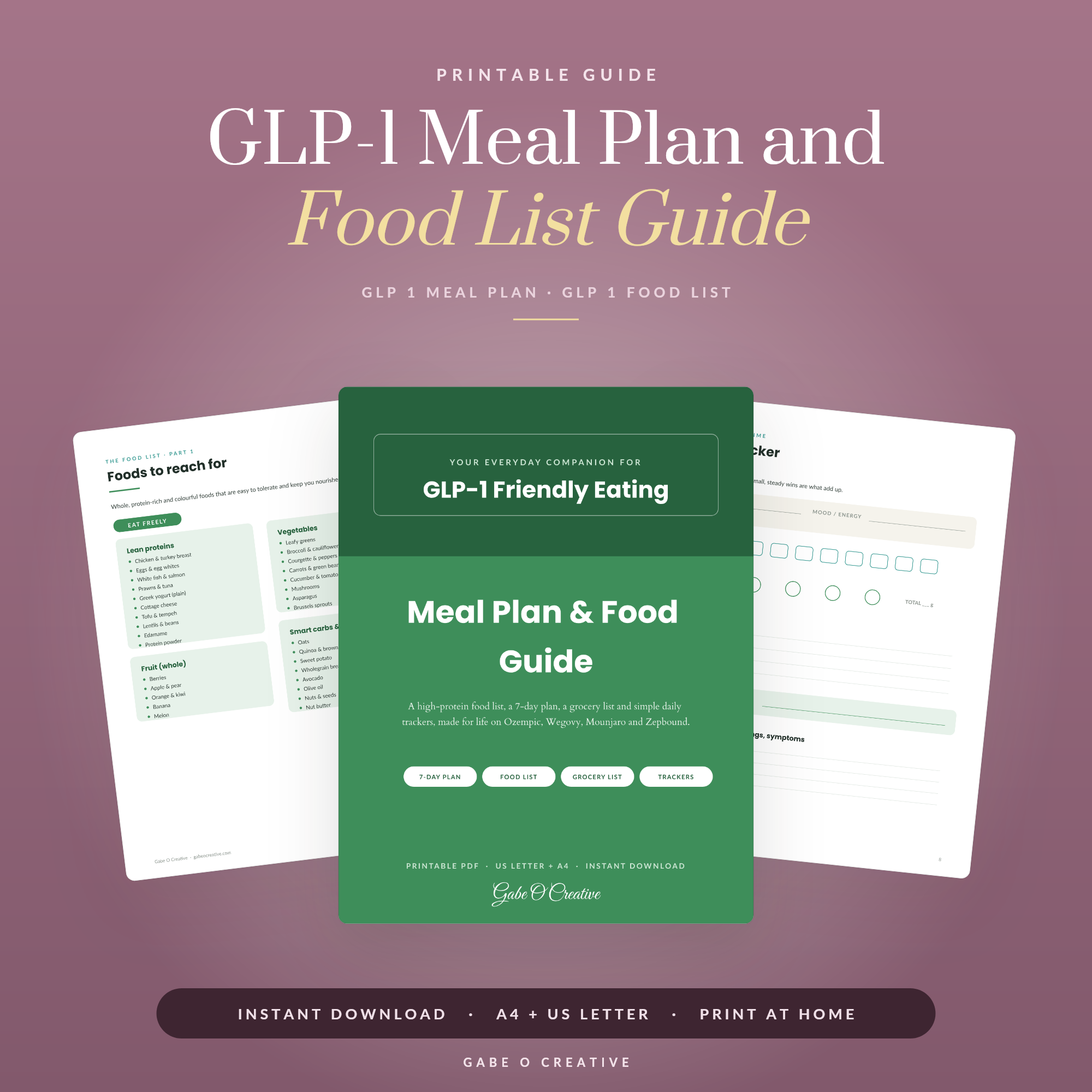 Shop GLP-1 Meal Plan and Food List Guide, High Protein 7 Day Plan, Ozempic Wegovy Friendly Printable, Weight Loss Grocery List PDF →
How to Use an Anti-Inflammatory Food List Day to Day
Knowing the list is one thing; living it is another. These small habits make it stick:
- Build your plate around the green column. Aim for half veg, a palm of protein and a fist of whole grains or beans.
- Make easy swaps. Olive oil for vegetable oil, berries for biscuits, sparkling water for fizzy drinks.
- Batch the basics. Cook a pot of beans or roast a tray of veg so the right food is always to hand.
- Plan your week. A quick meal plan stops the 6pm "what's for dinner" panic that ends in a takeaway.
- Keep the list visible. On the fridge or in your phone, so it nudges you at the shops.
If your eating habits are tangled up with stress—late-night snacking, skipped meals, comfort eating—it's worth tackling both together. Our Cortisol Detox and 7-Day Reset Guide pairs beautifully with the food list, because calmer stress levels and a calmer gut tend to go hand in hand.
Anti-Inflammatory Eating for Specific Goals
The same core list flexes to fit different needs. If you're focused on protein and steady energy—especially on a weight-loss journey—the GLP-1 Meal Plan and Food List Guide layers high-protein structure on top of anti-inflammatory basics. If shifting hormones are part of your picture, the Menopause Symptom Tracker Guide helps you spot which foods ease or trigger symptoms so you can adjust with confidence.
For the full set, the Wellness Guide Bundle brings five printable health guides together—gut health, cortisol, GLP-1, menopause and anxiety—for the best value if you want the whole toolkit in one go.
Make it stick with a plan
The single biggest predictor of success here isn't willpower—it's planning. A loose plan for the week ahead means the right ingredients are in the house and the easy, helpful choice is the default one. Read our guide to building a cortisol detox meal plan for a week-by-week framework, or the GLP-1 meal plan guide if you want a high-protein structure to hang it all on.
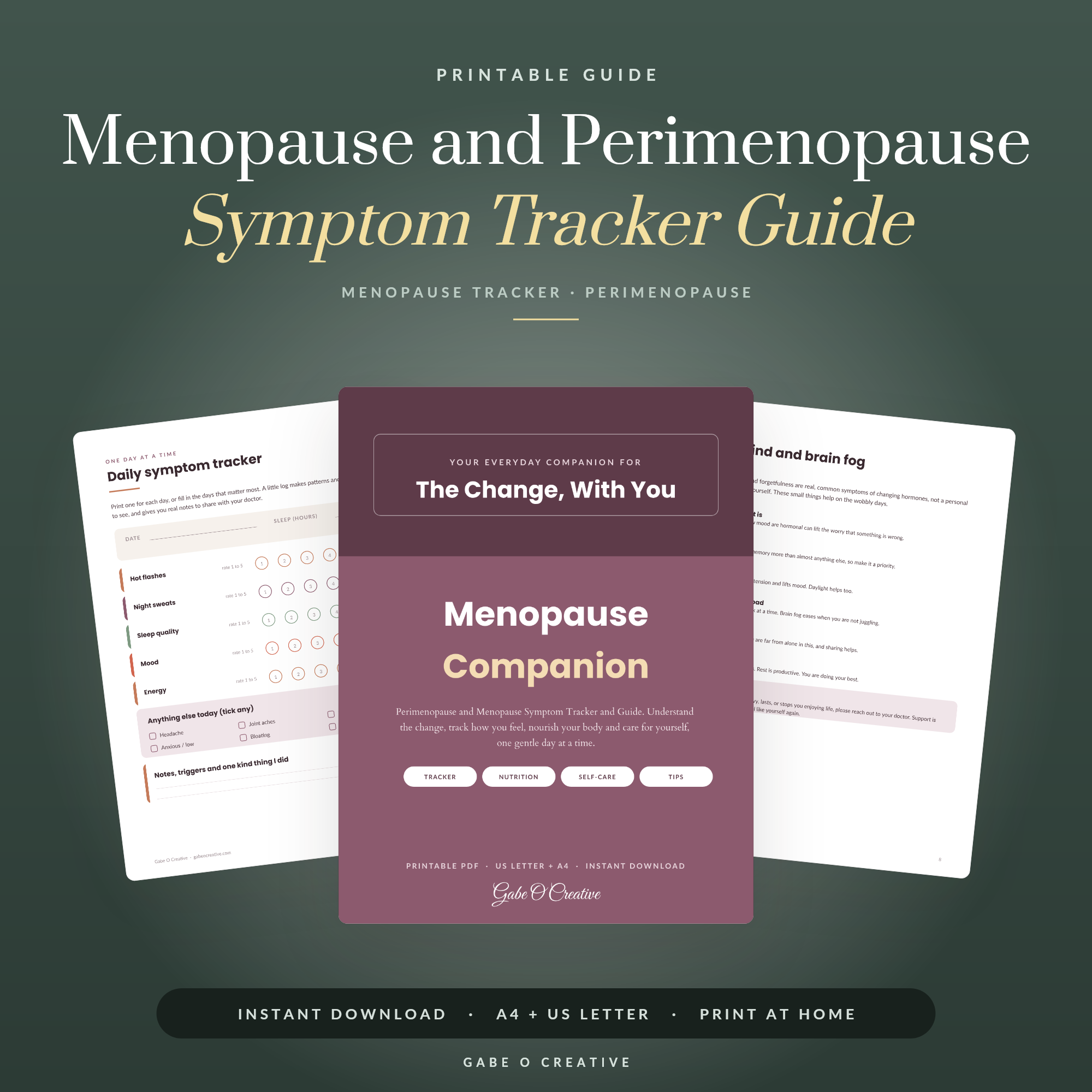 Shop Menopause and Perimenopause Symptom Tracker Guide, Hormone Health Journal Printable, Hot Flash and Mood Log, Self Care Workbook PDF →
The Bottom Line
Reducing inflammation through food doesn't require a strict regime or expensive supplements. It's a steady tilt toward whole, colourful, fibre-rich foods and away from the ultra-processed stuff—done consistently, not perfectly. Keep the list where you'll see it, plan a few meals ahead, and let the small swaps add up. Within a couple of weeks, most people feel the difference: less bloating, more energy and a gut that simply behaves itself.
A Realistic First Week
Do not overhaul everything on Monday. Change one meal, keep the rest, and let it settle.
Days 1–3: change breakfast only. Swap a refined-carb breakfast for oats with berries and nuts, or eggs with spinach. Leave lunch and dinner exactly as they are. One decision, made once.
Days 4–5: add the fish. Put two oily fish meals into the week — tinned sardines on toast counts, and costs very little. This is the highest-value single change on the list.
Days 6–7: fix the snacks. Look honestly at what you eat between meals and replace the most frequent offender with nuts, fruit or yoghurt. Not all of them. The most frequent one.
Writing down how you feel matters more than people expect, because the changes are gradual enough to miss. Energy, digestion, sleep and mood are the four worth noting. A simple weekly log turns a vague sense of "I think it is helping" into something you can actually read back — the Wellness Guide Bundle includes tracking pages for exactly this.
Anti-Inflammatory Food List FAQs
What is an anti-inflammatory food list?
It's a simple chart that sorts everyday foods into ones to enjoy freely, ones to limit, and ones to avoid, so you can build meals that calm inflammation without counting calories or following a rigid diet.
Which foods are the most anti-inflammatory?
Oily fish, leafy greens, berries, olive oil, nuts, seeds, beans and colourful vegetables are the heavy hitters. They're rich in omega-3s, fibre and polyphenols, all of which help your body settle inflammation.
Which foods should I limit on an anti-inflammatory diet?
Ultra-processed snacks, refined sugar, deep-fried foods, processed meats and too much alcohol tend to fan the flames. You don't have to ban them forever; aim to make them the exception rather than the everyday.
How long until an anti-inflammatory diet makes a difference?
Many people notice less bloating and steadier energy within a couple of weeks, though deeper changes build over months. Consistency beats perfection, so focus on small swaps you can keep up.
Is an anti-inflammatory diet good for gut health?
Yes. The same fibre-rich, whole foods that lower inflammation also feed the friendly bacteria in your gut, which is why people often report less bloating and more comfortable digestion.
Do I need supplements to reduce inflammation?
Usually not. A varied plate of whole foods does most of the work. If you're considering supplements for a specific issue, it's worth a quick chat with your GP or a registered dietitian first.
Ready to eat for a calmer gut? Grab the Anti-Inflammatory Food List and Gut Health Guide and build your first meal around it today, or browse the full Health & Fitness collection for more printable guides that help you feel your best.