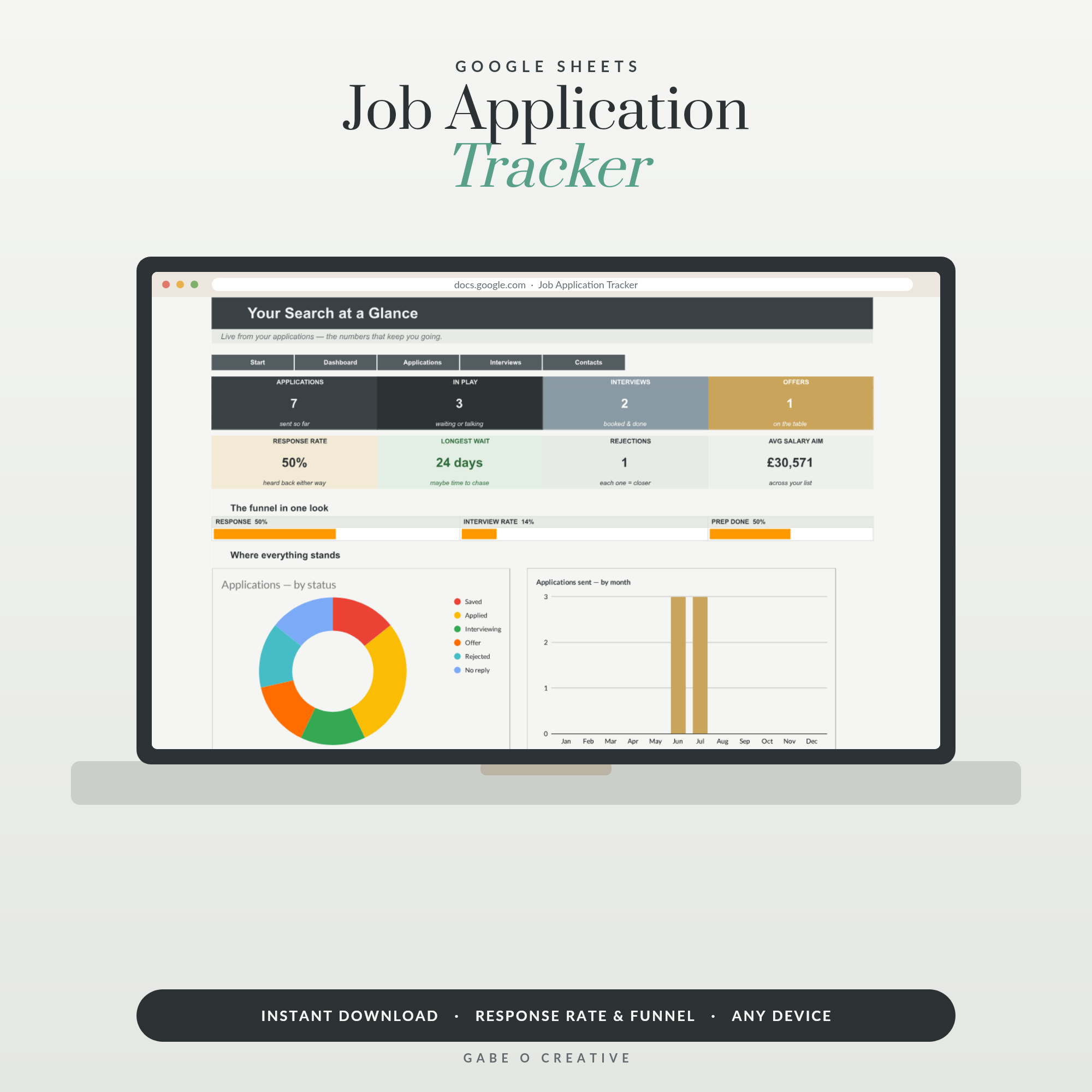
Somewhere around the fifteenth application, every job search hits the same wall: twelve open tabs, four slightly different CVs with mysterious file names, and a cold-sweat moment — did I already apply to this company? The fix isn't applying harder; it's learning how to organise your job search so the admin stops eating the energy the actual applications need. One tracker, one CV system, one weekly rhythm — our Job Application Tracker handles the first part the moment you open it.
Want the system ready-made? The Job Application Tracker keeps every application, status and follow-up date on one screen — and the Resume Studio handles the CV side.
Why job searches descend into chaos
A serious search generates a startling amount of data: 20–50 applications, each with its own deadline, CV version, contact name, portal login and follow-up window. Your brain is being asked to be a database again — and just like with student deadlines, it politely refuses. The cost isn't just stress. Missed follow-ups are missed interviews; sending the wrong CV version looks careless; and applying twice to the same company reads worse than not applying at all. Organisation isn't the boring part of job hunting — it's a genuine competitive edge, because most candidates don't have it.
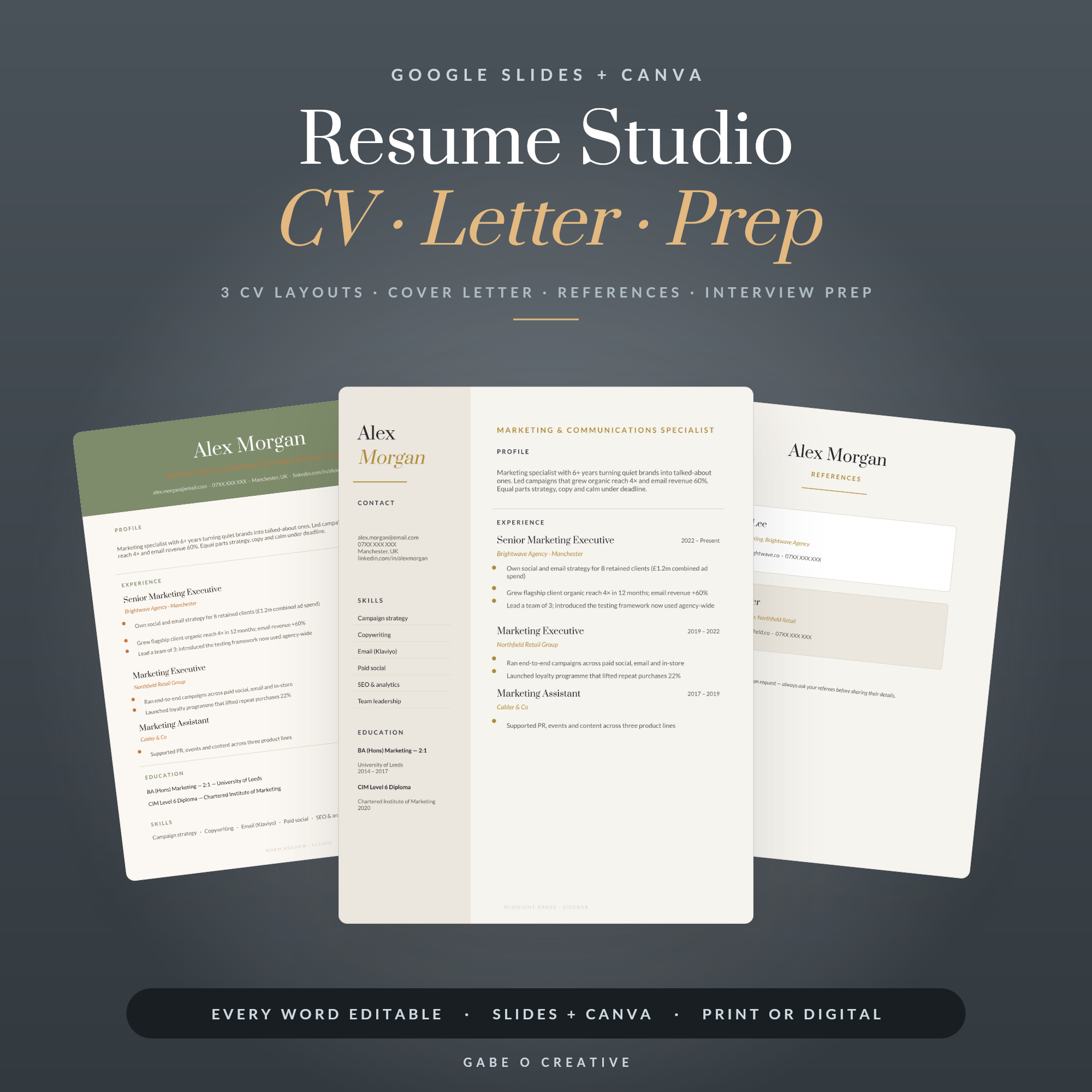 Shop Resume Studio — Editable Google Slides + Canva CV Template: 3 Resume Layouts, Cover Letter, References & Interview Prep, 2 Themes →
The tracker: one row per application
Everything else hangs off this. One sheet, one row per application, seven columns:
| Column | Why it earns its place |
|---|---|
| Company & role | The basics — plus a link to the job ad (they vanish!) |
| Date applied | Starts the follow-up clock |
| CV version sent | Walk into interviews knowing exactly what they read |
| Status | Applied → Screening → Interview → Offer / No |
| Next action + date | The anti-ghosting column — yours, not theirs |
| Contact | The recruiter or hiring manager's name, spelled right |
| Notes | Salary range, vibes, questions they asked |
The magic column is next action + date. Every application gets one the moment you hit submit — usually 'follow up on the 16th'. Your search stops being a pile of hopes and becomes a pipeline with moving parts. The tracker spreadsheet ships with the statuses, dropdowns and counters pre-built, and works on your phone when a recruiter calls unexpectedly.
The CV system: master + ten-minute tailoring
Four unnamed CV files is how the wrong one gets sent. Instead: one master CV containing everything, and a ten-minute tailoring pass per application — swap the profile line to mirror the job description's exact language, reorder your top bullets so the most relevant results lead, and save it as Firstname-Lastname-Company.pdf. Log the version in the tracker. That's it: tailored enough to triple your hit rate, systematic enough to never lose track.
If your CV itself needs the upgrade, the Resume Studio gives you three professional layouts pre-filled with a realistic example — plus the matching cover letter and an interview-prep page — editable in Google Slides or Canva. A matched set quietly tells a hiring manager you have it together before they've read a word.
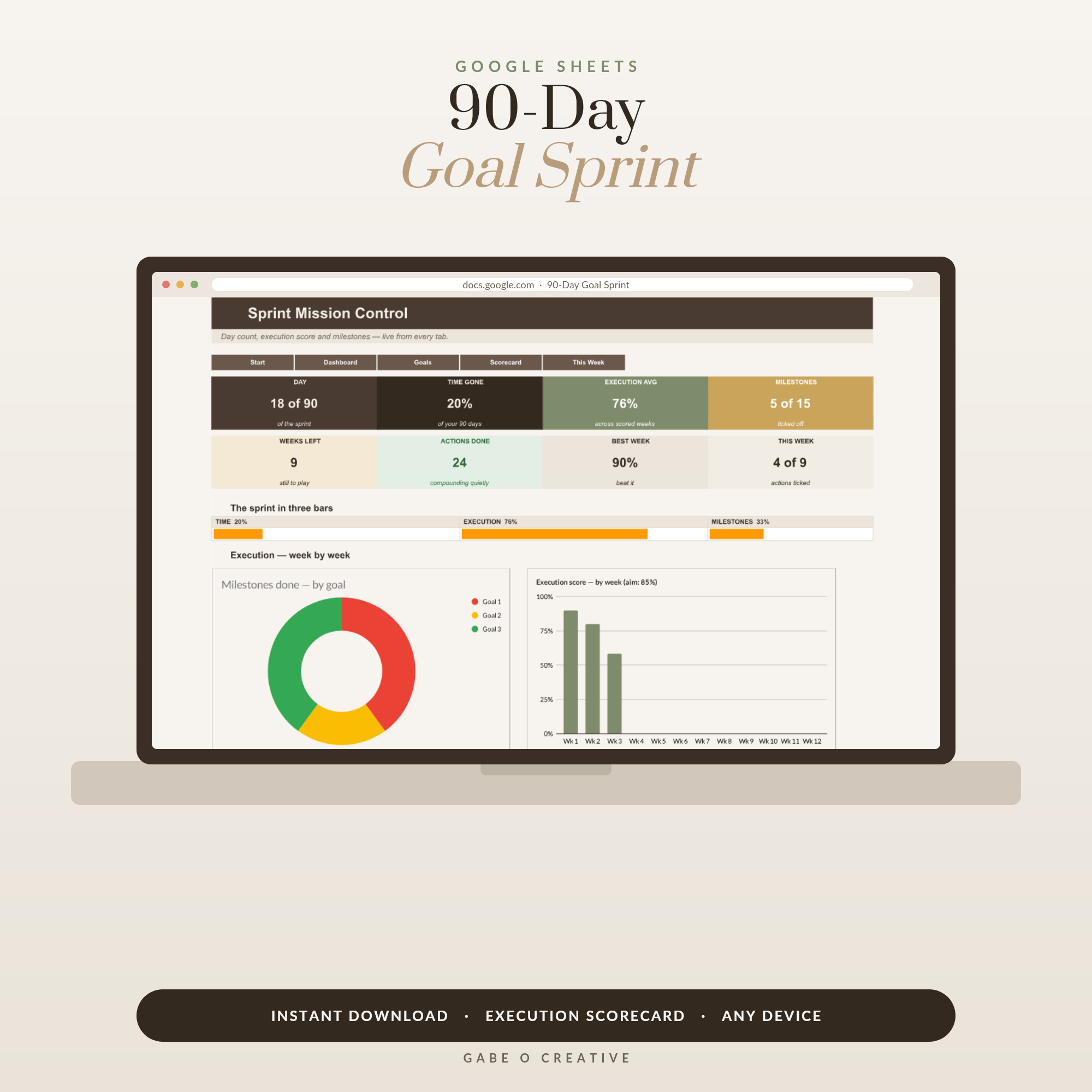 Shop 90 Day Goal Planner Google Sheets, Quarterly Goal Setting Spreadsheet with 12 Week Scorecard, Milestone Tracker & Weekly Action Planner →
The weekly rhythm: score the process
Job searching is a job with a cruel feedback loop — effort now, response (maybe) in weeks. The fix is to measure what you control:
Monday (30 min): review the pipeline, mark anything gone quiet for 2+ weeks, pick this week's target roles.
Tuesday–Thursday: 2–3 tailored applications a day, logged as you go. Quality over volume — five great ones beat thirty generic ones, every time.
Friday (20 min): follow-ups due this week, sent as short, warm nudges: still interested, happy to share anything else. Then close the laptop and have a weekend.
Count applications sent, follow-ups made, and interviews booked. Those numbers climb even when inboxes are silent — and watching them climb is what keeps the search alive in week six. Treat it like a 90-day sprint rather than an open-ended slog (the Goal Sprint dashboard is built for exactly this shape of goal), and structure the working day around it with a daily planner so the search doesn't swallow everything else.
Interviews: the one-page prep
When the tracker starts converting, preparation becomes the edge. The night before, fill one page: why this company (two specifics you genuinely rate), three STAR stories — situation, task, action, result — that prove the claims your CV makes, and three questions to ask them that show you've thought about the role, not just the salary. One page, prepared calmly, beats an evening of frantic Glassdoor scrolling. Log how it went in the tracker afterwards while it's fresh — including the questions that surprised you, because they'll come up again elsewhere.
 Shop Daily Planner Google Sheets, Weekly Planner Spreadsheet with Hourly Schedule, To Do List & Notes, Undated Digital Planner Template →
Silence, rejection and the long game
Two truths that make the middle stretch survivable. First, silence is usually logistics, not judgement — hiring drags, budgets pause, recruiters juggle forty roles. Your polite day-8 follow-up resurrects more applications than you'd believe. Second, rejection data is still data: if you're getting no interviews, the CV or targeting needs work; interviews but no offers, it's the storytelling — fixable with better STAR prep. The tracker shows you which problem you actually have, instead of the vague feeling that 'nothing is working'. Searches typically take two to four months; a system is what lets you run that distance without burning out at week three.
Frequently asked questions
How do I keep track of job applications?
One tracker, one row per application: company, role, date applied, CV version sent, status, next action and its date. The moment applying and tracking live in the same place, 'wait, did I already apply there?' disappears forever.
How many jobs should I apply for a week?
Five to ten well-tailored applications beat thirty copy-paste ones. Recruiters can smell a generic application instantly, and tailored ones convert to interviews at several times the rate. Quality is the whole game — the tracker just keeps quality organised.
Should I tailor my CV for every application?
Tailor, yes; rewrite, no. Keep one master CV, then adjust the profile line and reorder the top bullets to mirror the job description's language. Ten minutes per application, logged in your tracker so you always know which version each company saw.
When should I follow up after applying?
If you've heard nothing, a short, warm follow-up 7–10 days after applying is professional, not pushy. The trick is remembering — which is why every application in your tracker gets a 'next action date' the moment you submit it.
How do I stay motivated during a long job search?
Score the process, not the outcome. You can't control offers, but you can control applications sent, follow-ups made and skills practised — so track those weekly and let the wins count. A visible pipeline also reminds you silence at one company isn't silence everywhere.
What should I prepare before an interview?
Three things fit on one page: why this company (specifics, not flattery), three STAR stories that prove your headline claims, and thoughtful questions to ask them. Prepare it the night before — calm beats cramming at 8am.
Turn the chaos into a pipeline today: make your copy of the Job Application Tracker, pair it with the Resume Studio, and run next week on the system instead of the stress.