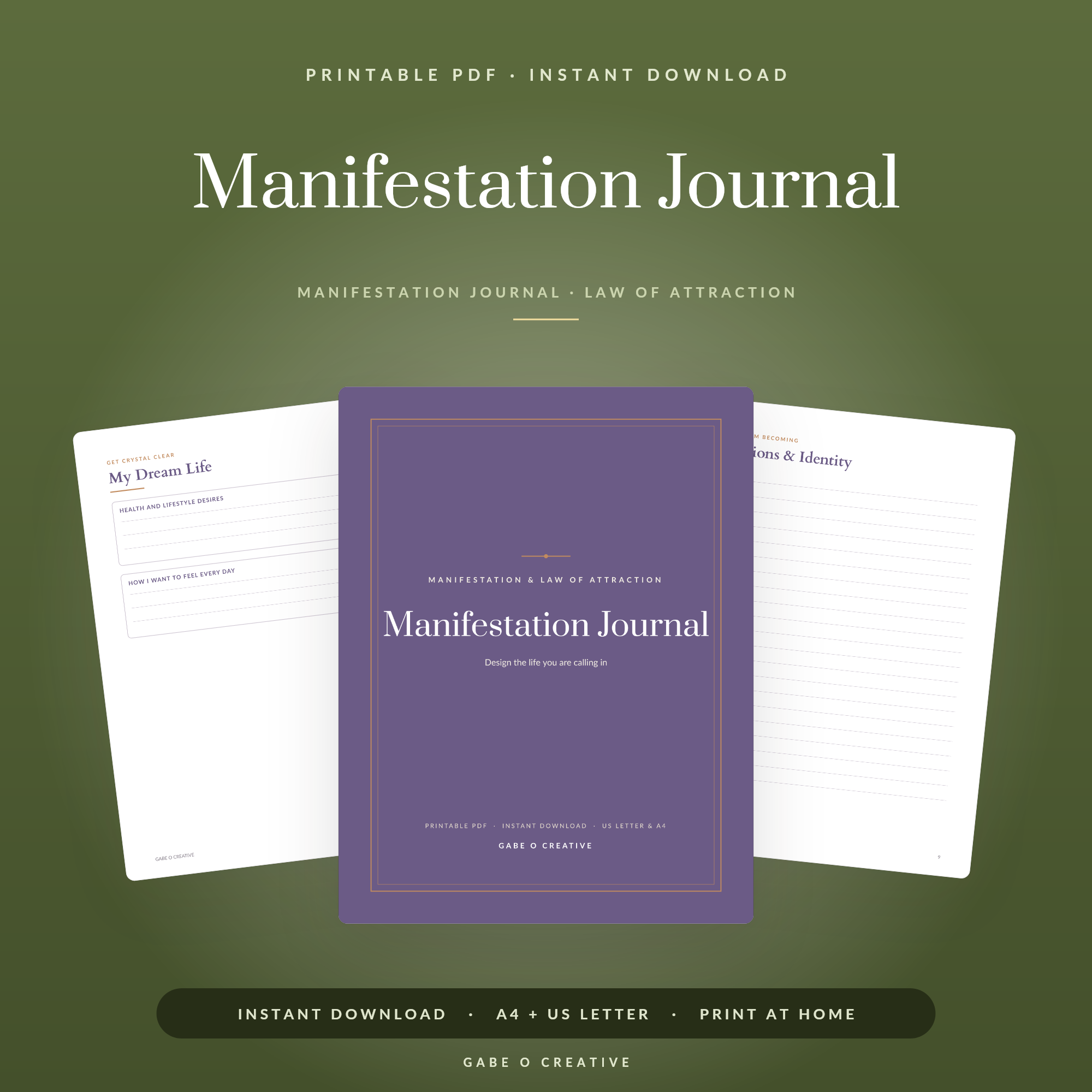
Most journalling skims the surface of a day. Shadow work prompts are different: they aim the pen directly at the parts of yourself you usually avoid — the envy, the snappiness, the self-sabotage — and ask where they actually come from. Done gently and regularly, it's one of the most freeing practices there is, and all it needs is a pen and something like our Manifestation Journal to give it a home.
Want the guided version? The Manifestation Journal pairs reflection pages with intention-setting, so every heavy session ends somewhere hopeful.
What shadow work actually is (without the mysticism)
The term comes from psychologist Carl Jung, who used 'the shadow' to describe everything we push out of our self-image. As children we learn quickly which parts of us get approval and which get frowns — so the loud parts, the needy parts, the angry parts get buried. They don't disappear. They leak out as triggers, jealousy, procrastination and the strange ability to ruin things that were going well.
Shadow work is simply inviting those parts back to the table and letting them speak on paper. No incense required. You write, you notice, you get curious instead of critical. The pay-off is enormous: what you can see, you can work with; what stays buried runs the show from the basement.
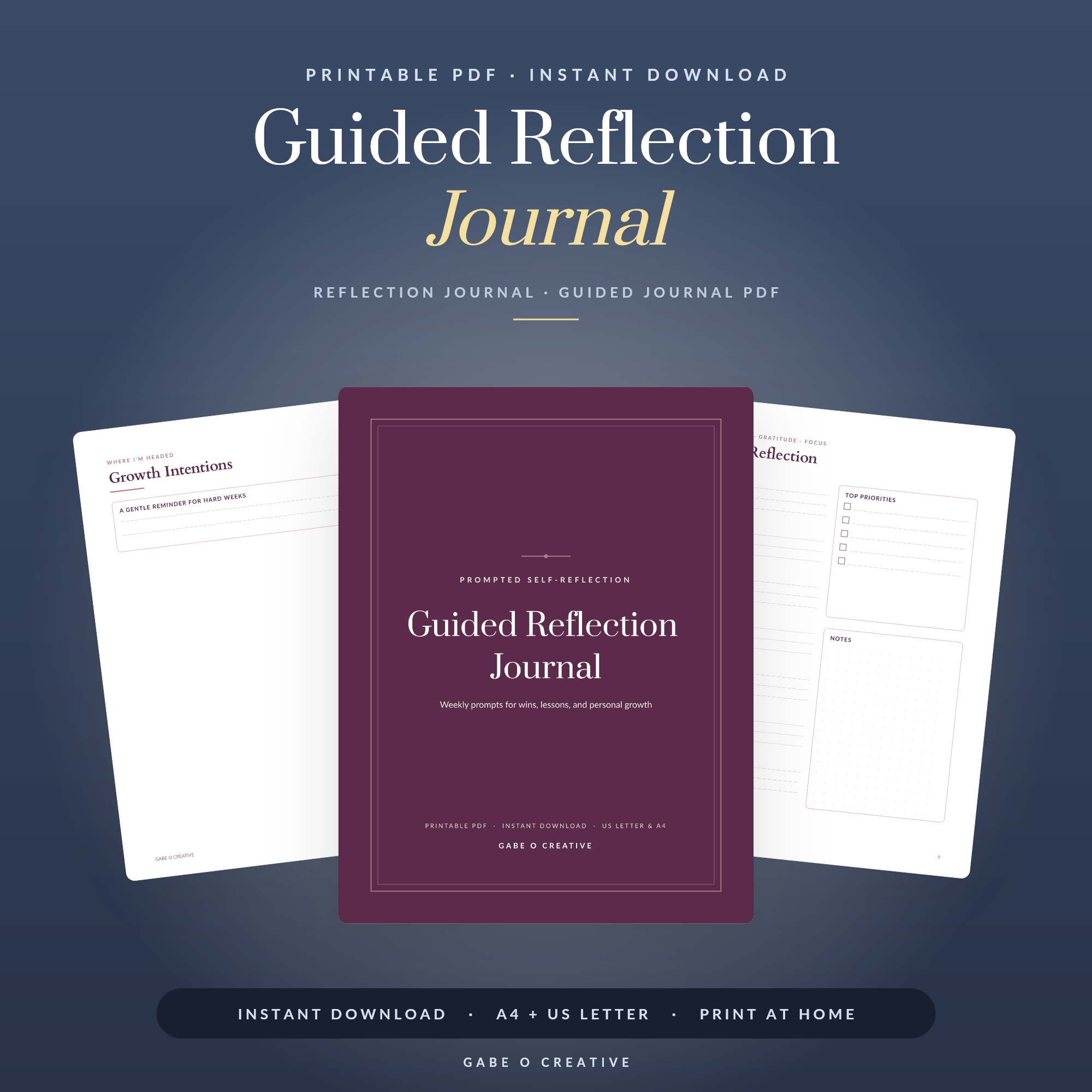 Shop Guided Reflection Journal →
How to start a shadow work session
Keep the container small and predictable — the routine is what makes the depth feel safe:
1. Pick one prompt, not five. One honest page beats five rushed ones.
2. Set a timer for 15–20 minutes. Shadow work expands to fill whatever time you give it, and past twenty minutes insight tends to slide into rumination.
3. Write without editing. Nobody is marking this. Half-sentences, mess and crossing-out are all fine — flow matters more than grammar.
4. Close warm. End every session with one kind sentence to yourself and three gratitudes. This isn't fluffy; it's how you teach your nervous system that honesty is safe.
30 shadow work prompts, from gentle to deep
Start in the first group and work down over the weeks. There are no prizes for going straight to the heavy ones.
Gentle openers
1. What emotion do I find hardest to admit to feeling?
2. When did I last pretend to be fine when I wasn't — and why?
3. What compliment do I always deflect, and what would accepting it mean?
4. What do I do when nobody is watching that I'd be embarrassed to explain?
5. Which childhood rule do I still obey without ever questioning it?
Triggers and reactions
6. Who irritated me most this week, and what exactly did they do?
7. What trait do I judge most harshly in other people?
8. When I criticise that trait, whose voice does it sound like?
9. What situation makes me disproportionately angry — and what older situation does it rhyme with?
10. When did I last overreact, and what was the reaction protecting?
 Shop CBT Therapy Journal →
Jealousy and desire
11. Who am I jealous of right now? Be specific.
12. What does their life have that I've told myself I can't have?
13. What did I want at 20 that I've quietly given up on?
14. If I could have any life with zero judgement from anyone, what would tomorrow look like?
15. What dream feels 'too big for someone like me' — and who taught me my size?
Self-sabotage
16. Where in my life do I keep getting almost there and then stopping?
17. What would I lose if I actually succeeded? (There is always something.)
18. What's my favourite way to numb out, and what feeling does it mute?
19. What am I currently procrastinating on, and what's the fear underneath it?
20. What promise to myself do I break most often?
The old story
21. What did I have to be, as a child, to feel loved?
22. What part of me got laughed at or told off until I hid it?
23. What would eight-year-old me think of my life — and what would they miss most?
24. What am I still trying to prove, and to whom?
25. What family pattern am I most afraid of repeating?
Integration and forgiveness
26. What do I need to forgive myself for — named plainly, once, on paper?
27. What has my 'worst' trait actually protected me from?
28. If my shadow could write me a letter, what would the first line say?
29. What truth am I now ready to say out loud that I couldn't last year?
30. What would I do differently tomorrow if I fully accepted this part of me?
A weekly rhythm that keeps it healthy
Shadow work is strong medicine, and the dose matters. Here's the rhythm we recommend to keep it useful rather than heavy:
| Day | Practice | Time |
|---|---|---|
| Monday | Light check-in — one line about the weekend's mood | 5 min |
| Wednesday | Shadow session — one prompt from the list above | 15–20 min |
| Friday | Reframe — turn Wednesday's insight into one new intention | 10 min |
| Daily | Three gratitudes before bed (the counterweight) | 2 min |
The Wednesday session is where the digging happens; the Friday reframe is where it becomes useful. A guided reflection journal makes that middle step almost automatic, because the pages ask the follow-up questions for you.
Why shadow work turbocharges manifestation
Here's the connection most manifestation content skips: visualisation writes the goal, but your shadow holds the veto. If a buried belief says 'people like us don't get that', you'll flinch at the exact moment the opportunity arrives — turn down the invitation, undercharge the client, ghost the application. It looks like bad luck. It's actually the shadow keeping you 'safe'.
That's why the deepest practice pairs both: shadow prompts to find the old belief, and intention pages to install the new one. It's the exact structure of the Manifestation Journal, and if you want the fuller toolkit, the Manifestation & Mindset bundle adds the 369 method and vision-board pages around it. If heavy feelings need more structured support, the CBT Therapy Journal uses the same on-paper honesty with a gentler, evidence-based frame.
 Shop Daily Gratitude Journal →
Keeping it safe
Two honest caveats. First, shadow work should feel like relief — heavy during, lighter after. If sessions consistently leave you worse for days, that's a sign to bring a professional alongside; a journal complements therapy, it doesn't replace it. Second, always end with the counterweight: a gratitude practice as small as three lines a night keeps the whole practice balanced, which is exactly why we pair the two in the weekly rhythm above.
If you're newer to journalling and want a gentler on-ramp first, start with our 5-minute gratitude habit or a brain dump to clear the surface noise — then come back to these prompts when you're ready to go deeper. And once the old stories are on paper, our vision board guide shows you how to build the new one.
Frequently asked questions
What is shadow work in simple terms?
It's the practice of noticing the parts of yourself you usually hide, deny or judge — jealousy, anger, neediness, old shame — and getting curious about them on paper instead of pretending they're not there. The 'shadow' is just the side of you that didn't feel safe to show growing up.
Is shadow work safe to do on my own?
For most people, yes — journalling about uncomfortable feelings is a normal, healthy practice. Start with gentler prompts, keep sessions to 15–20 minutes, and always close with something grounding like gratitude. If you have trauma or feel overwhelmed rather than relieved afterwards, do this work alongside a therapist, not instead of one.
How often should I do shadow work?
Once or twice a week is plenty. Unlike gratitude journalling, shadow work is heavier lifting — daily sessions tend to turn into rumination rather than insight. Many people pair one weekly shadow session with a light daily practice.
What's the difference between shadow work and normal journalling?
Normal journalling records what happened and how you feel. Shadow work deliberately aims the pen at what you'd rather not look at — your triggers, envy, and the traits you criticise in others — and asks where they come from. It's the difference between describing the weather and checking the foundations.
Why do shadow work before manifestation or goal setting?
Because the shadow is usually what's quietly vetoing your goals. You can visualise a confident, wealthy, loved version of yourself every morning, but if an old belief says you don't deserve it, you'll sabotage the first opportunity that shows up. Shadow work finds the belief; manifestation work replaces it.
What should I do after a heavy shadow work session?
Close the loop. Write one kind sentence to yourself, list three things you're grateful for, and physically shut the journal. Then do something ordinary and pleasant — a walk, tea, a shower. The insight settles in the hours afterwards; you don't need to keep digging.
Ready to go deeper than 'dear diary'? Start with one prompt tonight — and give the practice a proper home with the Manifestation Journal, or go all-in with the Manifestation & Mindset bundle.