Most handmade businesses track orders carefully and treat stock as something you can see by looking at the shelf. That works until the shelf lies — until you promise a market stall you can bring forty pieces and discover on the Thursday that you are eleven short and the component you need is a week away. A handmade inventory tracker is not bookkeeping; it is the thing that stops you finding out too late. The Handmade Orders & Inventory Tracker is built around that specific failure.
Making for a fair this autumn? The Handmade Orders & Inventory Tracker keeps finished stock, materials and orders in one Google Sheet, and flags what is running low before it stops you working.
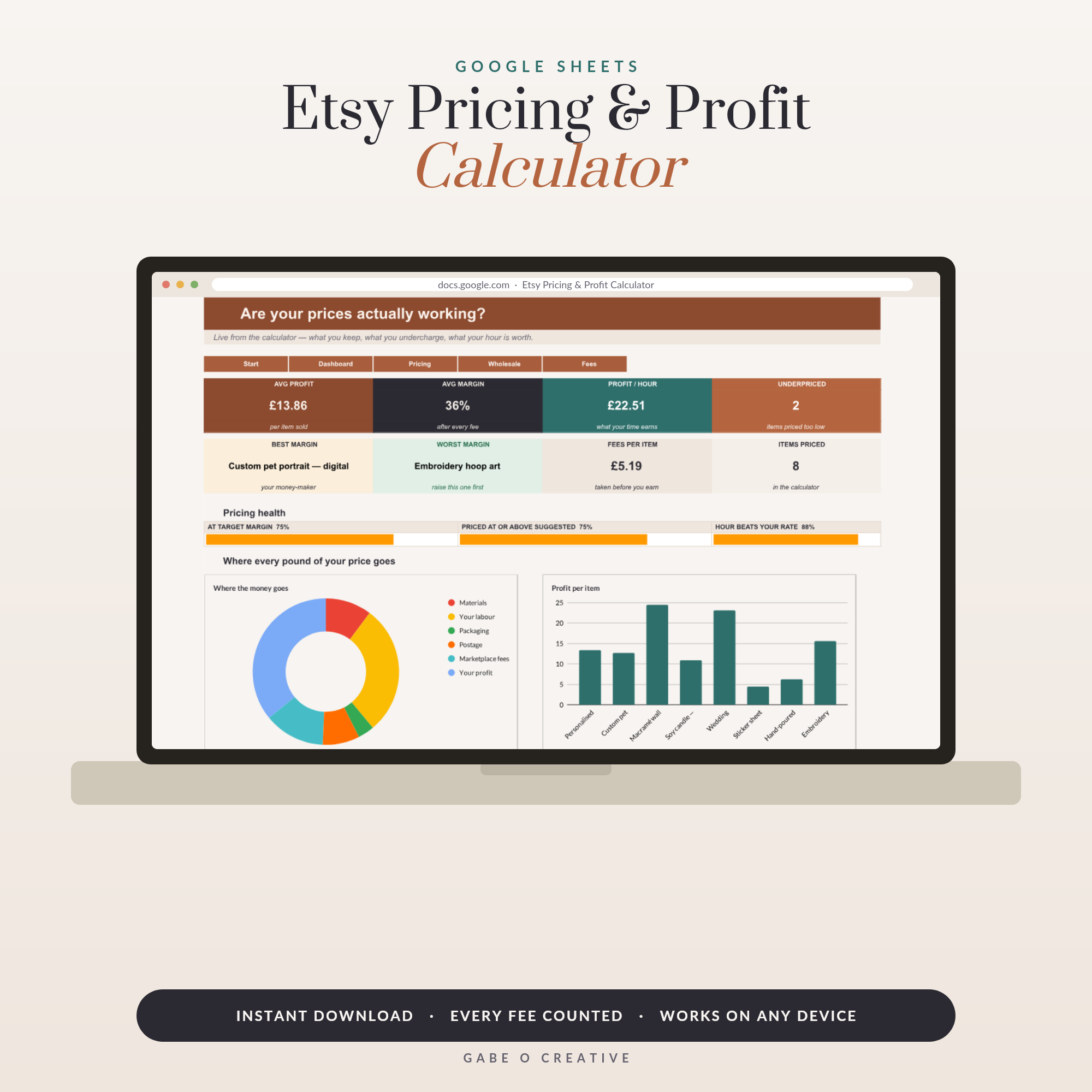 Shop Etsy Pricing Calculator Google Sheets, Handmade Profit & Margin Spreadsheet with Fee Calculator, Labour Costing & Wholesale Pricing →
Count Three Things, Not One
Stock is not a single number. It is three, and only one of them is the one people track.
- Finished items, by variant. Not "twelve candles" — three of that scent, one of the other, eight of the one nobody buys. The aggregate number is comfortable and useless.
- Materials, with a reorder point. The level at which you order more, decided calmly in advance rather than in a panic.
- Work in progress. Only if things genuinely sit half-made. If you build to order in an afternoon, skip it.
Materials are the ones that stop you
This is the counterintuitive bit. Running out of a finished product costs you sales of that line, and often you can make more the same day. Running out of a material stops production entirely for however long the delivery takes — and deliveries are slowest exactly when you are busiest, in the run-up to Christmas.
So if you only track one of the three, track materials. It is the one with a lead time you do not control.
The Number That Tells You What To Make
Revenue tells you what earned the most. Sell-through rate tells you what to make next, and they are frequently different products.
Sell-through is units sold divided by units made, over a fixed window. A piece you made six of and sold six of is telling you something urgent. A piece you made twenty of and sold four of is telling you something too, and it is not "make more".
| Made | Sold | Sell-through | What it means |
|---|---|---|---|
| 6 | 6 | 100% | You are leaving money on the table — make more |
| 10 | 7 | 70% | Healthy. Keep it in the range |
| 12 | 5 | 42% | Slowing. Stop making until stock clears |
| 20 | 4 | 20% | Retire it, or discount to free the materials |
That last row is the hard one, because it is usually a piece you like making. Sell-through is worth having precisely because it argues with you — left to instinct, most makers make what they enjoy and then wonder why the storage tubs keep filling up.
Count sell-through per season, not per year
An annual figure flattens everything that matters. A product with 30% sell-through across the year might be 90% in November and near zero the rest of the time, which is a completely different instruction: make it, but make it in October.
How Often To Count
Once a month, properly, and after every market or fair. That is it.
Weekly counting sounds more rigorous and is usually how the habit dies — it becomes a chore, gets skipped twice, and then the numbers are wrong and nobody trusts the sheet any more. A monthly count you genuinely do is worth more than a weekly one you abandon by spring.
The post-fair count is non-negotiable though. A market is the one event that changes stock dramatically in a single day, and it is also when things get damaged, given away or sold at a discount you have not recorded. Counting the boxes back in takes twenty minutes and keeps the whole sheet honest. Our craft fair prep checklist covers what to take; counting what comes home is the other half.
 Shop Small Business Planner →
Set the reorder point before you need it
A reorder point is just the level at which you order more, decided while you are calm. Work it out roughly: how many you use in a normal week, multiplied by how many weeks the delivery takes, plus a little margin for the week you get a big order. Write that number in the sheet next to the material.
The value is that it removes the judgement call entirely. You are not deciding whether it is time to reorder while tired on a Sunday evening — the number already decided, weeks ago, and all you have to do is notice you have crossed it.
Where Inventory Meets Pricing
Inventory and pricing are the same conversation held at different times, and keeping them apart is why makers underprice.
Your material cost per item comes out of the inventory side. Once it is written down, pricing stops being a feeling about what people will pay and becomes arithmetic you can defend — materials, plus your time at a real rate, plus fees, plus a margin. Our guide to the handmade pricing formula covers that calculation, and the Etsy Pricing & Profit Calculator does the maths for you.
The link runs both ways. When a material price rises — and they have been — the inventory sheet is where you notice, and the pricing sheet is where you respond. Without the first, the second is out of date and you are quietly making less on every sale.
Wastage counts
Track what you spoil, at least roughly. Every craft has a failure rate, and a maker who thinks theirs is zero is pricing as though every piece of material becomes a sellable item. It does not, and the gap comes straight out of your margin.
For the wider running of the business rather than the stock itself, the Small Business Planner covers the planning side.
Handmade Inventory FAQs
What should a handmade inventory tracker include?
Finished stock by variant, materials with their reorder point, and a line per order. The variant detail is what most makers skip — knowing you have twelve candles is useless if nine of them are the scent nobody buys.
How often should I count stock?
Properly once a month, and after every market or fair. Counting weekly sounds diligent and is usually how the habit dies. A monthly count you actually do beats a weekly one you abandon in March.
Should I track materials or just finished items?
Materials, and it matters more than the finished count. Running out of an ingredient stops production for however long delivery takes, whereas running out of a finished item only stops sales of that one line — and you can often make more the same day.
How do I know what to make next?
Sell-through rate: units sold divided by units made, per product, over a set period. It answers what to make far better than revenue does, because a high-revenue item you sell two of a month is not the thing to spend Sunday on.
Do I need to track work in progress?
Only if things sit half-finished for a while. If you make to order in a day, it is noise. If you have thirty part-assembled pieces waiting on one component, that is real money and real time sitting still, and it deserves a column.
Is a spreadsheet enough, or do I need software?
A spreadsheet is enough well past the point most makers assume. Dedicated inventory software earns its keep when you have multiple sales channels writing to the same stock in real time — before that it is a subscription buying you very little.
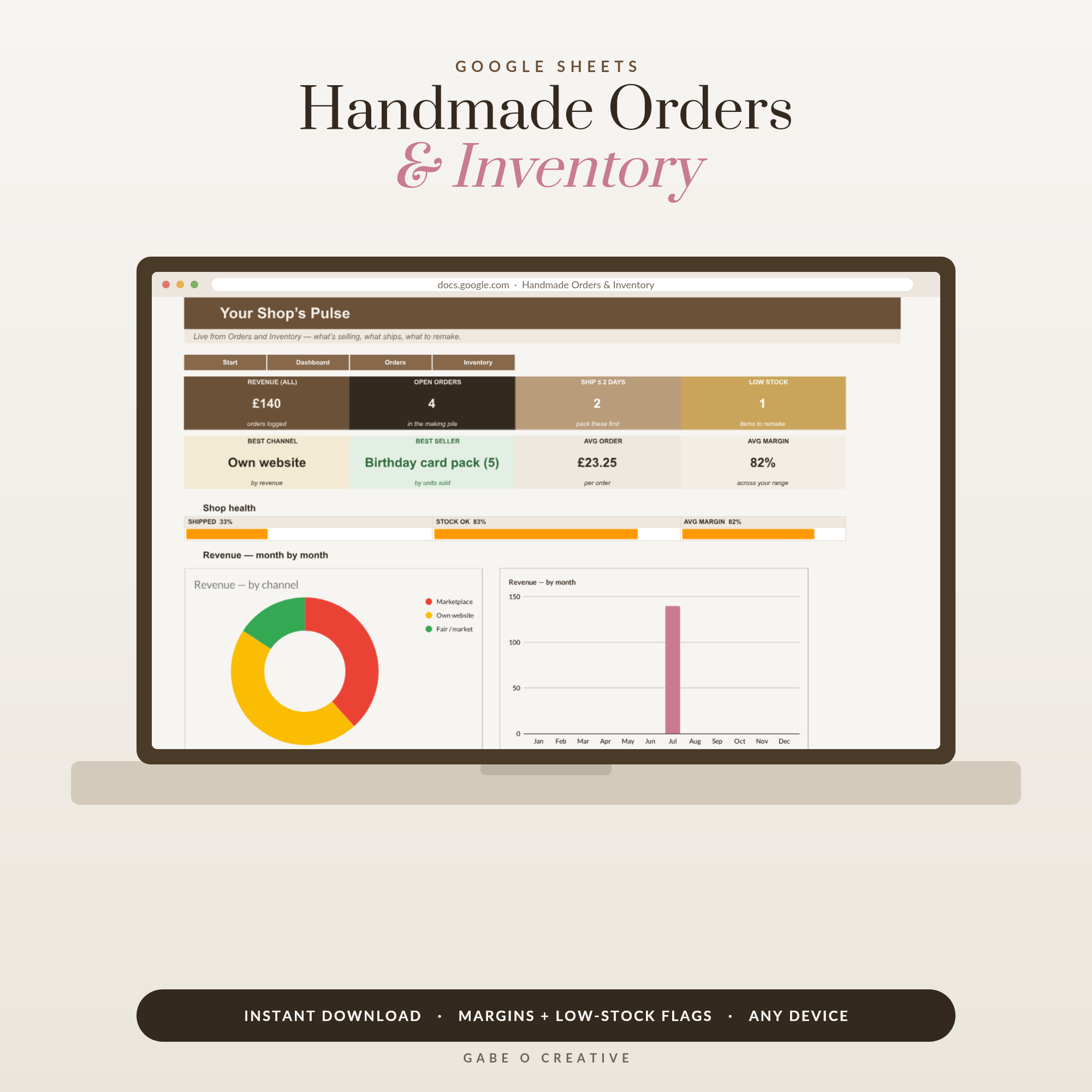 Shop Order Tracker for Small Business Google Sheets, Handmade Shop Inventory Spreadsheet with Ship-By Alerts, Product Margins & Low Stock Flags →
Start with one monthly count. Open the Handmade Orders & Inventory Tracker, count what you have today, and let sell-through tell you what to make next — or browse the full Google Sheets collection.