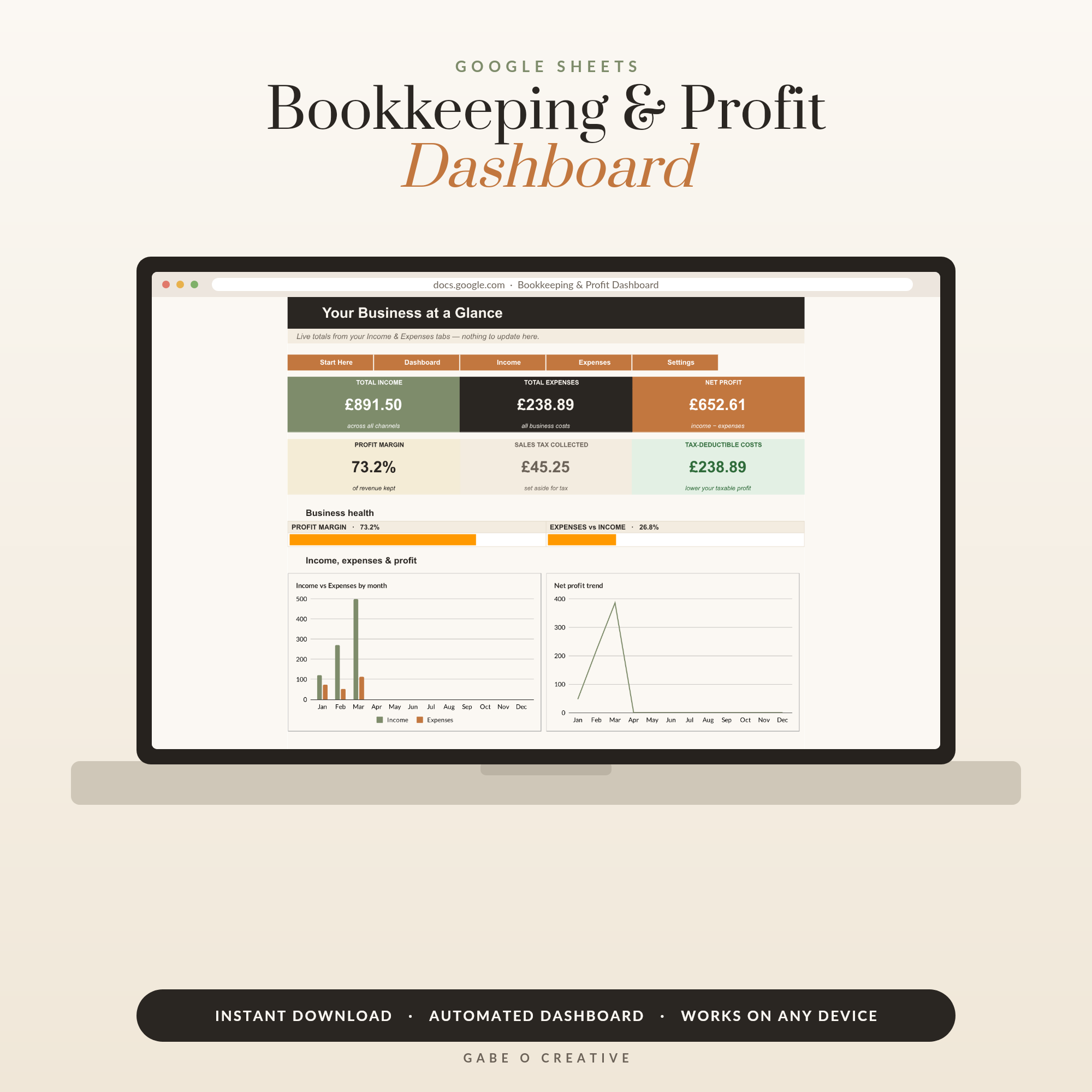
Here's the uncomfortable truth about handmade shops: plenty of sellers who look busy are quietly losing money, and they don't know it, because bookkeeping for Etsy sellers is the job everyone postpones. Fees nibble every order, materials creep up, postage surprises you — and 'it feels like a good month' turns out to be a £40 loss. The fix isn't accounting software with a monthly fee. It's a simple system you'll actually keep up, like the Bookkeeping & Profit Dashboard — log every sale and cost in seconds, and watch your real profit calculate itself.
Want the short version? The Bookkeeping & Profit Dashboard tracks income by channel, categorised expenses, sales tax and true profit — one automated Google Sheet, no subscription, ready in minutes.
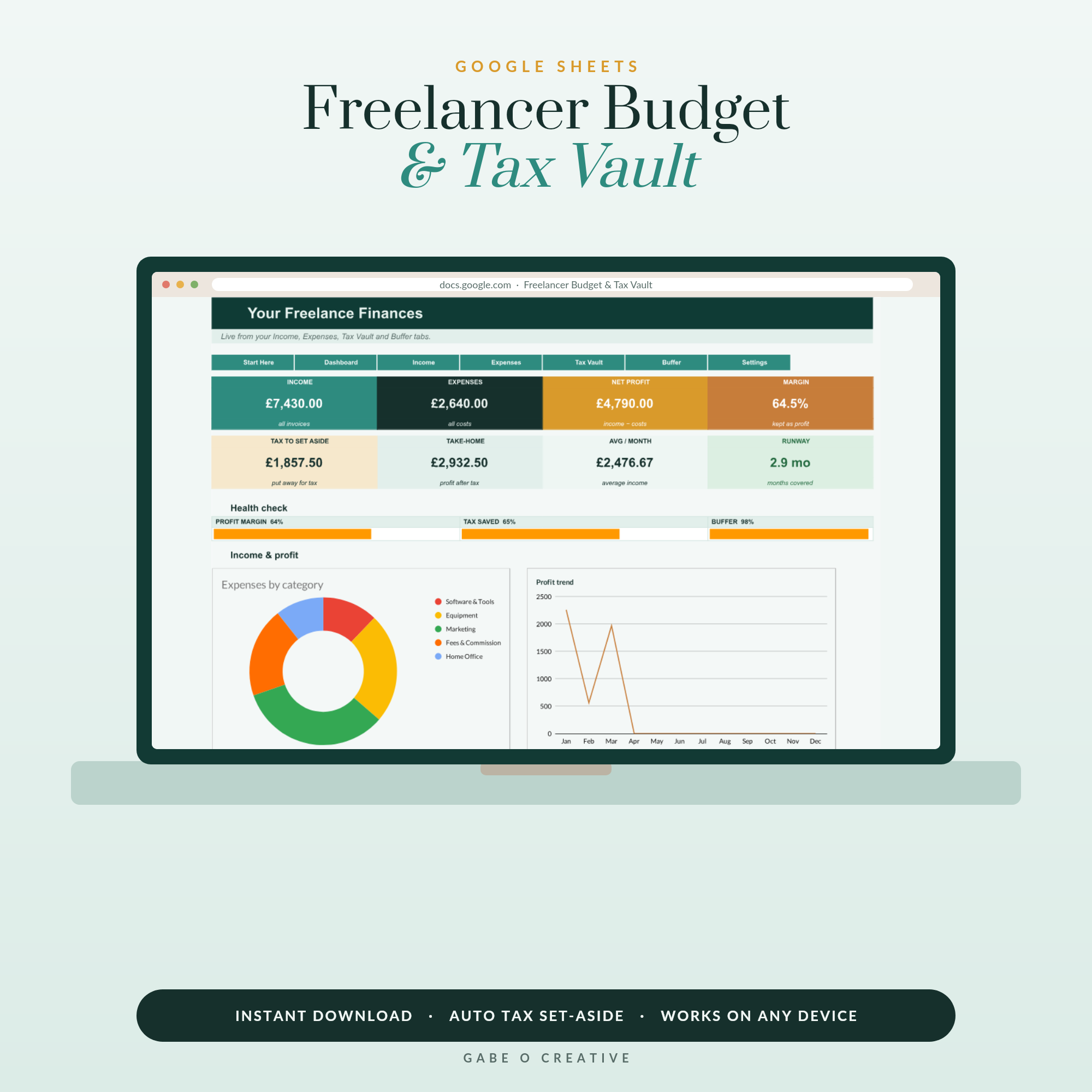 Shop Freelancer Budget & Tax Vault, Google Sheets Template for Self-Employed, Irregular Income Planner, Tax Set-Aside Tracker →
Why 'Revenue' and 'Profit' Are Different Shops
Marketplace dashboards show revenue — the number before reality. Between listing fees, transaction fees, payment processing and offsite advertising, a meaningful slice of every order never reaches you. Then come materials, packaging, postage and the quiet overheads: software, photography props, that label printer. Profit is what survives all of it. A seller charging £22 for a print can discover their actual take-home is £9 — or £3 if they underpriced postage. You cannot price properly, run a sale safely or pay yourself honestly until you can see that number per month and per product.
The Five Numbers Every Shop Must Track
Whatever you call it — Etsy bookkeeping, shop accounts, 'doing the books' — it reduces to five numbers kept honestly, every week, in one place.
| Number | What it includes | Question it answers |
|---|---|---|
| Gross income | Every order, every channel | How much came in? |
| Marketplace & payment fees | Listing, transaction, processing, ads | What did selling cost me? |
| Cost of goods | Materials, packaging, postage | What did making & shipping cost? |
| Overheads | Software, equipment, subscriptions | What does existing cost? |
| Net profit | Income minus all of the above | What did I actually earn? |
Track those five and you're ahead of most small shops. The trick is making the tracking so easy it survives a busy week — which is where dropdown categories and self-calculating totals earn their keep.
The 15-Minute Friday Routine
Forget daily bookkeeping guilt. A small shop stays perfectly current on one short weekly session:
- Log the week's orders — date, channel, order value. With dropdowns this is seconds per sale.
- Log the week's spending — materials, postage runs, any subscriptions that renewed. Snap receipts into a folder as you go.
- Glance at the dashboard — income vs expenses this month, profit margin, best channel. One minute, honestly.
- Move your tax slice — a fixed percentage of profit into a separate pot, every week, no exceptions.
That last step deserves its own sentence: sellers who set tax aside weekly never have a tax-season crisis. If your income swings month to month, the Freelancer Budget & Tax Vault automates exactly this — it works out the set-aside per invoice so you're never caught short.
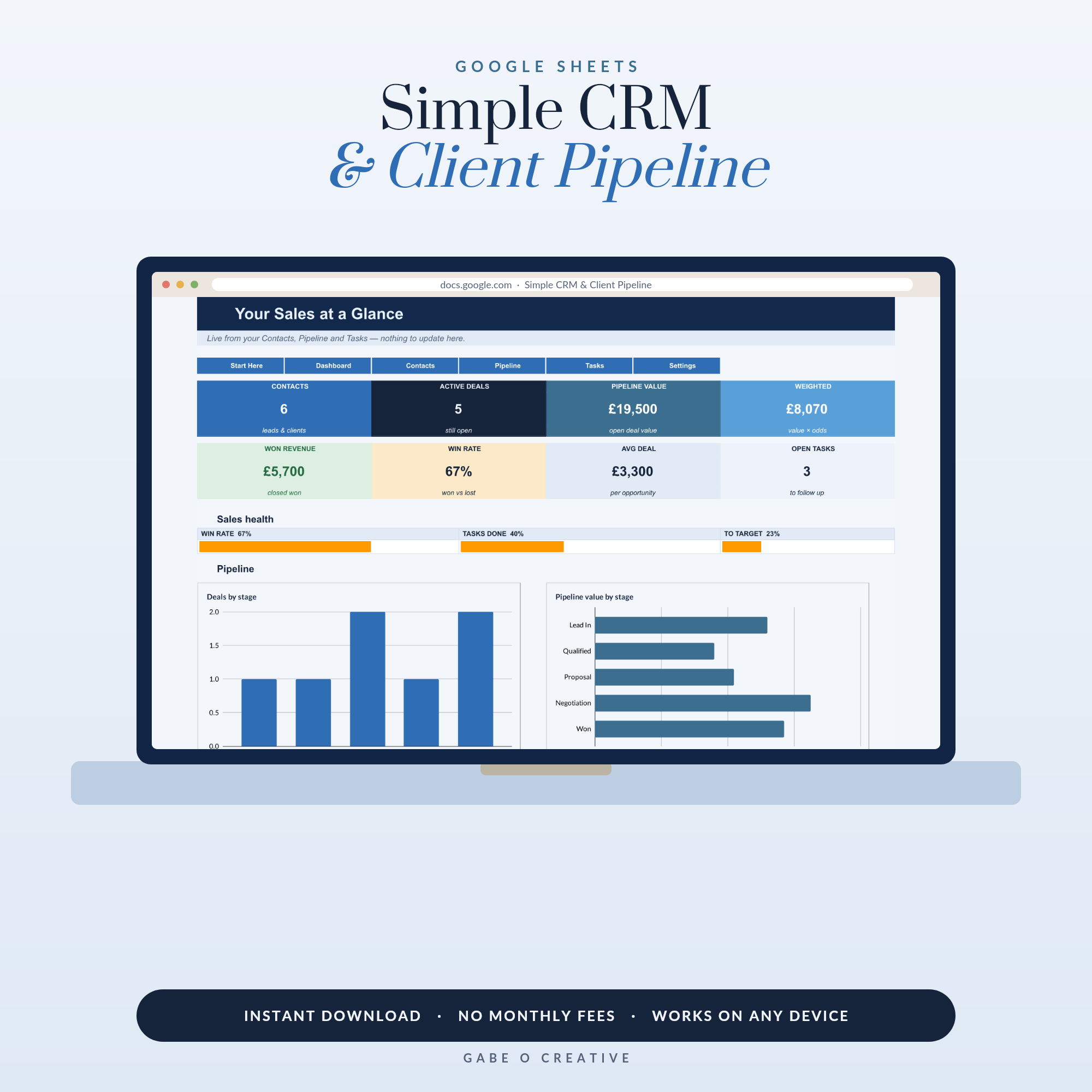 Shop Simple CRM & Client Pipeline, Google Sheets Template, Sales Tracker, Lead & Deal Pipeline, Small Business CRM →
Keep business and personal money separate
Even a basic second bank account transforms your bookkeeping. When every business transaction lives in one place, your weekly log becomes a copy-paste job instead of detective work — and if the tax office ever asks questions, your answers are already tidy.
Spreadsheet or Software? The Honest Answer for Small Shops
Accounting software earns its subscription when you have employees, VAT complexity or hundreds of orders a week. Below that, it's mostly paying monthly for features you won't touch. A purpose-built spreadsheet gives a small shop the parts that matter — categorised income and expenses, profit by month, tax-ready totals — for a one-off cost, with no login treadmill. And because it's Google Sheets, it's on your phone at the post office and your laptop at the kitchen table, always in sync. (This logic isn't Etsy-specific, by the way: the same system works for Shopify, craft fairs, your own website, or all of them at once — good bookkeeping tracks the channel per sale, so you can see which one actually pays.)
From Books to Better Decisions
The real prize isn't tidy records — it's what they let you do. When you can see profit per month you can set a realistic goal for the quarter (our 90-Day Goal Sprint is built for exactly that kind of focused push). When you can see profit per product, you know what to promote, what to reprice and what to retire. And when repeat buyers start appearing, a lightweight CRM spreadsheet keeps those relationships warm. If you're building a business alongside a day job, keep the personal side equally clear with the All-in-One Finance Dashboard — one glance tells you whether the side hustle is genuinely moving your life forward. For more small-business systems, see our guides to starting a photography business and starting a cleaning business, or how top agents stay organised.
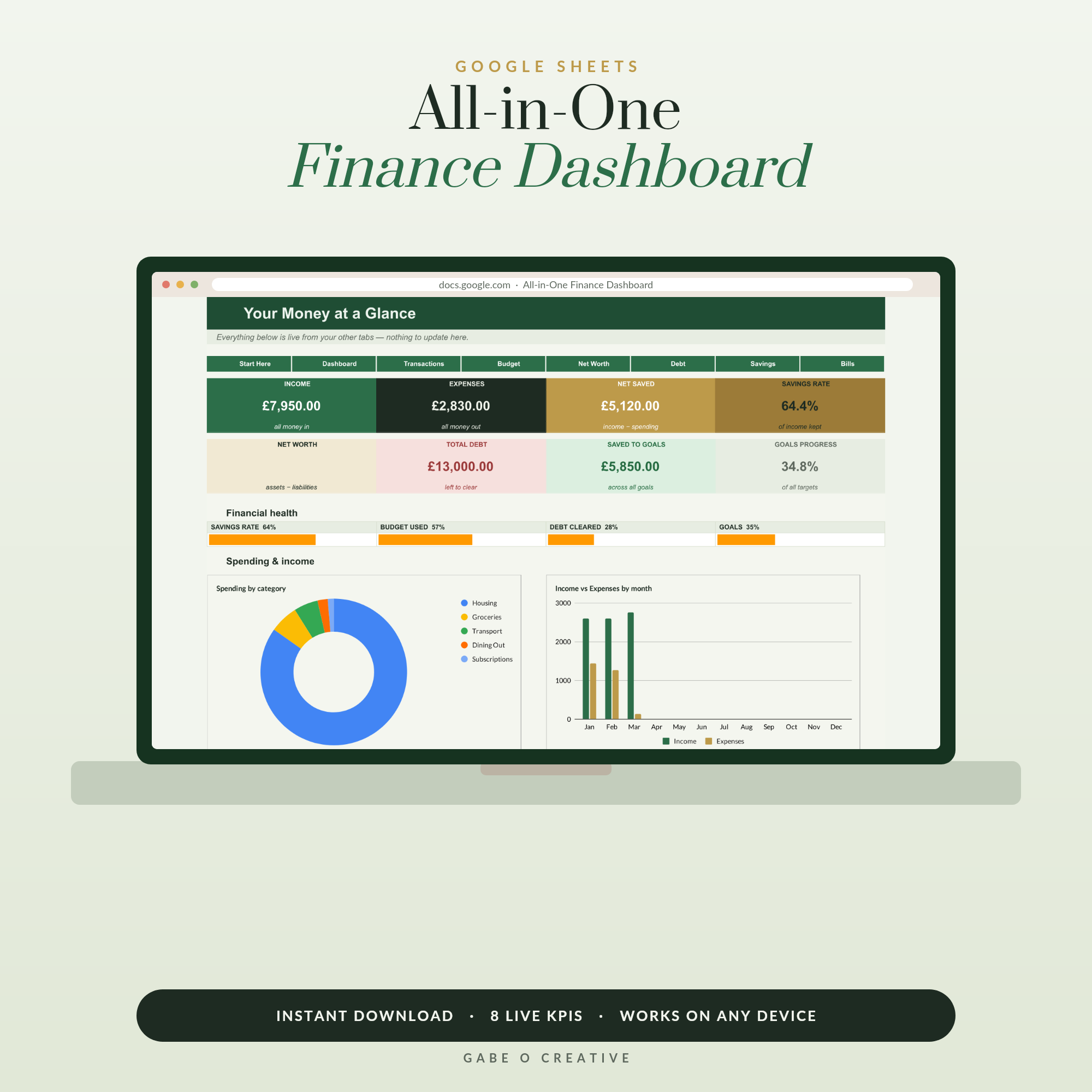 Shop All-in-One Personal Finance Dashboard, Google Sheets Budget Template, Net Worth, Debt Payoff & Savings Goal Tracker →
The Pricing Payoff: What Your Books Unlock
Here's where the 15 Fridays a quarter pay for themselves. Once your books can tell you the true cost of a product — materials, packaging, postage, the fee slice and a fair share of overheads — pricing stops being guesswork and starts being arithmetic. Cost £7.40, want a 60% margin? The price is £18.50, and now it's a decision instead of a vibe. The same numbers answer the questions that keep sellers up at night: Can I afford a sale this weekend? (Only if the discounted price still clears cost.) Should I keep the slow product that everyone compliments but nobody buys? (The books say it's paying rent in your workspace and your head.) Is free shipping viable? (Only if it's baked into the price — your postage column knows the real average.) And when a wholesale enquiry lands asking for 50 units at half price, you'll answer in minutes, from data, instead of panicking in the group chat. Sellers with clean books also sail through the January tax scramble: totals per category are already sitting there, ready to hand over. The shops that grow aren't always the most talented — they're the ones that know their numbers cold.
Bookkeeping for Etsy Sellers FAQs
Do Etsy sellers really need to do bookkeeping?
Yes — from your very first sale. Most countries require you to report self-employment income, and beyond the legal side, bookkeeping is how you discover whether you're actually making a profit once fees, materials and postage come out.
What records should an Etsy seller keep?
Every sale (date, order value, fees taken), every expense (materials, packaging, postage, software, marketplace fees, advertising), and receipts for all of it. A simple spreadsheet with dropdown categories covers this comfortably for most shops.
Do I need accounting software for a small handmade shop?
Usually not at the start. Software subscriptions eat £15–30 a month, which stings on handmade margins. A well-built bookkeeping spreadsheet does the same core job — income, expenses, profit and tax categories — for a one-off cost.
How do I work out my actual profit per sale?
Take the order total, subtract marketplace and payment fees, then subtract materials, packaging and postage for that order. What's left is gross profit — and dividing your monthly overheads across sales shows your true net picture.
How often should I update my books?
Weekly is the sweet spot for small shops: 15 minutes every Friday keeps everything current and painless. Monthly works too, but the pile grows and memories fade. Never leave it until tax season.
What percentage should I set aside for tax?
A common rule of thumb is 20–30% of profit, depending on your country and tax band. Set it aside as you earn — a separate pot or a tax vault tab — so the bill never arrives as a surprise. Confirm your exact rate with your local tax authority or an accountant.
Ready to know your real numbers? Get the Bookkeeping & Profit Dashboard — automated profit tracking for handmade and small online shops, delivered instantly — and explore the rest of the Google Sheets collection.