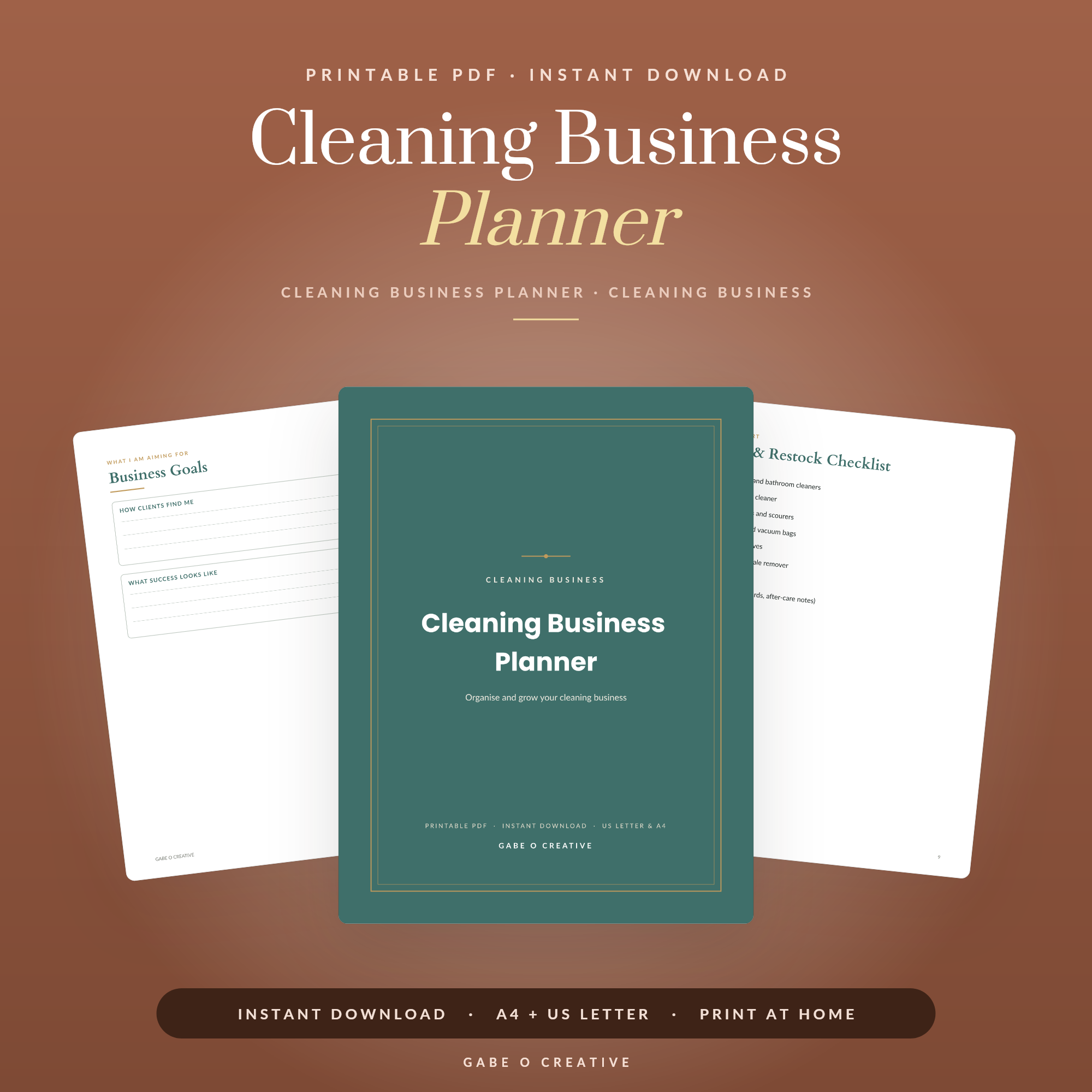
Learning how to start a cleaning business is one of the most achievable routes to working for yourself. The startup costs are low, the demand is steady, and you can begin part-time around another job and grow at your own pace. What separates the cleaners who build a real income from those who fizzle out isn't scrubbing skill—it's organisation. Pricing, clients, scheduling and money all need a system, and the sooner you build one, the smoother the whole thing runs. A ready-made cleaning business planner gives you that system on day one, so you can spend your energy on clients instead of admin.
Ready to launch your cleaning business the organised way? Our printable cleaning business planner includes client lists, scheduling, supplies checklists and income tracking—print it or use it on a tablet and start today.
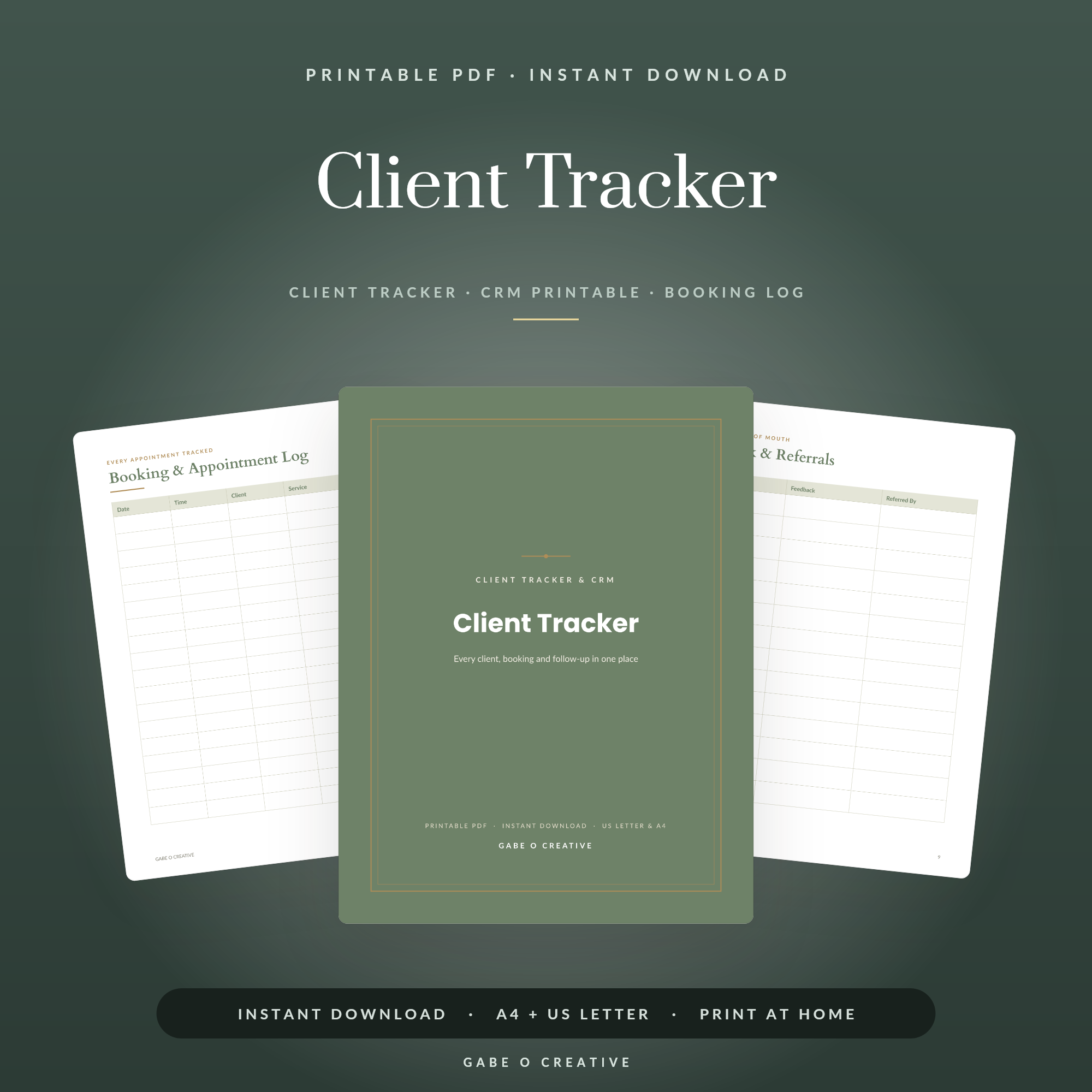 Shop Client Tracker →
Step 1: Plan Your Cleaning Business
Before you knock on any doors, get clear on the basics. You don't need a 40-page business plan—just honest answers to a few questions that shape everything else.
- What will you offer? Domestic cleaning, end-of-tenancy, offices, holiday lets, or a mix. Each has different pricing and clients.
- Who is your ideal client? Busy families, landlords, small offices—knowing this focuses your marketing.
- What area will you cover? Keep travel tight at first so you're not burning time and fuel between jobs.
- What are your goals? A few hundred pounds a month on the side, or a full-time income with a team? Your target shapes your pace.
Write these down and revisit them as you grow. A simple small business planner is perfect for mapping out your offer, goals and first steps in one place.
A quick word on supplies: you can start with a lean, professional kit and upgrade later. Microfibre cloths, a good all-purpose cleaner, glass and bathroom products, gloves, bin bags and a sturdy caddy to carry it all will handle most domestic jobs. Buy in bulk once you know what you actually get through, choose products that work fast so you're not scrubbing for hours, and factor the cost into your pricing so supplies never quietly eat your profit. Fancier equipment—a vacuum, a steam cleaner—can wait until the bookings justify it.
Step 2: Sort the Legal and Money Basics
Cleaning is low-cost to start, but a few essentials protect you. Register your business as required where you live, and get public liability insurance—you're working in other people's spaces, and most serious clients will ask for it. Then set up the money side before your first job: a way to invoice, a place to record income and expenses, and the habit of setting aside tax as you earn.
Because cleaning income can vary while you build your client base, keep a close eye on the numbers. A simple invoice and receipt set gets you paid promptly and looking professional, and for managing uneven early months our guide to budgeting on an irregular income will keep you steady.
Step 3: Price Your Cleaning Jobs Properly
Pricing is where new cleaners most often go wrong—usually by charging too little. Remember that your rate has to cover far more than your time: supplies, travel, insurance, equipment wear and tax all come out of it before you earn a penny. Undercharge and you'll be exhausted and broke; price properly and you'll build a business worth running.
| Pricing method | Best for |
|---|---|
| Hourly rate | Regular domestic cleans where hours are predictable |
| Fixed price per job | One-offs like end-of-tenancy or deep cleans |
| Size-band pricing | Quoting quickly by number of rooms or square footage |
Whichever you choose, quote after seeing the space where you can, and never be afraid to charge what the work is worth. Clients who value a spotless home will happily pay a fair price—it's the bargain-hunters who cost you the most in the end.
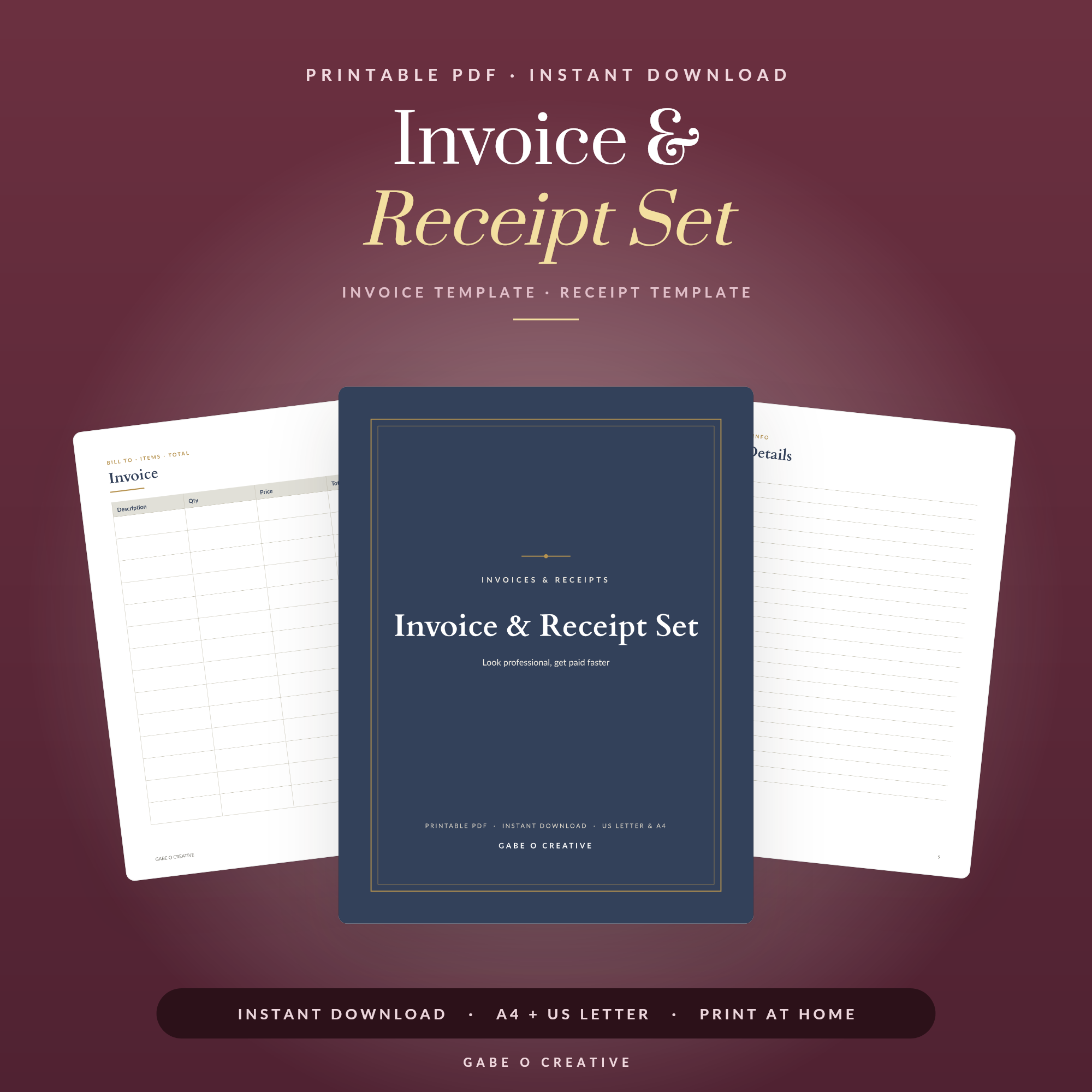 Shop Invoice & Receipt Set →
Step 4: Find Your First Clients
You don't need a marketing budget to land your first few jobs—you need to tell people. Start with these:
- Your own network. Friends, family and neighbours are the easiest first clients and the best source of referrals.
- Local community groups. Post in local online groups and noticeboards where people actually look for cleaners.
- A simple online presence. A basic listing and a few before-and-after photos build instant trust.
- Referrals. Ask every happy client for a review and to mention you to one friend. This alone can fill your book.
The key is consistency: keep asking, keep showing up, and keep every client so delighted they can't help but recommend you. Cleaning is a word-of-mouth business, and a handful of loyal, chatty clients can keep you fully booked.
Step 5: Stay Organised as You Grow
This is where a system pays for itself. As your client list grows, holding schedules and payments in your head stops working fast. Keep three things tight and you'll scale smoothly:
- Your clients. A client tracker or a simple CRM and pipeline logs every client, their address, preferences, schedule and payment status.
- Your schedule. A fixed weekly plan means no double-bookings and efficient routes between jobs.
- Your money. Weekly bookkeeping and tax set aside as you go means no year-end panic.
Build these habits while you're small and adding clients—or even staff—later becomes easy instead of chaotic. For more on running a tidy operation, read our guides to small business planner printables and the cleaning schedule printable for keeping every job consistent.
Put It All in One System
The simplest way to start organised and stay that way is to keep everything in one place. The cleaning business planner brings your clients, schedule, supplies and income together, on paper or tablet. Add the invoice and receipt set for the money side, and you've got a business you can run from a single, tidy system.
Starting a cleaning business is genuinely within reach—the low costs and steady demand are on your side. Do the planning, price with confidence, delight your clients, and keep it all organised, and you'll build something that pays you well and grows exactly as fast as you want it to.
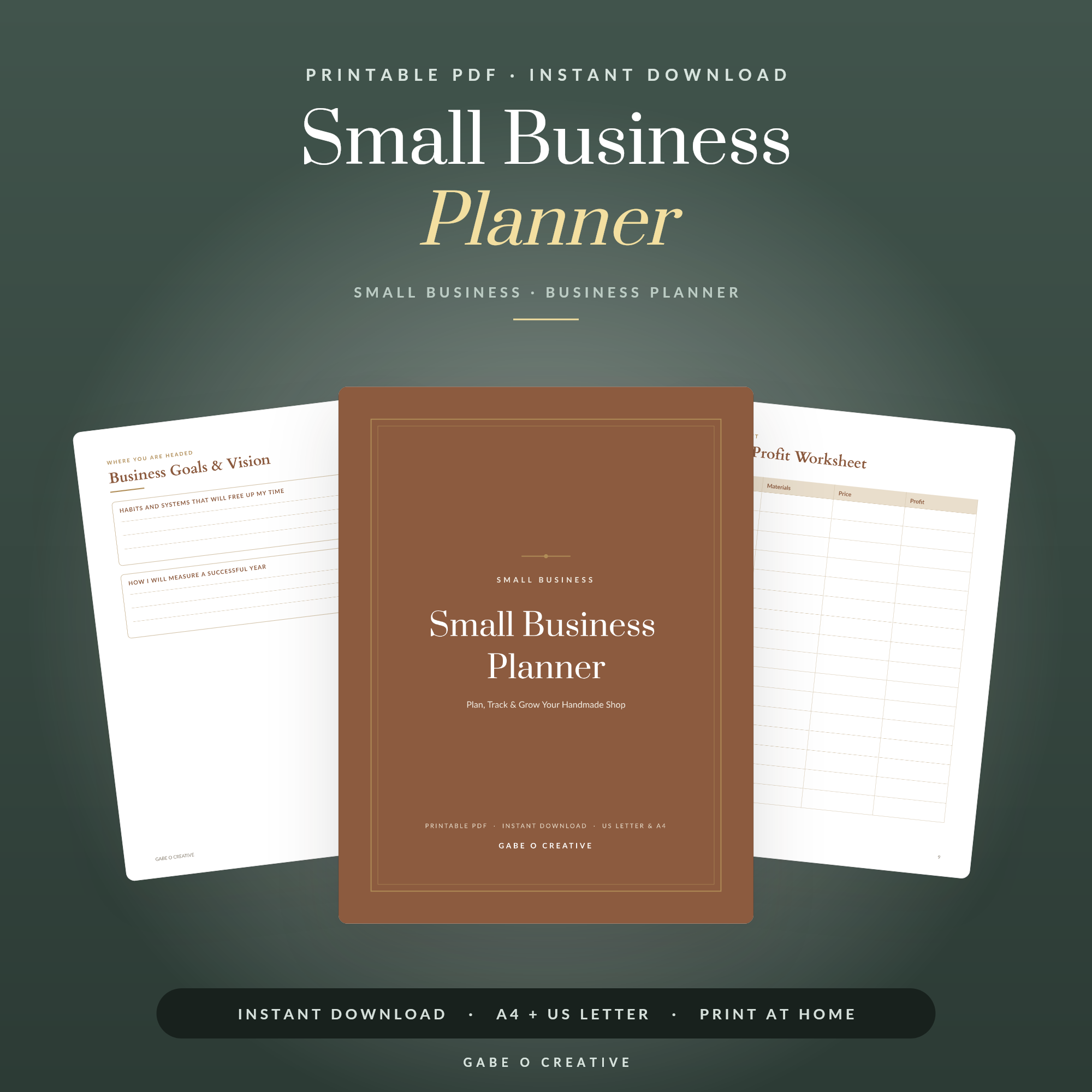 Shop Small Business Planner →
How to Start a Cleaning Business FAQs
How much does it cost to start a cleaning business?
A domestic cleaning business is one of the cheapest to start—often just supplies, insurance and basic marketing. You can begin with equipment you already own and reinvest early profits into better kit as you grow.
How do I price cleaning jobs?
Price by the hour or by the job based on size and condition, and always cover your costs—supplies, travel, insurance and tax—plus a proper wage for your time. Quote after seeing the space, or use clear size bands so you never underprice.
How do I get my first cleaning clients?
Start with people who already trust you: friends, family and local community groups. Add a simple online listing, ask every happy client for a review and a referral, and post before-and-after photos. Word of mouth grows a cleaning business fast.
What do I need to run a cleaning business day to day?
A client list, a schedule, a supplies checklist, a way to invoice and a simple record of income and expenses. A cleaning business planner keeps clients, bookings and money in one place so nothing slips.
Do I need insurance for a cleaning business?
Yes—public liability insurance is essential because you're working in other people's homes and businesses. It protects you if something is damaged or someone is hurt, and many clients will ask for it before they book.
How do I keep a cleaning business organized as it grows?
Systemise early: track every client and booking, keep a fixed weekly schedule, and review your income monthly. Good systems from the start make it far easier to add clients—or staff—later without the wheels coming off.
Ready to start your cleaning business the smart way? Grab the cleaning business planner and set up your clients and schedule today, or explore the full Small Business collection for everything you need to launch and grow.