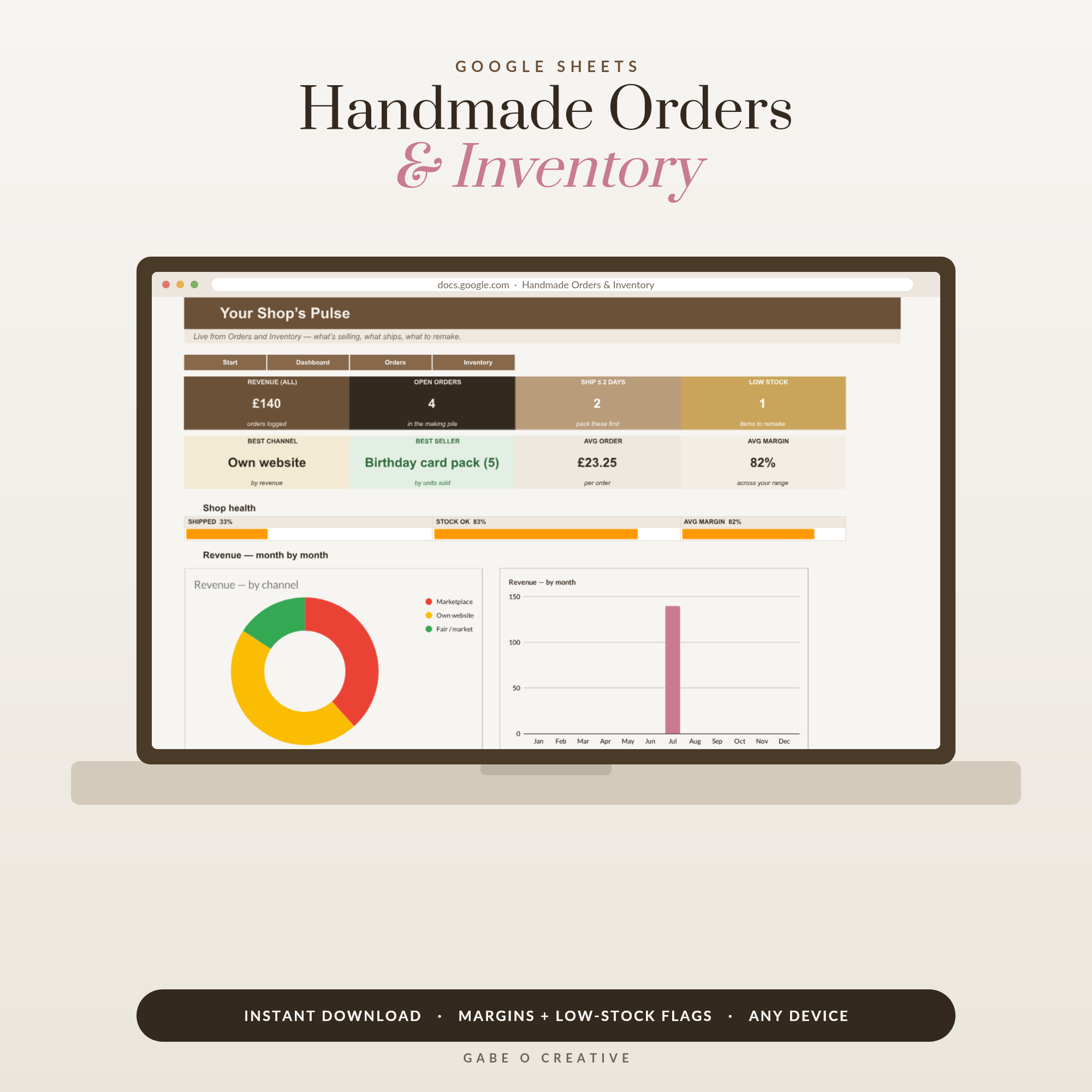
A great fair day starts weeks before the doors open, and a proper craft fair checklist is the difference between selling with calm and rummaging under the table while customers drift away. The makers who sell out are rarely the ones with the most stock — they are the ones who did the stock maths, priced with confidence, built a table with height and light, and brought the boring kit everyone forgets. This guide is the complete prep system: four weeks out to the drive home, plus the tracking that turns one good fair into a repeatable business. If you sell handmade, our Handmade Orders & Inventory Tracker keeps the stock list, materials and fair-day sales in one calm spreadsheet.
Selling this season? The Handmade Orders & Inventory Tracker for Google Sheets tracks stock, materials, orders and what actually sold at each event.
Four weeks out: the stock maths
Start with the only number that matters: how much to make. The working rule is stock worth 8–10× your table fee at retail prices — a £40 pitch wants £320–£400 on the table. Weight it toward what has already sold well for you, and stack the £5–£15 bracket deep: small items drive most transactions and turn browsers into buyers who then look at your bigger pieces. Plan roughly 60% proven sellers, 25% mid-price, 10% premium hero pieces, and 5% experiments. Write the make-list with materials against each item so you can order supplies once, not four panicked times — this is exactly the materials-and-stock view the inventory tracker was built for.
Three weeks out: pricing you can say out loud
Price from costs, not from fear: materials plus your time at a real hourly rate, then doubled for retail. If that number frightens you, the fix is faster processes or different products — not paying yourself £2 an hour. Two psychological helpers: one anchor piece priced noticeably higher than everything else (it makes your mid-range feel reasonable, and it sells more often than you would think), and clean price points (£8, £12, £25) on visible tags, because shoppers who have to ask a price mostly do not. Bundle deals — 3 cards for £10 — quietly lift the average basket. For the deeper margin maths, our bookkeeping for makers guide walks through cost-of-goods properly.
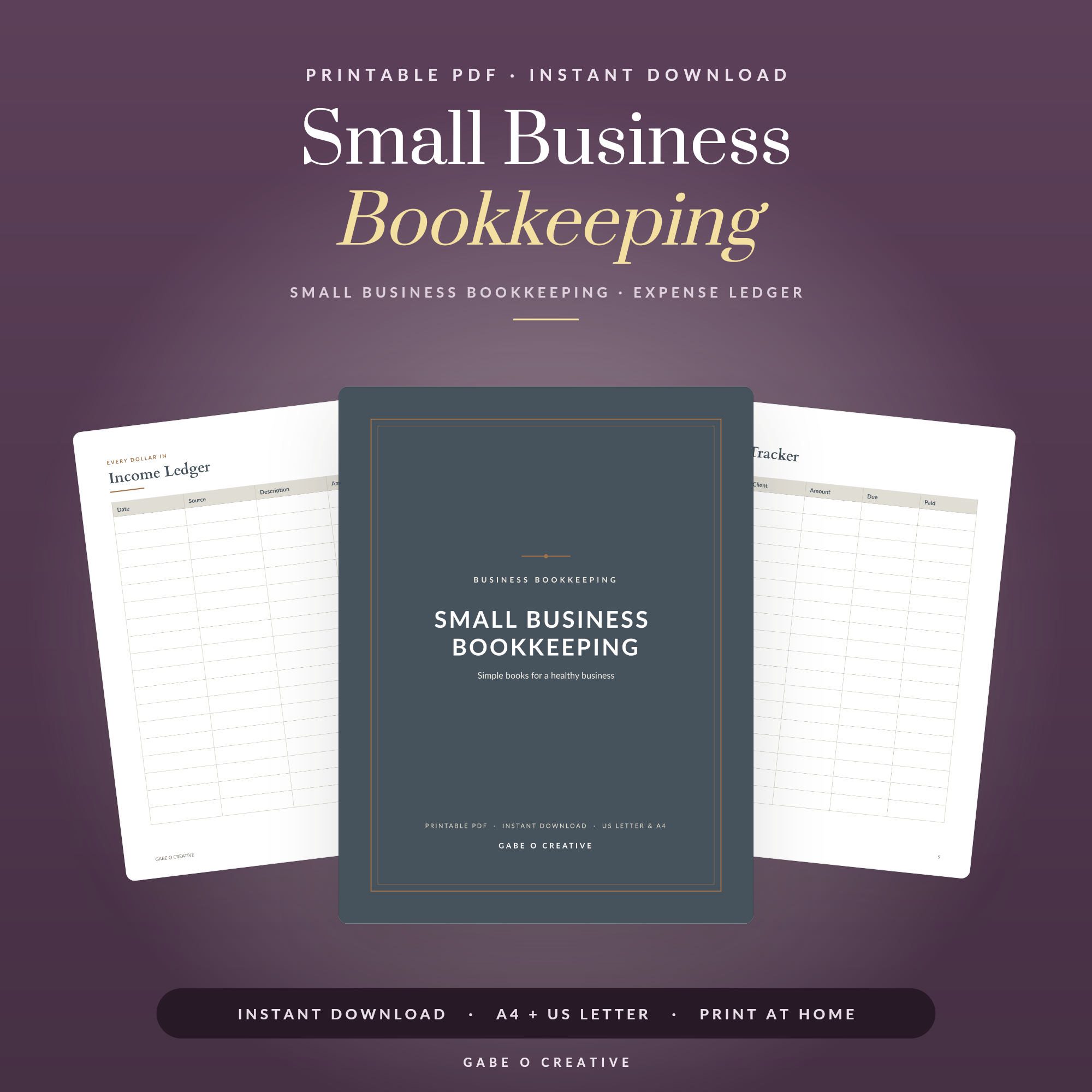 Shop Small Business Bookkeeping →
One week out: build the table at home
Do a full dress rehearsal on a table the same size as your pitch — fair morning is not the time to discover your layout does not fit. The rules that separate professional-looking stalls from flat ones:
| Rule | Why it works |
|---|---|
| Three levels of height (risers, crates) | Eyes travel; flat tables get walked past |
| Bestseller at eye level, facing the walkway | Your strongest piece does the stopping |
| Cloth to the floor | Hides storage; instantly looks professional |
| Battery fairy lights or a small lamp | Warmth reads as quality, especially in dim halls |
| Two-thirds on display, restock from below | Full but not cluttered; you top up as it sells |
Photograph the final layout so you can rebuild it in ten minutes on the day, and post it — a 'come find me Saturday' post with the stall photo is the easiest marketing you will do all week. If your pitch is outdoors, add the weather layer to the rehearsal: weights or guy ropes for the gazebo, clips for the cloth, clear covers you can throw over stock in thirty seconds, and a plan for wind-fragile displays — outdoor fairs punish improvisation. If posting consistently is the part you always drop, the Social Media Content OS gives fair announcements a home in your weekly plan.
The night before: the kit bag
Pack the unglamorous things that save fair days: a float heavy on coins and £5 notes (£50 in change is not too much), the card reader tested and charged plus a power bank, spare price tags and a pen, bags and tissue paper, tape, scissors, safety pins and string, table clips for wind if you are outdoors, snacks and a water bottle, and business cards or a QR code stand linking to your shop and mailing list. Card matters more every year — a cheap reader pays for itself in one event, and a small 'cards happily accepted' sign visibly lifts sales. The QR code is your long game: the person who does not buy today but joins your list is next month's customer, and capturing their interest beats hoping they remember your name.
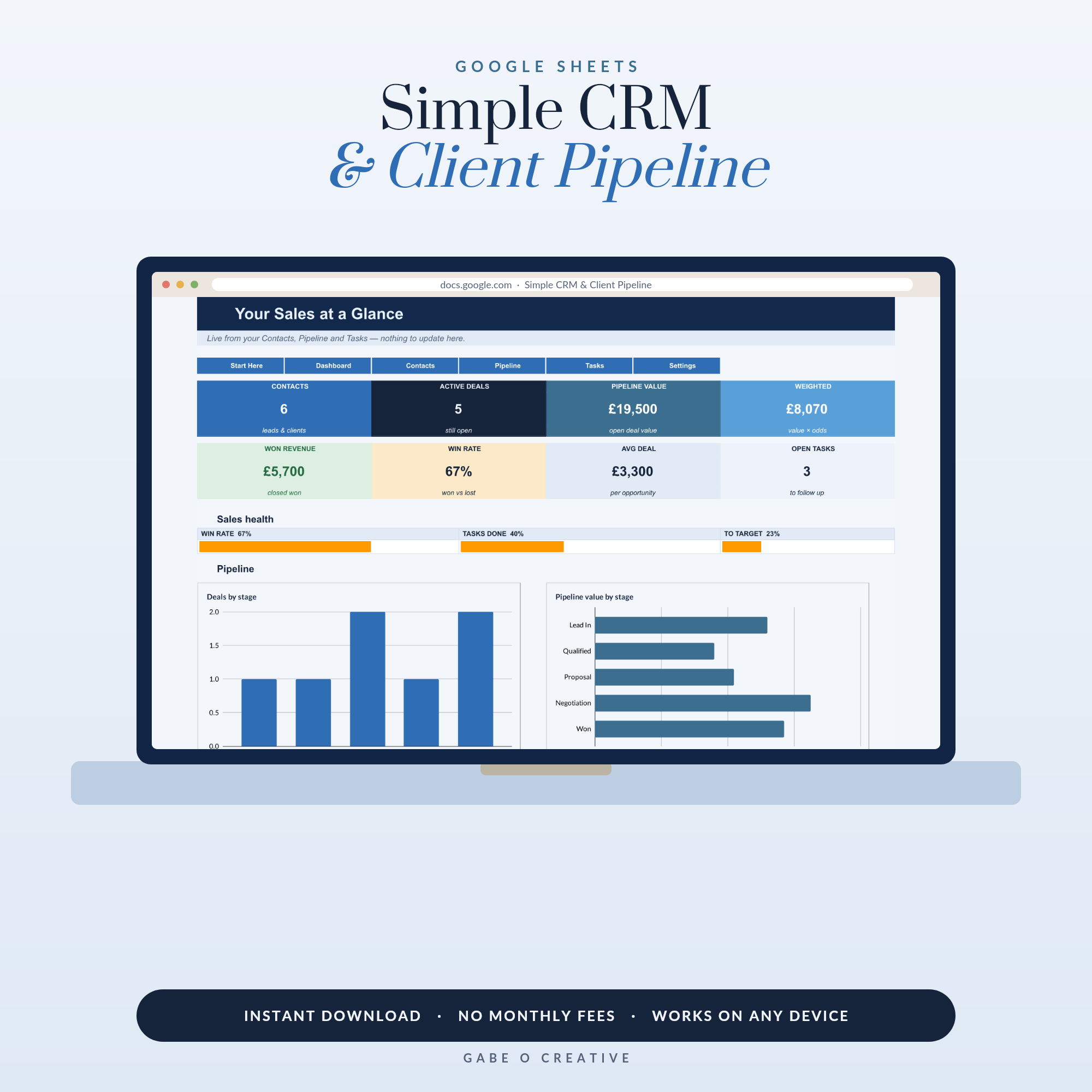 Shop Simple CRM & Client Pipeline, Google Sheets Template, Sales Tracker, Lead & Deal Pipeline, Small Business CRM →
Fair day and the drive home
Arrive early enough to build calmly, greet neighbours (stallholders are the best source of which fairs are worth doing), and keep a simple tally of what sells as it sells — memory lies by 4pm. Talk to browsers about the making, not the buying; stories sell handmade. Then do the ten-minute debrief before the adrenaline fades: takings, table fee, travel, what sold out, what nobody touched, and one thing to change next time. Log it per event and the pattern emerges within three or four fairs — which venues, seasons and products actually earn. That log is what turns craft fairs from hopeful gambles into a plannable sales channel, and it feeds straight into your books: the Small Business Bookkeeping dashboard tracks fair income against costs, wholesale enquiries you collect can live in the Simple CRM, and our CRM guide plus the small business planner roundup cover the wider system. Browse everything for makers in the Small Business collection.
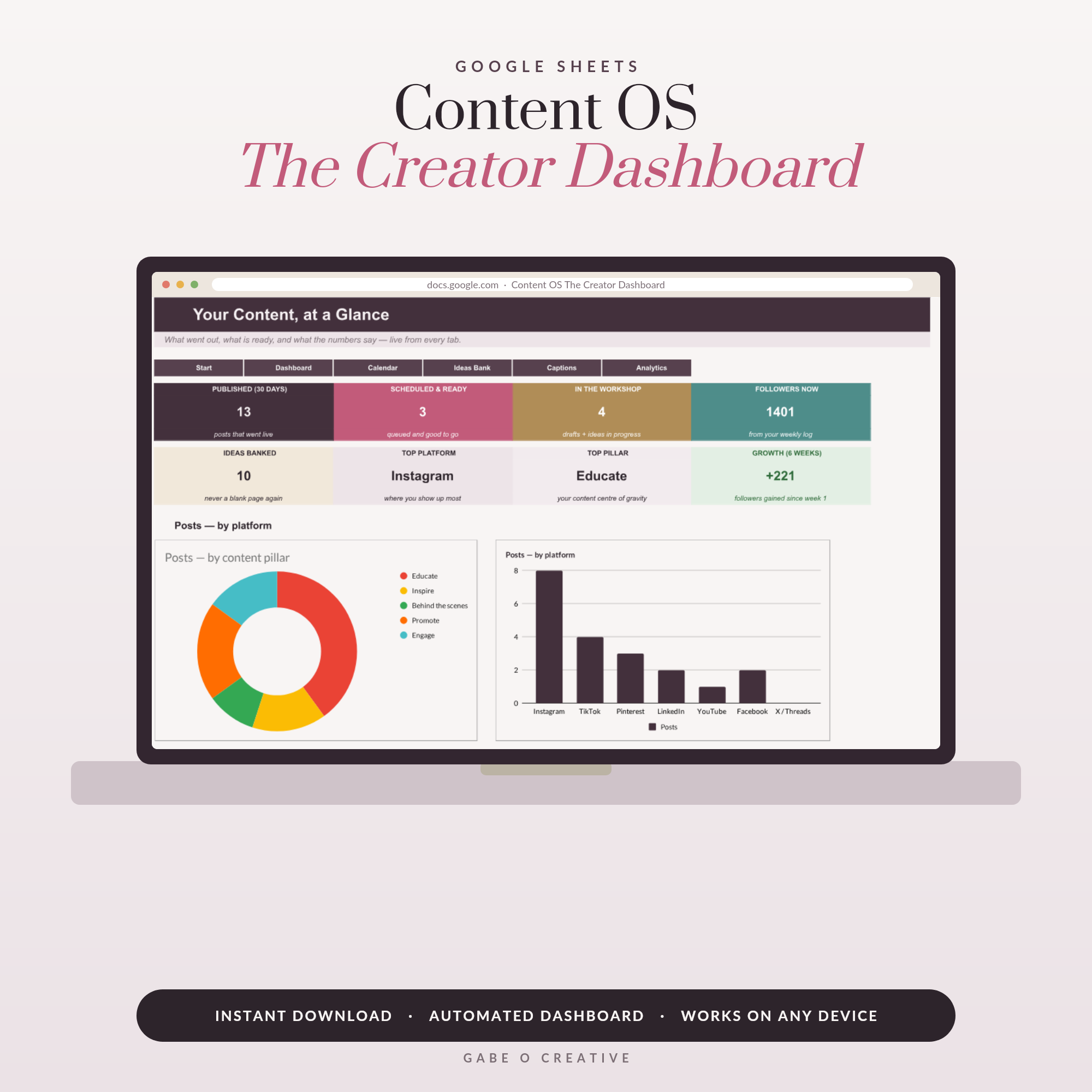 Shop Social Media Content OS — Google Sheets Content Calendar & Planner Spreadsheet: Post Scheduler, Ideas Bank, Hashtag & Caption Library, Analytics Dashboard for Creators & Small Business →
Frequently asked questions
How much stock should I bring to a craft fair?
A solid rule of thumb is stock worth 8–10× your table fee, weighted toward your proven sellers and your lowest price point. For a £40 table, aim for £320–£400 of retail-priced stock. Bring more small items than you think — the £5–15 bracket usually accounts for most transactions.
What should I bring to a craft fair besides my products?
Float (lots of coins and £5 notes), a card reader with a charged power bank, price labels, bags and tissue, a tablecloth that reaches the floor, risers for height, business cards with your shop link, a QR code to your store or mailing list, tape, scissors, safety pins, snacks and water — and a stock list to track what sells.
How do I price handmade items for a craft fair?
Cost of materials plus your time at a real hourly rate, doubled for retail — then sanity-check against the room. Underpricing reads as low quality and leaves nothing for growth. Anchor with one hero piece at a premium price; it makes your mid-range look reasonable and occasionally sells.
How do I make my craft stall stand out?
Height and lighting beat quantity. Use risers or crates to build three levels, keep two-thirds of stock on display and restock from underneath, put your bestseller at eye level facing the walkway, and add one prop that tells your story. A cluttered flat table is the most common beginner mistake.
Should I take card payments at a craft fair?
Yes — card-only shoppers are now a large share of fair traffic, and a £15–20 reader pays for itself in one event. Test it at home, bring a power bank, and put a small 'cards happily accepted' sign on the table; it visibly lifts sales.
How do I know if a craft fair was worth it?
Track it: table fee, travel, stock sold at retail, and time spent. Profit = takings minus fee, travel and cost of goods sold. Log every fair in a tracker and patterns appear fast — which venues, seasons and products earn, and which fairs to politely skip next year.
Prepping for a fair? Get the stock list, materials and sales tally in one place with the Handmade Orders & Inventory Tracker for Google Sheets — and walk in on fair morning already organised.