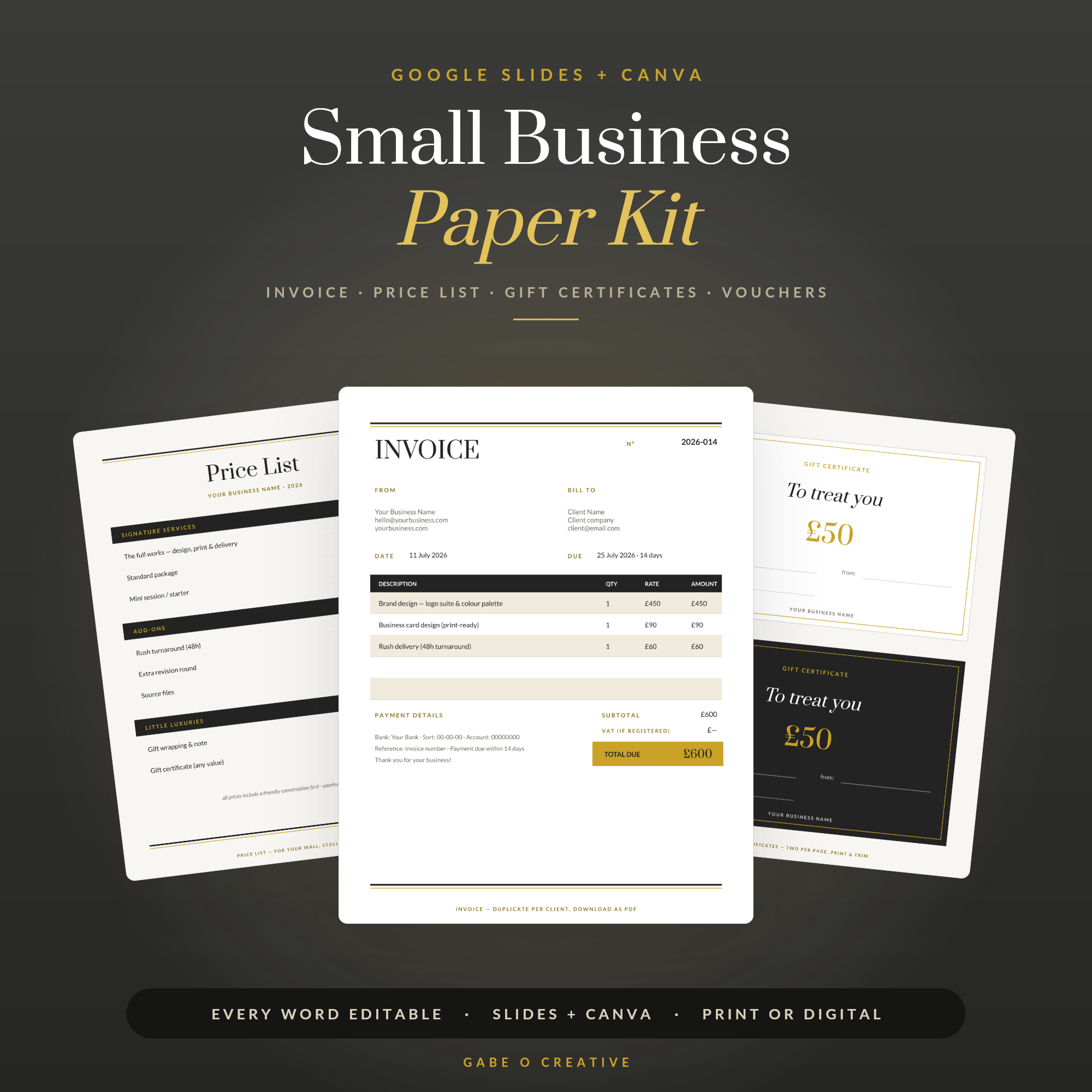
The cheapest marketing you will ever do is already going in the box. Postage is paid, the customer is about to open a parcel they chose and are looking forward to, and their attention is entirely yours for about thirty seconds. That's what makes small business packaging inserts the most underrated retention tool a maker has — not because a bit of card is magic, but because it reaches a happy person at exactly the right moment. Here's what earns its place in the parcel, what to leave out, and why. (The printable set is in the Small Business Paper Kit.)
Want the whole set ready to brand? The Small Business Paper Kit has the invoice, price list, gift certificates, thank-you cards, 10%-off comeback vouchers and a product care card — all matching, all editable in free Google Slides or Canva. Brand it once, use it forever.
The three inserts that earn their space
Almost everything people put in parcels is optional. These three aren't, and between them they cover gratitude, usefulness and a reason to return:
| Insert | Its job | Why it works |
|---|---|---|
| Thank-you card | Make it feel personal | Proves a human made this, not a warehouse |
| Comeback voucher | Give a reason to return | Reaches them at peak goodwill, postage already paid |
| Care card | Help them use it well | A product that lasts is a product they recommend |
That's it. Three small pieces of card, each doing one job. Everything else is you talking when you could be listening.
The thank-you note: write like a person
The single thing that ruins a thank-you card is when it reads like marketing. 'Thank you for supporting our brand journey' is not how anyone speaks. Write it the way you'd talk to someone standing in front of you: what they bought, that you made it, that it genuinely mattered that they chose you over the enormous shop that could have had it there tomorrow.
Handwritten wins while your volume allows it — real ink is an unmistakable signal that a person was involved. When that stops being realistic (and it will, if things go well), a printed card with a handwritten first name and signature keeps most of the warmth for a fraction of the time. That hybrid scales a long way before anyone notices.
The comeback voucher: small, dated, easy
This is the insert that actually pays for the others. Three rules make it work. Keep the discount around 10% — enough to prompt a second look, small enough to protect the margin on a customer you've already paid to acquire. Give it an expiry, because an open-ended voucher goes in a drawer and dies there, while a date is a gentle reason to act. And make the code short and easy to type, since friction at checkout undoes the entire gesture.
One quiet extra: a voucher is far more powerful when it can be passed on. Plenty of people won't reorder themselves but will happily hand it to a friend who'd love your work — which is a referral you didn't have to ask for.
The care card: the one people forget
If your product needs any looking after — washing, storing, seasoning, charging, framing — tell them how, on card, in the box. It costs almost nothing and it does two things at once: it makes the product last, and a product that lasts is a product that gets recommended. It also heads off a good share of 'it went wrong' messages that were really 'nobody told me how to look after it'.
Even when care is obvious to you, it isn't to them. You've made a hundred of these. They've owned one for four minutes.
What to leave out
The temptation with a parcel is to use the space. Resist it. Leave out the long leaflet about your full catalogue — they already bought, and a brochure turns a gift-like moment into junk mail. Leave out the paragraph begging for a five-star review; ask once, gently, on the card, with a short link or QR code and an honest 'it really helps a small business like mine'. Never offer anything in exchange for a review or ask for a particular rating — it's against most platforms' rules and it's simply dishonest.
And go easy on the filler. Three layers of tissue and a fistful of shredded paper doesn't read as luxury, it reads as a product buried in packaging, and increasingly it reads as waste. The test for anything you're about to add: does it say thank you, help them use the thing, or give them a good reason to come back? If not, you're paying to print something destined for a bin.
Make it repeatable, not heroic
The reason most insert systems die isn't cost — it's that they were designed for the week you had six orders and collapse the week you have sixty. Print the cards in batches ahead of time so packing day is assembly, not creation. Keep one packing shelf with everything on it. Decide once what goes in every parcel and stop re-deciding per order.
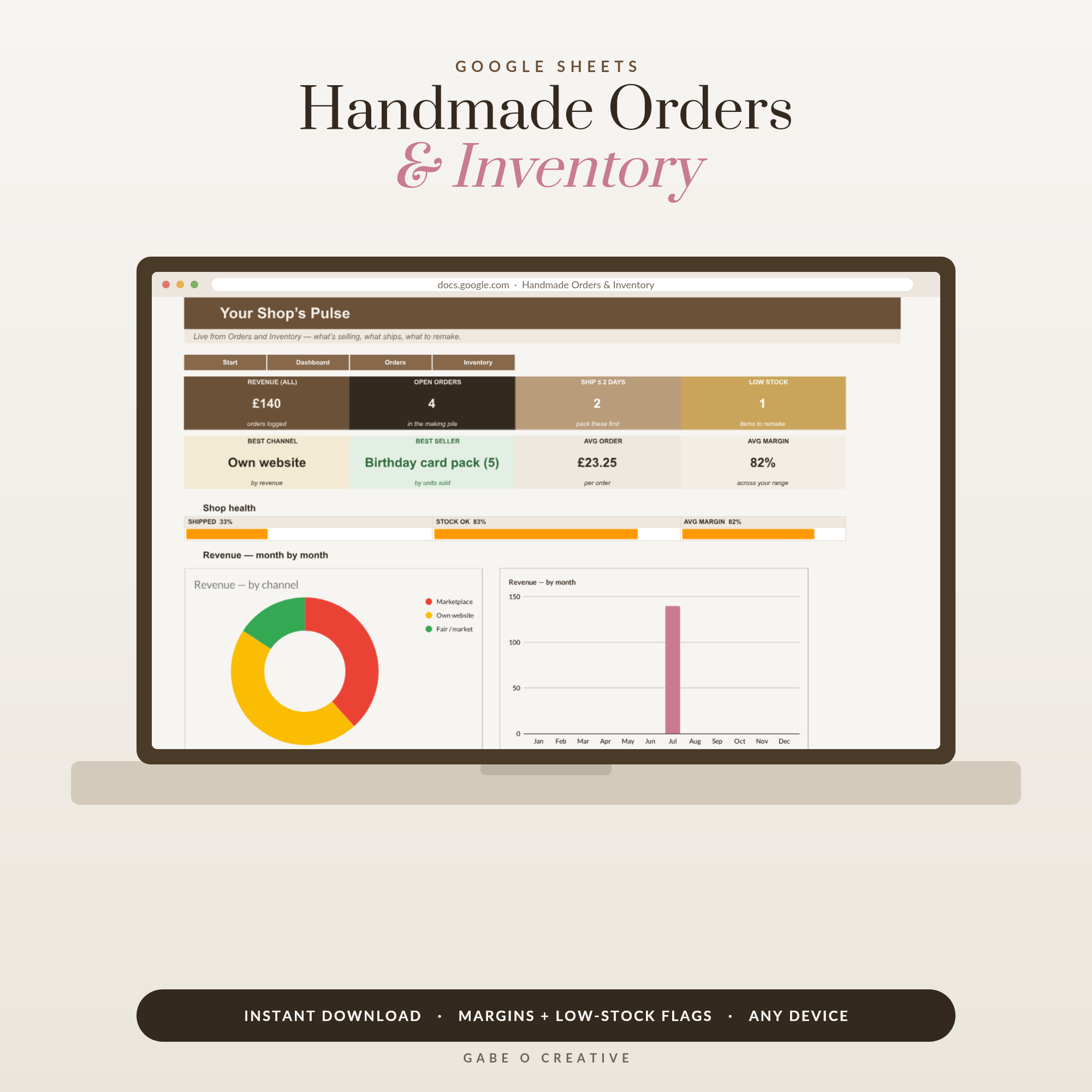
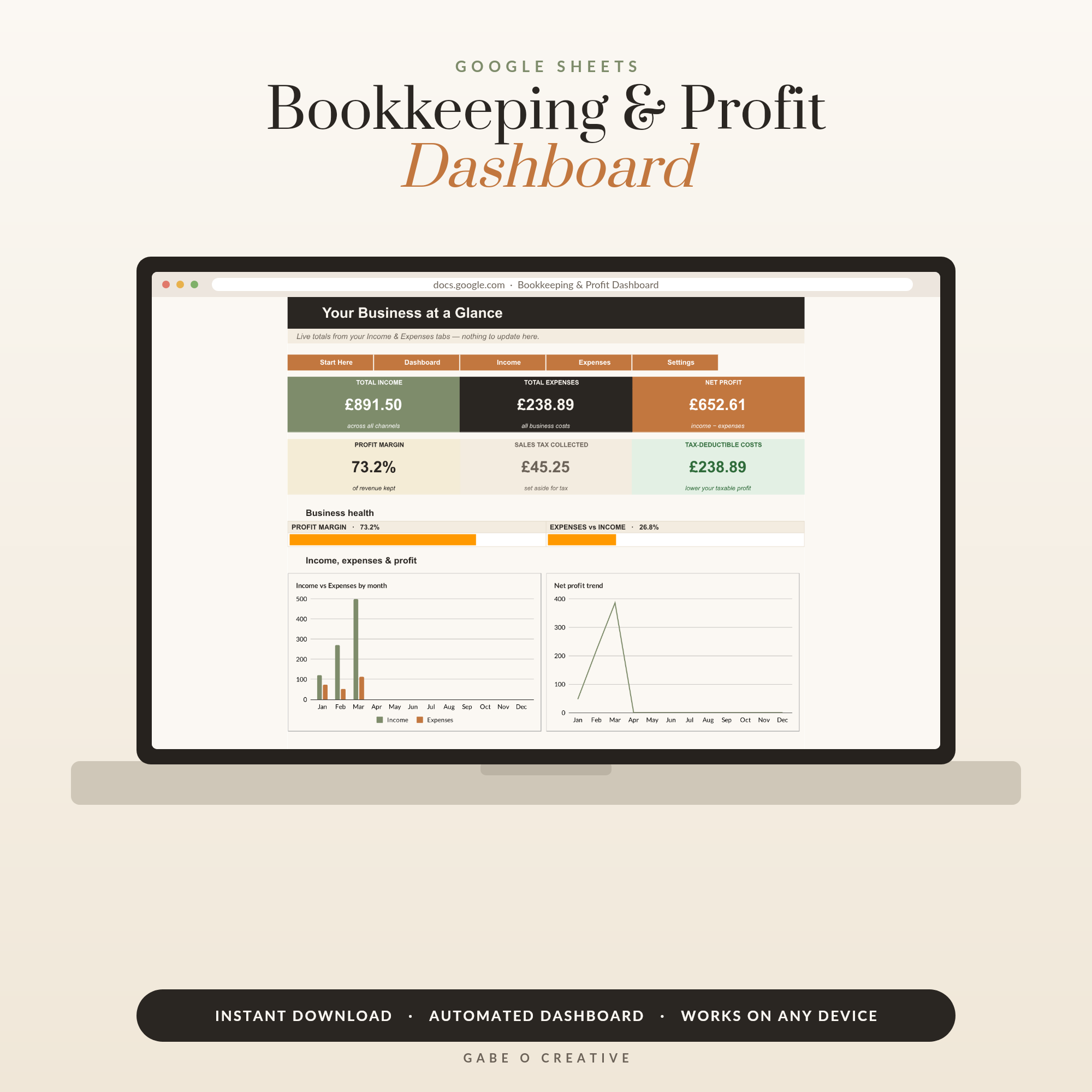
The behind-the-scenes side matters just as much: knowing what actually went out, to whom, and what it cost you. The Handmade Orders & Inventory Tracker keeps the orders and stock straight, while the Bookkeeping & Profit Dashboard tells you whether those vouchers are winning enough repeat business to be worth the discount. If you sell at markets as well, our craft fair prep checklist covers the stall version of the same idea, and running a small business on Google Sheets ties the whole back office together.
Your questions, answered
What should you put in a packaging insert?
Three things earn their space: a thank-you that sounds like a person wrote it, a reason to come back (usually a discount voucher with an expiry), and a care card if the product needs looking after. Everything else is optional. The parcel is the one moment you have a customer's full, delighted attention — spend it on gratitude and one clear next step, not on a leaflet about your whole range.
Do packaging inserts actually increase repeat orders?
They're one of the cheapest retention tools available, because the delivery cost is already paid and the customer is opening the box happy. A voucher in the parcel reaches someone at their most receptive moment, which is more than most emails manage. It won't rescue a product people didn't love, but for a customer who's pleased, a small nudge at the right second is often all it takes.
Should the thank-you note be handwritten?
Handwritten wins while your volume allows it — a real note in real ink is a small, unmistakable signal that a person made this. When that stops being realistic, a printed card with a handwritten first name and signature keeps most of the warmth for a fraction of the time. What kills it is a card that reads like marketing. Write the way you'd speak to someone standing in front of you.
How big should the discount on a voucher insert be?
Around 10% is the usual sweet spot: enough to prompt a second look, small enough to protect your margin on a customer you've already paid to acquire. Give it an expiry — an open-ended voucher gets put in a drawer and forgotten, while a date creates a gentle reason to act. And keep the code short and easy to type, because friction at checkout undoes the whole gesture.
What should you leave out of a parcel?
Anything that makes the moment feel like advertising. Long leaflets about your full catalogue, a paragraph begging for a five-star review, so much tissue and filler that the product feels buried, and anything that will be in a bin within ten seconds. The rule is simple: if it doesn't say thank you, help them use the thing, or give them a good reason to return, it's costing you money to print.
How do I ask for a review without being pushy?
Ask once, gently, and make it easy. A single line on the thank-you card — a short link or QR code and a genuine 'it really helps a small business like mine' — does far more than a pleading paragraph. Never offer anything in exchange for a review or ask for a specific rating; that's against most platforms' rules and it's dishonest. Ask, make it effortless, and let the product do the persuading.
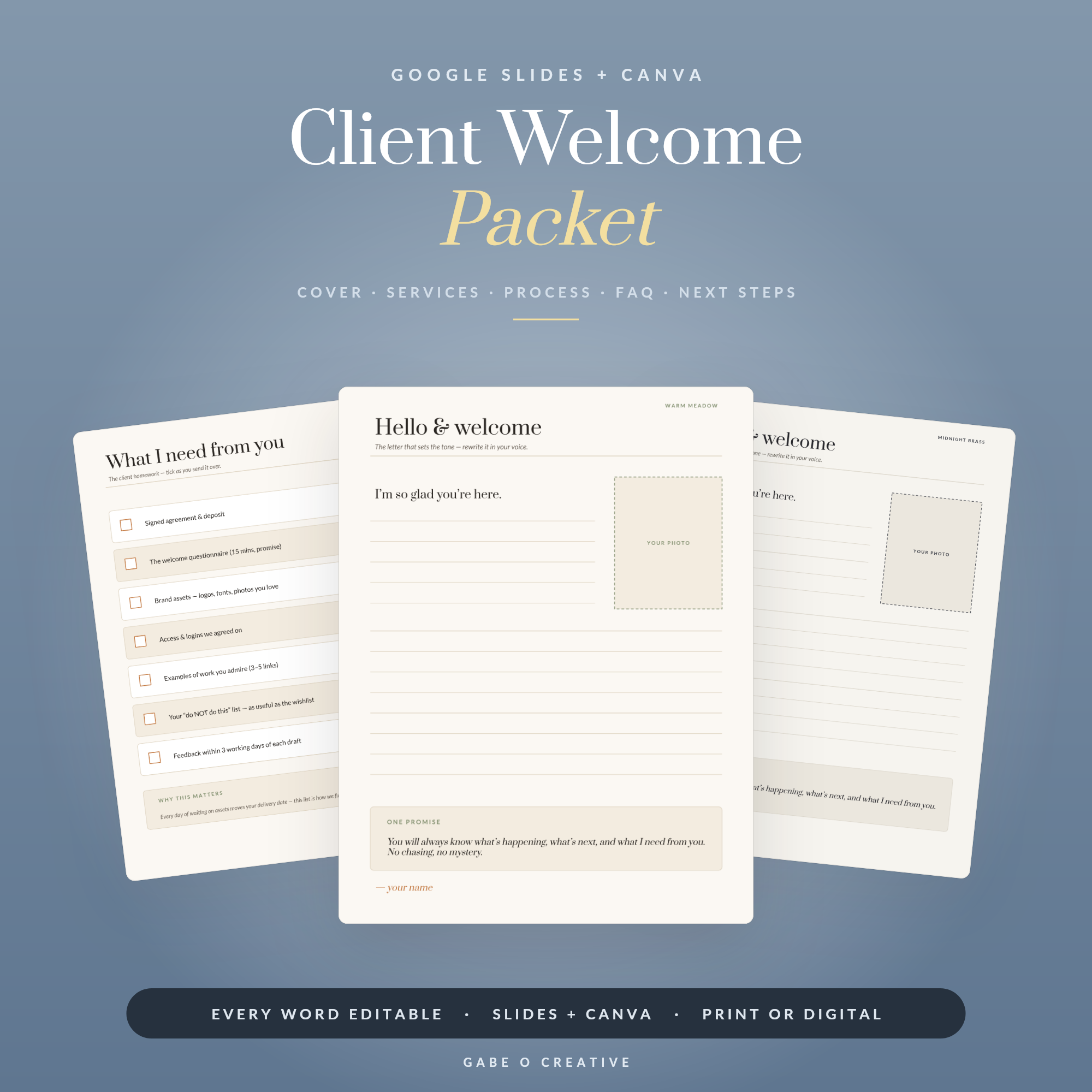
More for the back office: our guide to client onboarding applies the same thinking to service businesses, and the Client Welcome Packet is the service-world equivalent of a beautifully packed parcel.
Three cards, one loyal customer. The Small Business Paper Kit has the thank-yous, vouchers, care card, invoice and price list — matching and editable. Brand it once and put it in every box.