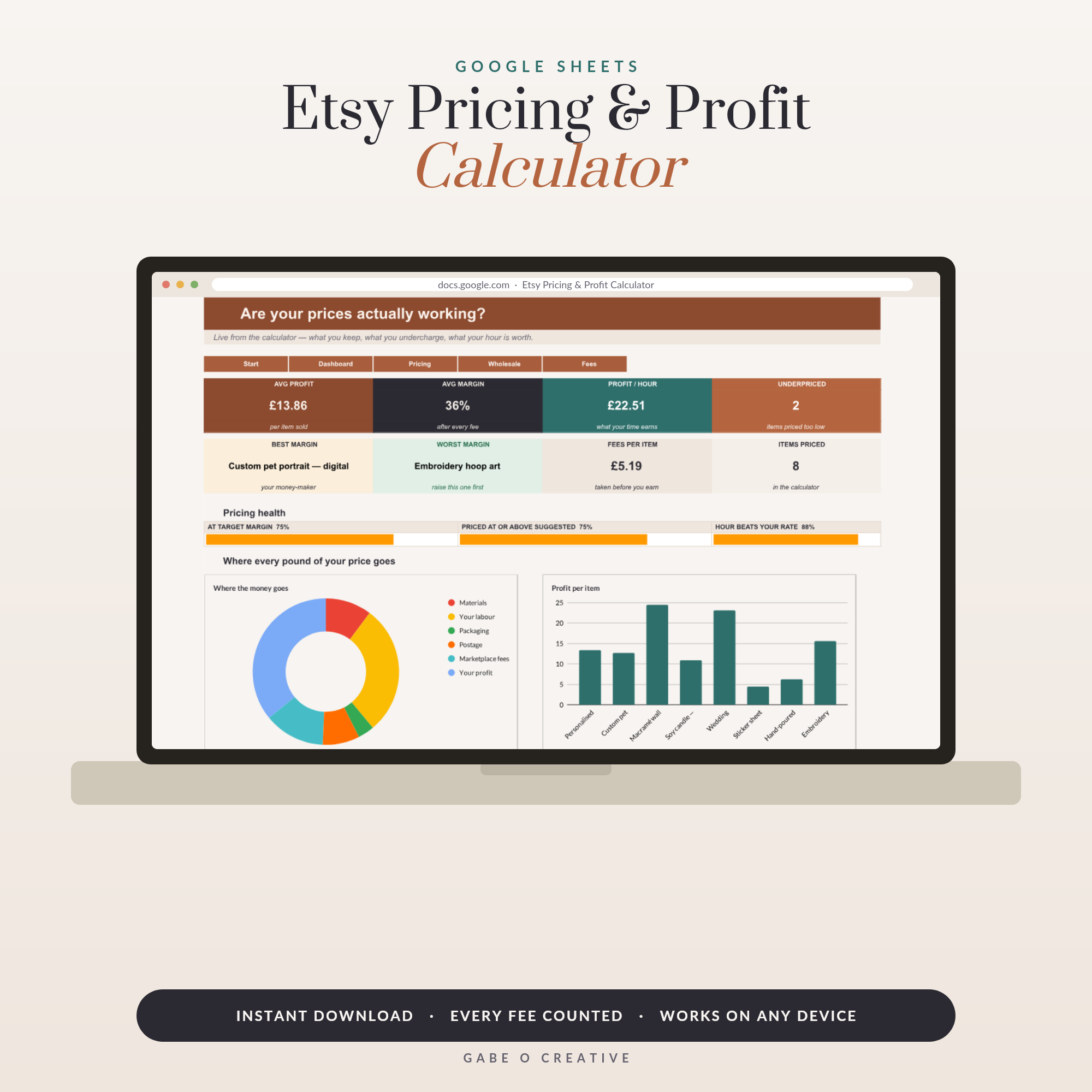
Ask a room of makers how to price handmade products and most will describe the same method: look at what similar sellers charge, then land slightly under. It feels like market research. It is actually copying someone else's guess, and it is the reason so many talented people work weekends for less than minimum wage. A proper formula takes about ten minutes to set up and changes what you charge for the rest of your business — which is exactly what the Etsy Pricing & Profit Calculator does for you automatically.
Want the maths done for you? The Etsy Pricing & Profit Calculator counts materials, your labour, packaging, postage and every marketplace fee, then shows the price that hits your target margin — and flags the items you are underselling.
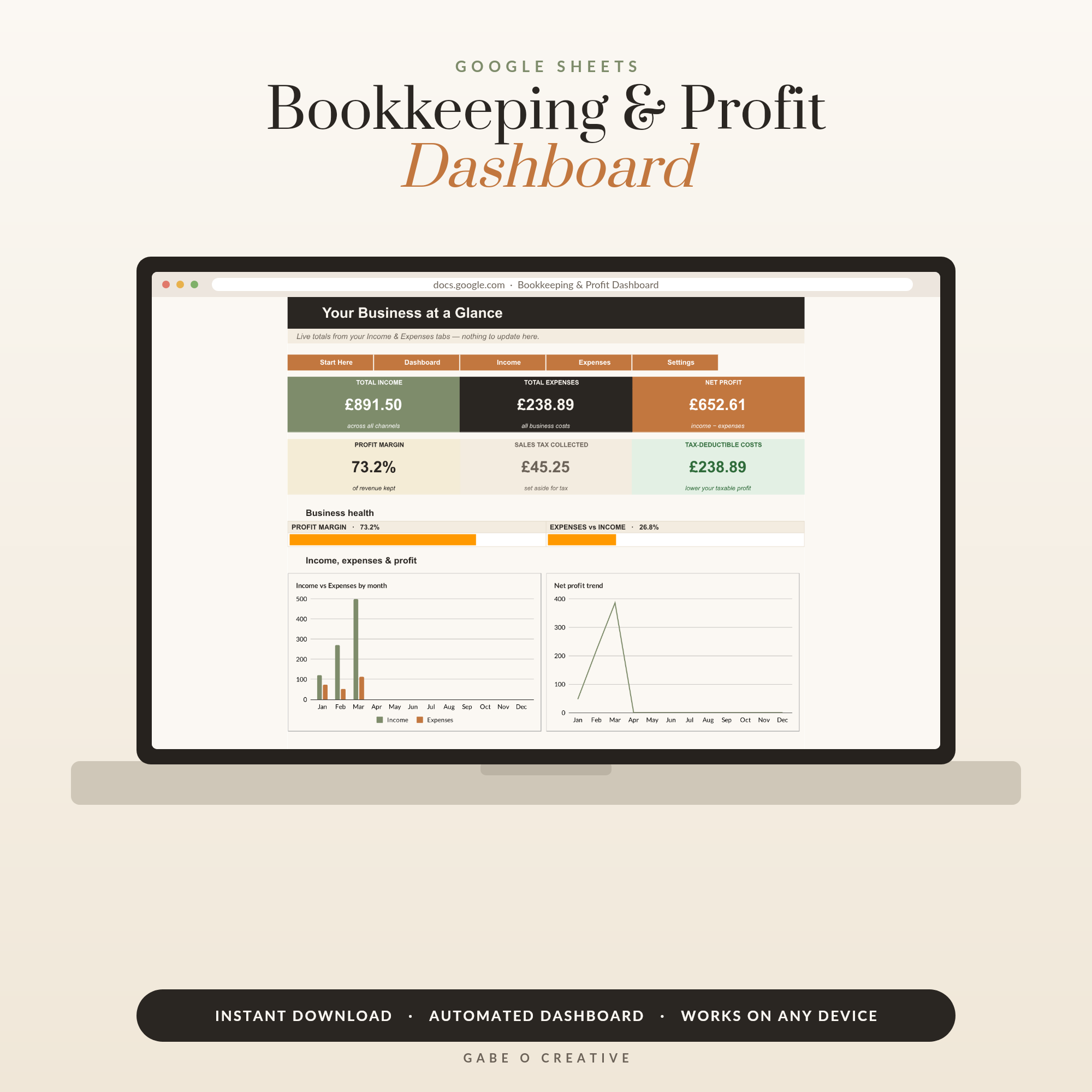 Shop Small Business Bookkeeping & Profit Dashboard, Google Sheets Template, Automated P&L, Income Expense Tracker →
The Formula That Actually Works
Here is the whole thing:
Price = (materials + labour + overhead + fixed fees) ÷ (1 − target margin − percentage fees)
It looks fussier than "double your costs", and it is, for one reason: the divisor. Marketplace fees are taken as a percentage of the selling price, not of your costs — so you cannot simply add them on at the end. Dividing builds them in properly. Skip that step and you will be short by roughly the fee percentage on every single sale, forever.
Work through it with a candle. Materials £4.20, twenty minutes of your time at £15 an hour is £5, packaging £1.80, postage you absorb £3.95. That is £14.95 of real cost. Fixed fees are about £0.36. If you want a 35 per cent margin and your platform takes roughly 12.5 per cent in transaction, payment and ads, the divisor is 1 − 0.35 − 0.125 = 0.525. So (14.95 + 0.36) ÷ 0.525 = £29.16.
Most people making that candle charge £18.
The four costs sellers forget
Materials are the easy part. The ones that vanish are: your labour, which is almost always the largest single cost in a handmade item; packaging, including the tissue, tape, insert card and box; the postage you absorb when you offer free delivery; and overhead — the shed heating, the craft fair table, the software subscription. If you never count them, the shortfall comes straight out of what you were meant to earn.
Costing Your Time Honestly
Set an hourly rate before you price anything, and set it once. Minimum wage is the floor, not the target. Then time yourself properly — not the optimistic version, the real one including the setup, the mistakes and the tidying up. Most makers underestimate their own making time by around a third.
Time the whole batch and divide, rather than timing one item. If you make eight candles in ninety minutes, that is eleven minutes each, not the twenty you would guess from watching yourself make one. Batching is genuinely the fastest lever you have on profit per hour, and costing it correctly is how you notice.
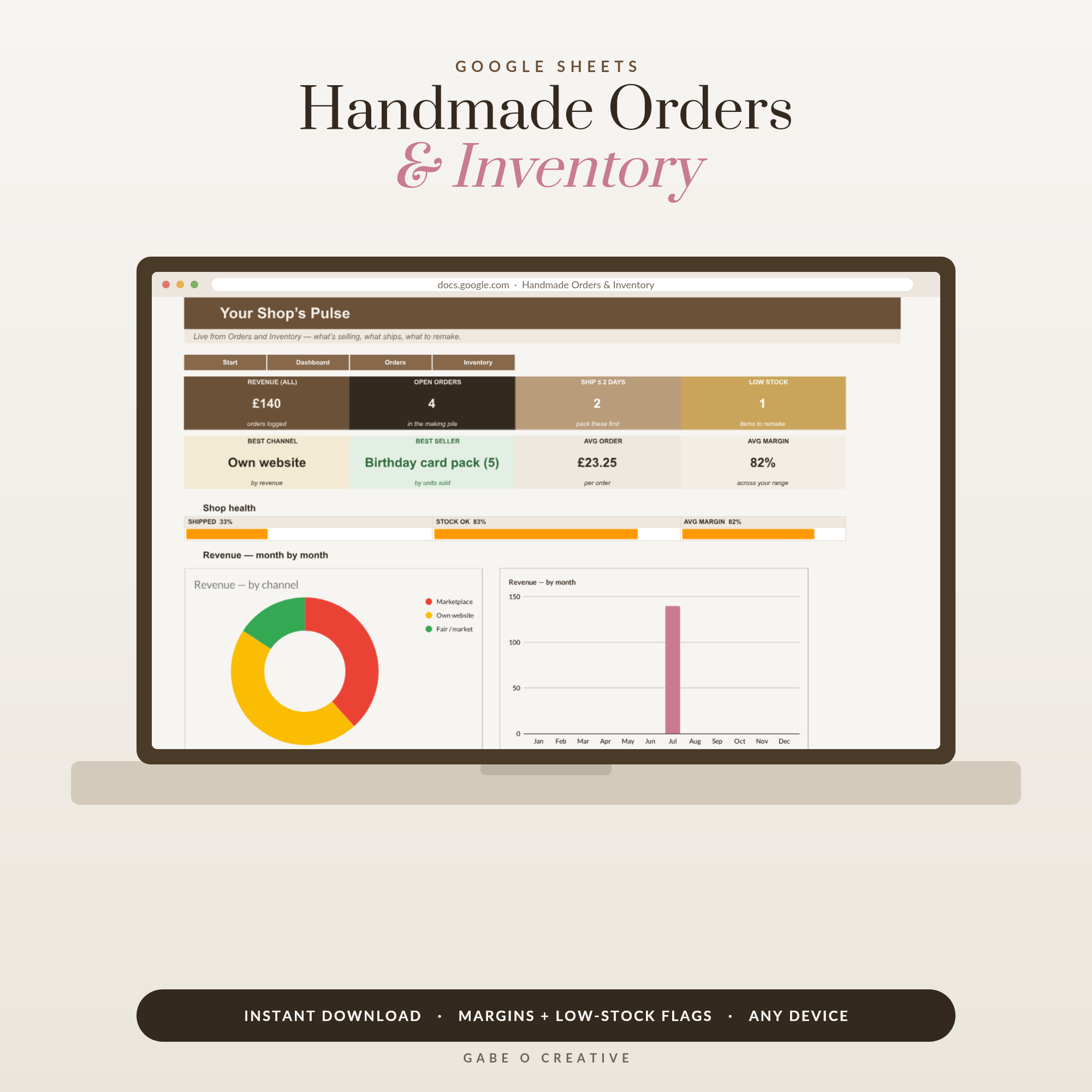 Shop Order Tracker for Small Business Google Sheets, Handmade Shop Inventory Spreadsheet with Ship-By Alerts, Product Margins & Low Stock Flags →
Where Your Price Actually Goes
It helps to see the slice each part takes on a real item. This is that £29.16 candle:
| Where it goes | Amount | Share |
|---|---|---|
| Materials | £4.20 | 14% |
| Your labour | £5.00 | 17% |
| Packaging | £1.80 | 6% |
| Postage | £3.95 | 14% |
| Marketplace fees | £4.01 | 14% |
| Your profit | £10.20 | 35% |
Two things usually surprise people here. Fees take about as much as the materials do. And postage — the thing offered as "free" to win the sale — costs nearly as much as the labour. Free delivery is a price rise you have already agreed to; it just has to be in the price.
Profit Per Hour: The Number That Reorders Everything
Margin tells you the share of the price you keep. It says nothing about how long you spent earning it. Profit per hour does, and it tends to rearrange a product range completely.
Say you sell a £12 sticker pack returning £4.20 profit, and a £68 macramé hanging returning £22. The hanging looks like the better product until you divide: the stickers take ten minutes, so they pay £25 an hour, while the hanging takes seventy-five minutes and pays £17.60. Neither is wrong to sell — but if you only have six making hours this week, you now know which one to spend them on. Sort your whole range by that column once and you will almost certainly find your bestseller is not your best product.
Wholesale, and When to Say No
A stockist will normally expect around 50 per cent of your retail price. Run every item through that test before you agree: at half price, does it still clear your costs and fees? If your retail price was set properly, plenty of items will. If it was a guess, wholesale is where that gets exposed — which is a much better place to find out than three hundred units into an order.
Worth saying plainly: it is fine to decline. A stockist order that pays you eight pounds an hour is not a growth opportunity — it is a commitment to work for less than you already do, in larger volume, to someone else's deadline. The makers who do well at wholesale are the ones whose retail price had real margin in it to begin with.
Getting the price right is only half the picture, though; you also need to know what the shop actually earned once everything is counted. Our guide to bookkeeping for Etsy sellers covers the recording side, and the Bookkeeping & Profit Dashboard turns those figures into a live profit and loss. If it is the making side that is chaotic rather than the money, the handmade orders and inventory tracker handles ship-by dates and stock, the Etsy seller bookkeeping pack keeps the records tidy, and if you are self-employed alongside it, setting money aside for tax is the next thing to sort. Selling at fairs too? The craft fair prep checklist assumes you already know your margins.
 Shop Etsy Seller Bookkeeping →
Handmade Pricing FAQs
What is the standard formula for pricing handmade products?
The workable version is (materials + labour + overhead) ÷ (1 − your target margin − percentage fees), then add any fixed fees. Older advice says simply to double your costs, which quietly ignores marketplace fees and usually leaves you short.
How much should I pay myself per hour?
Start at your local minimum wage as an absolute floor and work up from there. If you are skilled and the work is hard to replicate, £15–£25 an hour is a realistic band. The number matters less than the fact that it is not zero.
Should I include marketplace fees in my price?
Yes, and as a percentage rather than a flat guess. Listing fees, transaction fees, payment processing and offsite ads together commonly take 10–15 per cent of the sale price, so a price built only on costs plus margin loses that slice before you see it.
Why is my profit per hour so much lower than my margin?
Because margin is a percentage of the price and profit per hour is a rate. A £40 item at 35 per cent margin returns £14 — excellent if it takes twenty minutes, poor if it takes four hours. Ranking your products by profit per hour usually reorders them completely.
How do I price for wholesale?
Wholesale is usually around half your retail price, so the test is whether the item still makes money at 50 per cent. If it does not, you either raise retail, simplify the product to cut labour, or politely decline the stockist.
What if my calculated price is higher than my competitors'?
That is information, not a verdict. It usually means they are either buying materials far cheaper at volume, or not paying themselves. Competing with someone who has forgotten to count their own time is a race you win by losing.
Stop guessing and run the numbers. Open the Etsy Pricing & Profit Calculator, put in your three bestsellers, and see what your hour is actually worth — or browse the full Google Sheets collection for the rest of the shop toolkit.