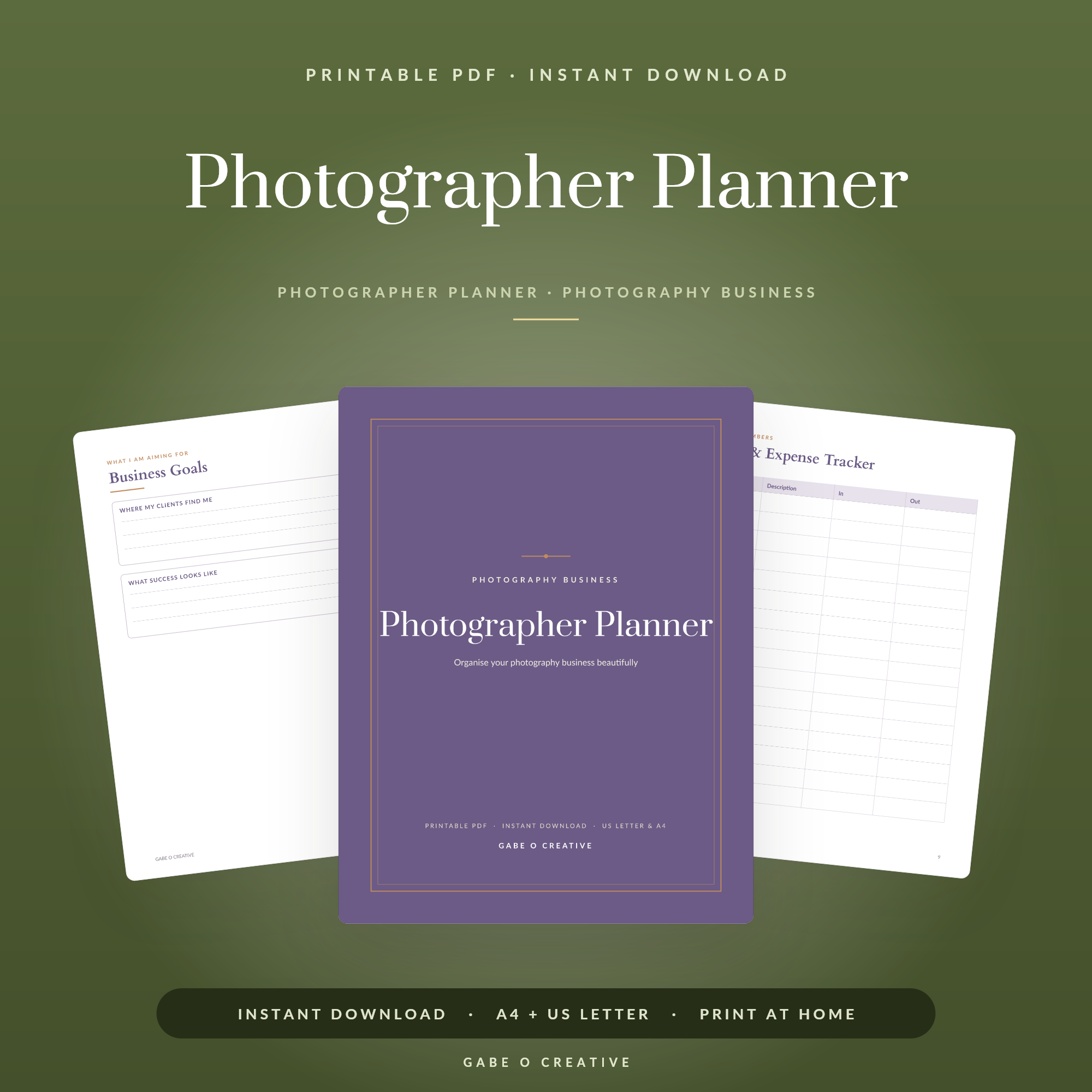
A clear photography business checklist is the difference between a hobby that occasionally earns a bit and a business that reliably pays you. Talent behind the camera gets you the first booking; systems behind the scenes get you the next hundred. Whether you're shooting weddings, portraits, newborns or brands, the work that makes photography sustainable is the unglamorous part—pricing, contracts, booking, editing workflow and money. Get those right and you can focus on the craft. If you'd rather not build it all from scratch, a ready-made photographer planner gives you the whole system in one place.
Want to run your shoots like a pro from day one? Our printable photographer planner includes client booking pages, shoot checklists, a pricing worksheet and session planning—print it or use it on a tablet on location.
 Shop Client Tracker →
Before You Launch: The Foundations
You don't need thousands of pounds of gear or a studio to start—you need clarity on a few essentials. Rushing past these is what leaves new photographers underpriced, overwhelmed and burnt out within a year.
- Know your niche. 'I photograph everyone' is hard to market. Weddings, families, newborns, pets, products, personal branding—pick a lane you love and can sell.
- Master your gear. One camera and one or two lenses you know inside out beat a bag of kit you half understand.
- Have an editing workflow. Decide how you'll cull, edit and deliver so you're not reinventing it after every shoot.
- Sort the legal basics. Register your business as required where you live, and use a simple contract for every job.
- Set up the money side. A way to invoice, track income and set aside tax—before the first payment lands.
These foundations aren't exciting, but they're what turn 'I take nice photos' into a business people can confidently book and pay for.
Pricing: The Part Most Photographers Get Wrong
Underpricing is the number-one reason talented photographers quit. The trap is pricing for the hour or two behind the camera and forgetting that editing, admin, travel, gear replacement, software and tax are most of the real cost. A shoot that looks like two hours' work is often eight once you include culling and editing.
To price properly, work out your true costs and the full time each job takes, then set packages that pay you a real wage on top. It helps to think in terms of how many shoots you can realistically deliver each month without burning out, and what you need each one to earn. A freelancer budget with a built-in tax vault is perfect here: it tells you what to set aside from every booking so a tax bill never wipes out a good month, and it's built for income that varies. For more on managing the peaks and troughs, see our guide to budgeting on an irregular income.
 Shop Invoice & Receipt Set →
Client Booking and Workflow
Once enquiries start coming in, the business lives or dies on how smoothly you handle them. A confused booking process loses clients; a calm, clear one wins them—and gets you referrals. Here's the workflow to systemise:
- Enquiry. Log every enquiry with the date, type of shoot and how they found you.
- Quote and book. Send your package, contract and deposit request together so booking is one simple step.
- Pre-shoot. Confirm the date, location, shot list and any details a week ahead.
- Shoot day. Work from a checklist so you never leave without the key shots.
- Edit and deliver. Follow your set workflow and deliver by the promised date.
- Follow up. Ask for a review, offer a print or a next session, and stay in touch.
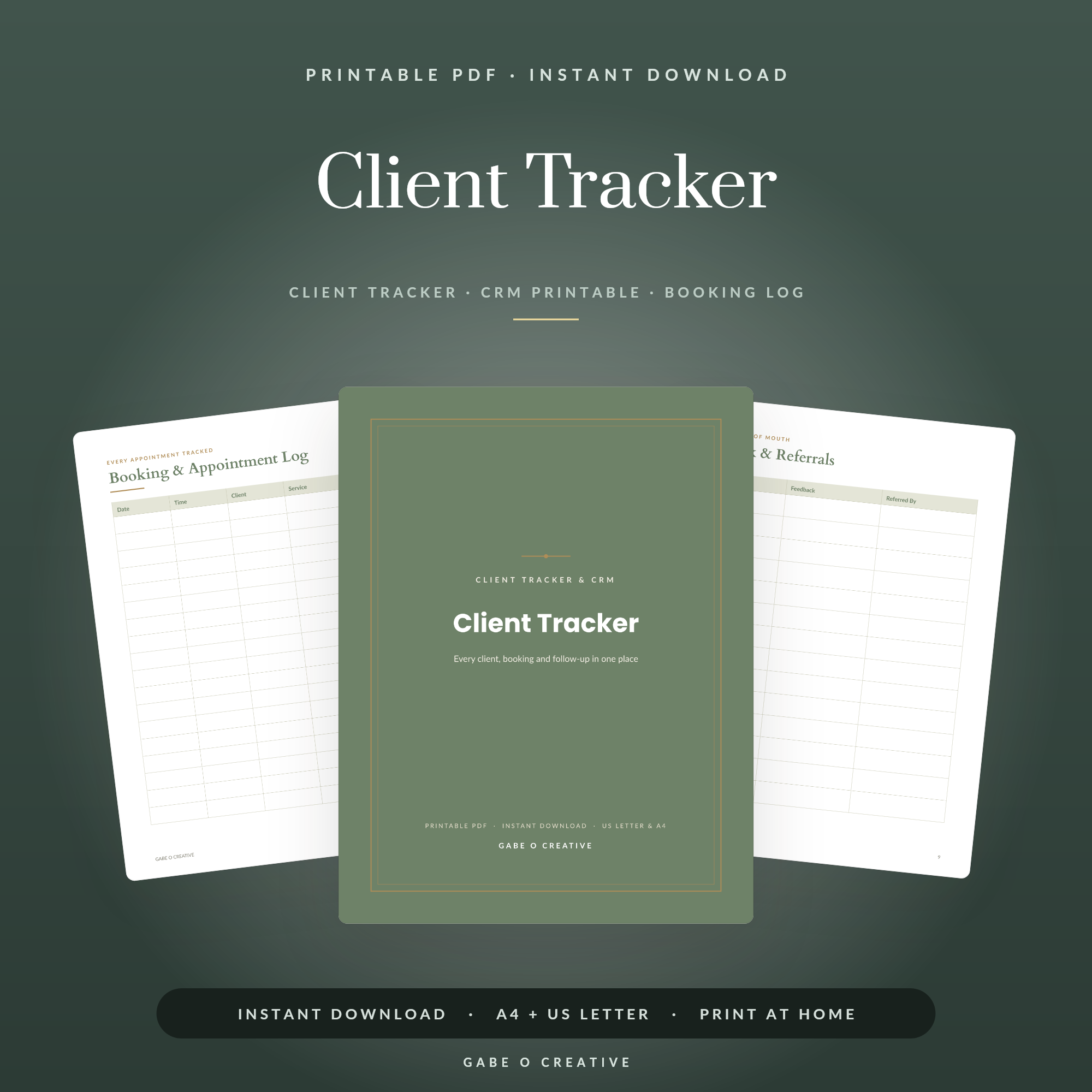
Keeping all of this in one system matters. A client tracker and CRM or a spreadsheet-based pipeline stops double-bookings and dropped follow-ups, while a social media content planner keeps your marketing consistent so the enquiries never dry up. When bookings are busy, systems are what keep you sane.
The Admin That Keeps You Paid
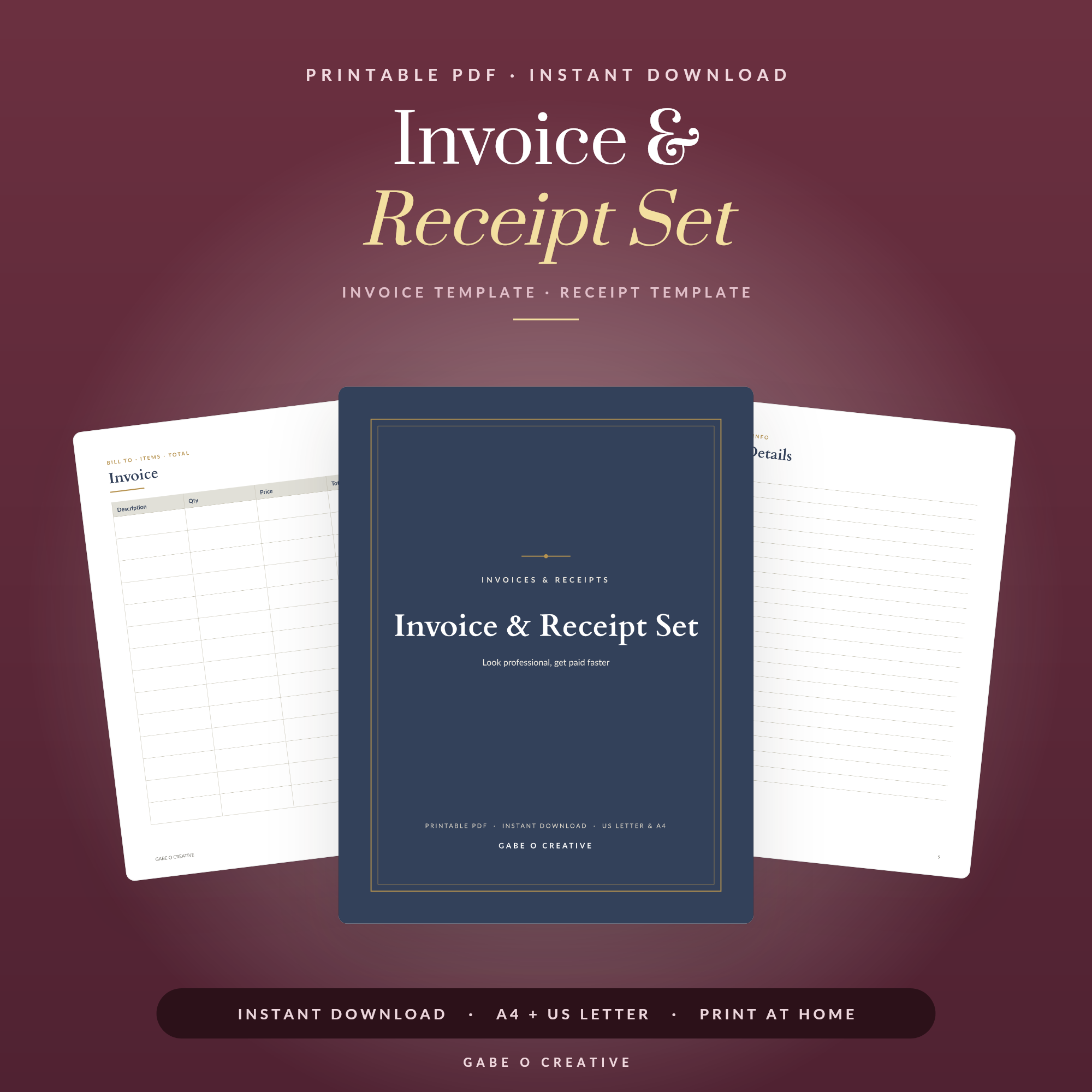
Money problems sink more small photography businesses than a lack of talent ever will. Stay on top of three things and you'll be fine: invoice promptly, track every payment and expense, and set aside tax as you go. A simple invoice and receipt set makes you look professional and gets you paid faster, while regular bookkeeping means no nasty surprises at tax time.
| Task | How often |
|---|---|
| Send invoices and deposit requests | At the moment of booking |
| Log income and expenses | Weekly |
| Set aside money for tax | Every payment received |
| Review bookings and pipeline | Weekly |
None of this takes long once it's a habit—half an hour a week keeps the whole business healthy. The photographers who last are rarely the ones with the fanciest cameras; they're the ones whose admin runs quietly in the background so the creative work can shine.
One more habit worth building: back up every shoot in two places the moment you get home. Photographers rarely recover from losing a wedding or a newborn session to a corrupted card, and clients never forget it. A simple rule—card to computer, computer to cloud, before you sleep—protects both your reputation and your income. Treat delivery as part of the service too: a tidy, well-named gallery that arrives on or before the promised date is the small detail that turns a one-off client into a repeat booking and a stream of referrals. Reliability, in photography, is a genuine selling point.
Put It All Together
Everything above fits into one organised system. The photographer planner gives you booking pages, shoot checklists, pricing worksheets and session planning in one place, on paper or tablet. Pair it with the invoice and receipt set and the freelancer budget and tax vault and you've covered the shoot, the client and the money.
For the wider picture of running a lean, organised business, read our guide to small business planner printables. Build the systems once, and you free yourself up to do what you started this for: make beautiful photographs people treasure.
 Shop Social Media Content Planner →
Photography Business Checklist FAQs
What do I need to start a photography business?
A camera and lens you know well, a way to edit, a simple contract and invoice, pricing you've worked out on paper, and a system to book and track clients. You can start lean and upgrade gear as the bookings come in.
How do photographers organize their clients and bookings?
Most use a client tracker or simple CRM that logs each enquiry, shoot date, package, payment status and next step. A photographer planner keeps enquiries, shoots and deadlines in one place so nothing is double-booked or forgotten.
How should I price my photography?
Add up your costs and the hours a shoot really takes—including editing—then price so each job pays you properly. Never price only for the time behind the camera; editing and admin are most of the work.
Do I need a contract for photography clients?
Yes. Even a one-page contract that covers the date, deliverables, payment terms and cancellation policy protects both you and the client. It sets clear expectations and prevents most disputes before they start.
How do I manage the money side of a photography business?
Track every payment and expense, set aside money for tax as you go, and invoice promptly. Because photography income is often irregular, a budget built for variable income keeps you steady between busy and quiet months.
Can I run my photography business from a planner on my tablet?
Yes. Load a printable photographer planner into GoodNotes or Notability and manage bookings, shoot checklists and client notes with a stylus—handy on location where you don't want to carry paper.
Ready to turn your camera into a real business? Grab the photographer planner and set up your booking system today, or browse the full Small Business collection for everything you need to run it well.