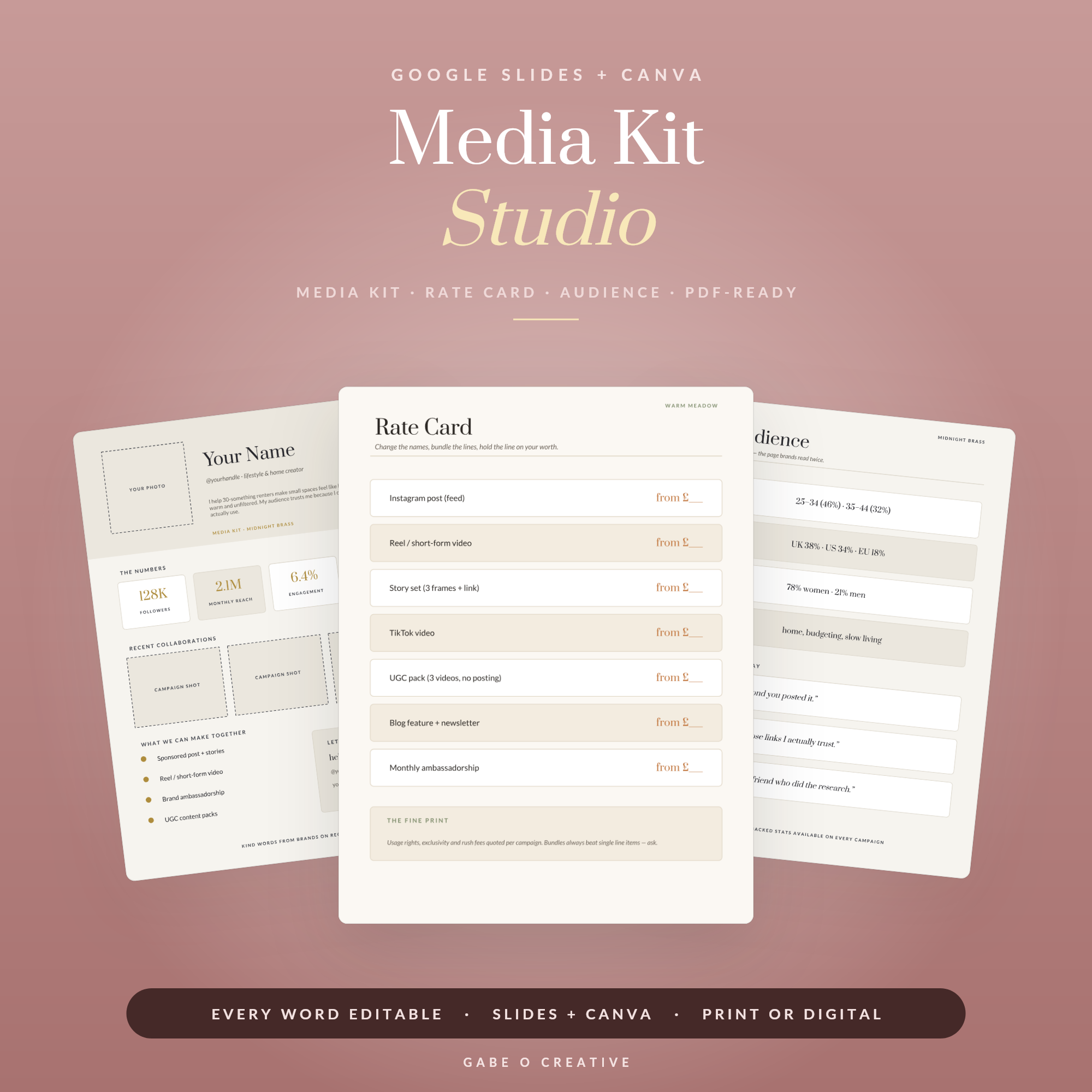
An influencer media kit is your CV for brand deals — and like a CV, it gets skimmed, not read. The brand manager deciding whether to reply to your pitch gives it about 30 seconds, which means every choice comes down to one question: what can they learn about you in half a minute? This guide covers exactly what belongs in the kit (and what quietly kills deals), which numbers matter at every follower size, and how to price the rate card that goes with it. If you want the design solved before you start, our Media Kit Studio is a one-page kit, rate card and audience page in Google Slides and Canva — type your stats, export the PDF, pitch.
Pitching this month? The Media Kit Studio has the layout, stat blocks and rate card ready — you just add your numbers.
The one-page rule
The single biggest media kit mistake is length. Six pages of every collaboration you've ever done reads as insecurity; one confident page reads as professionalism. Page one carries everything a brand needs to say yes to a call: who you are and your niche in two lines, a strong photo, your headline stats, a taste of your content, and contact details. The rate card lives on page two (or arrives on request), and the deeper audience breakdown on page three for the brands that get serious. Nobody has ever lost a deal because their kit was too easy to skim.
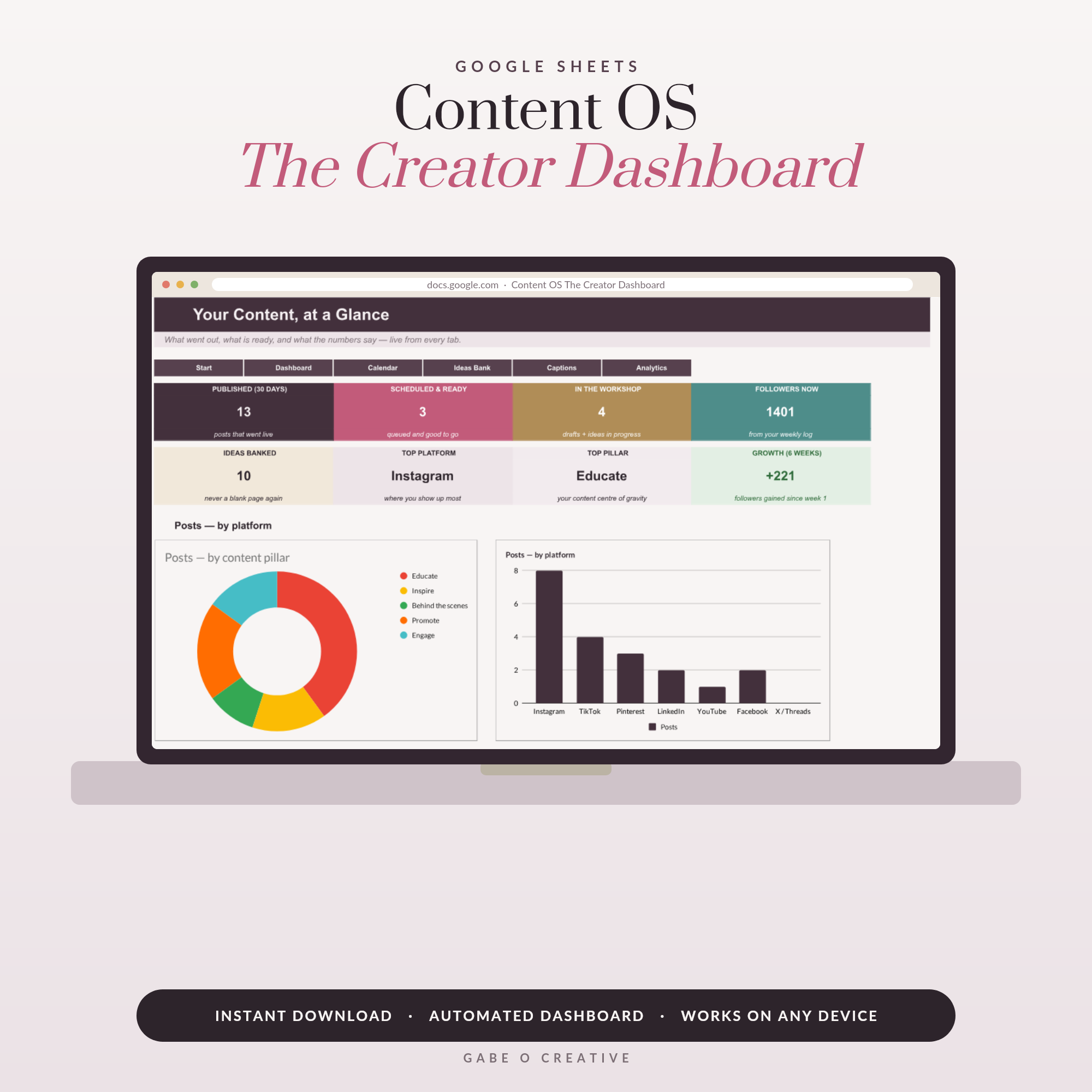 Shop Social Media Content OS — Google Sheets Content Calendar & Planner Spreadsheet: Post Scheduler, Ideas Bank, Hashtag & Caption Library, Analytics Dashboard for Creators & Small Business →
The stats that matter (at every size)
Brands stopped buying follower counts years ago — they buy audiences that act, and audiences that match their customer. Lead with these, in this order:
| Stat | Why brands care | Rule of thumb |
|---|---|---|
| Engagement rate | Proof your audience is real and listening | (likes+comments+saves) ÷ followers; 3%+ is good, 6%+ is a headline |
| Audience demographics | Does your audience match their customer? | Top age band, gender split, top locations |
| Monthly reach | Actual eyeballs, including non-followers | From your platform insights, last 30 days |
| Follower count | Context, not the headline | State it once; let engagement carry the pitch |
This ordering is why micro-influencers with great engagement out-pitch accounts ten times their size: '4,200 followers' is unremarkable, but '8% engagement, 78% UK women 25–40' is precisely what a UK skincare brand is shopping for. If your niche is tight and your audience is loyal, the kit's job is to make that impossible to miss.
Keep the numbers fresh
A kit with April's numbers sent in July tells brands you're not on top of your own business. Update monthly — with a template it's a five-minute job, and it's exactly the habit that pairs with the weekly analytics row in our Social Media Content OS.
Rate card maths (without underselling yourself)
Pricing paralyses more creators than pitching. A working baseline: £8–12 per 1,000 followers for a single feed post, then adjust for what the baseline can't see — strong engagement, niche authority, production quality, exclusivity. Price each deliverable separately (reel, carousel, story set, link in bio), offer one bundle that's obviously better value than the à-la-carte sum, and always — always — list usage rights and whitelisting as their own line. Brands running your content as paid ads extracts far more value than the post itself; giving that away free inside a £150 collab is the most common money leak in creator deals. On the eternal 'rates in the kit or on request?' question: printed rates filter out no-budget enquiries; on-request lets you tailor. 'Collaborations from £X' is the honest middle. And when the invoices start arriving, treat it as a business: the Bookkeeping & Profit Dashboard tracks collab income, and our CRM guide shows how to stop losing brand contacts in your DMs.
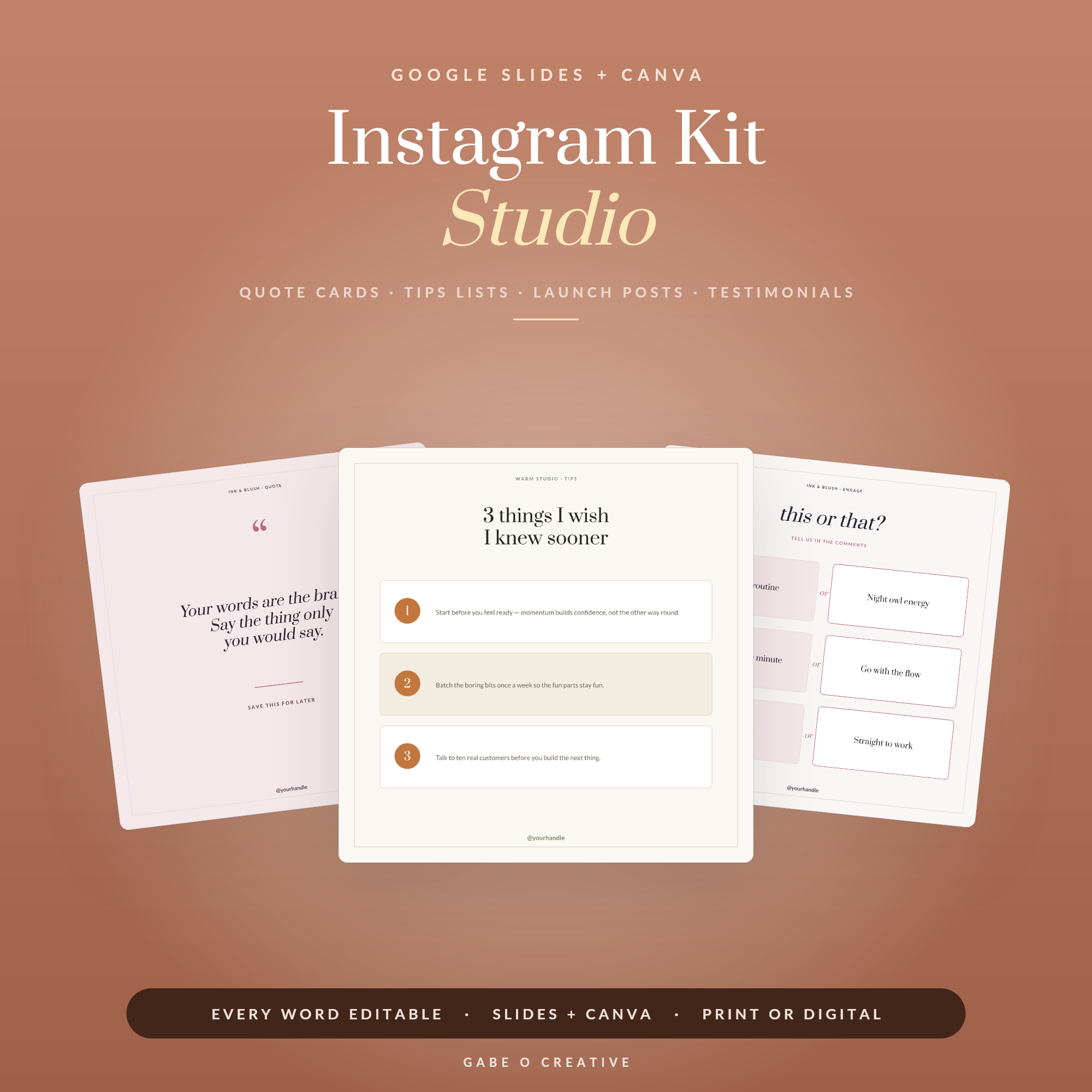 Shop Instagram Kit Studio — 15 Editable Instagram Post Templates for Google Slides & Canva: Quotes, Tips, Launch, Testimonial & Engagement Posts in 3 Brand Moods →
The mistakes that kill pitches
Four things make brand managers close the PDF: stale numbers (see above); screenshots instead of design — cropped analytics screenshots say 'I made this in five minutes', while typed stat blocks in a designed layout say 'I do this professionally'; no audience information at all, which forces the brand to do your homework; and the humble-brag essay — a 300-word bio where two sharp lines would do. None of these are talent problems. They're presentation problems, which is exactly why a well-designed template punches so far above its cost: the Media Kit Studio's three themes exist so your kit matches your feed's mood, and the layout decisions are already made by someone who obsesses over them.
No past collaborations yet? Show the content instead
A kit with an empty 'past partners' section feels like a CV with no experience — so don't include the section. Replace it with your three strongest pieces of content presented as case studies in miniature: the post, its reach and saves, and one line on why it worked. Brands are buying your next post, not your history, and strong recent content with honest numbers beats a logo wall of one-off gifted collabs every time. Your first paid deal will fill the section soon enough.
The kit is one third of the machine
A media kit converts interest into deals — but it works best as part of a system: consistent content brings brands to your profile (that's the Instagram Kit Studio's job), organised planning keeps you posting through busy weeks (the Content OS), and the kit closes. Creators running all three stop chasing collabs and start fielding them. For the wider toolkit — invoicing, client pipelines, planning — browse the Small Business collection or start with our small business planner roundup.
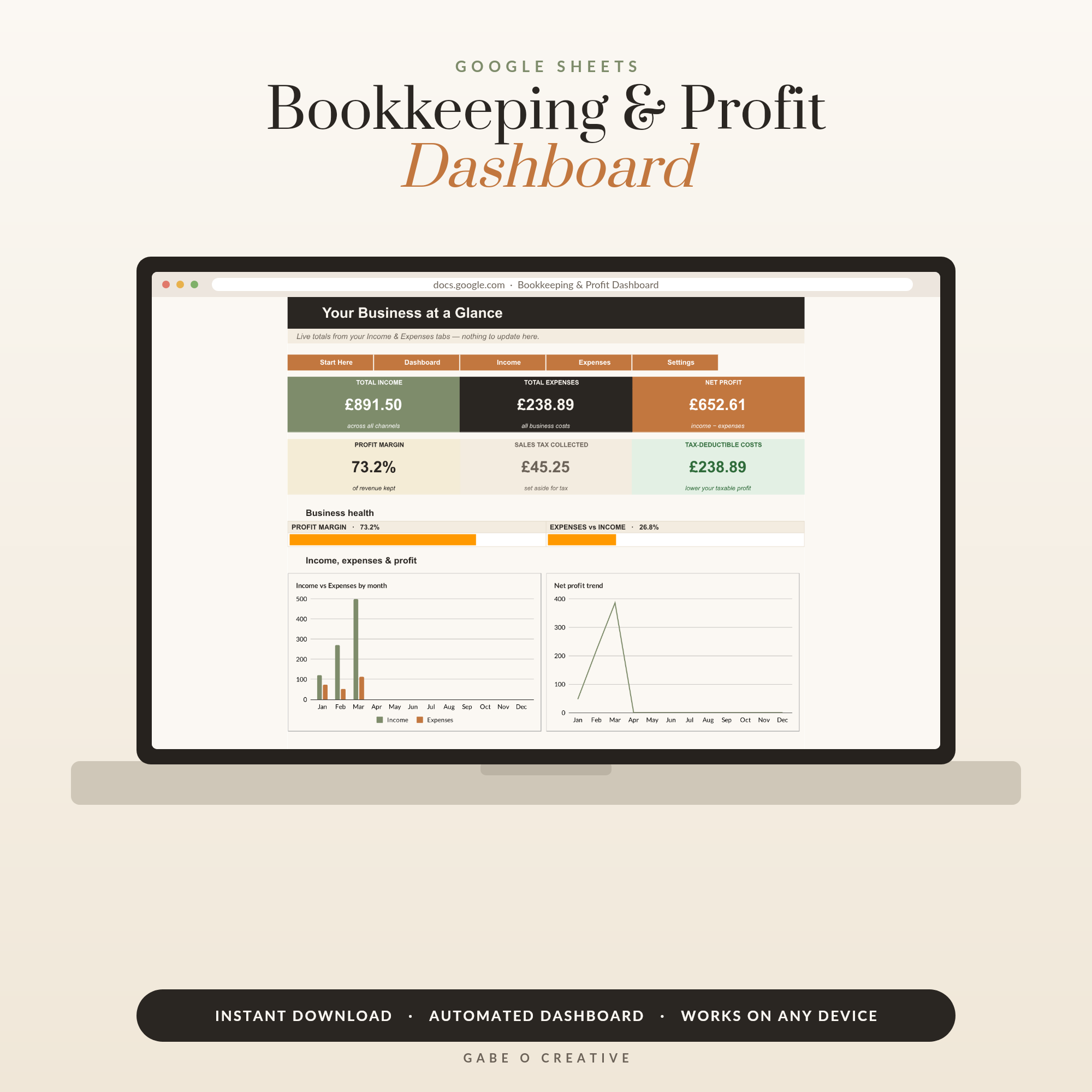 Shop Small Business Bookkeeping & Profit Dashboard, Google Sheets Template, Automated P&L, Income Expense Tracker →
Frequently asked questions
What should an influencer media kit include?
One page that a busy brand manager can skim in 30 seconds: who you are and your niche in two lines, your audience (size, engagement rate, top demographics), three strong content examples or past collaborations, and how to contact you. Rates usually live on a second page or are sent on request.
Do I need a media kit with under 10k followers?
Yes — arguably more than anyone. Micro-influencers win deals on engagement rate and audience fit, not reach, and a professional kit is how you reframe the conversation: '4,200 followers' looks small until the same page says '8% engagement, 78% UK women 25–40'. The kit does that reframing for you.
How do I work out my rates for the rate card?
A working baseline many creators use is £8–12 per 1,000 followers for a single feed post, adjusted up for strong engagement, niche authority or usage rights, and down for none of those. Price stories, reels, and bundles separately — and always list a rate for usage/whitelisting, because that's where brands quietly get expensive value for free.
Should I put my rates in the media kit?
Both approaches work: printed rates filter out brands with no budget and save you emails; rates-on-request lets you tailor to the brief and negotiate. A good middle path is 'collaborations from £X' — it sets a floor without boxing you in.
What stats do brands care about most?
Engagement rate first (likes + comments + saves ÷ followers), then audience demographics (age, gender, location — brands need to know your audience matches theirs), then reach and story views. Follower count matters least of the four; every brand knows it can be bought.
How do I send a media kit — PDF or link?
PDF attached to the pitch email is still the standard: it's skimmable offline, forwards cleanly to the decision-maker, and looks intentional. Keep it under 5MB, name the file professionally ('YourName-MediaKit-2026.pdf'), and update it monthly so the numbers are never stale.
Ready to pitch like a professional? The Media Kit Studio for Google Slides & Canva gives you the one-page kit, rate card and audience page — type your stats tonight, send your first PDF tomorrow.