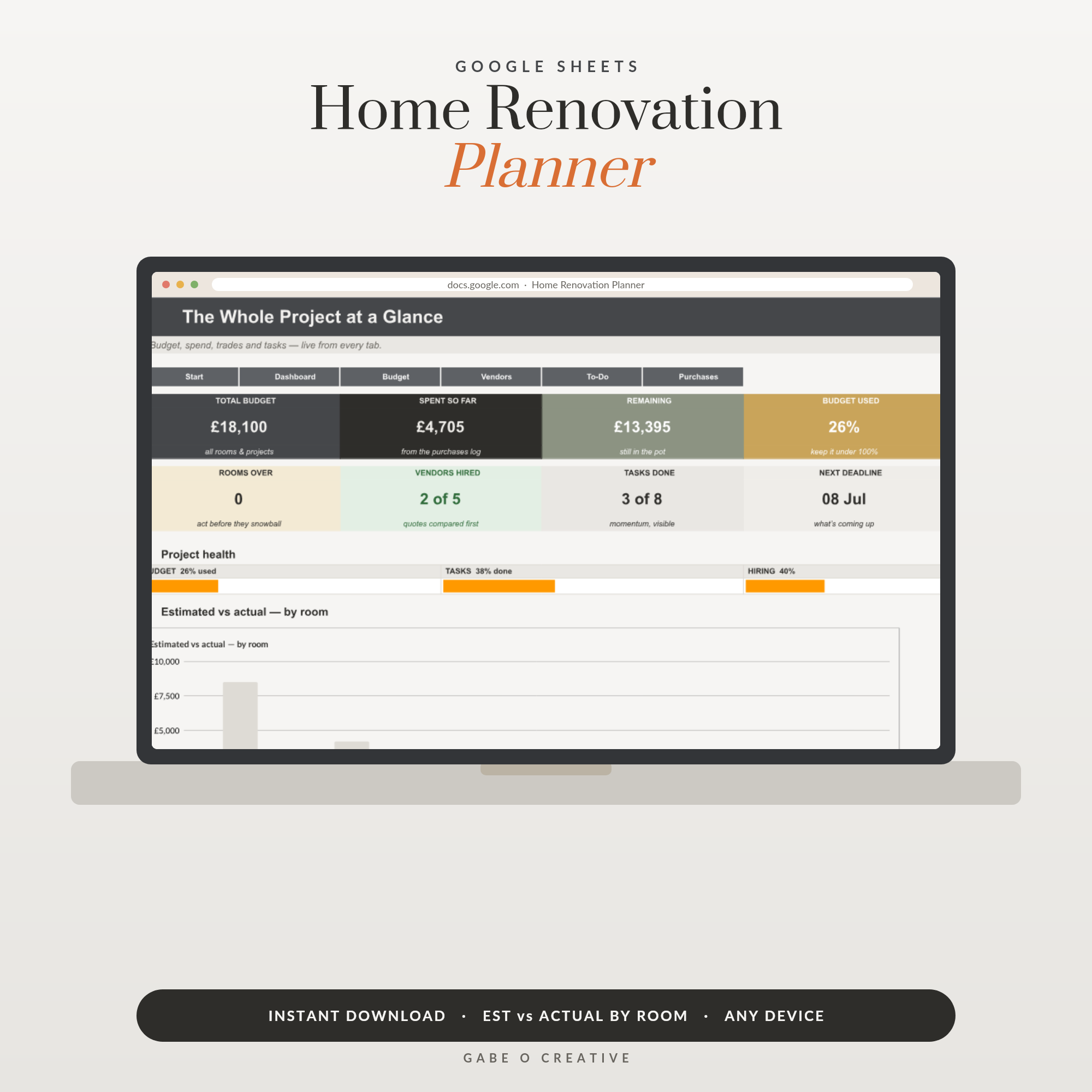
A renovation budget is not the number you tell yourself the kitchen will cost — it is a written plan for every pound, with room for the surprises you cannot see yet. Most renovations do not fail because of one dramatic disaster; they fail from a thousand small, undocumented overspends that nobody notices until the money runs out with two rooms left. The fix is not more money. It is a budget built line by line, a contingency you treat as sacred, and a ten-minute weekly habit of writing down what was actually spent. Our Home Renovation Planner for Google Sheets was built around exactly that method.
Planning a project right now? Grab the Home Renovation Planner spreadsheet — rooms, trades, quotes and a live budget-vs-actual dashboard, ready in minutes.
Why renovation budgets blow up
Ask anyone who has renovated and they will tell you the same story: the project cost 20 to 40 per cent more than planned. The reasons are boringly consistent. The original number was a guess, not a bill of items. There was no contingency, so the first surprise came straight out of the finish budget. Nobody tracked spending against the plan while the project ran, so overspend was only discovered when it was too late to react. And 'while we're at it' decisions — the extra socket, the nicer tap, the underfloor heating that suddenly seemed sensible — were made one at a time, each too small to feel dangerous.
None of these is a money problem. All of them are planning problems, which is genuinely good news: planning is free.
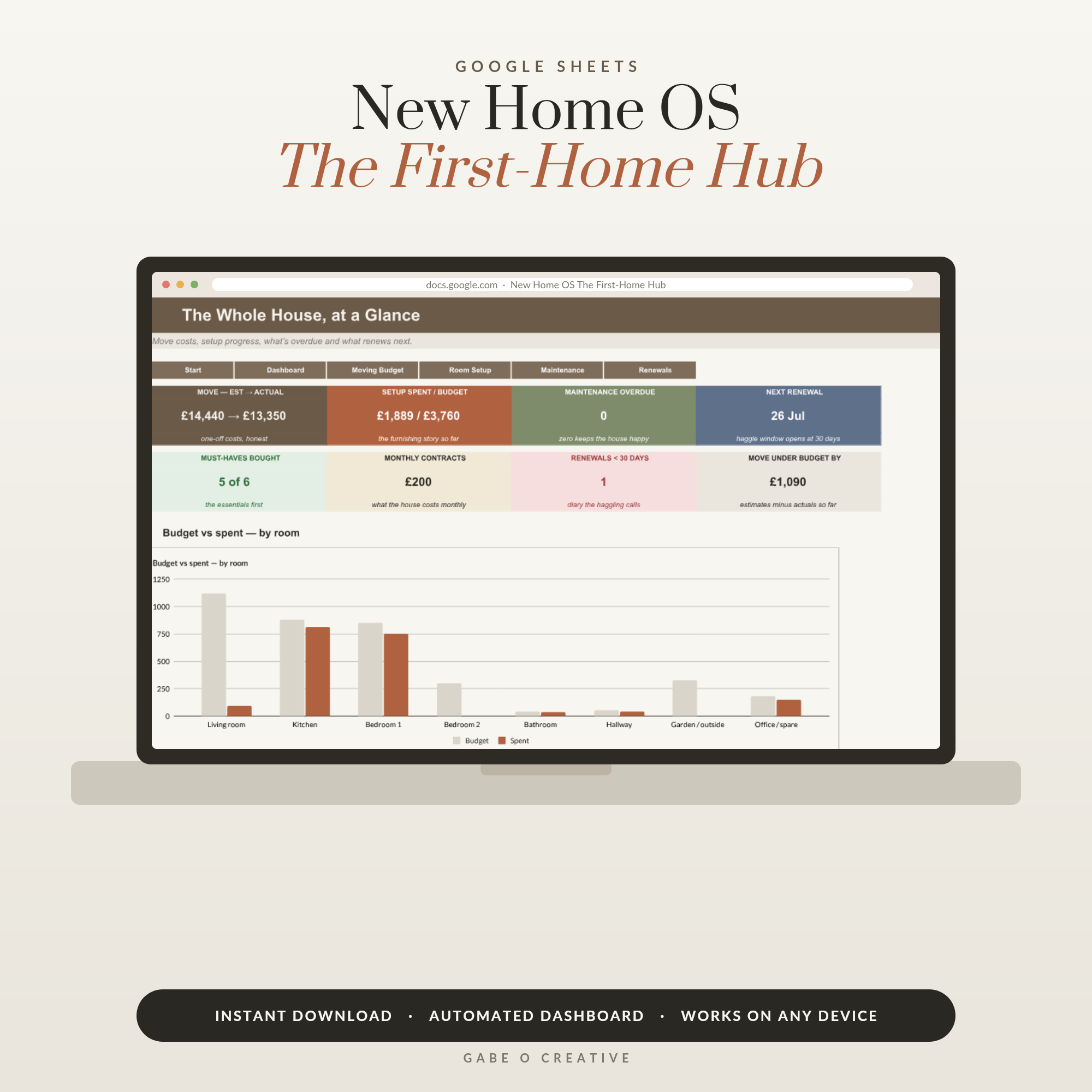 Shop New Home OS — Google Sheets First-Home Spreadsheet: Moving Budget, Room-by-Room Setup, Home Maintenance Schedule & Renewal Tracker →
Step one: write the scope before you price anything
Before a single quote, write down exactly what is and is not in the project, room by room. 'Kitchen: new units, worktop, sink and tap, tiled splashback, existing flooring stays, existing boiler stays.' The discipline matters for two reasons. First, an identical written scope is the only way to compare three quotes fairly — if each trader prices a slightly different guess at the job, the cheapest number means nothing. Second, the scope is your defence against creep: when a mid-project idea arrives (and it will), it must be added to the scope in writing, priced, and taken from somewhere else in the budget. That 30-second ritual kills most impulse spending on its own.
The 24-hour rule for new ideas
Any addition to the scope waits 24 hours before it is approved. Not because the idea is bad, but because renovation showrooms and half-finished walls are emotional places. A day later, half of the 'essential' upgrades quietly stop mattering.
Step two: build the budget line by line
A renovation budget is a list of items with numbers against them — not a single round figure. Work room by room, and within each room list the trades and materials separately: labour, units, worktops, tiles, electrics, plumbing, decoration, waste removal. Put an honest estimate against every line, using quotes where you have them and research where you do not. As a sanity check, here are typical UK ranges for common projects — your area and spec will move these substantially, but they catch wildly optimistic guesses early:
| Project | Budget range | Mid-range typical |
|---|---|---|
| Kitchen refit (keep layout) | £6,000–£15,000 | £10,000 |
| Bathroom refit | £4,500–£10,000 | £7,000 |
| Full room redecoration | £400–£1,500 | £800 |
| New flooring per room | £500–£2,000 | £1,100 |
| Rewire (3-bed house) | £4,000–£8,000 | £5,500 |
Two views of the same money matter here. You will make decisions room by room ('can we still afford the bathroom?'), but trades price the work trade by trade ('the electrician quotes the whole house at once'). Keep both views — it is exactly why we built the renovation planner with rooms and trades as separate, linked tabs.
Step three: the contingency is not optional
Add 15 per cent on top of the line-item total — 20 per cent for period properties, structural work, or any plumbing and wiring you have not physically seen. This is not pessimism; it is pattern recognition. Every renovation contains at least one surprise: the rotten joist behind the bath, the wiring that is not to regulation, the wall that turns out to be load-bearing. With a contingency, a surprise is an inconvenience. Without one, it eats the finish budget, and you live with bare plaster and the cheapest possible flooring because the money ran out at the worst moment.
Protect it from yourself
The contingency is for surprises found inside walls — not for upgrading taps. Keep it as a separate line you are mildly ashamed to touch. If it survives to the end, it becomes the furniture fund, and you will be very glad of it. If you are saving up before the project starts, a sinking funds tracker is the calmest way to build the renovation pot month by month — the same method we recommend in our guide to sinking funds.
 Shop Sinking Funds Tracker Spreadsheet, Google Sheets Savings Template, Multiple Savings Goals, Cash Stuffing & Budget Planner →
Step four: track weekly, not at the end
The budget you write before the project is a forecast. The document that saves you is the one you update while the project runs. Every week — Sunday evening, ten minutes — log what was actually spent and what was committed (ordered but not yet billed) against each line. Committed spend is the one everyone forgets: by the time invoices arrive, the money was spent weeks ago. Then look at one number: variance. Which lines are over, which are under, and what does the projected final total look like now?
Caught in week two, a £400 overspend on tiles is a course correction — you choose simpler bathroom fittings and the total stays intact. Discovered in week ten, it is one of eight overspends that together sank the project. The weekly habit is the whole game. If you like this rhythm for the renovation, the same weekly check-in works for your whole money life — our All-in-One Finance Dashboard runs on it, and the 50/30/20 guide is a good place to start if budgeting is new to you.
Living through it (and paying for it) calmly
Renovating a home you live in adds its own costs people forget to budget: takeaways during the kitchen weeks, a few nights elsewhere during the messiest phase, storage for furniture, extra cleaning. Add a small 'living through it' line — £200 to £500 depending on the project — and it stops being a nasty surprise. If the renovation is part of a bigger move into a first home, our New Home OS tracks the moving budget, room-by-room setup and maintenance calendar around the renovation itself, and pairs well with a simple monthly budget planner for the months when cash is tight. For the wider set of home printables and tools, browse the Home & Organization collection.
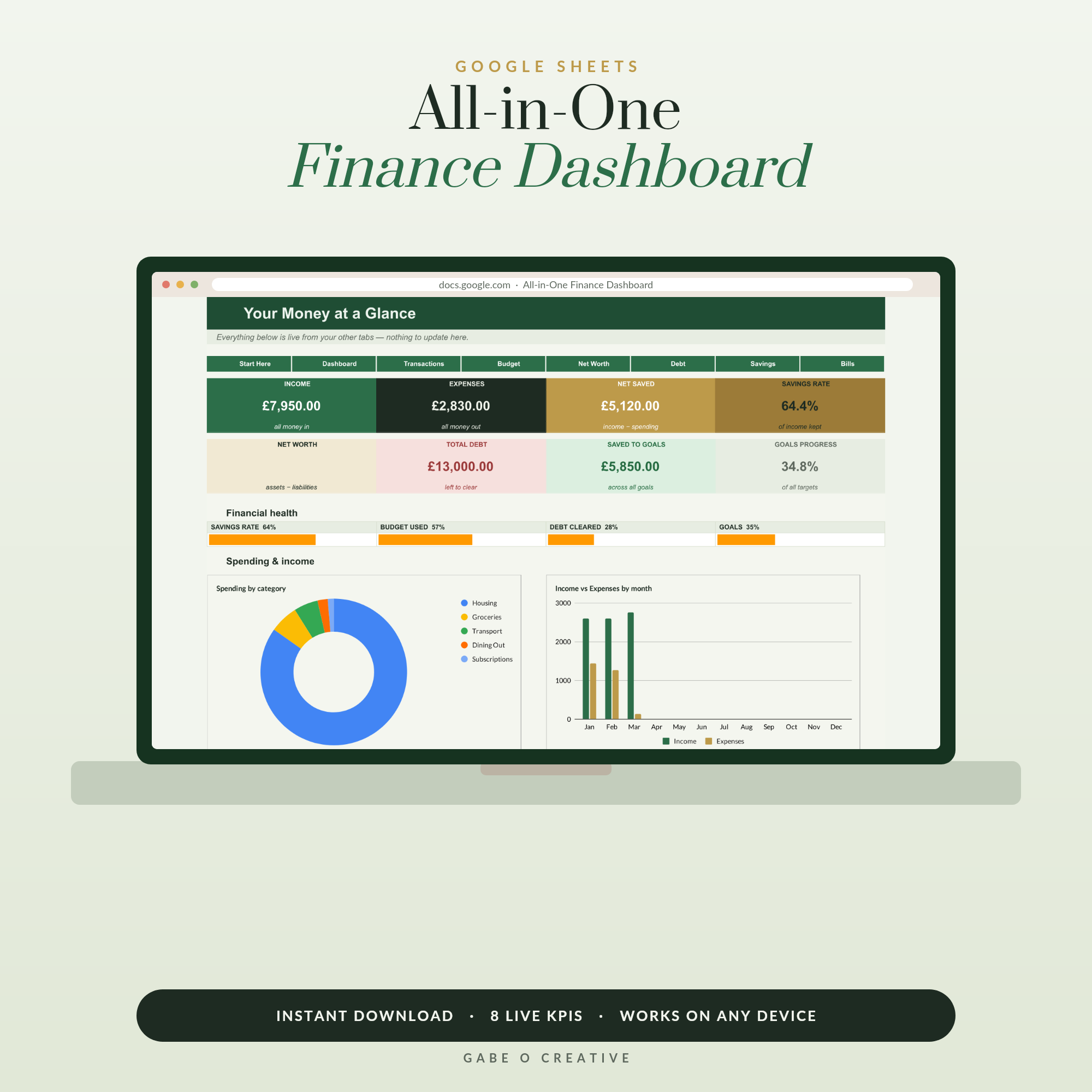 Shop All-in-One Personal Finance Dashboard, Google Sheets Budget Template, Net Worth, Debt Payoff & Savings Goal Tracker →
Frequently asked questions
How much contingency should a renovation budget have?
Set aside 15% of the total budget for surprises on a standard refurb, and 20% for anything involving older properties, structural work or plumbing you have not seen. If the contingency is untouched at the end, it becomes your furniture fund — but plan as though you will need every penny.
What is the biggest cause of renovation overspend?
Scope creep — the small 'while we're at it' decisions made mid-project. Each one feels tiny, but ten of them can add 20% to the final bill. Write the scope down before you start, and force every addition through a 24-hour cooling-off rule.
Should I budget room by room or trade by trade?
Budget room by room for decision-making (it matches how you think about the home), but get quotes trade by trade, because that is how the work is actually priced. A good renovation planner tracks both views so nothing falls between the two.
How do I get accurate renovation quotes?
Get three quotes for every major trade, give each trader an identical written scope, and treat any quote that is dramatically cheaper than the others with suspicion. Vague quotes produce vague bills — ask for line items.
How often should I update the renovation budget?
Weekly, without fail — ten minutes every Sunday. Log what was actually spent and committed that week against each line. Overspend caught in week two is a course correction; overspend discovered in week ten is a crisis.
Is it cheaper to renovate one room at a time?
Usually, yes — it protects cash flow, lets you learn from mistakes cheaply, and keeps part of the house liveable. The exceptions are jobs with big setup costs like scaffolding or full rewires, where doing it once across the house is genuinely cheaper.
Ready to plan a renovation that finishes on budget? Start with the Home Renovation Planner for Google Sheets — scope, quotes, contingency and a live budget-vs-actual dashboard, all in one calm hub.