Getting landlord allowable expenses right is the difference between a tax bill that feels fair and one that quietly overcharges you by several hundred pounds a year. HMRC lets you deduct the genuine running costs of letting a property from your rental income, but only the costs that pass its tests, and only where you can evidence them. Most landlords do not lose money through dramatic errors. They lose it through small forgotten claims: the £14 hardware shop receipt, the drive over to meet a plumber, the accountancy fee paid in a different month. A single landlord rental property spreadsheet catches all of them, because it is open at the moment the money leaves your account.
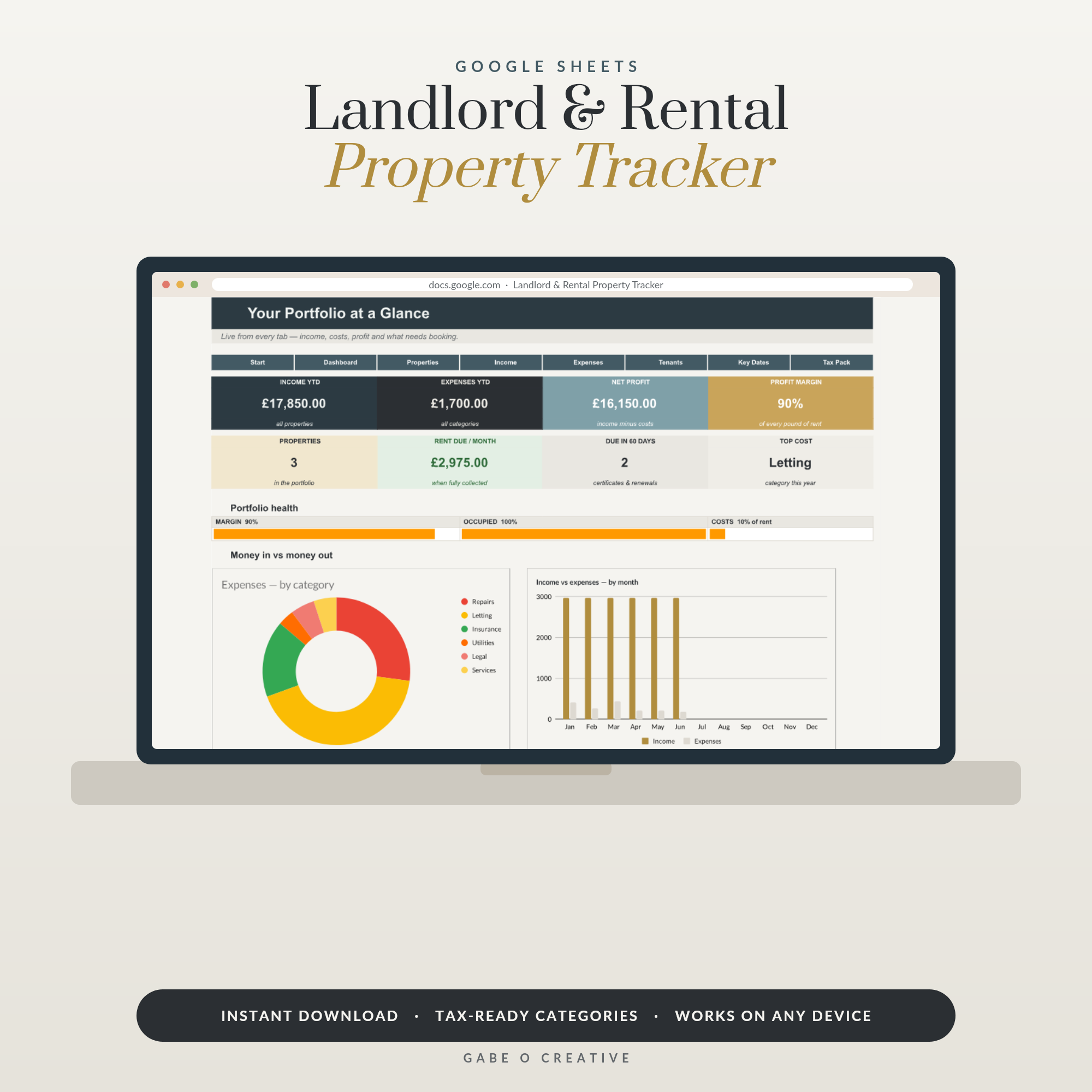
Want your figures tax-ready long before January? The Landlord Rental Property Tracker gives every property its own income and expense log, then totals each expense category into a tax-ready summary you can hand straight to your accountant.
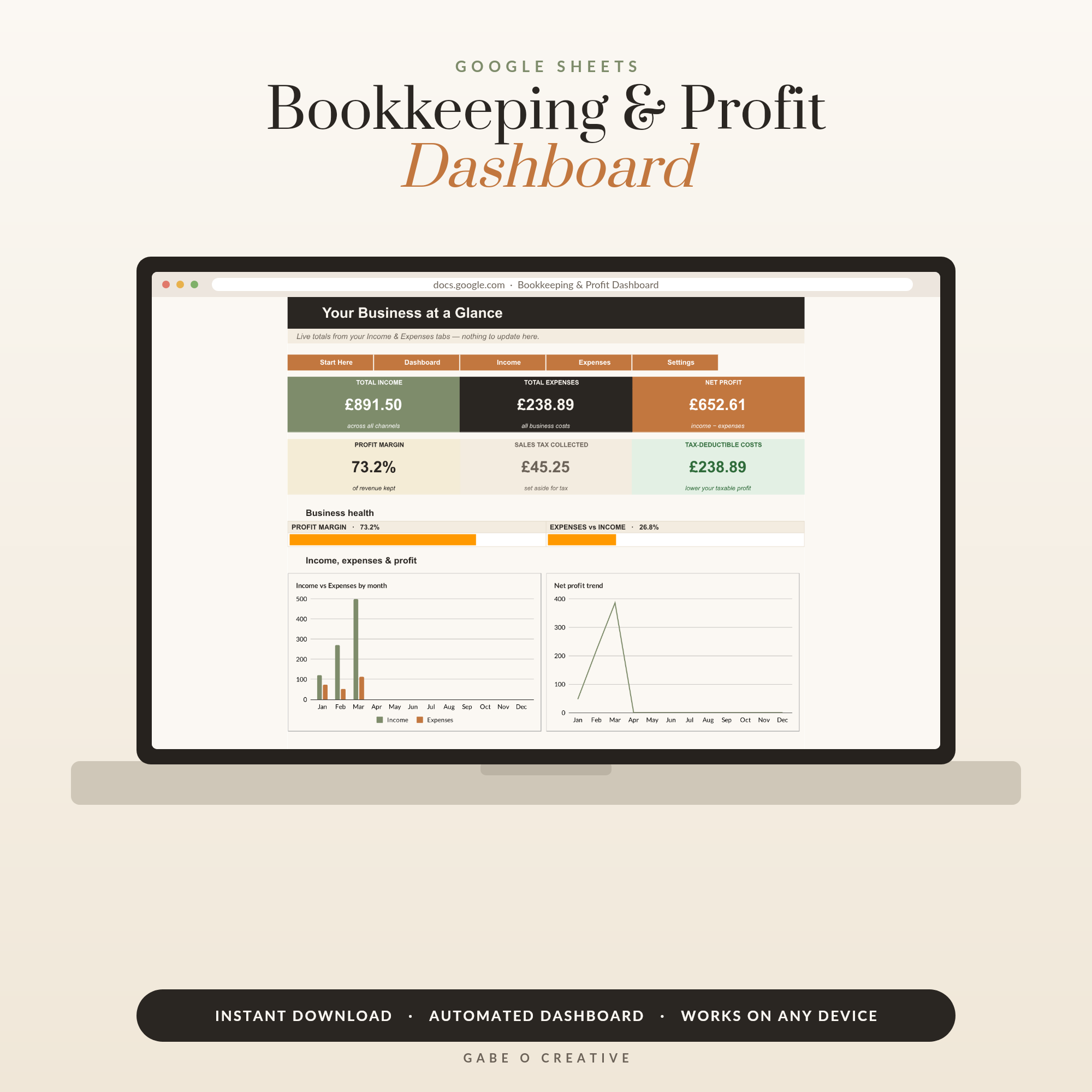 Shop Small Business Bookkeeping & Profit Dashboard, Google Sheets Template, Automated P&L, Income Expense Tracker →
What 'Allowable' Actually Means
The test HMRC applies is that a cost must be incurred wholly and exclusively for the purposes of your property business. A landlord insurance policy is wholly and exclusively for the letting, so it is allowable in full. Your home broadband is not, because you would pay for it anyway. Where a cost is genuinely split, you can usually claim the business proportion, provided you can explain how you arrived at the split and show the same logic every year.
The second test is timing. Revenue costs, meaning the ongoing expenses of running the letting, come off your rental income this year. Capital costs, meaning money spent acquiring or improving the asset itself, do not. They wait until you sell and reduce your Capital Gains Tax instead. Almost every argument a landlord has with their own spreadsheet comes down to this one distinction.
The £1,000 property allowance
If your total rental income for the tax year is £1,000 or less, you generally do not need to declare it at all. Above that, you get a choice: deduct your actual allowable expenses, or deduct a flat £1,000 property allowance instead. You cannot do both. Real expenses beat the allowance comfortably on a typical let, so it mainly helps people renting out a garage, a driveway or a single room.
The Expenses You Can Claim
These are the everyday deductions that make up the bulk of a normal landlord's return:
- Letting agent and management fees, including tenant-find fees and renewal commissions.
- Landlord insurance: buildings, contents, rent guarantee and public liability.
- Repairs and maintenance: damp treatment, replacing a broken boiler, redecorating between tenancies.
- Ground rent and service charges on a leasehold flat.
- Utilities and council tax for any period you pay them, including void months.
- Safety certificates: gas safety, electrical installation condition reports, EPCs and legionella assessments.
- Professional fees: accountancy, tenancy agreement drafting, and legal costs on a short lease renewal.
- Advertising to find new tenants.
- Direct running costs: stationery, postage, phone calls and the business share of software you use for the letting.
- Travel to the property for inspections, repairs and check-ins.
Replacing domestic items
If you let furnished or part-furnished, replacement of domestic items relief lets you claim the cost of replacing things like a sofa, a bed, carpets, curtains or a washing machine. Two conditions catch people out. The first purchase of an item never qualifies, only the replacement does. And you can only claim the cost of a broadly equivalent replacement, so swapping a basic fridge for a range-style American model means claiming the price of a basic fridge, not the upgrade.
Mortgage Interest: The Rule That Catches Landlords Out
This is the single biggest misunderstanding in landlord tax. The capital portion of your mortgage payment has never been deductible, because it buys the asset. Since April 2020, individual landlords cannot deduct the interest as an expense either. Instead, the interest gives you a basic-rate tax reduction worth 20 per cent of it, applied after your tax has been worked out.
The practical effect is that your taxable rental profit now looks larger than the cash actually in your pocket, which can push higher earners into a steeper band. It also means your spreadsheet should record mortgage interest in its own row, separate from your allowable expenses, so nothing gets double counted. Do not delete it — your accountant needs the figure to apply the tax credit.
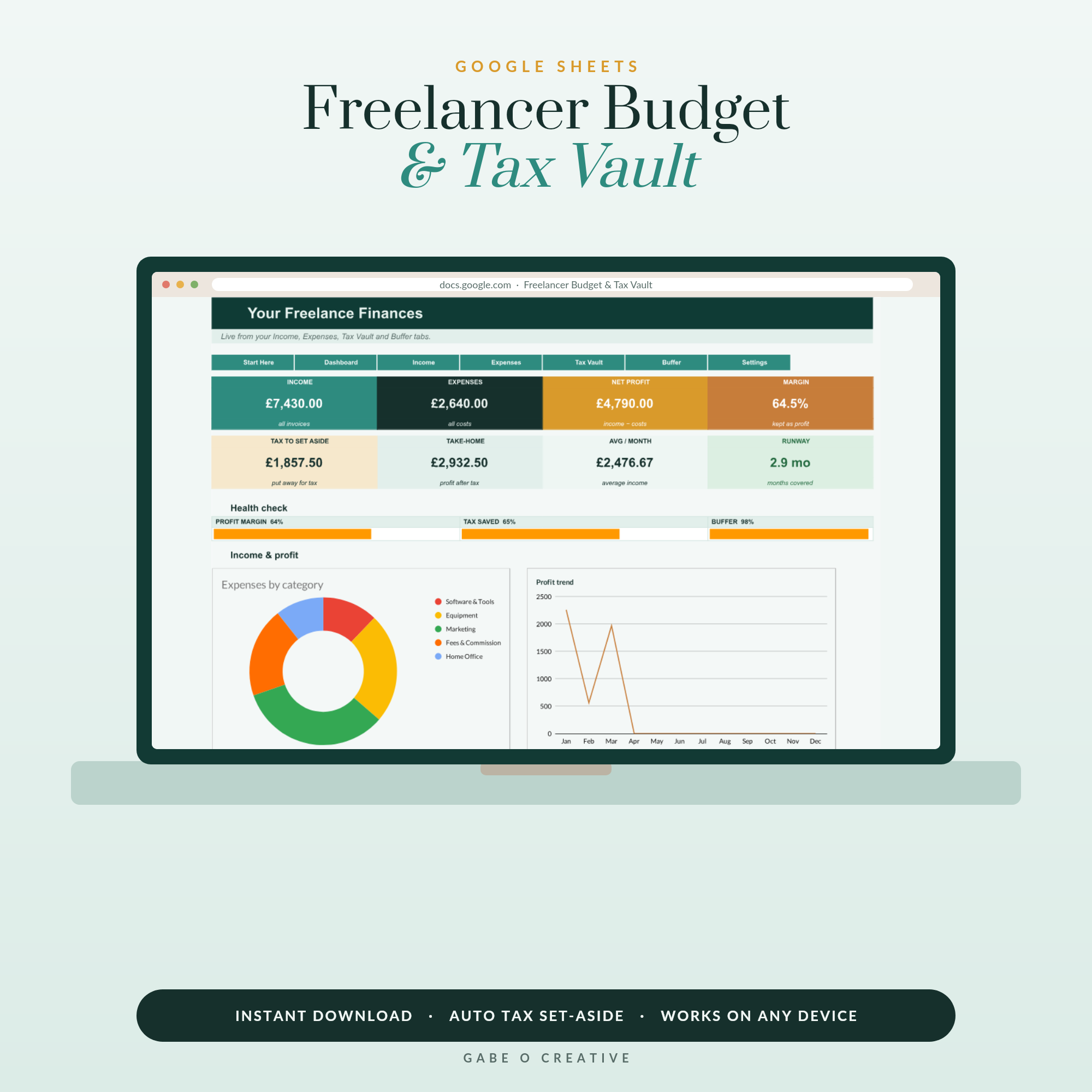 Shop Freelancer Budget & Tax Vault, Google Sheets Template for Self-Employed, Irregular Income Planner, Tax Set-Aside Tracker →
Repairs Versus Improvements: The Line HMRC Cares About
A repair returns something to the condition it was in. An improvement makes the property better, bigger or materially different. Repairs come off this year's rental income; improvements are capital and wait for the sale. Using modern equivalent materials does not turn a repair into an improvement, so replacing rotten single-glazed windows with standard double glazing is still generally a repair, while adding a conservatory is not.
| Cost | Treatment |
|---|---|
| Replacing a broken boiler with a similar model | Repair — deduct now |
| Fitting central heating where there was none | Improvement — capital |
| Repainting between tenancies | Repair — deduct now |
| Adding an extension or loft conversion | Improvement — capital |
| Replacing a worn-out kitchen like for like | Repair — deduct now |
| Upgrading a basic kitchen to a high-spec one | Part repair, part improvement — split it |
Note the last row. Mixed jobs are common and perfectly claimable, but you need the invoice broken down by element rather than a single line saying 'kitchen'. Ask for an itemised invoice at the time; nobody enjoys asking eighteen months later.
What you cannot claim
Keeping the disallowed list in mind saves you from an awkward correction later. You cannot claim the capital repayment part of the mortgage, the cost of buying or selling the property itself, stamp duty, legal fees on purchase, improvements, your own time or labour, personal expenses, or the cost of travel that mixes business with a holiday. Fines and penalties are not allowable either.
Losses are more generous than people expect. If your allowable expenses exceed your rental income in a year, the loss is normally carried forward and set against future profits from the same property business, so a heavy maintenance year is not wasted.
Records That Survive an Enquiry
Claiming well is really a record-keeping habit rather than a tax skill. Photograph every receipt the day it arrives, name the file with the date and property, and enter the amount into your tracker in the same sitting. Keep a simple mileage log with date, reason and miles. Keep records for at least five years after the 31 January deadline for that tax year, and keep them digitally so a faded till receipt is not the weak link in your claim.
If you are still working out which figures to capture in the first place, our companion guide to building a landlord spreadsheet for rental income and expenses walks through the exact columns, the yield calculations and the monthly routine that keeps it honest. Landlords running other self-employed income alongside their property will also find the approach in setting money aside for tax useful, and if the letting has grown into a small business of its own, Google Sheets for small business covers the wider toolkit. For a broader books-and-profit view, the bookkeeping and profit dashboard or the freelancer budget and tax vault pair neatly with the landlord tracker, and the tax prep organiser keeps the paper side tidy.
 Shop Tax Prep Organizer →
Landlord Allowable Expenses FAQs
What counts as a landlord allowable expense?
Any cost incurred wholly and exclusively for the day-to-day running of your letting business: letting agent fees, landlord insurance, repairs, ground rent, service charges, accountancy fees, advertising for tenants and utilities or council tax you pay yourself.
Can I deduct my mortgage payments from rental income?
Not in full. The capital part of the payment is never deductible, and since April 2020 individual landlords cannot deduct mortgage interest either. Instead you get a basic-rate tax reduction worth 20 per cent of the interest, applied after your tax is calculated.
What is the difference between a repair and an improvement?
A repair puts something back to its original condition and is deductible now. An improvement makes the property better than it was and is a capital cost, which you set against Capital Gains Tax when you eventually sell instead.
What is the £1,000 property allowance?
If your total rental income is £1,000 or less in a tax year you usually do not need to declare it. If it is more, you can choose to deduct the £1,000 allowance instead of your actual expenses, which is worth doing only when your real costs are lower than that.
Can I claim for travelling to my rental property?
Yes, where the journey is wholly for the letting business, such as inspections, repairs or check-ins. Keep a simple mileage log with the date, reason and miles, because this is exactly the sort of claim HMRC asks you to evidence.
How long should I keep landlord expense records?
At least five years after the 31 January submission deadline for that tax year. Digital copies are fine, so photographing receipts into a dated folder as they arrive is the easiest way to stay compliant.
This is general guidance rather than tax advice, and the rules do shift, so check the current HMRC guidance or ask an accountant about your own circumstances before you file.
Ready to stop guessing at your figures? Set up the Landlord Rental Property Tracker this week, log the last three months of costs, and see what you have been missing — or browse the full Google Sheets collection for the rest of the toolkit.