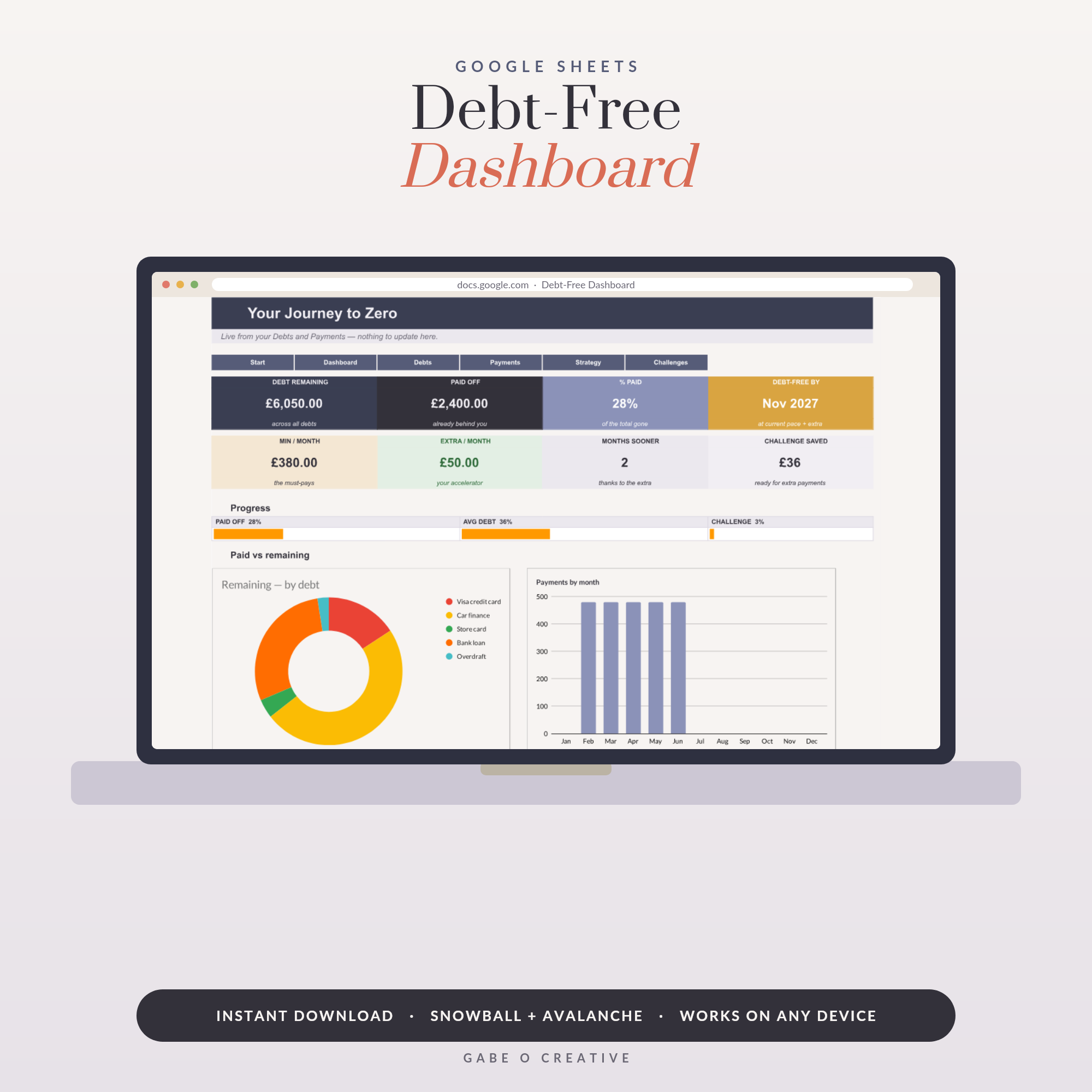
Debt feels heaviest when it feels endless — a fog with no far edge. The fix is surprisingly specific: work out your debt-free date, the actual month and year your last payment lands. Suddenly the fog has an exit sign, and every decision (skip the takeaway? sell the old bike?) becomes 'does this move my date closer?'. Our Debt-Free Dashboard calculates that date live from your real numbers, but let's walk through exactly how it works.
Want the date without the maths? The Debt-Free Dashboard works out your payoff date per debt and overall, updates it with every payment, and shows the finish line getting closer.
Why a date beats a balance
Your brain treats '£8,400 of debt' and 'debt-free by March 2028' completely differently. A balance is a weight; a date is a destination. Research on goal-setting shows specific, dated goals dramatically outperform vague ones, and debt payoff is the perfect example. A date lets you plan the celebration, imagine the first debt-free payday, and — crucially — measure whether this month actually helped. Watching 'March 2028' turn into 'November 2027' because you sold some clutter is the most motivating money experience there is.
 Shop All-in-One Personal Finance Dashboard, Google Sheets Budget Template, Net Worth, Debt Payoff & Savings Goal Tracker →
The maths, in plain English
Three numbers set your date for each debt: the balance, the interest rate (APR), and your monthly payment. Interest is the reason you can't just divide balance by payment: each month, interest is added before your payment lands, so only part of your payment actually shrinks the debt.
The quick estimate: divide the balance by your monthly payment, then add roughly 10–25% more months depending on how high the rate is. So £3,000 at £150/month is 20 months before interest — call it 23–24 months at a typical card rate.
The proper way uses the amortisation formula: n = −log(1 − r×B/P) ÷ log(1+r), where B is the balance, P the monthly payment and r the monthly interest rate (APR ÷ 12). Nobody should do that on paper for five debts every month — this is exactly the job spreadsheets were born for, and it's the engine inside the Debt-Free Dashboard: type each debt once, and it shows the payoff month per debt and the grand debt-free date across all of them.
A worked example
Meet a fairly typical debt picture:
| Debt | Balance | APR | Monthly payment | Paid off in |
|---|---|---|---|---|
| Credit card | £2,400 | 22% | £120 | ~25 months |
| Car loan | £4,800 | 9% | £220 | ~24 months |
| Overdraft | £600 | 19% | £60 | ~11 months |
| Total | £7,800 | — | £400 | debt-free in ~25 months |
Now the magic part: when the overdraft dies in month 11, that £60 doesn't go back into spending — it rolls onto the credit card. When the card dies, £180 rolls onto the car. That rolling snowball is why your true debt-free date is earlier than the slowest single debt suggests, and it's why trackers that handle the rollover automatically beat mental maths every time.
 Shop Sinking Funds Tracker Spreadsheet, Google Sheets Savings Template, Multiple Savings Goals, Cash Stuffing & Budget Planner →
Five levers that move the date closer
1. Add a fixed extra payment. Even £25/month goes 100% at principal. On the example above, an extra £50/month brings the date forward by about four months.
2. Fire one-off windfalls at the target debt. Birthday money, tax refunds, selling clutter — one £200 lump sum early in the plan beats £200 spread thin later, because it stops months of interest compounding.
3. Cut the interest, not just the spending. A 0% balance-transfer card (mind the fee), a lower-rate consolidation loan, or even a phone call asking for a rate reduction can shave months off with zero extra payment.
4. Pick your order deliberately. Avalanche (highest APR first) is the mathematician's choice; snowball (smallest balance first) is the psychologist's. Our snowball vs avalanche guide compares them honestly — the dashboard supports both, so choose the one you'll actually sustain.
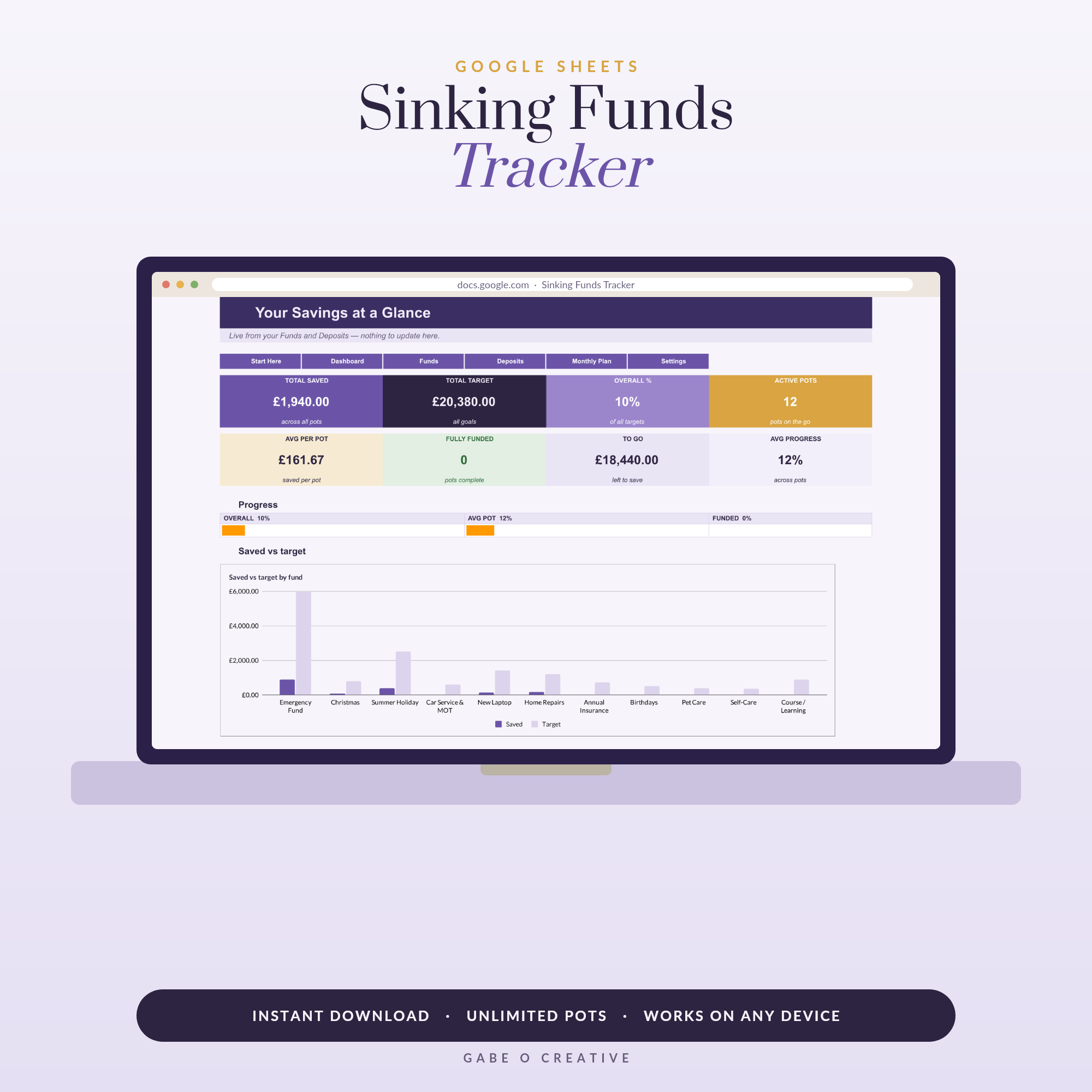
5. Stop new debt with sinking funds. Most 'failed' debt plans die when Christmas or car repairs land on the card. Small monthly pots for the expenses you know are coming — sinking funds — are the armour; the Sinking Funds Tracker makes them automatic.
Keep the date where you can see it
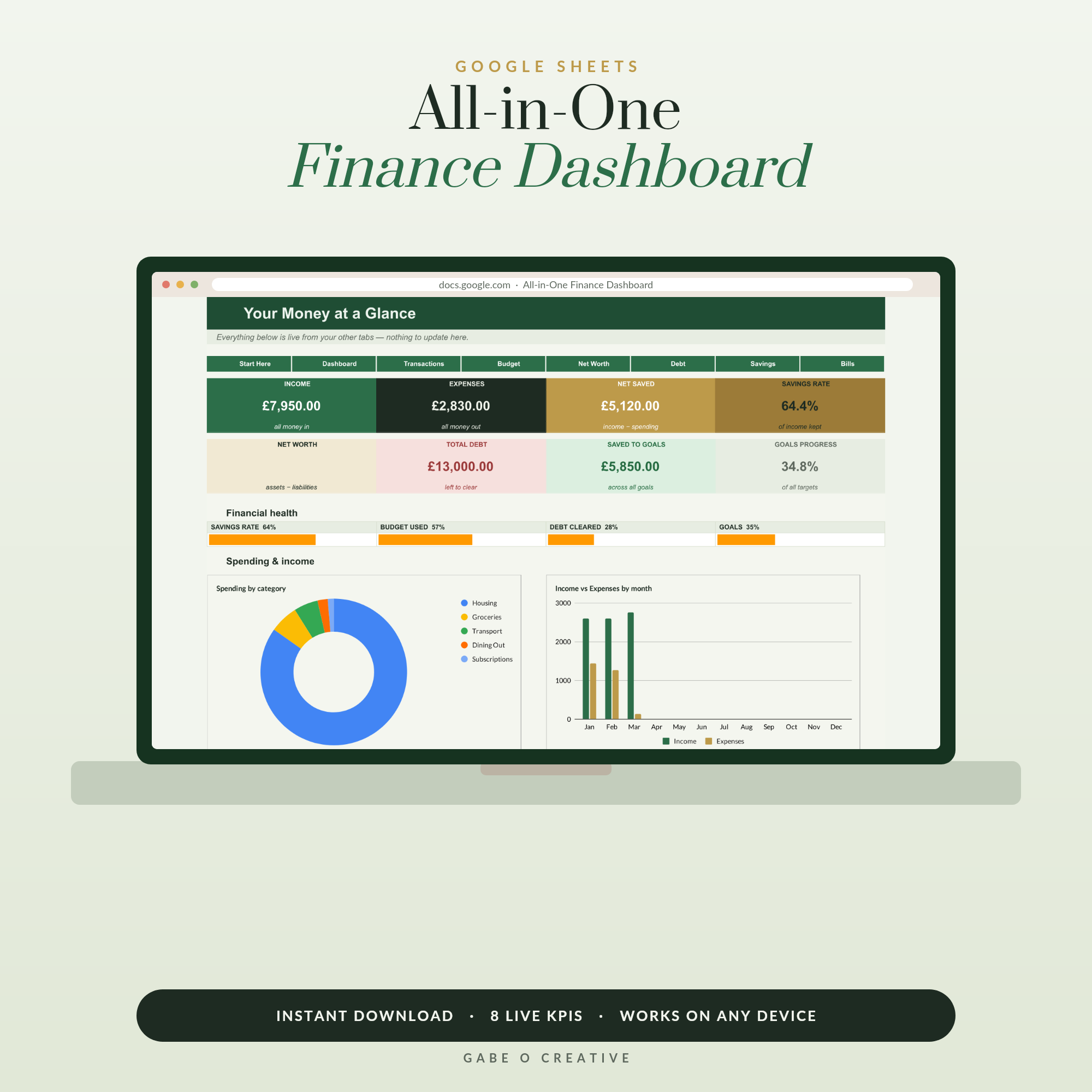
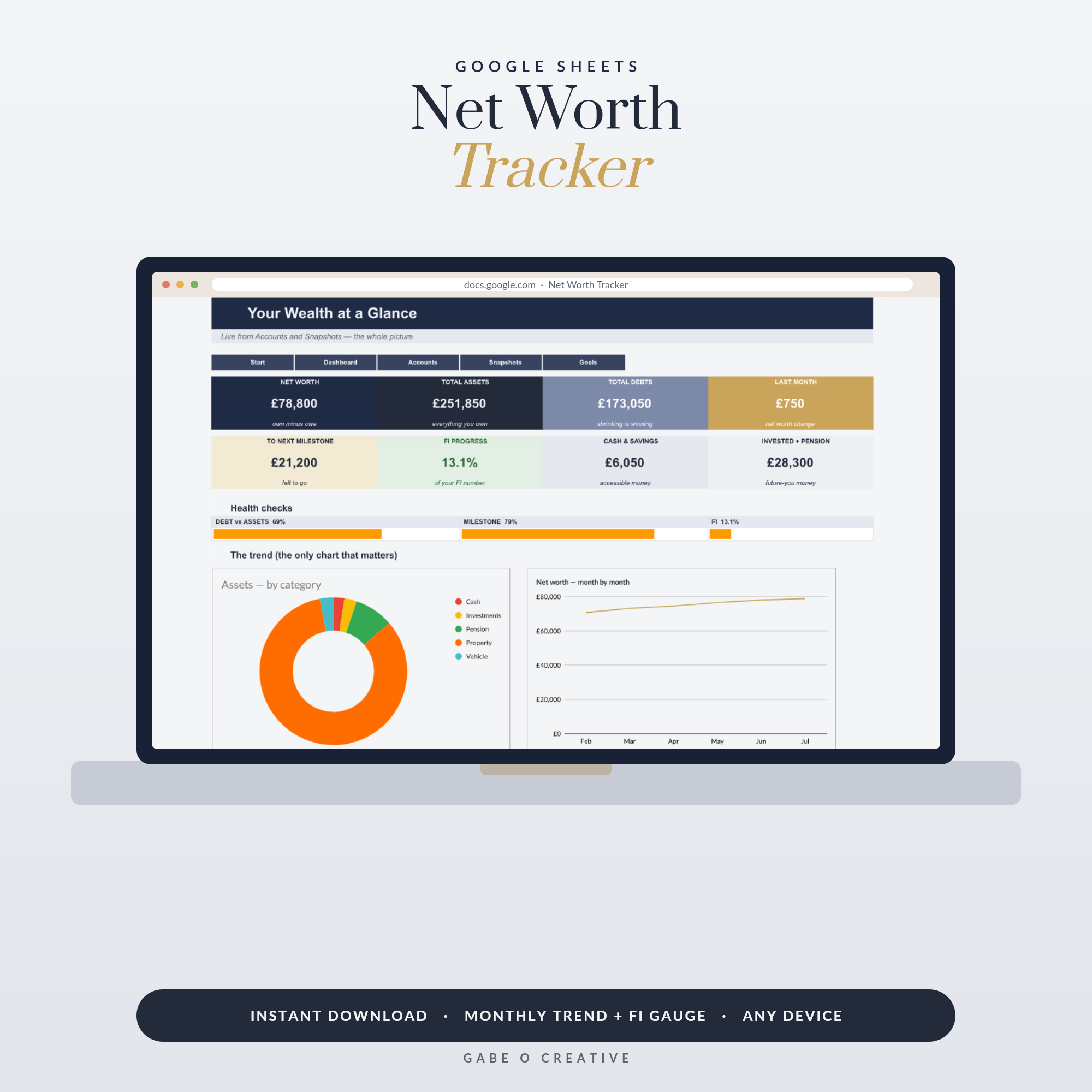
Calculate the date once and hide it in a drawer, and it quietly loses. Put it where you'll collide with it weekly: the dashboard open on your phone, the month written on the fridge, a countdown in your planner. Then make one small ritual of updating the tracker after every payday — thirty seconds that turn an abstract plan into a scoreboard. Pair it with a simple monthly money check-in using the All-in-One Finance Dashboard, and watch two numbers with opposite jobs: debt falling, and net worth rising (the Net Worth Tracker handles that side).
 Shop Net Worth Tracker Google Sheets, Personal Finance Dashboard with Monthly Snapshots, Asset & Debt Tracker, FI Progress Spreadsheet →
Make it a household number
If you share money with a partner, share the date too. Debt hidden in one person's head breeds resentment and secret spending; a date on the fridge makes it a team sport. Some couples do a five-minute 'date check' after payday — payment made, tracker updated, new date read aloud. When the date jumps closer because of a windfall, both people get the win; when it slips a month, it's a shared puzzle rather than a private shame. The maths doesn't change, but the follow-through does.
After the date arrives
Here's the beautiful twist: the day you're debt-free, you're already trained. The £400 a month that was servicing debt doesn't vanish — it redirects. Point it at savings and the same rolling maths that killed your debt now builds your emergency fund, then your investments, at startling speed. Many people run a savings challenge with the freed-up money for the first few months, just to keep the game alive. The debt-free date isn't the end of the plan; it's the day the plan starts paying you.
Frequently asked questions
What is a debt-free date?
It's the specific month and year your last debt payment lands, based on your balances, interest rates and what you pay each month. It turns 'someday' into a real date you can circle — which is exactly why it's so motivating.
How do I calculate my debt-free date by hand?
For a single debt, divide the balance by your monthly payment for a rough month count, then add a cushion for interest — or use the proper amortisation formula. For several debts it gets messy fast, which is why a spreadsheet that does the maths per debt and totals the timeline is the sanity-saving option.
Does paying a little extra really change the date much?
More than almost anyone expects. Extra payments go entirely at the principal, which shrinks the balance interest is charged on. On a typical credit card, an extra £50 a month can pull the payoff date years closer and save hundreds in interest.
Snowball or avalanche — which gives the earlier debt-free date?
Avalanche (highest interest rate first) is mathematically fastest and cheapest. Snowball (smallest balance first) usually finishes only slightly later but delivers early wins that keep people going. The honest answer: the method you'll stick with gives you the earlier date.
Should I save while paying off debt?
Keep a small emergency buffer — £500 to £1,000 — before going all-in on debt. Without it, the first surprise bill goes straight back on the credit card and undoes your progress. After that buffer, throw everything spare at the debt.
What happens to my debt-free date if I miss a month?
It slips a little — and that's all. One missed extra payment isn't failure, it's a data point. Update the tracker, look at the new date, and carry on. A visible date is resilient in a way vague intentions never are.
Put a date on it today: open the Debt-Free Dashboard, type in your debts, and meet the month your last payment lands — then start dragging it closer.